
Grade I
Our shop is rated 5.0 out of 5 from 63 Google reviews
₹329/gMRP ₹450−27%
Our Pampore harvest, coded, lab-graded and sealed at IIKSTC under the Kashmir Saffron GI label. Pre-order at ₹800/g; ships from 1 December 2026.
Reviews of our shop on Google
Choose grade
Choose weight
₹800
₹800/g · GST-inclusive
Pre-order · ships from 1 December 2026
Pay the pre-order price now; the jar leaves Pampore from 1 December 2026, then 4–8 days by courier. Cancel any time before dispatch for a full refund. Once the lot is on the shelf this jar sells at its regular price.
ISO 3632 Grade I — tested by IIKSTC
IIKSTC Quality Evaluation Laboratory, Pampore · Government of J&K · NABL-accredited to ISO/IEC 17025
If your jar fails the home water-bloom test, or its grade or batch does not match, tell us within 7 days of delivery and we refund in full — no questions asked.
Report TC118432400000049E · lot L20020644 · issued 5 October 2026 · Returns & refunds
See the full lab reportNine moments, one season
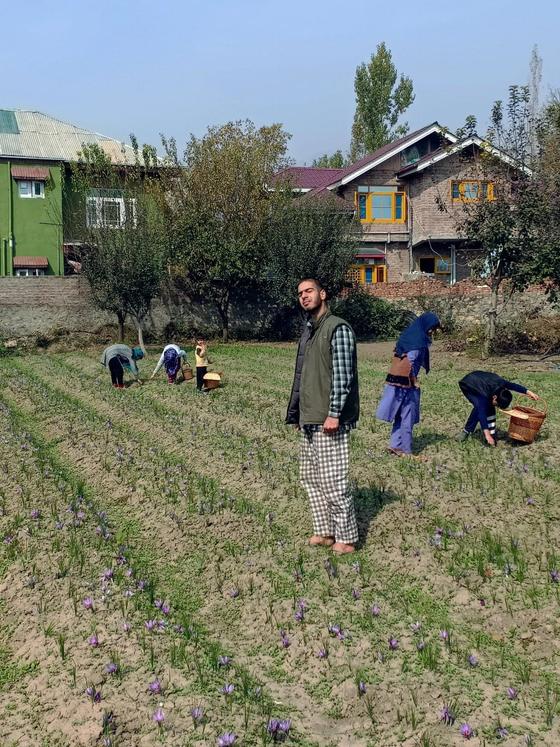
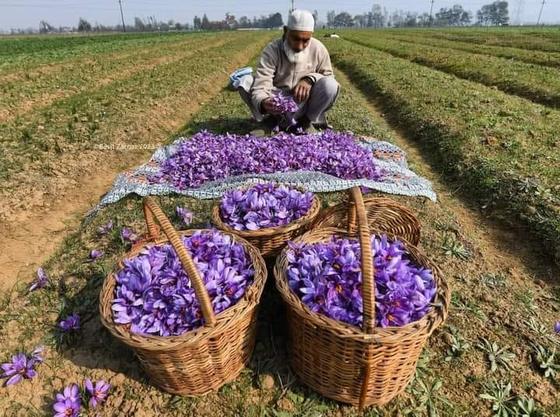
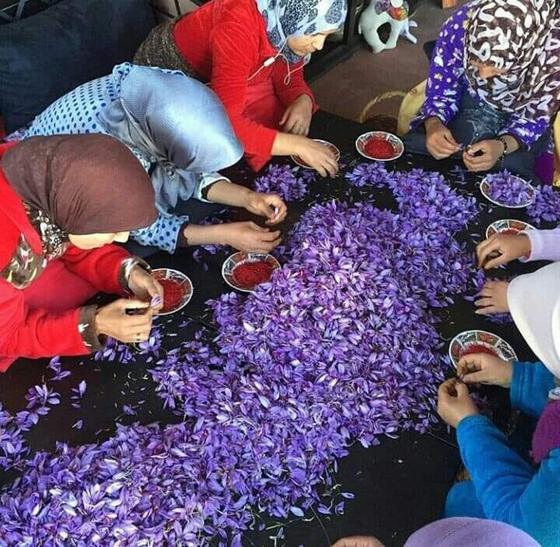
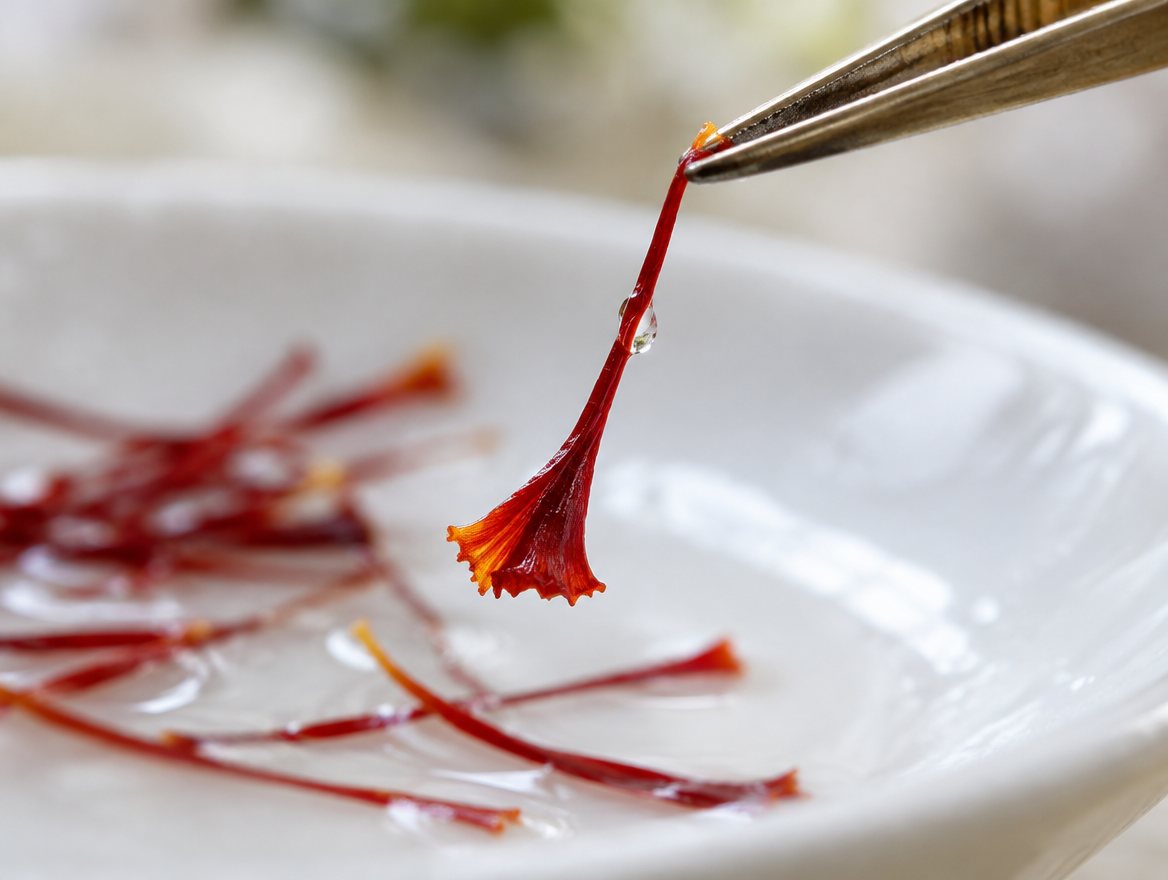
Roughly 160 hand-picked flowers go into a single gram. Our own film and photographs from Pampore, in the order it happens; the last frame is an illustration. Tap to go on, hold to pause.
A 39-second film of the saffron harvest in Pampore, Kashmir, set to music with no speech. It follows the crop from flower to thread, shot by shot:
Know what you are buying
The Kashmiri saffron grade names (Mongra, Lachha, Guchhi) say which part of the flower is in the jar. ISO 3632 is a separate lab standard for colour, flavour and aroma, and ours is Grade I. A jar worth buying states both; “A++” belongs to neither and means nothing.
Kashmiri saffron grades · Mongra, Lachha, Guchhi
Mongra, Lachha and Guchhi are the three types in the Kashmir saffron GI registration; Zarda and Choora are market terms. Pick a grade:
Lachha, Mongra and Guchhi are the three types named in the Kashmir Saffron GI registration, GI Journal No. 127 (1 January 2020); Zarda and Choora are market terms. More in our saffron grades guide.
Don’t take our word for it
Three checks, ten minutes, a glass of water. If ours fails any of them, tell us within 7 days of delivery and we refund in full. Two more checks are in how to identify real Kashmiri saffron.
In your kitchen
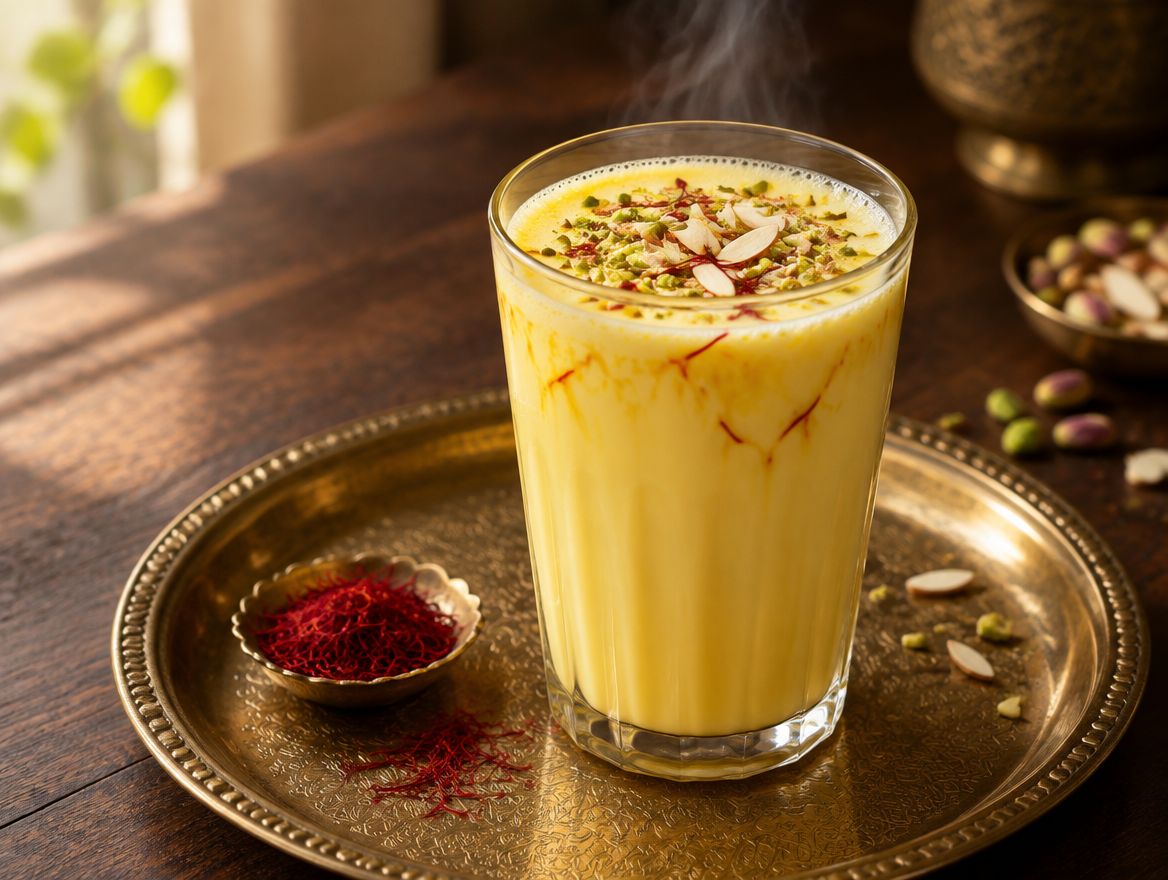
4–5 threads, steeped in warm milk
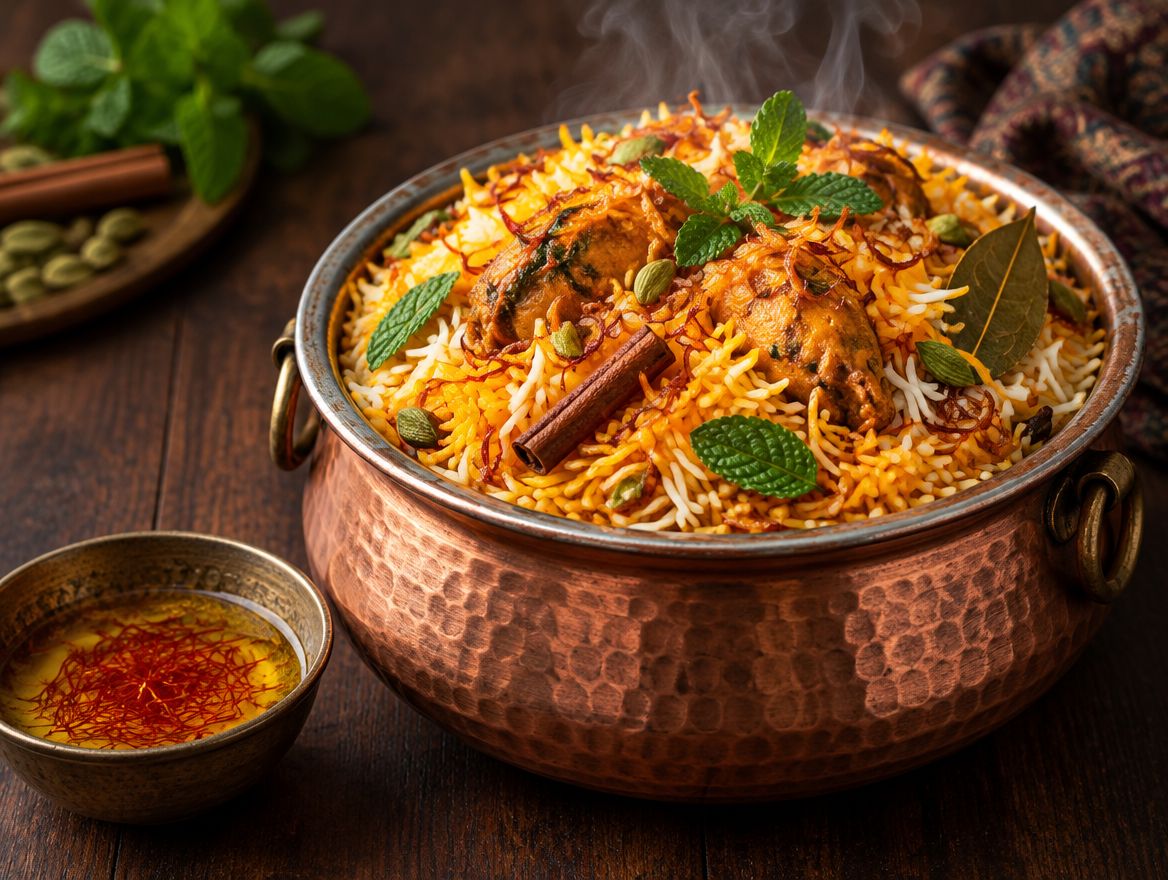
8–10 threads over the top layer before dum
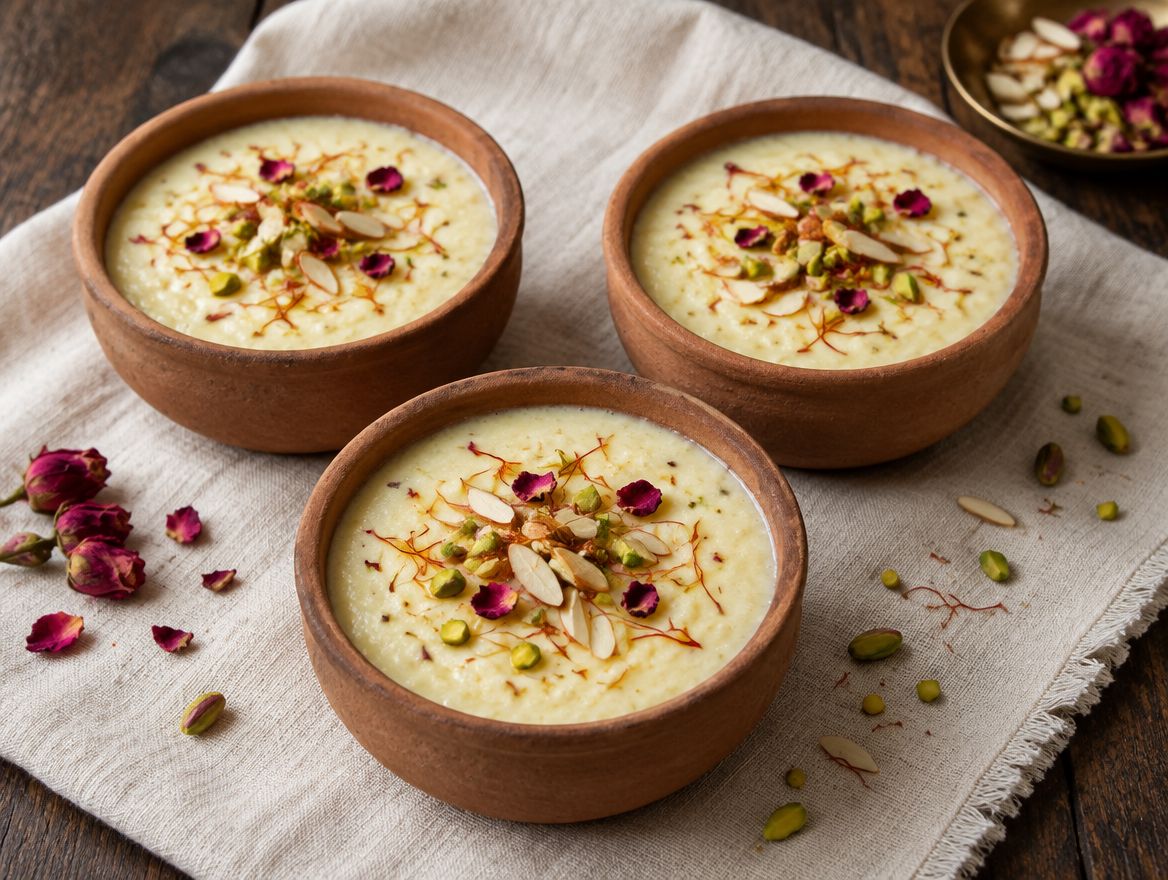
Bloomed saffron stirred in as it thickens
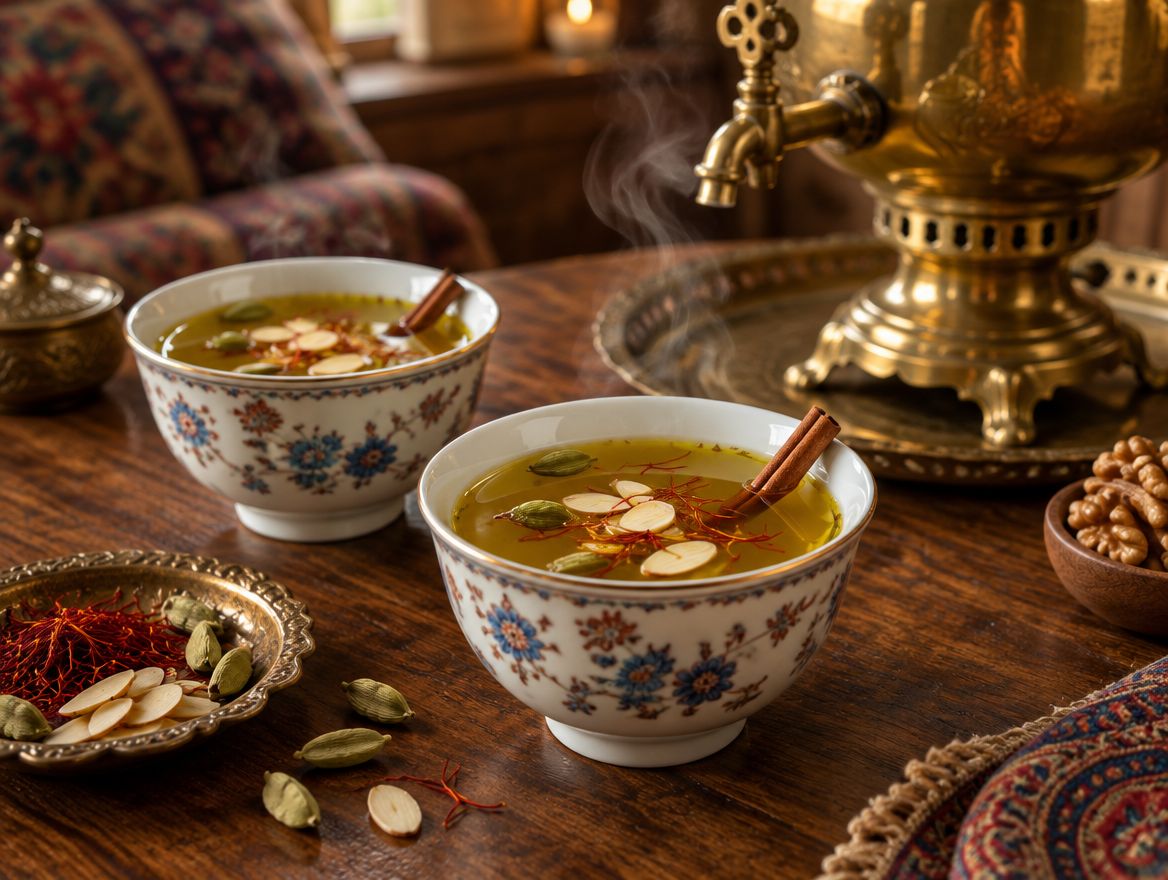
3–4 threads a cup with cardamom and cinnamon
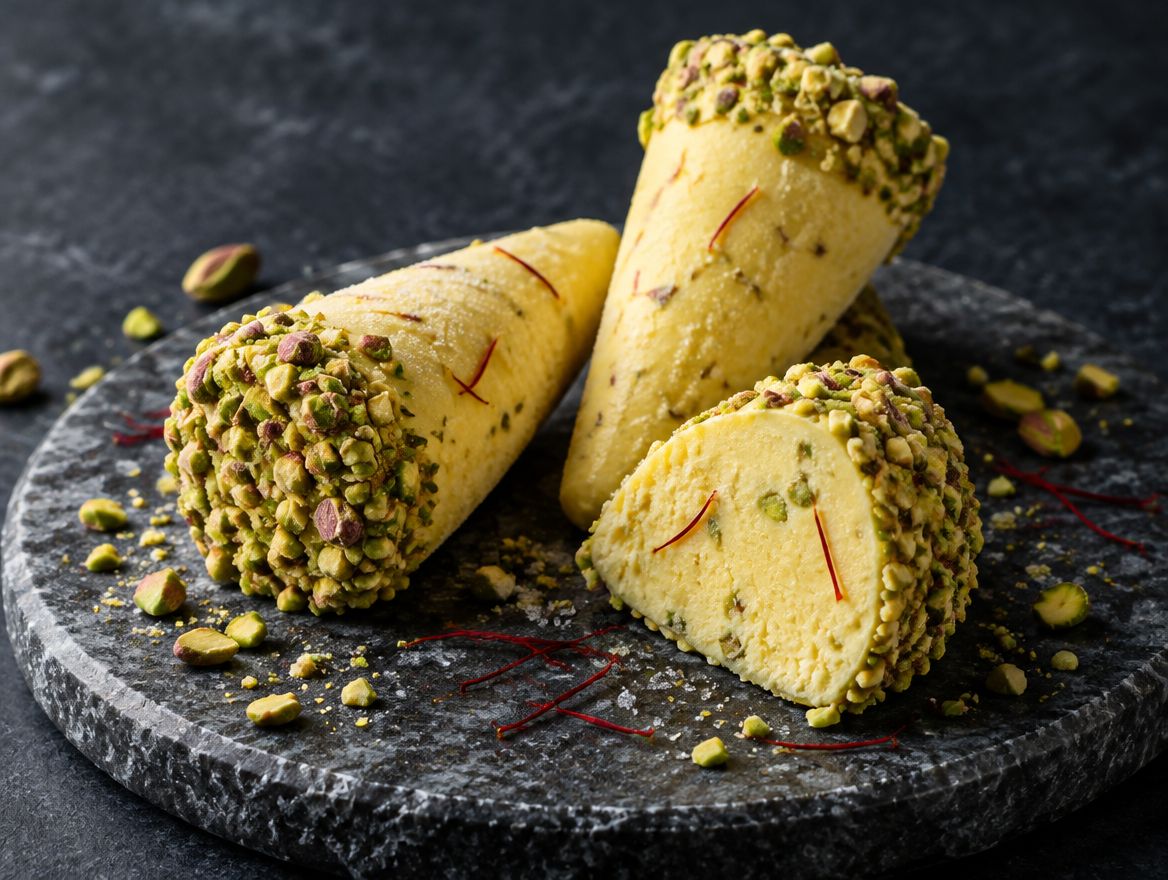
8–10 threads in the reduced milk
Traditional uses, each with its own read before you try it. Not medical advice.
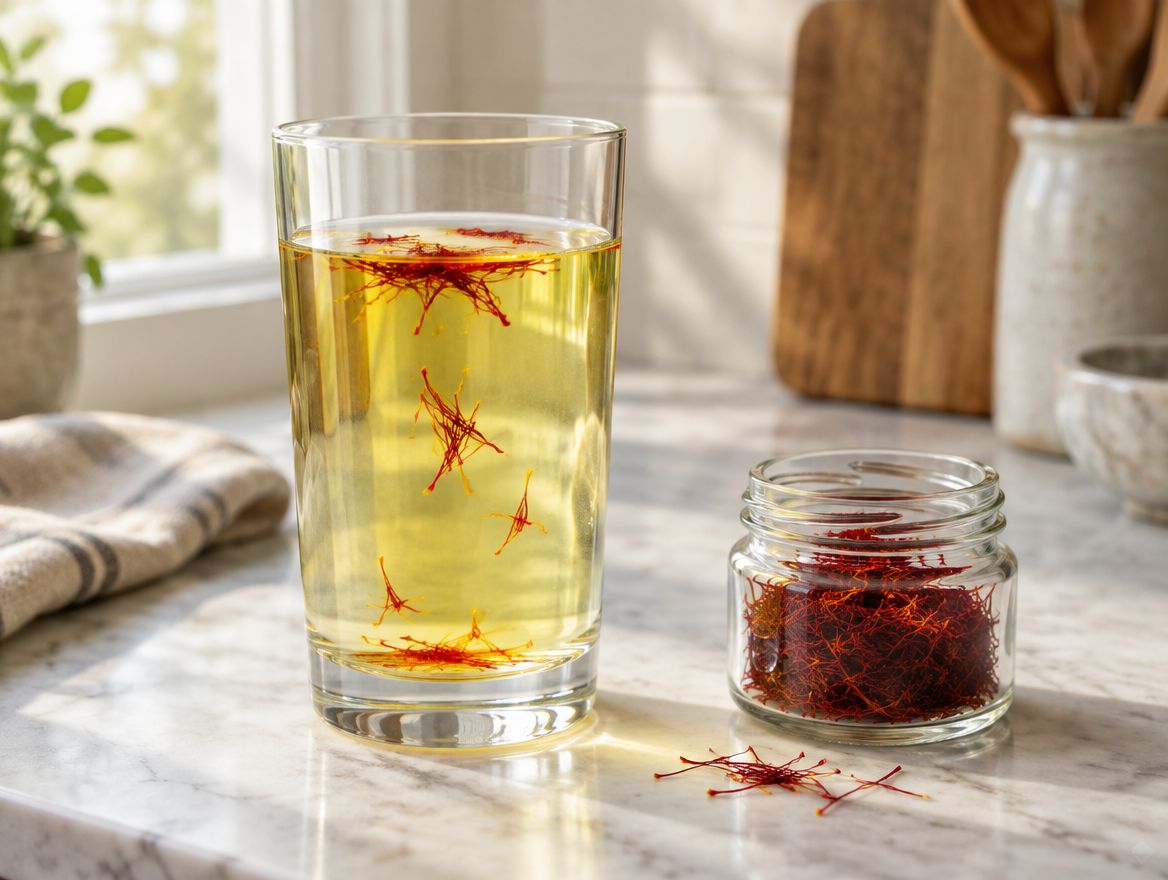
2–3 threads in a glass, overnight or 15 minutes
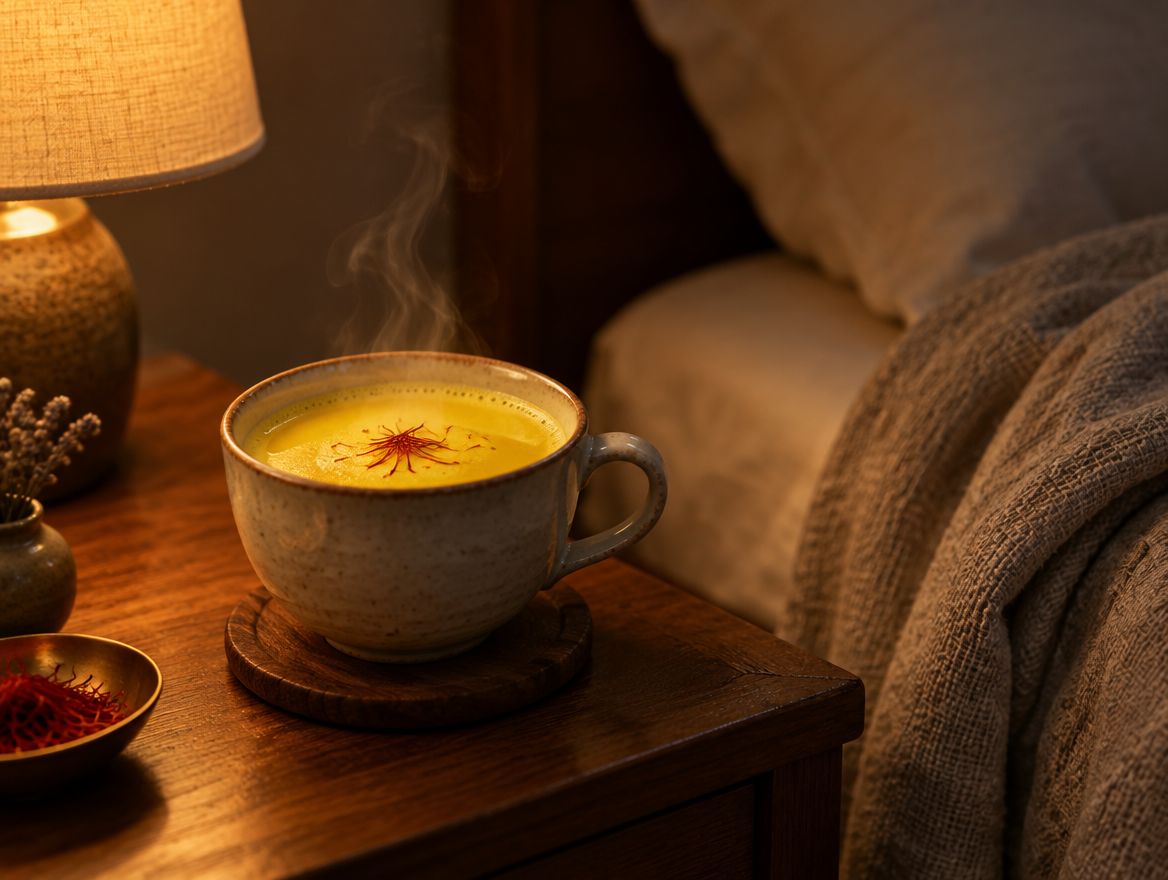
The bedtime cup, and how much to use
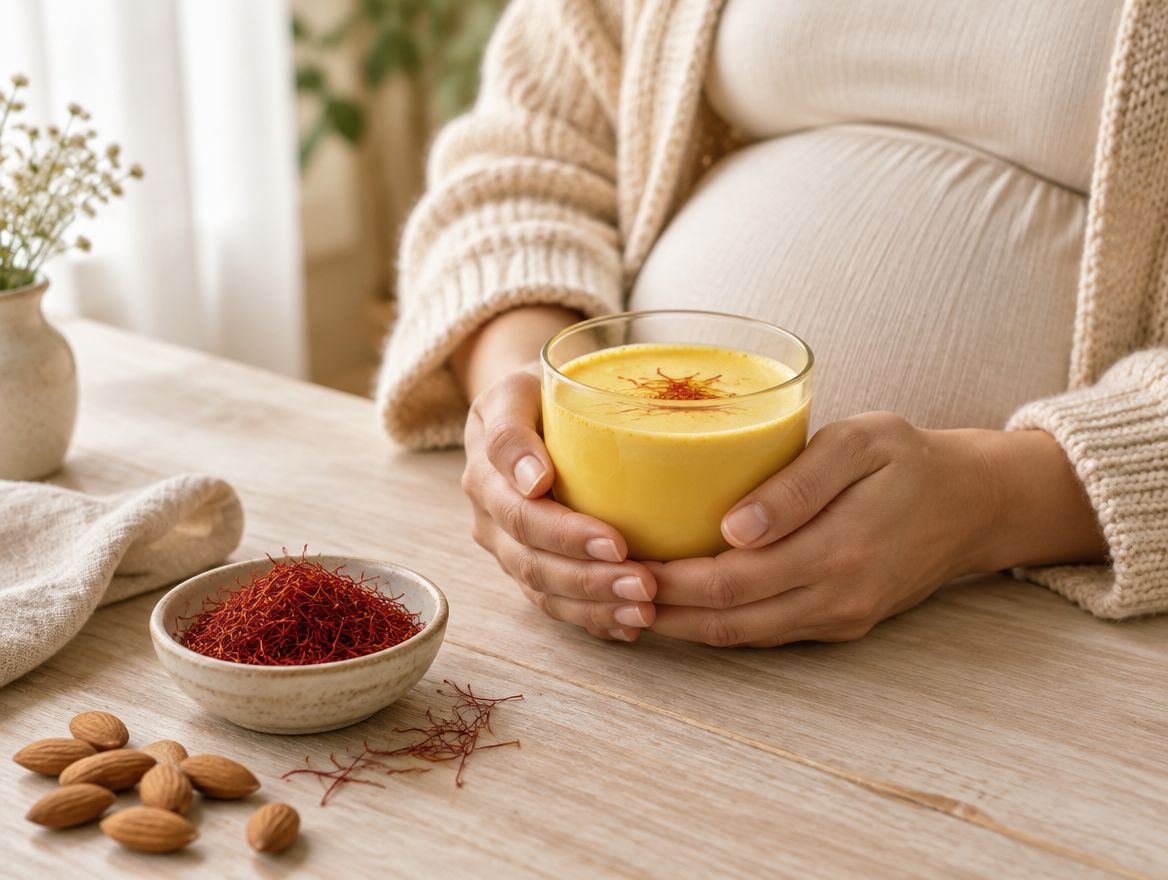
What is known, how much, and when to ask a doctor
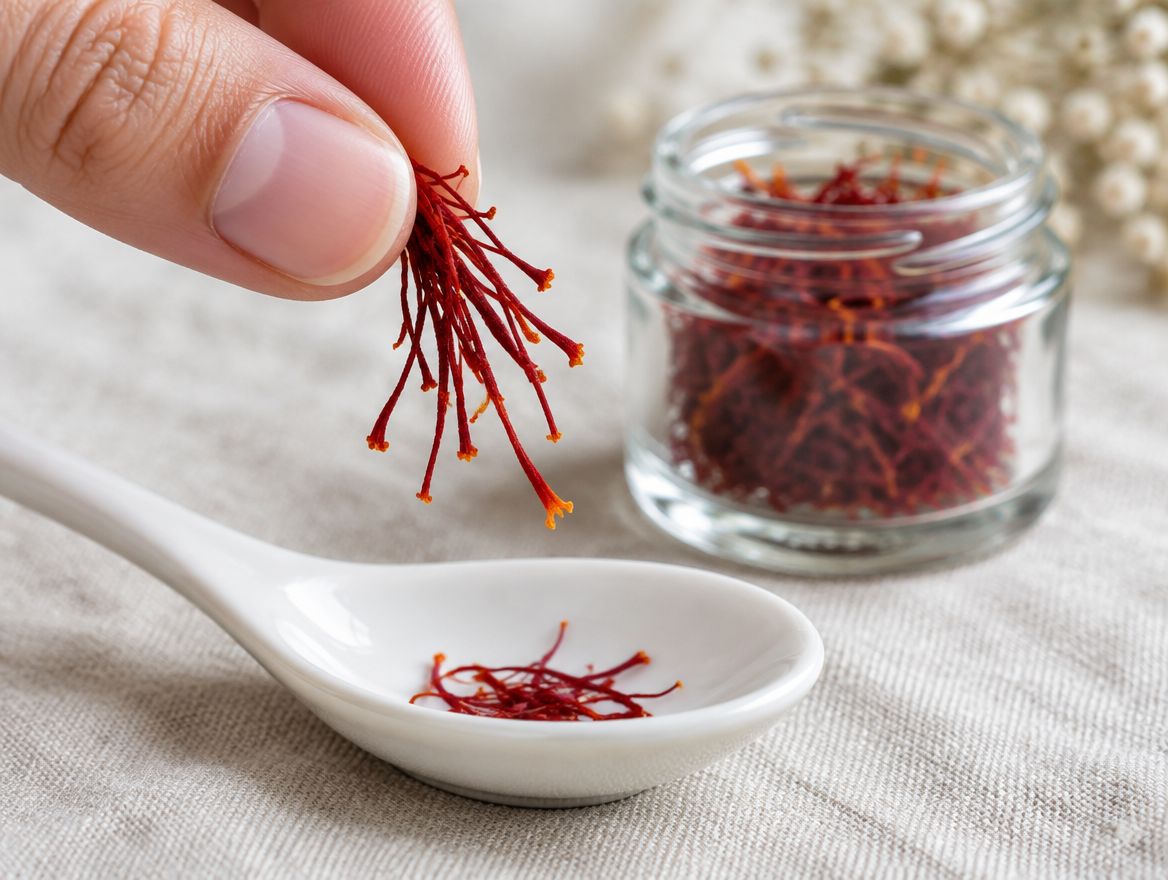
A few threads a day; the limits that matter
Photographs are illustrations, not our kitchen.
This is the one jar we call GI-tagged, because you can check it. The saffron is our own Mongra from the family fields in Pampore — the same all-red stigma as our other two jars — taken as a lot to the India International Kashmir Saffron Trading Centre (IIKSTC) at Dussu, Pampore. There it is weighed and coded, a sample is tested in the centre's NABL-accredited laboratory under ISO 3632, the lot is graded, and it is packed on the campus in sealed glass carrying the IIKSTC Kashmir Saffron GI label and its lot code, under the Department of Agriculture, Kashmir. That label and code are what "GI-tagged" means on this page. Our other jars are grown inside the same GI area, but we do not put the mark on them.
Why a pre-order. The harvest comes in across late October and early November; coding, testing, grading and labelling at IIKSTC follow, and the lot is back with us in time to leave Pampore from 1 December 2026. Order now and you pay the pre-order price of ₹800 a gram. Once the lot is on the shelf this jar sells at its regular price, shown struck through above. You can cancel any time before dispatch for a full refund, and if the date moves we email every pre-order with the new date and a refund if you would rather not wait.
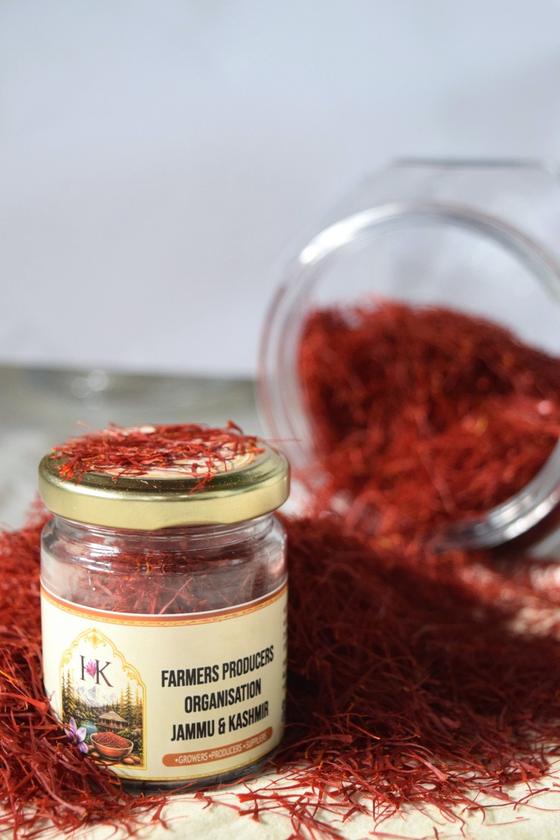
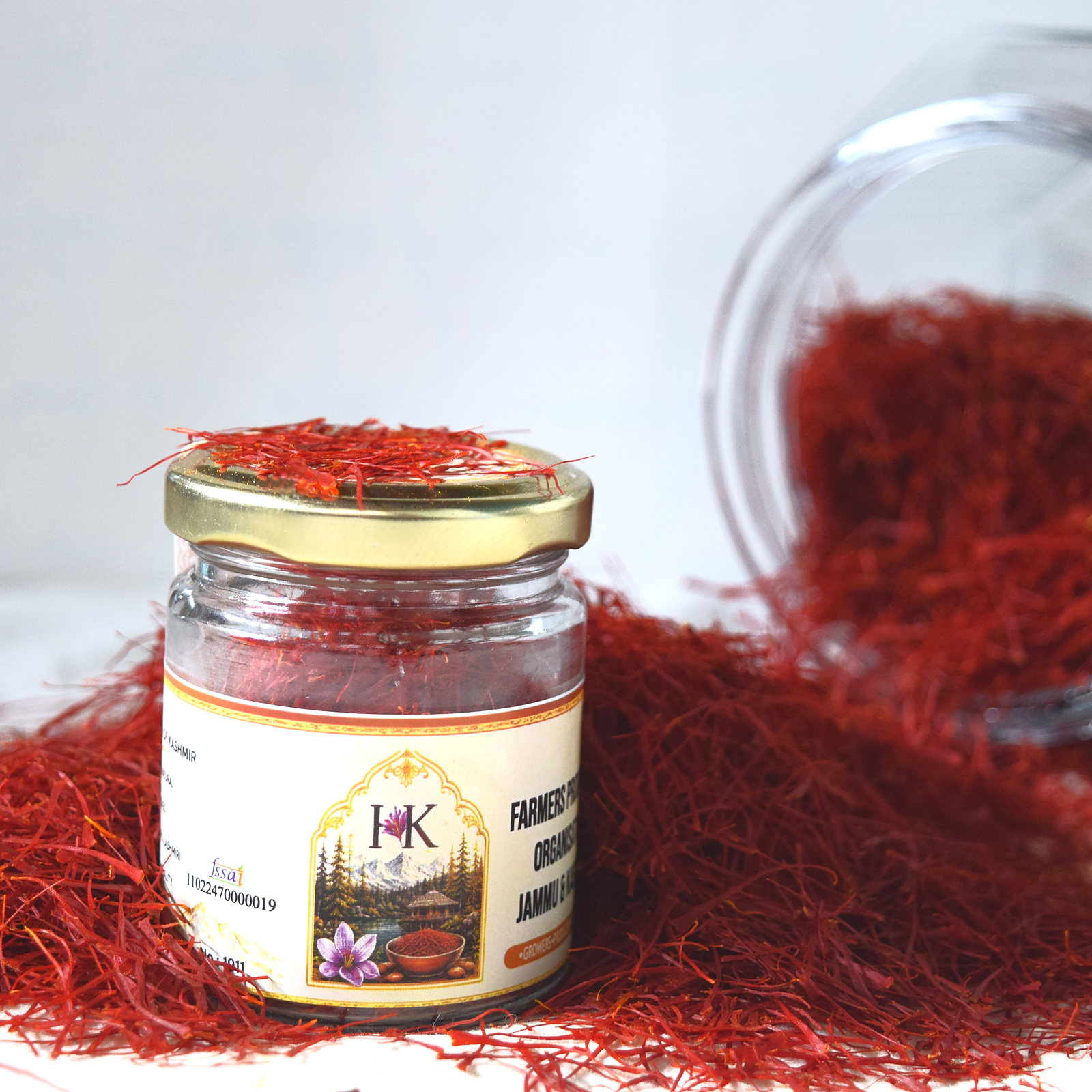
What arrives: the small sealed glass jar from IIKSTC with the black lid and the red "Kashmir Saffron" label — "100% Pure · Certified & Packed by: India International Kashmir Saffron Trading Center, Dussu Pampore · Department of Agriculture Kashmir (Govt. of J&K)" — and the matching red hang tag on its thread, whose back prints GI No. 635, Grade: GI and the centre's FSSAI licence number. Packed by us in our usual mailer. The Kashmir Saffron GI is registered by the Government of India (application 635, registered 1 May 2020) and names three types — Lachha, Mongra and Guchhi; this lot is Mongra, the all-red cut. Prime Minister Narendra Modi named our chairman, Abdul Majeed Wani, on Mann Ki Baat (27 December 2020) for selling GI-tagged saffron through e-trading at the Pampore trading centre; the source is linked on our Recognition page.
How to use it: bloom 8–10 threads in two tablespoons of warm milk or water for 10 minutes, then stir into biryani, kheer, phirni, kahwa or badam milk. Keep the jar sealed, away from light and moisture, and the saffron holds its colour and aroma for over two years.
Compare on facts
We grow it ourselves in Kashmir — so you can compare on facts, not marketing.
| What to check | Grown by usThe Heritage Kashmir | ElsewhereTypical online sellers |
|---|---|---|
| Where it comes from | Grown and hand-sorted by our own family in Pampore — the fields are ours | Outsourced from mandis, importers or re-packers. Most brands, however big, do not own a farm. |
| Proof of what you get | The IIKSTC Kashmir Saffron GI label and lot code on the jar, the lot's laboratory grade — plus a water-bloom test you run yourself | No verifiable proof — just a label |
| Freshness | Pre-order: the lot is coded and graded after the late-October harvest and leaves Pampore from the date on the page | Unknown stock age, often months old |
| Purity | Single-origin — never blended | Often blended, dyed, or re-packed Iranian saffron |
| Price | Best rate when you book direct on WhatsApp | Marked up by middlemen & marketplace fees |
Booking a larger order? Message us on WhatsApp for the best direct-from-farm rate.
Order on WhatsAppThe doubts in your head? We’ve answered them here.
That this lot was taken to the India International Kashmir Saffron Trading Centre (IIKSTC) at Dussu, Pampore, given a lot code, tested under ISO 3632 in the centre's NABL-accredited laboratory, graded, and packed there in sealed glass carrying the IIKSTC Kashmir Saffron GI label and its code, under the Department of Agriculture, Kashmir. The Kashmir Saffron Geographical Indication is registered by the Government of India (application 635, registered 1 May 2020). The GI certifies origin; the laboratory grade certifies strength. This jar carries both.
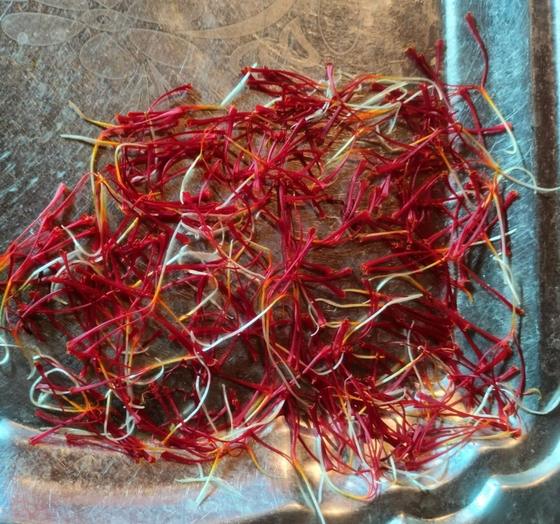
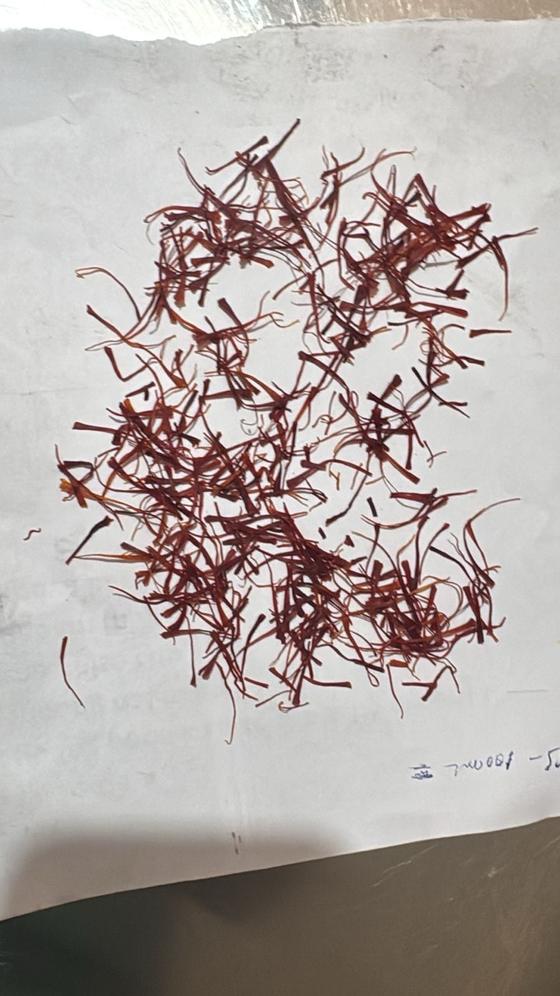
Look at the red IIKSTC "Kashmir Saffron" label on the jar and the matching hang tag: "Certified & Packed by: India International Kashmir Saffron Trading Center, Dussu Pampore" and "Department of Agriculture Kashmir (Govt. of J&K)". Turn the tag over: it prints GI No. 635, Grade: GI, and the centre's FSSAI licence number 11022470000024. GI No. 635 is the Kashmir Saffron registration on the Government of India's GI Registry. Ask us for the lot's laboratory grade, then run the warm-water test: real saffron releases a golden colour slowly over 10–15 minutes and the threads stay whole. If the jar does not match this description, we refund in full.
It is the same saffron: our own all-red Mongra from the family fields in Pampore, the same fields the long-thread and Short Thread jars come from. The difference is the government label and the per-lot grade on the jar, not the strength of the threads. Buy this jar when you want origin you can check on the pack itself — a gift, a wedding, or simply certainty.
Because the lot goes through IIKSTC's coding, laboratory testing, grading and labelling before it is sold, in small lots, at the centre's price. That is work and time the ordinary jar does not carry. The pre-order price here is ₹800 a gram; once the lot is on the shelf the jar sells at its regular price, shown struck through above the buy button.
From 1 December 2026. The harvest comes in across late October and early November; coding, testing, grading and labelling at IIKSTC follow, and the lot is back with us for dispatch from that date. The parcel then takes 4–8 days by courier depending on your state. If the date moves, we email every pre-order with the new date and a refund if you would rather not wait.
Yes. Cancel any time before dispatch for a full refund to your original payment method — email or WhatsApp us with your order number. Once the parcel has left Pampore, the ordinary returns policy applies.
The small sealed glass jar from IIKSTC with its black lid and red "Kashmir Saffron" label, and the matching red hang tag on its thread — front: "100% Pure, Certified & Packed by: India International Kashmir Saffron Trading Center, Dussu Pampore, Department of Agriculture Kashmir"; back: "GI No. 635, Grade: GI", the centre's FSSAI licence and "Use by 24 months from date of packing". Packed by us in our usual padded mailer with our family-story card. The lot's laboratory grade is available on request.
No, and we say so plainly. All of our saffron is grown inside the GI area, in Pampore itself, but only this lot carries the IIKSTC GI label and code. Our Kashmiri Mongra Saffron and Short Thread jars are sold as what they are: our own harvest, tested ISO 3632 Grade I by IIKSTC, without the tag.
The Agriculture Production Department of Jammu and Kashmir, through the Directorate of Agriculture, Kashmir, applied for it; the Geographical Indications Registry of the Government of India registered it as application 635 with certificate 366 on 1 May 2020, published in GI Journal No. 127. The registration names three types of Kashmir saffron — Lachha, Mongra and Guchhi — and covers Pulwama (Pampore), Budgam, Srinagar and Kishtwar districts.
Not lawfully under the GI: the name Kashmir saffron is restricted to saffron grown and handled inside the registered area. It still happens, which is the point of the label and lot code on this jar — and of buying from a grower who can show you the field.
Yes — it is published. The IIKSTC Quality Evaluation Laboratory in Pampore, a NABL-accredited (ISO/IEC 17025) Government of J&K lab, tested our saffron and graded it ISO 3632 Grade I; the full report, report number TC118432400000049E, is on our Lab reports page with every value. Ask on WhatsApp which lot your jar comes from. ISO 3632 is the laboratory standard that measures crocin (colour), picrocrocin (taste) and safranal (aroma); Grade I, also called Category I, is its top band.
Our saffron is grown in our own fields in Pampore, inside the Kashmir saffron region registered as a Geographical Indication by the Government of India. Yes: our GI Tag jar is a lot of our own Mongra taken to the India International Kashmir Saffron Trading Centre (IIKSTC) at Dussu, Pampore, where it is lot-coded, tested under ISO 3632, graded and packed in sealed glass carrying the IIKSTC Kashmir Saffron GI label and its code. It is the third grade on this page, sold as a pre-order at ₹800 a gram and dispatched from 1 December 2026; our other two jars are grown inside the GI area but are not sold under the tag. Our chairman, Abdul Majeed Wani, was named by Prime Minister Narendra Modi on Mann Ki Baat (27 December 2020) for selling GI-tagged saffron through the Pampore Trading Centre's e-trading system.
The Pampore Saffron Farmers Producer Company — a grower family in Pampore, FSSAI licence 11022470000019, checkable on the FSSAI portal. The family elder, Abdul Majeed Wani, is the company's chairman and the president of the Jammu & Kashmir Saffron Growers Association, so you buy straight from the grower family that leads Kashmir's saffron growers. The family works with the Directorate of Agriculture, Kashmir and trades through the India International Kashmir Saffron Trade Centre (IIKSTC), the government saffron park at Dussu, Pampore, where saffron is processed, grade-certified, GI-tagged and sold by e-auction. Photographs of the family's recognition, including a saffron-flower bouquet presented to Prime Minister Narendra Modi, are on our Recognition page.
Reviews from buyers on this website come first, then reviews of the shop on Google.
“Excellent quality saffron! The strands look fresh and premium, with a beautiful natural aroma and colour. The quality is genuinely impressive, and the packaging was neat and secure. Very happy with my purchase. Definitely worth buying!”
 Ahmad basha SyedGoogle review · October 2026
Quality achi hai
Achi quality hai... Packing b achi the.. parcel time pai b aaya ... Thanks
Kesar bohat acha tha
Best quality
Mongra is top quality...
Top quality
Absolutely top notch...... Length of thread is absolutely top
Good quality
I like it
Bohat bohat acha kesar tha apka ... khushbu b bohat achi thee
Worth it 😀.....
Nice
Worth it
Very nice... Everyone should try
Threads are full length and smell is also nice
Very good quality
Nice and amazing
Amazing
They sell the best sources saffron since it is directly from grower family
Nice
Nice
Good quality
Acha quality Saffron bhi hai
Boht test kiya....💝💝
Top grade
Authentic 🌺
I liked your saffron
Saffron has given me results
It looks amazing
Premium saffron
Best saffron i have ever seen
Good quality grade 1 hmmm💯
Very nice fragrance, bohut acha hai
Very geniune
Short one is good for the food and long for personal use
Nice product
Very good
Good product
Very good customer support reply within minutes and frequently update
Recieved late but very good.
💝💝 I went kashmir and find this product very good
Nice
Liked it
They offer grade 1 saffron which is kashmiri GI tagged in origin and that's an amazing one
Thank you for your product. I compared your product with other brands ، I found your saffron far better then others
Thank you for your product. I compared your product with other brands ، I found your saffron far better then others
Your saffron made my day
Nice
Kesar humai buhat pasand aaya .....
I searched throughout the internet and I find this one as best
I bought this and it arrived fast and I was amazed with the quality
Top grade
Threads are of full length and fragrance is best
Amazing quality saffron
I would suggest this is the best saffron ever
Nice and best in india
They sell the best saffron. Sourced from pampore and graded at IIKTSC pampore
I recommend everyone to give it a try . Authentic.
Marvellous
This is the best saffron in the world 🌎
Wow...the quality is unbeatable
Many buyers sell expensive and fake saffron but they sell ISO grade 1 certified saffron which I think is the best in india
Bohat achi quality hai
Best saffron i found online
Nice quality
Genuinely recommend The heritage...
First time I recieved a genuine product after searching throughout the internet
Very good quality 💯
Short one was very good for biryani
The quality is superb
Everyone should buy this
Rated 5 out of 5 after buying.
Ahmad basha SyedGoogle review · October 2026Excellent quality saffron! The strands look fresh and premium, with a beautiful natural aroma and colour. The quality is genuinely impressive, and the packaging was neat and secure. Very happy with my purchase. Definitely worth buying! ❤️
 FaizanGoogle review · October 2026
An exceptional experience! The quality of their Kashmiri dry fruits and authentic saffron is unmatched. Everything is incredibly fresh, packed beautifully, and tastes amazing. If you are looking for premium, genuine Kashmiri produce, this is the perfect place. Highly recommended!
 Sheikh TawqeerGoogle review · October 2026
Really good quality dry fruits and saffron. Everything felt fresh and authentic, and the service was warm and friendly. Definitely worth visiting if you’re looking for genuine Kashmiri products!
 Naveed Mohammad pareyGoogle review · October 2026
“The saffron quality is genuinely impressive. Great aroma, vibrant colour, and a rich flavour. A wonderful product from Heritage Kashmir.”
 Masroor RiyazGoogle review · October 2026
Exceptional quality saffron with deep-red threads, an intense aroma, and rich, natural color in just a few strands
 Mozin GaniGoogle review · October 2026
Pure saffron quality with genuine prize.
 Moien ShabanGoogle review · October 2026
Really impressed with the quality of the saffron from The Heritage Kashmir. The saffron has a beautiful natural aroma, rich colour, and the quality feels genuinely premium. The packaging was also neat and secure. Overall, a very good experience and I’m definitely satisfied with my purchase. Highly recommended! ❤️
 MOHAMMAD ALEEMGoogle review · October 2026
Good-quality natural products with neat packaging. The saffron has a lovely aroma,Smooth delivery and a great overall experience. Would definitely recommend!
 Shaiq NabiGoogle review · October 2026
Good-quality natural products with neat packaging. The saffron has a lovely aroma, and the shilajit feels authentic and well-presented. Smooth delivery and a great overall experience. Would definitely recommend!
 PEACE FOUNDATIONGoogle review · October 2026
I purchased saffron from your website.... It was really nice ,authentic.. delivery was on time...... Quality, it was super awesome.......
 Rahul MauryaGoogle review · October 2026
Bought from here a few times now. Always got 10/10 quality saffron & dry fruits. Easily one of the best in Kashmir
 Naveen SonyGoogle review · October 2026
i bought saffron powder and it was extremely good. the quality was excellent and i was really happy with the product. delivery was also smooth and everything was well packed. really satisfied with my purchase and would definitely recommend them.
 Pranav MishraGoogle review · October 2026
Really good stuff icl, greatest saffron and dryfruits seller in the multiverse
 Imad WaniGoogle review · October 2026
They sell iso grade 1 Saffron and that is unheard from other sellers. Wishing you lots of success with this amazing journey.
 AFTAB WANIGoogle review · October 2026
Proud to see kashmir heritage promoting The saffron, looks authentic, has a beautiful aroma, and gives a lovely natural colour and flavour. The packaging was also good. Highly recommended for anyone looking for quality Kashmiri saffron. 🌸❤️
 Danish HameedGoogle review · October 2026
Very goof quality
 Sheikh Tahfeez AhmadGoogle review · October 2026
Quality is superb
 THE KNOWN 1Google review · October 2026
Premium quality stuff 🤌🏻
 Bhat EhsanGoogle review · October 2026
Excellent
 Kaaabir KhanGoogle review · October 2026
Superb Quality! And best price you will ever get Worthy Experience ❤️
 AyaN AmeenGoogle review · October 2026
beyond expectation... quanlity is really superb
 Majid RatherGoogle review · October 2026
Supr quality
 zaid khanGoogle review · October 2026
one of the best experiences.
 Arsalan ShahGoogle review · October 2026
Fresh dry fruits, good quality, and reasonable prices. Highly recommended!
 Rakib ZahoorGoogle review · October 2026
It's a great place. Quality is superb
 magray shakirGoogle review · October 2026
quality to b trusted
 Sheikh SaadGoogle review · October 2026
Very good quality
 suhaib QurashiGoogle review · October 2026
Superb quality 👌
 Kifayat FarooqGoogle review · October 2026
Great quality and awesome hospitality
 rahilGoogle review · October 2026
Quality is amazing, loved it
 Zamin BashirGoogle review · October 2026
super quality
 Magandeep SinghGoogle review · October 2026
Quality is top notch and really fabulous! Authentic and amazing! Would recommend to everyone! 😍
 Bhat RakibGoogle review · October 2026
This product is just 🔥 Looks aesthetic, feels premium, and works perfectly. Instantly became my favourite. Quality 10/10.
 Kashif ShabirGoogle review · October 2026
Best quality ❤❤
 Yasir HamidGoogle review · October 2026
Outstanding
 moomin magrayGoogle review · October 2026
The overall experience was too good
 Hammaad SuhailGoogle review · October 2026
Very good quality and completely pure.The quality is consistently excellent. Definitely one of the best places for genuine, high-quality products. Highly recommended!
 Sheikh AhsanGoogle review · October 2026
Great quality
 Khass NafarGoogle review · October 2026
Good quality
 XeropXGoogle review · October 2026
Best experience
 Rujhan RatherGoogle review · October 2026
excellent quality
 Shahid NisarGoogle review · October 2026
Good quality stuff
 wani musavirGoogle review · October 2026
Trustworthy service and quality products.
 Sadaa SadaariyazGoogle review · October 2026
Wishing Kashmir Heritage huge success and hoping it reaches people all across the country. Keep going and keep making Kashmir proud! 🤝✨
 faizan bashirGoogle review · October 2026
Very nice and 100% authentic products💕
 Faisal QayoomGoogle review · October 2026
Excellent quality and freshness! The dry fruits were fresh, tasty, and well-packed. Great quality at a reasonable price. Highly recommended! ⭐⭐⭐⭐⭐
 Maaid Farooq WaniGoogle review · October 2026
Exceptional. Quality is fantastic. I compared your product with top bands out in market and I found your product best. Quality is superb
 Daily Quran_360Google review · October 2026
Original story.
 Kashish KhanGoogle review · October 2026
Thank you
 Ayushi TiwariGoogle review · October 2026
Thank you
 Bhatt YawerGoogle review · October 2026
🔥💝
 lone hashimGoogle review · October 2026
Thank you
 Fahadsajad BhatGoogle review · October 2026
Rated five stars on Google.
 Tawqeer NazirGoogle review · October 2026
Rated five stars on Google.
 Mohsin BhatGoogle review · October 2026
Rated five stars on Google.
 Saqib AltafGoogle review · October 2026
Rated five stars on Google.
 TerminatorGoogle review · October 2026
Rated five stars on Google.
 Shamiq ShafiGoogle review · October 2026
Rated five stars on Google.
 Suhail ShafiGoogle review · October 2026
Rated five stars on Google.
 Jitendra Kumar PradhanGoogle review · October 2026
Rated five stars on Google.
 TawseefGoogle review · October 2026
Rated five stars on Google.
 anit beniwalGoogle review · October 2026
Rated five stars on Google.
 Suhaib MirGoogle review · October 2026
Mudasir is a great businessman, I have known him for long and he cares about his customers
Our shop is rated 5.0 out of 5 from 63 Google reviews
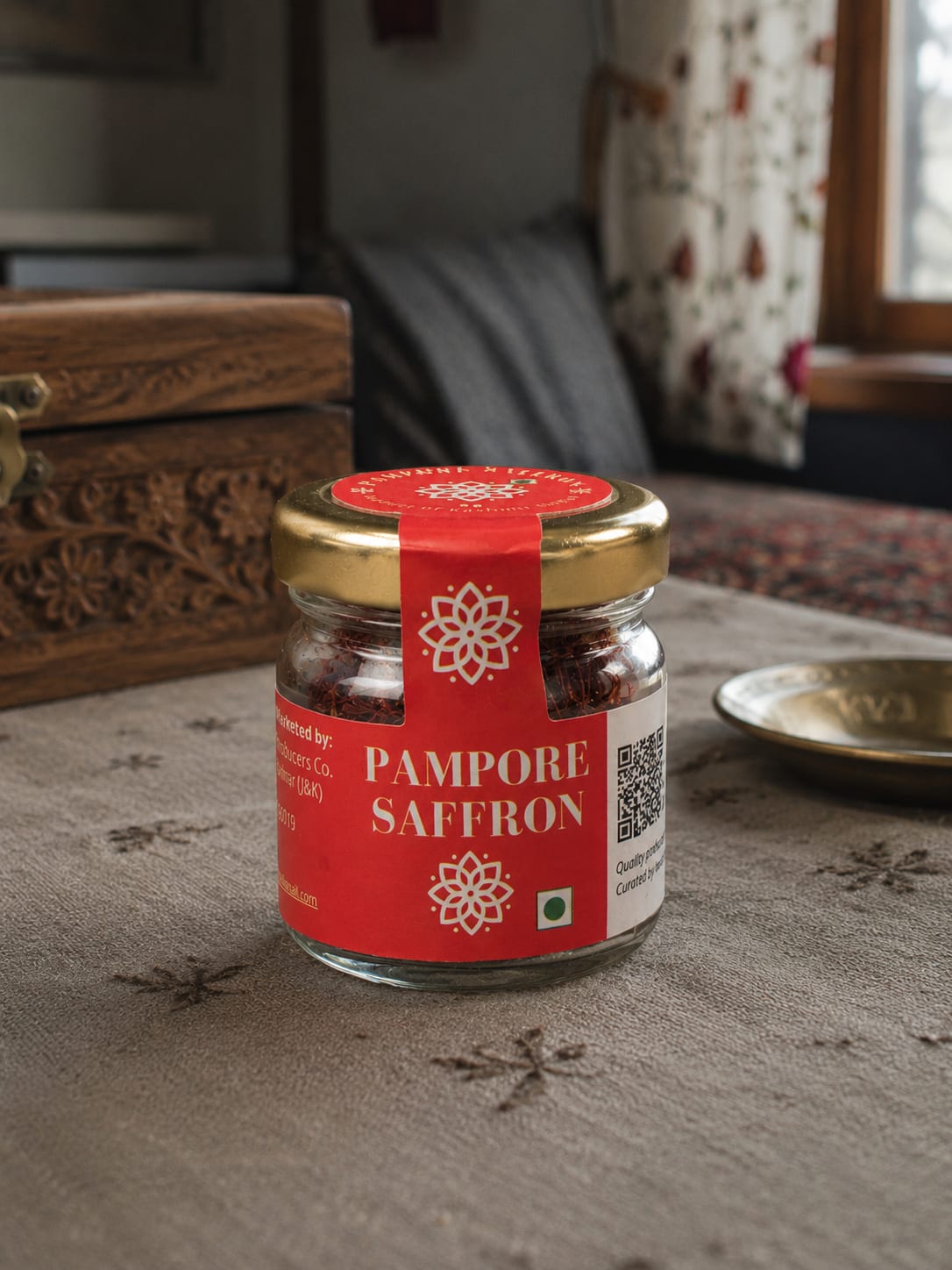
Giving it as a gift? See our 30 ready-packed combo gift boxes or the Diwali gifting guide.