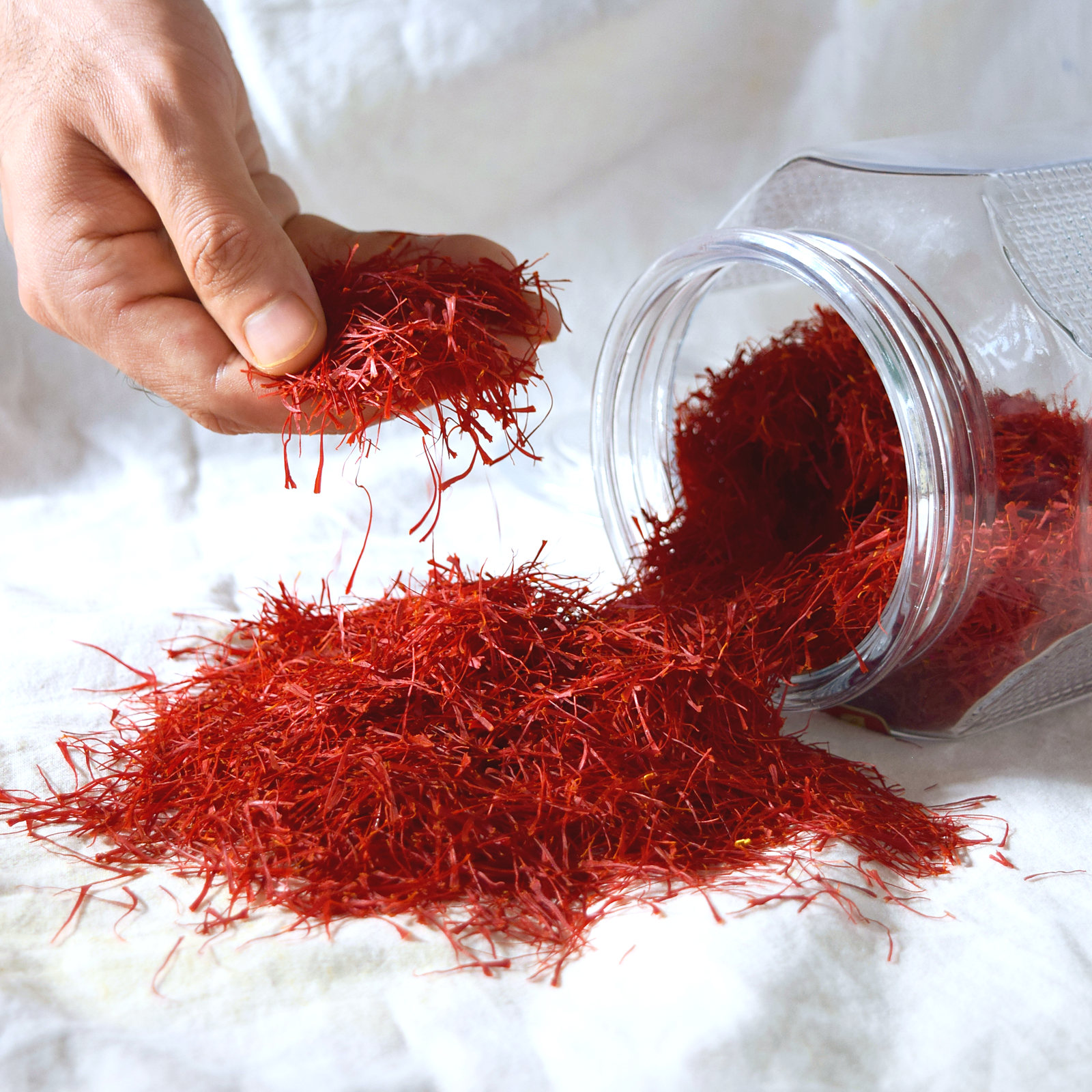
Use 20–25 strands of Kashmiri saffron per kilo of rice (12–15 for 500 g). Steep them in warm milk for at least 20 minutes, then drizzle that milk over the top layer of rice just before you seal the pot for dum. Saffron is the last thing to go into a biryani, not the first. Put it in the marinade or fry it in ghee and the heat takes the aroma before the rice is even cooked. Add it last, under a sealed lid, and the steam carries it through the whole pot.
Why saffron goes in last
Saffron carries three things: crocin (colour), picrocrocin (the faintly bitter, honeyed taste) and safranal (the smell). Safranal is volatile. A hot pan or a rolling boil drives it off as steam, and that steam leaves the kitchen. Inside a sealed dum pot, the same steam has nowhere to go: it moves up through the rice and settles back into it. That is why biryani is the one dish where saffron belongs on top, under a lid, for the final half hour. The general steep-never-boil rule is in how to use saffron; this page applies it to the pot.
How much saffron for biryani
| Rice (raw weight) | Serves | Saffron strands | Warm milk to steep |
|---|---|---|---|
| 250 g | 2–3 | 6–8 | 2 tablespoons |
| 500 g | 4–6 | 12–15 | 4 tablespoons |
| 1 kg | 8–10 | 20–25 | 6 tablespoons |
| 2 kg | 16–20 | 40–50 | ½ cup |
A gram of saffron holds roughly 450–500 threads, so 25 strands is about 50 mg. At ₹329 a gram that is under ₹20 for a 1 kg pot. The per-gram arithmetic is in Kashmiri saffron price per gram. Spread across eight or ten plates, each person eats only a few threads, well inside how much saffron a day is sensible.
Chicken dum biryani with saffron (serves 4–6)
Time: about 1 hour prep (mostly marinating) and 1 hour 20 minutes cooking, including the dum and rest.
Ingredients
- 500 g aged basmati rice, washed and soaked 30 minutes
- 12–15 strands Kashmiri saffron
- 4 tablespoons warm milk, for the saffron
- 800 g bone-in chicken, curry cut
- 250 g thick yoghurt
- 2 tablespoons ginger-garlic paste
- 1½ teaspoons Kashmiri red chilli powder
- ½ teaspoon turmeric
- 1 teaspoon garam masala
- Juice of half a lemon
- Salt: 1½ teaspoons for the marinade, 1 tablespoon for the rice water
- 3 large onions, thinly sliced
- Oil for frying the onions
- 6 tablespoons ghee (4 for the chicken, 2 for the layering)
- Whole spices for the rice water: 4 green cardamom, 4 cloves, 1 bay leaf, 2 cm cinnamon bark, 1 teaspoon shahi jeera
- A handful each of mint and coriander leaves, chopped
- 2 green chillies, slit
- 1 teaspoon kewra water (optional)
Method
- Steep the saffron. Crush 12–15 strands lightly between your fingers into 4 tablespoons of warm (not hot) milk. Cover and leave at least 20 minutes.
- Fry the onions. Fry the sliced onions in oil over medium heat for 12–15 minutes until deep golden. Drain on paper; they crisp as they cool.
- Marinate. Mix the chicken with the yoghurt, ginger-garlic paste, chilli, turmeric, garam masala, 1½ teaspoons salt, lemon juice, half the fried onions and half the herbs. Leave at least 1 hour, or overnight in the fridge.
- Cook the chicken base. Heat 4 tablespoons ghee in a heavy-bottomed pot, add the chicken with its marinade and cook on medium for 18–20 minutes, stirring, until about three-quarters done and the gravy is thick and clinging.
- Par-boil the rice. Bring 3 litres of water to the boil with the whole spices and 1 tablespoon salt. Add the drained rice and cook 5–6 minutes, until a grain snaps with a firm white core. Drain at once.
- Layer and add the saffron. Spread the rice over the chicken in an even layer. Scatter the remaining onions, herbs and green chillies, drizzle 2 tablespoons melted ghee, then spoon the saffron milk over the top in streaks and spots, threads included. Add the kewra now if using. Do not stir.
- Dum. Seal the lid with dough or foil and a heavy lid. Cook on high for 3–4 minutes, then move to the lowest flame over a flat tawa for 25 minutes. Rest off the heat for 10 minutes before opening.
- Serve. Lift portions from the side with a flat spoon so each plate gets white, gold and spiced grains together. Do not mix the pot.
Vegetarian swap: replace the chicken with 600 g mixed vegetables (potato, carrot, beans, cauliflower) and 200 g paneer cubes. Marinate the same way, but cook the base for 10–12 minutes rather than 20 so the vegetables keep their shape through the dum. The saffron step does not change.
Saffron milk, saffron water, kewra and rose water
- Saffron milk is the classic dum biryani finish. It gives a soft gold, a little richness, and keeps the top layer of rice moist under the lid.
- Saffron water gives a brighter, cleaner colour. Crocin dissolves easily in water, so the gold on the rice looks sharper. Good for a lighter pulao-style biryani.
- Kewra and rose water are perfumes, not substitutes. Many Lucknowi and Hyderabadi cooks add a teaspoon to the saffron milk. More than that and the floral note covers the saffron you paid for.
Whichever you use, keep the liquid warm rather than hot and give it time. Two minutes of steeping releases a fraction of the colour; twenty releases most of it.
The yellow food colour question
Most restaurant biryani gets its bright orange patches from food colour, and permitted colours are legal in restaurant food. The issue is not that colour is dangerous; it is that colour only does half the job. It makes the rice look like saffron rice and adds no smell and no taste. Saffron does both.
Real saffron also colours differently. It gives a golden yellow, never a vivid orange or red. If you are used to restaurant biryani, a saffron-only pot can look paler at first. Lift the lid and smell it before you judge it. If you want the brighter look, a few drops of colour alongside real saffron will not hurt the aroma; colour instead of saffron is what loses it.
Is your saffron real?
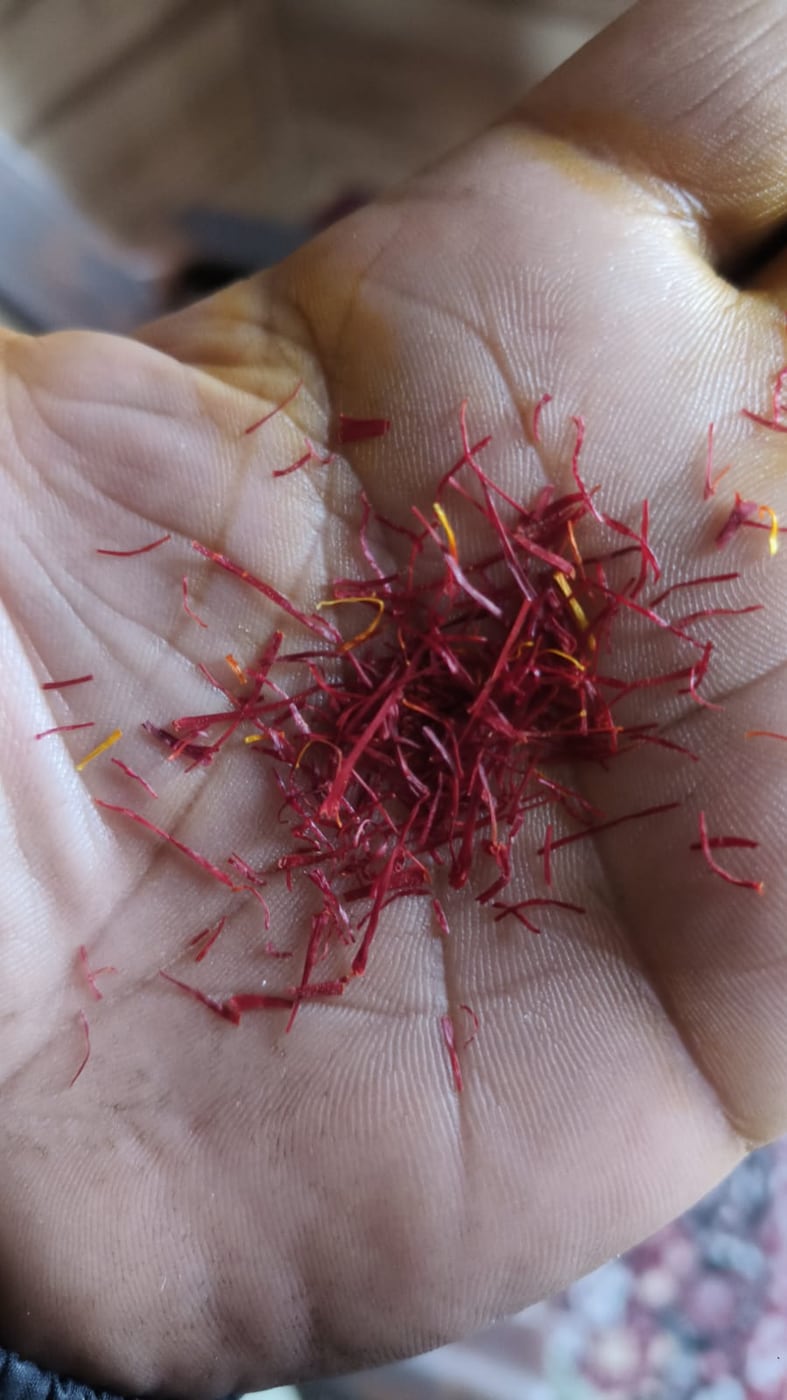
A biryani that smells of nothing often has nothing wrong with the method. The saffron itself is old, dyed or not saffron at all. Drop three or four threads into a glass of warm water: genuine saffron releases a golden colour slowly over 10–15 minutes and the threads stay whole and red. Dyed threads bleed red almost at once and turn pale. The full set of checks is in how to identify real Kashmiri saffron.
Common mistakes with saffron in biryani
- Frying it in ghee at the start. The aroma is gone before the chicken goes in.
- Mixing it into the marinade. Yoghurt, chilli and garam masala bury it, and 20 minutes of cooking burns off what is left.
- Hot milk and a two-minute steep. Warm milk, covered, 20 minutes minimum.
- A loose lid. If steam escapes during dum, the safranal escapes with it.
- Stirring after the dum. You lose the white-and-gold layers and the saffron grains go muddy.
- Doubling the dose to fix weak saffron. It makes the rice bitter. Buy better saffron instead.
The saffron we cook with
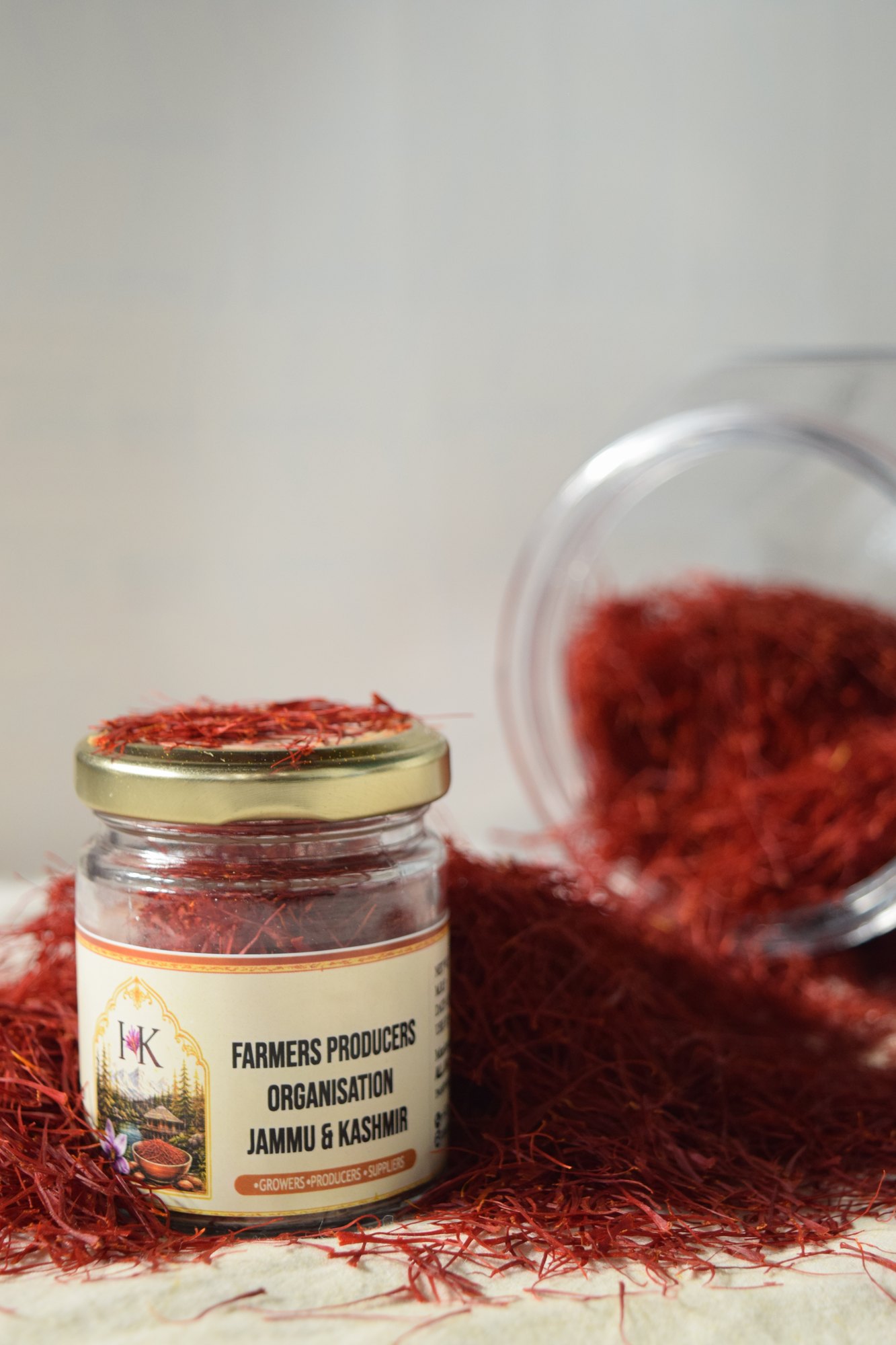
Our family grows saffron in Pampore, and the jar that goes into our own biryani is Mongra Short Thread (₹329/g): all-red Mongra from the same harvest and sorting table as our Mongra Saffron (Super Negin) (₹359/g), just with shorter threads. In the pot, thread length makes no difference. Our saffron is graded ISO 3632 Grade I by the IIKSTC Quality Evaluation Laboratory in Pampore, with a colouring strength (crocin) of 217.51 against a Grade I minimum of 200; the full report is on our lab reports page. For something sweet after the biryani, the same saffron goes into kesar kheer.