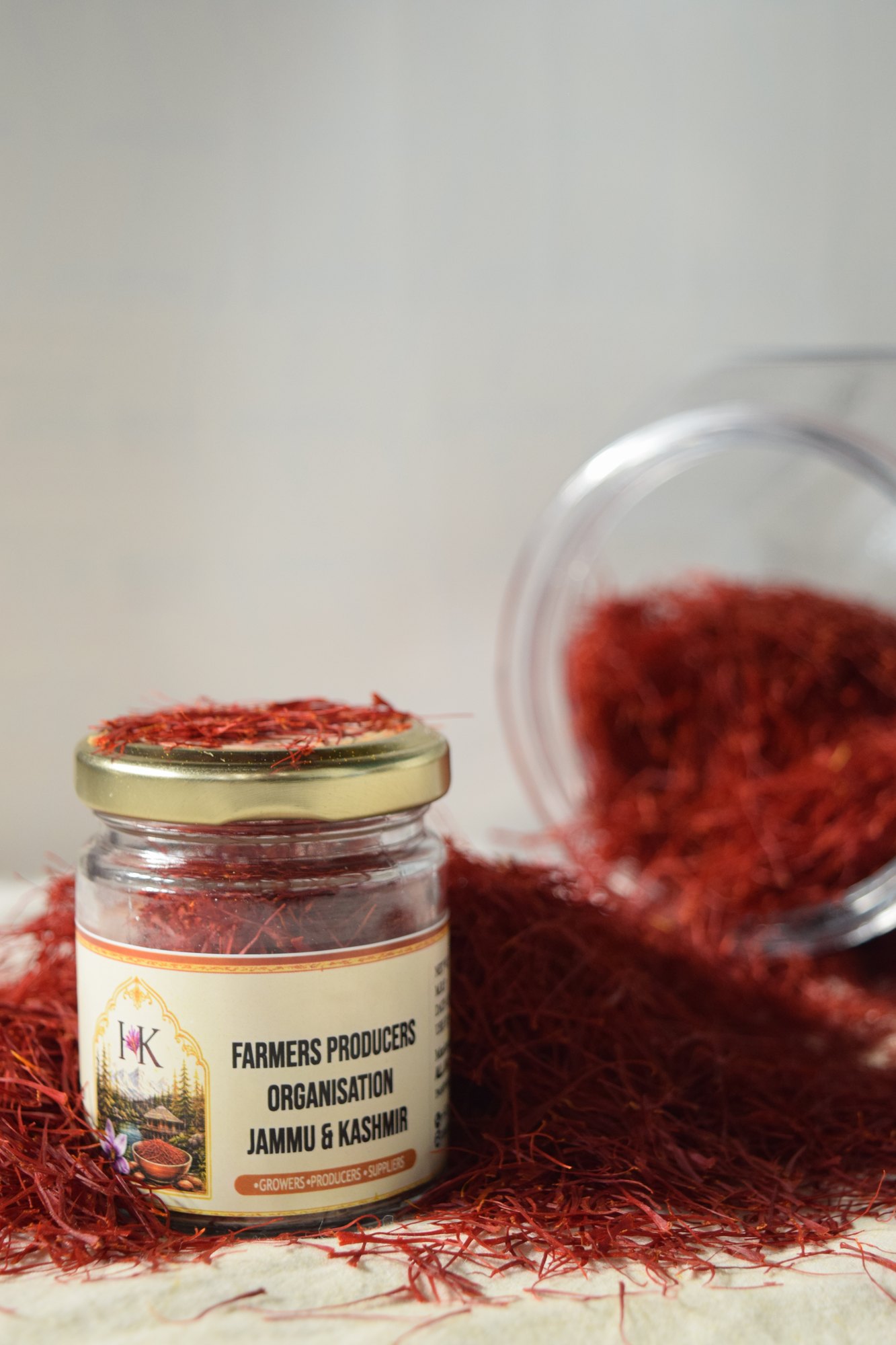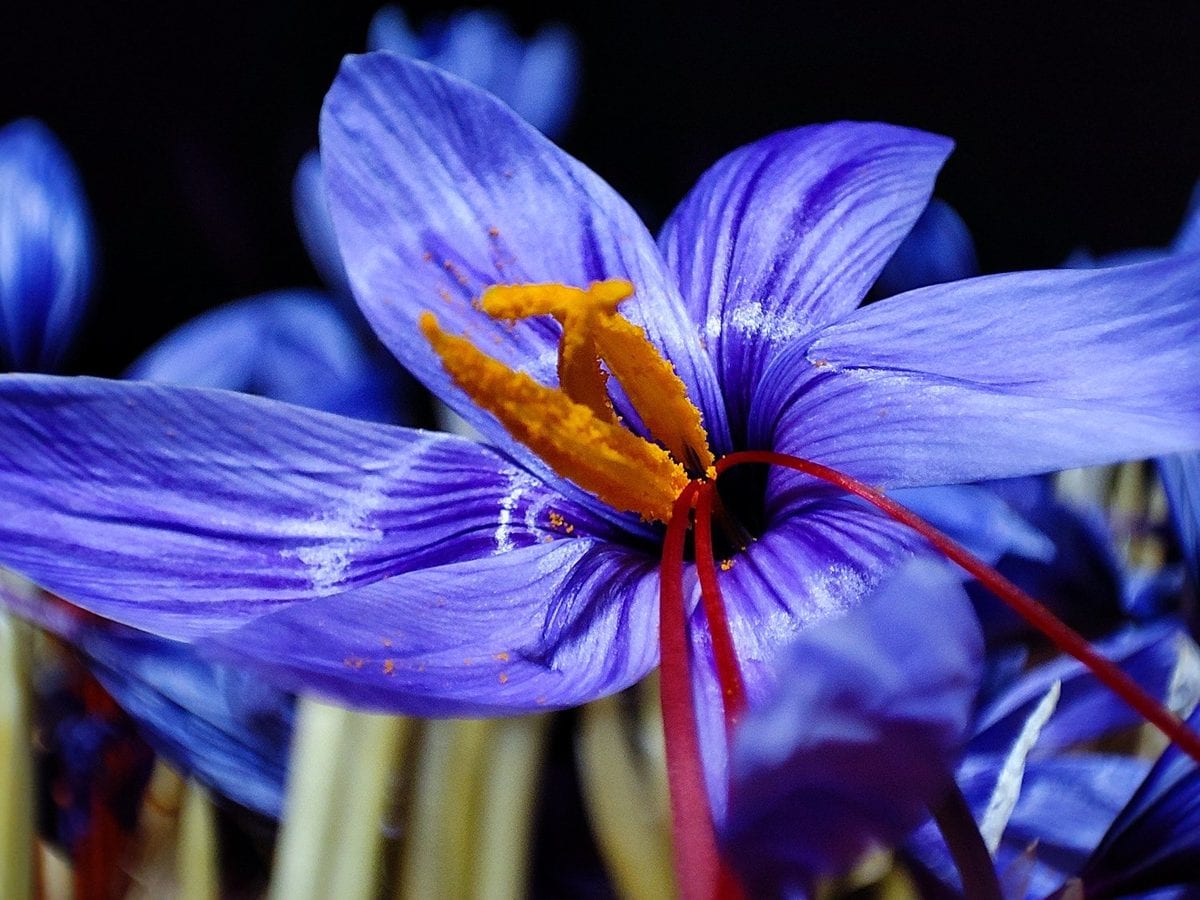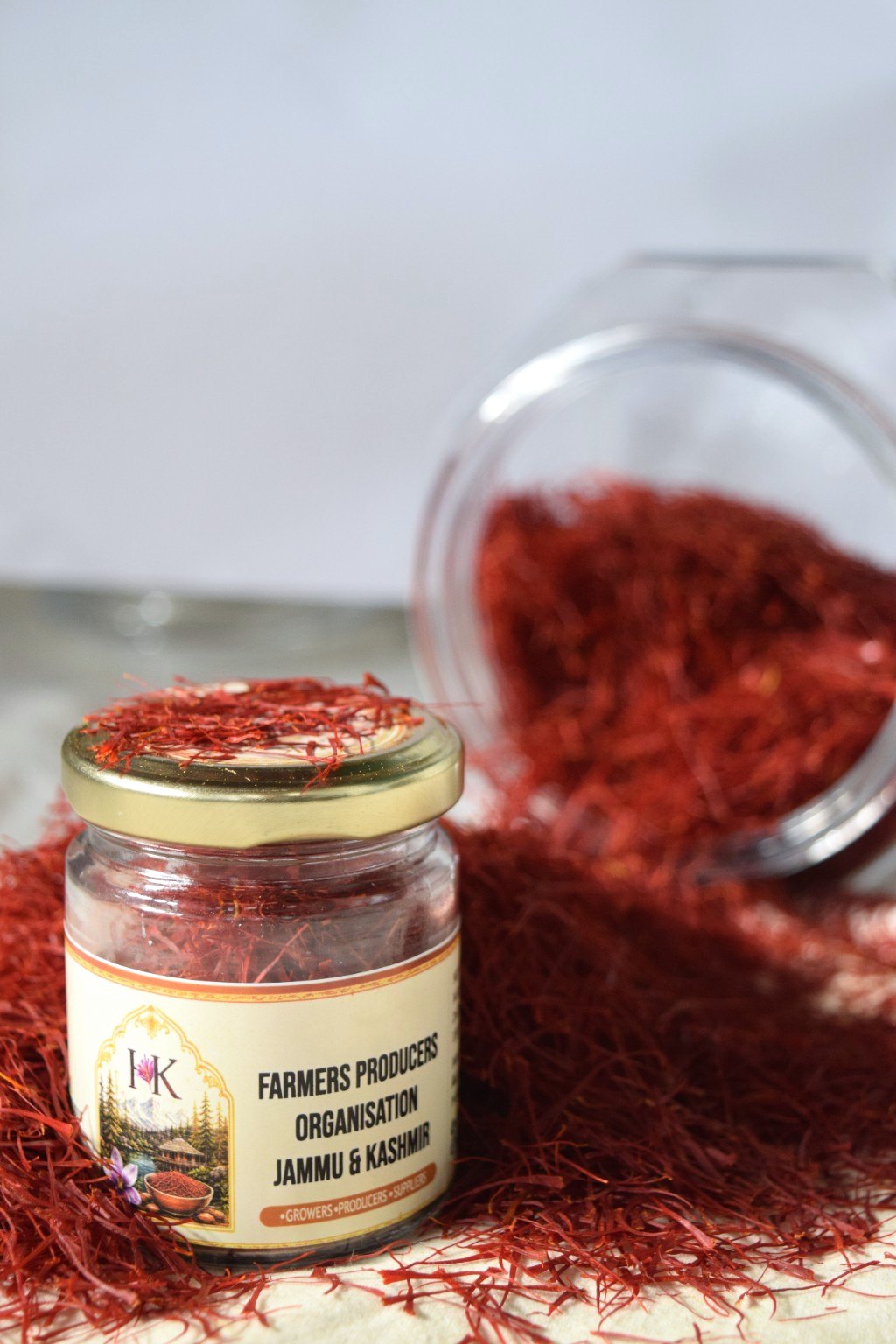
Saffron is the most adulterated spice on earth. Because a single kilogram needs roughly 150,000 hand-picked flowers, the price of the real thing is high — and that price gap is exactly what counterfeiters exploit. Dyed corn silk, safflower petals, coloured coconut fibre, and cheap imported stigma re-packed as “Kashmiri kesar” all circulate freely on marketplaces. The good news: real saffron behaves in ways fakes cannot copy. Here are five tests, from a grower’s family in Pampore.
1. The water test — the one test that matters most
Drop 3–4 threads into a glass of warm (not boiling) water and wait. Genuine Kashmiri saffron does three things, in order:
- It colours the water slowly. A golden-yellow halo spreads from each thread over 10–15 minutes. Instant colour means dye.
- The colour is gold, never red. Crocin — saffron’s colour compound — dissolves yellow. If your water turns red, you are watching textile dye dissolve.
- The threads stay whole. After 15 minutes you can lift a thread out and rub it between two fingers; it keeps its shape and keeps its deep red colour. Fakes crumble, go pale, or dissolve.
This single test defeats nearly every common fake. It is why we tell every customer to run it on the day their jar arrives — and why we refund in full if the threads fail it.
2. Look at the thread shape
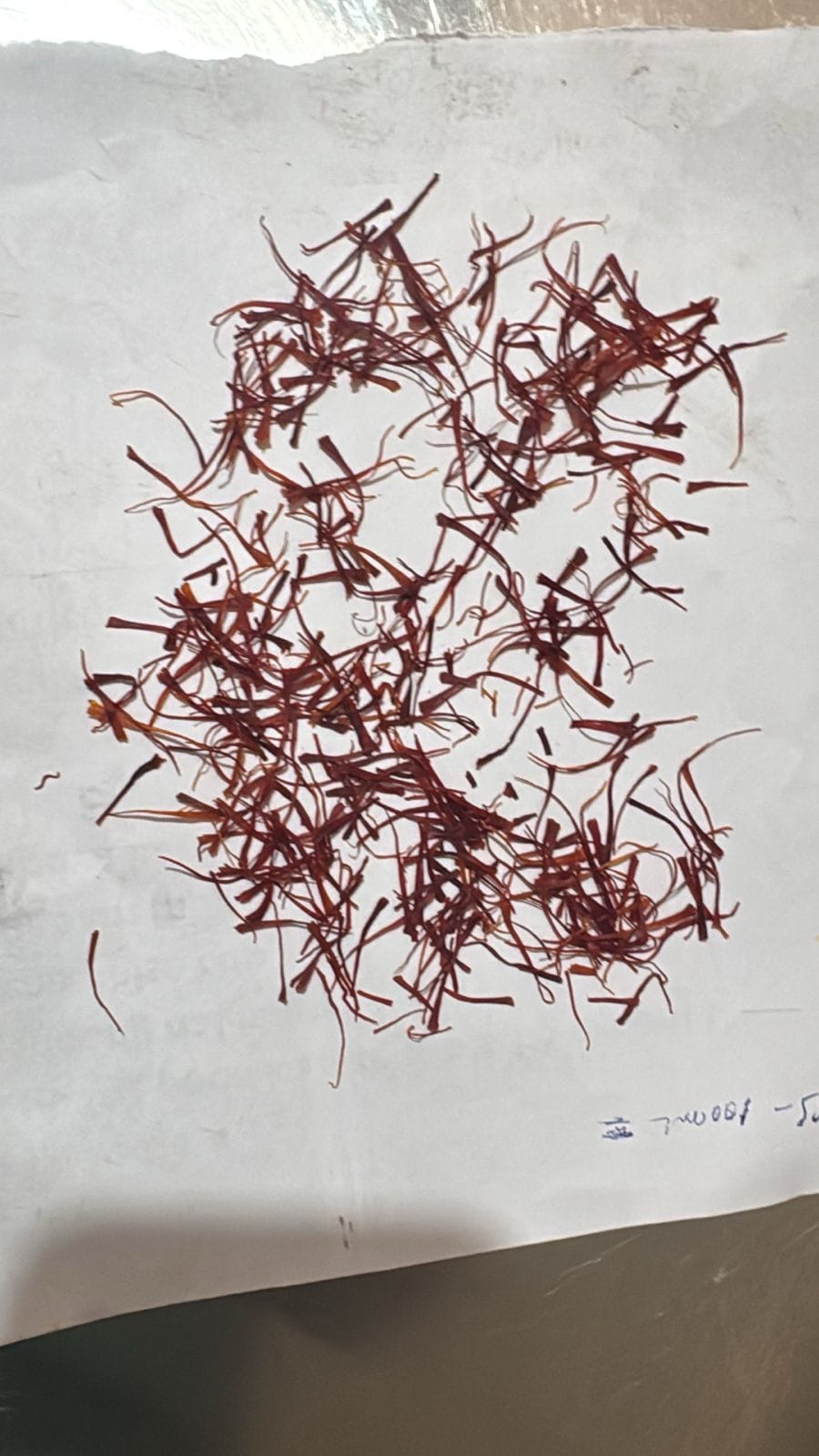
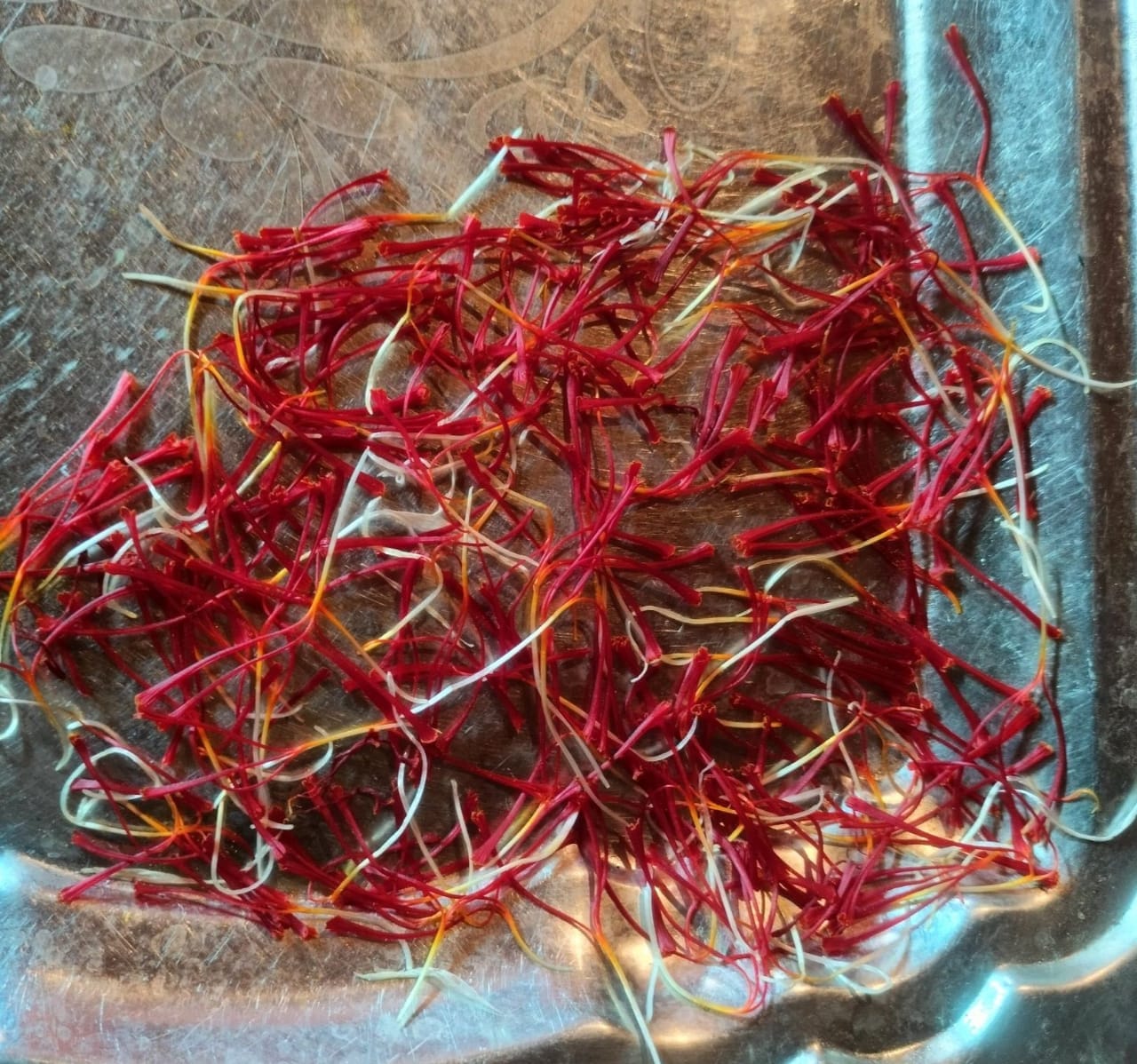
Real Mongra saffron is the top of the flower’s stigma, so every thread has a natural trumpet shape — slightly flared and thicker at one end, tapering to a fine point at the other. Lay a few threads on white paper and look closely:
- Uniform, machine-straight strands that look like cut wires → suspicious.
- Flat, ribbon-like pieces → often safflower or marigold petals.
- Yellow or white streaks on a “red” thread → dye that did not penetrate.
3. Smell it — honey and hay, never perfume
Safranal, the aroma compound, smells of honey with an earthy, hay-like edge. It is distinctive but never loud. If the jar smells intensely sweet or fruity like an air freshener, artificial fragrance was added. If it smells of nothing, the stigma is either exhausted with age or not saffron at all.
4. The baking-soda check
Stir a pinch of baking soda into a little water, then add a few threads. Real saffron keeps turning the solution yellow. Dyed fakes shift it towards red or orange. It takes two minutes and uses nothing you don’t already have in the kitchen.
5. Respect the price floor
In 2026, with Kashmir’s reduced harvests, even the lowest grade of genuine saffron costs upwards of ₹150 per gram at origin — and true Grade I Kashmiri Mongra trades far above that. We’ve written a full breakdown in our saffron price per gram guide. If a listing offers “pure Kashmiri saffron” at ₹40 a gram, no test is needed — the price is the confession.
What no home test can prove: origin
The water test proves your threads are real saffron. It cannot prove they are Kashmiri. Iranian saffron — a fine spice, but a different one, and roughly a third of the price — is routinely re-packed and sold as Kashmiri. Origin needs paperwork:
- The GI tag. Kashmir saffron carries a Geographical Indication registered with the Government of India’s IP office, which legally restricts the name to saffron grown in the valley.
- The ISO 3632 standard. The international lab standard (ISO 3632) measures crocin, safranal and picrocrocin. Kashmiri Mongra scores among the highest crocin values of any origin.
- A named grower. Every jar we sell comes from our own family fields in Pampore — the people, the land and the harvest are on our our story page.
Why buying from a grower changes the odds
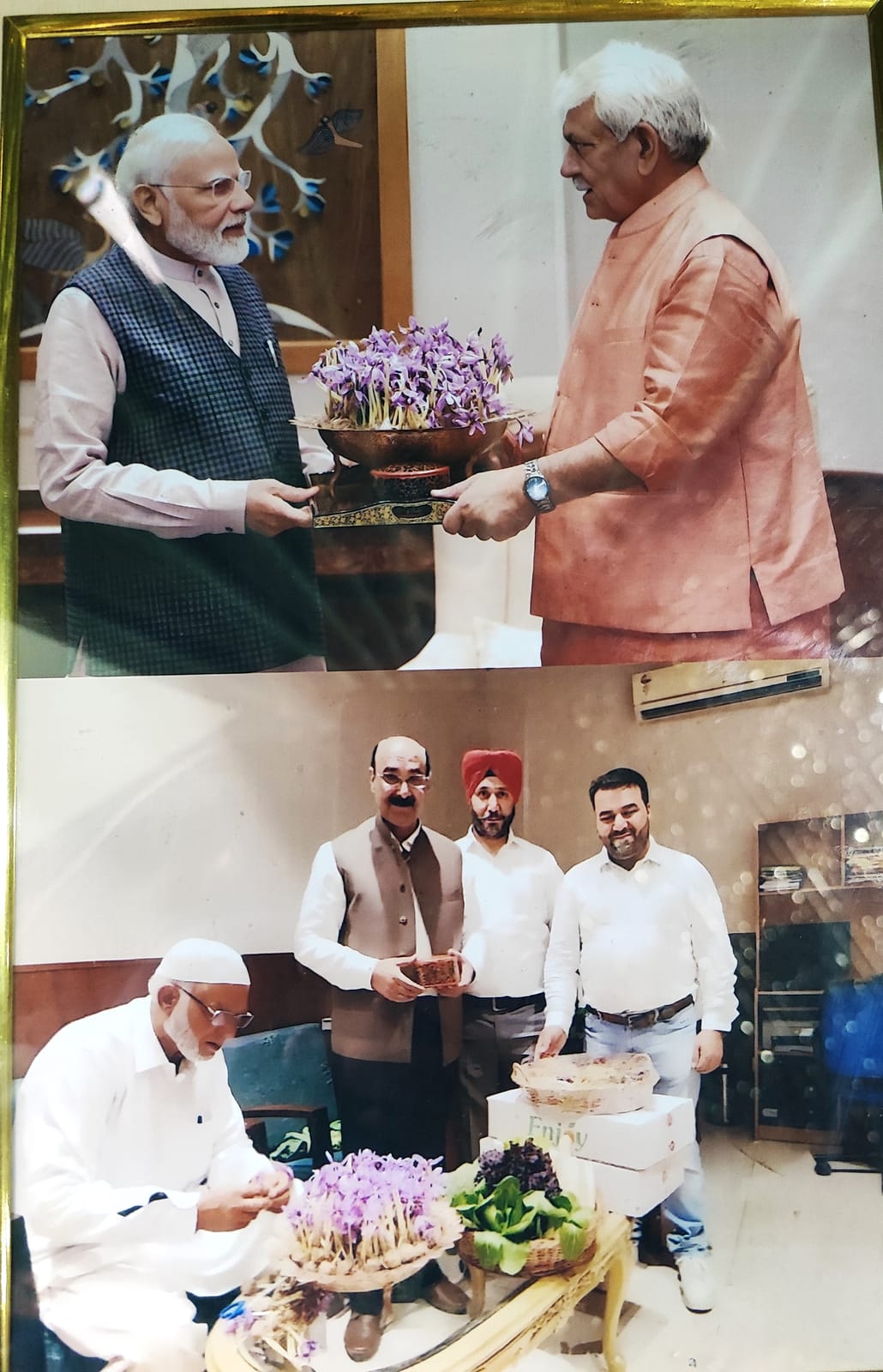
Every adulteration step happens in the middle of the supply chain — blending at the trader, dyeing at the re-packer, substitution at the marketplace seller. Our family grows saffron in Pampore and sells it direct; you can see the whole journey on our growing process page, and the national recognition our harvest has earned on the awards & media page. When the grower and the seller are the same family, there is simply no link in the chain where a fake can enter.
Ready to taste the difference? Start with our ISO-graded Kashmiri Mongra saffron or browse the full range — every jar is sealed at source by an FSSAI-licensed grower family, and the water-test guarantee stands on every order. If you are comparing sellers, our page on how to buy real Kashmiri saffron online sets these same tests beside our own grade and lab result.
Two things to read next. Before you buy anything, the seven checks in the best saffron in India turn everything above into a checklist you can run on any seller. And once the jar is home, how to store saffron covers the part that decides whether it is still worth what you paid in a year’s time — starting with keeping it out of the fridge.