Kesar price per gram today, at a glance
The kesar rate per gram below was checked on 4 October 2026. The market column is the range for genuine Grade I Kashmiri Mongra across Indian retail; the other two are our own jars, the same rate per gram at every size.
| Quantity | Genuine Kashmiri, market range | Ours: Kashmiri Mongra Saffron (Short Thread) | Ours: Kashmiri Mongra Saffron |
|---|---|---|---|
| 1 gram | ₹300–600 | ₹329 | ₹359 |
| 5 grams | ₹1,500–3,000 | ₹1,645 | ₹1,795 |
| 10 grams | ₹3,000–6,000 | ₹3,290 | ₹3,590 |
| 1 kg | ₹3–6 lakh | Bulk only — send a bulk enquiry | |
Below ₹150 a gram it is not real saffron, whatever the label says. The sections below explain why the cost per gram varies so much, what moved prices in 2026, and how to read a price tag.
Search “saffron price” or “kesar price” and you will find everything from ₹40 to ₹800 a gram, all claiming to be pure Kashmiri kesar. Most of that spread is not a market — it is a purity gradient. As a growing family in Pampore, we watch these prices from the field side. Here is what the numbers actually mean in 2026.
The honest kesar price range in India in 2026
- Below ₹150/g: not real saffron. The raw labour cost of picking ~160 flowers per gram exceeds this.
- ₹150–₹300/g: real saffron, but usually lower grades (Lacha with yellow style attached) or imported origin.
- ₹300–₹600/g: the genuine Kashmiri range. Grade I Mongra — all-red stigma tips, lab-graded — sits at the top of it.
Kesar price by grade: 1 gram, 10 gram and 1 kg
The per-kilogram column is not a retail offer — almost nobody buys saffron by the kilo outside the trade. It is here because it is the number that makes the economics legible, and because it is the figure wholesale listings quote when they want a price to look small.
| Grade | Per gram | Per 10 gram | Per kg | What you are actually getting |
|---|---|---|---|---|
| Kashmiri Mongra Saffron (long thread) | ₹340–600 | ₹3,400–6,000 | ₹3.4–6.0 lakh | Longest all-red threads, style fully cut away. The top morphological sort. |
| Mongra short thread | ₹300–450 | ₹3,000–4,500 | ₹3.0–4.5 lakh | Same harvest, same all-red sort, shorter threads. Identical chemistry. |
| Lachha / Lacha | ₹150–280 | ₹1,500–2,800 | ₹1.5–2.8 lakh | Threads with the yellow style still attached — you pay for weight that carries no colour. |
| Iranian (repacked) | ₹80–200 | ₹800–2,000 | ₹0.8–2.0 lakh | Often genuine saffron, but not Kashmiri — and frequently sold as if it were. |
| Below ₹150/g | — | — | — | Dyed corn silk, safflower, or bulked stock. Below the labour floor for any real saffron. |
Ranges reflect what genuine material trades at across Indian retail in 2026, not a single quoted rate. Our own prices are stated below and are the only ones here we can vouch for directly.
Kesar price per kg in India in 2026
A per-kilo price is just the per-gram rate times 1,000. At our grower-direct rates that is ₹3,29,000/kg for Kashmiri Mongra Saffron (Short Thread) and ₹3,59,000/kg for the long-thread Kashmiri Mongra Saffron. Across genuine Indian retail the same kilo spans roughly ₹3.0–6.0 lakh depending on grade and channel. A “1 kg kesar” listing far under ₹1.5 lakh sits below the labour cost of picking the flowers — it cannot be real Kashmiri saffron. Almost nobody buys a kilo at retail; for bulk quantities — weddings, corporate orders, resale — send a bulk enquiry and we quote the same harvest at trade rates. The full per-kilo breakdown, grade by grade, is in kesar price per kg.
The same gram, priced by where you buy it
| Channel | Typical Grade I rate | Why it sits there |
|---|---|---|
| Grower direct | ₹329–359/g | No intermediary margin. You are paying the field and the courier. |
| Metro dry-fruit retail | ₹500–900/g | Three to four hands between the field and the counter, plus rent. |
| Branded supermarket vial | ₹600–1,500/g | The 0.5g and 1g vial format hides a very high per-gram rate. |
| Marketplace “deal” | ₹90–250/g | Below the labour floor. Grade and origin claims here are rarely checkable. |
The most useful line in that table is the last one. A price is a claim about a supply chain, and a claim that cannot be true is the cheapest piece of information a shopper ever gets.
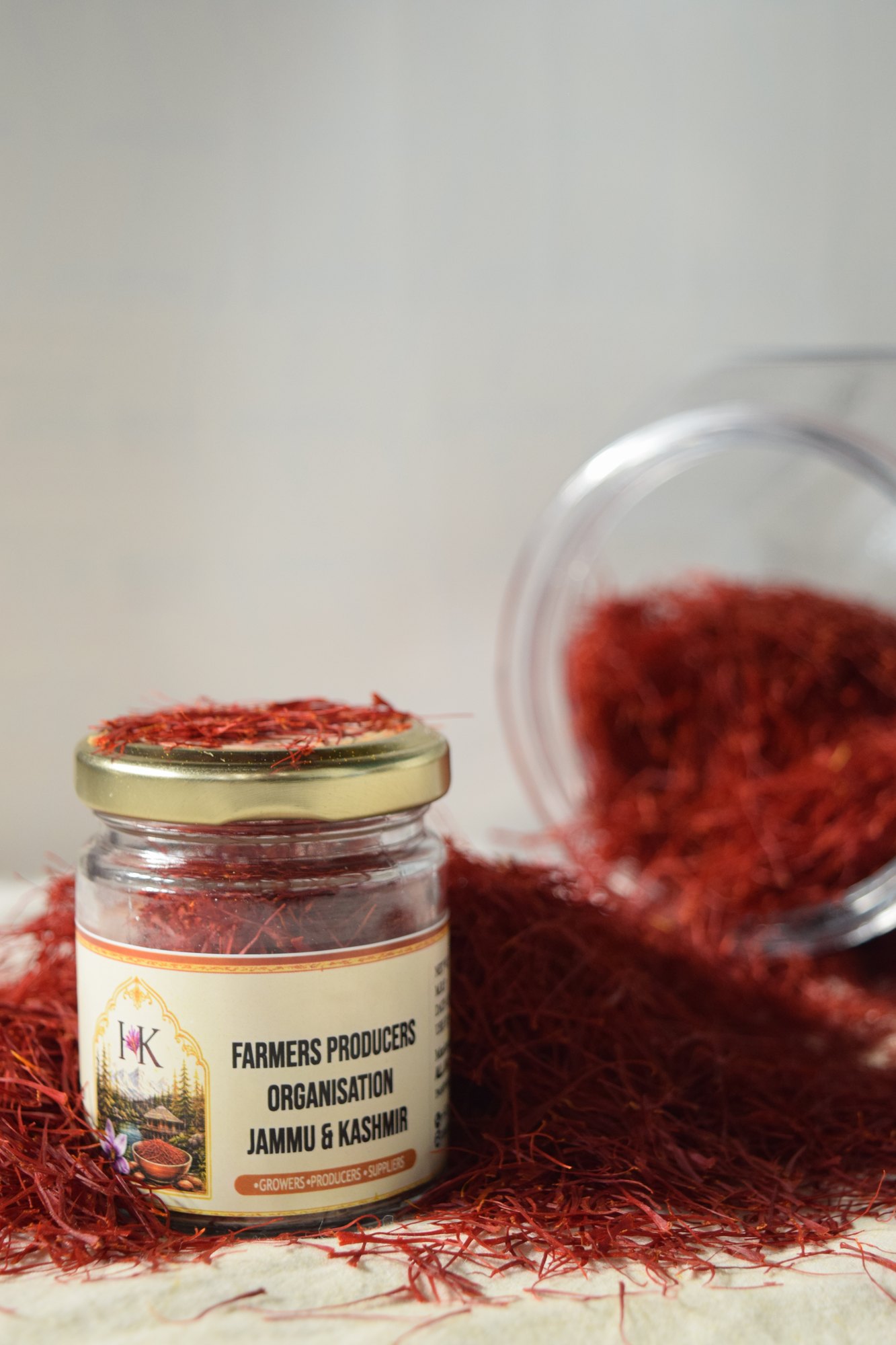
Our own Kashmiri Mongra saffron is priced inside that honest band, in two tiers off the same harvest: Kashmiri Mongra Saffron at ₹359 per gram (₹1,795 for 5g, ₹3,590 for 10g) and Kashmiri Mongra Saffron (Short Thread) — the shorter-thread half of the same sort — at ₹329 per gram (₹1,645 for 5g, ₹3,290 for 10g). Both direct from our fields, sealed by an FSSAI-licensed grower family.
Prices do not change by state — we ship the same jars at the same rate across India — but local names, market rates and delivery times do. If you want the picture where you are, we keep a state-by-state saffron guide covering price, local names and where to buy in Delhi, Maharashtra, Karnataka and every other state.
Why a gram costs what it costs
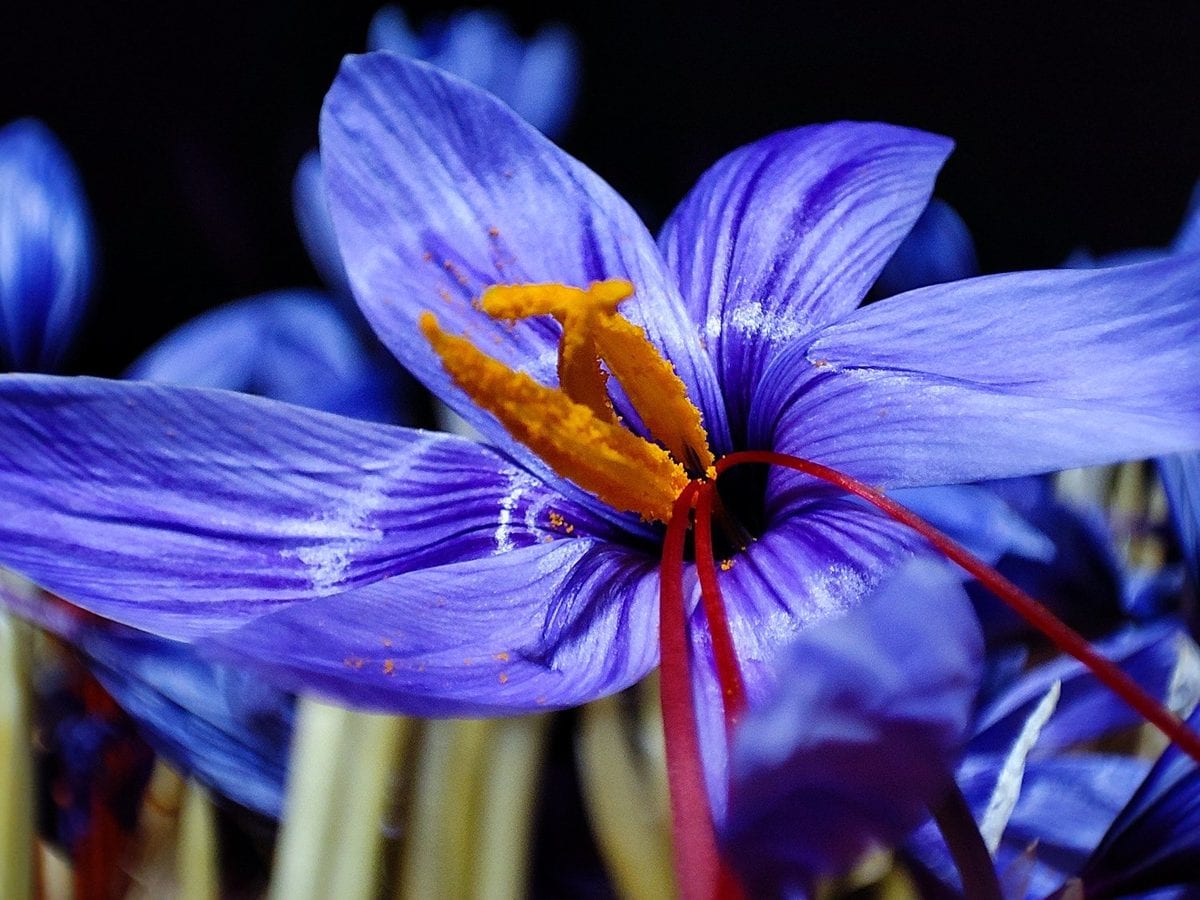
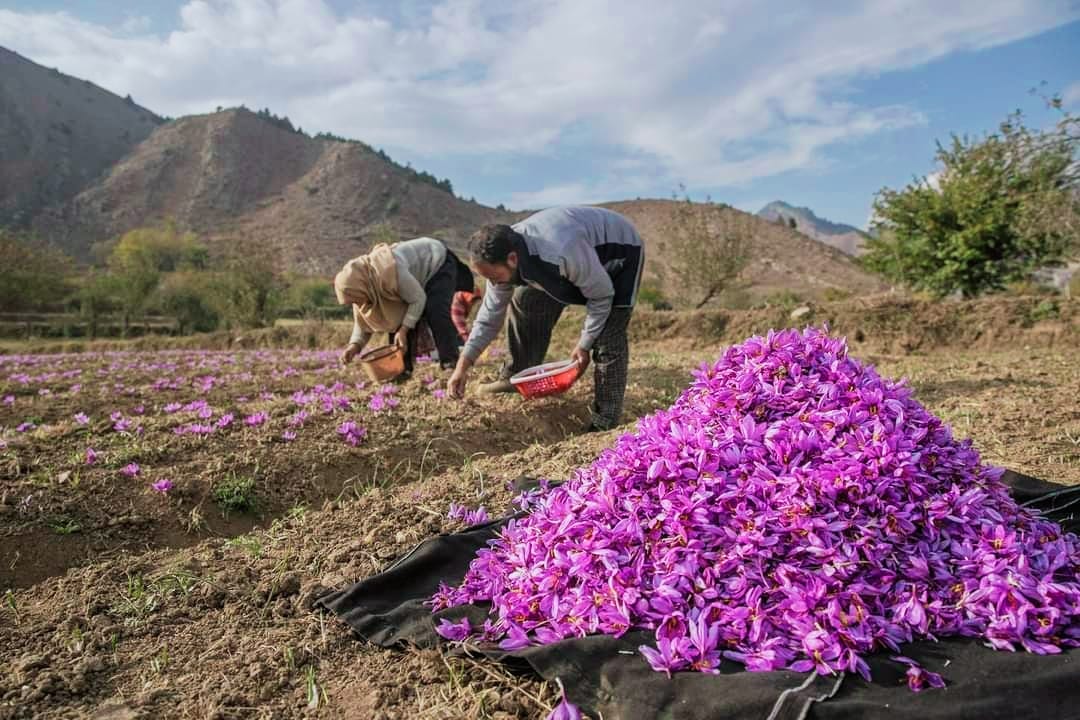
One gram of Mongra saffron is the dried stigma of roughly 150–160 crocus flowers, each picked by hand at dawn within a two-week autumn window, each separated by hand the same day. No machine does any step. When you buy a gram, you are buying about an hour of skilled human work plus a year of field cultivation — corm sorting, planting, weeding, and protection. You can see the entire cycle on our growing process page.
What moved prices in 2025–2026
Supply shrank
Erratic autumn rain and warm spells across the Kashmir valley cut recent yields significantly — in bad years by half. Saffron only grows on the karewa highlands around Pampore; there is no second region to absorb a bad season, so the shortfall goes straight into price.
Verification concentrated demand
Since Kashmir saffron received its GI tag and lab grading became common, buyers can finally tell Kashmiri Mongra from Iranian re-packs. Demand that used to leak into fakes now competes for the small genuine supply. Business press covered the result: Kashmiri saffron trading at multiples of the silver price by weight (Business Standard).
Price per gram vs price per dish — the maths that matters
High-crocin Mongra is stronger, so a pinch goes further. A biryani or a pot of kheer needs 8–10 threads; a gram holds roughly 500. That is ₹7–9 per dish at Grade I prices — less than the cardamom in the same recipe. Weak, blended saffron is cheaper per gram but you use three times as much for a paler result. Per dish, real saffron is usually the cheaper spice.
How to read a price tag before you buy
- Check the per-gram rate, not the jar price — 0.5g jars can hide a very high rate.
- Ask for the grade evidence. ISO 3632 Grade I should be stated and shipped as a card, not just a word in the listing. (See how to identify real Kashmiri saffron.)
- Prefer a named grower. A seller who can show you the field beats any discount — ours is on our story.
- Treat deep discounts as data. Below the labour floor, the product is the lie.
If you want the honest version of the price — grower’s rate, lab grade in the box, shipped across India — start at the shop or the home page, or message us directly on WhatsApp. We will tell you exactly which harvest your jar comes from. Ordering for the first time? Our guide to buying original Kashmiri saffron online walks through the grades, the lab test and how delivery works.
Price is only one of the seven things worth checking before you pay — the rest are in the best saffron in India. And if you are comparing what a shop quotes in your own city against the grower’s rate, our state-by-state pages set out the local retail range for every state and union territory, along with why it differs so much between Delhi and Guwahati.