Champagne can only come from Champagne. Darjeeling tea can only come from Darjeeling. And since 2020, Kashmir saffron can only — legally — come from the saffron-growing belt of the Kashmir valley. That protection is the Geographical Indication (GI) tag, and if you buy saffron in India, it is the single most useful line on the label. Here is what it does and does not guarantee.
What a GI tag actually is
A Geographical Indication is a form of intellectual property registered under India’s GI Act, 1999, administered by the office of the Controller General of Patents, Designs and Trade Marks. It certifies two things at once: the product’s origin (grown in the designated region — for saffron: Pampore, Pulwama, Budgam and Kishtwar) and its character (the qualities that region produces, verified through a registered process).
Why saffron needed one
India consumes far more saffron than Kashmir can grow. For decades the gap was filled by imported saffron quietly re-labelled “Kashmiri” — a trade that punished the genuine growers whose product it imitated. The GI registration made that renaming illegal and gave buyers, for the first time, a legal definition to hold sellers to. (For the full comparison, read Kashmiri vs Iranian saffron.)
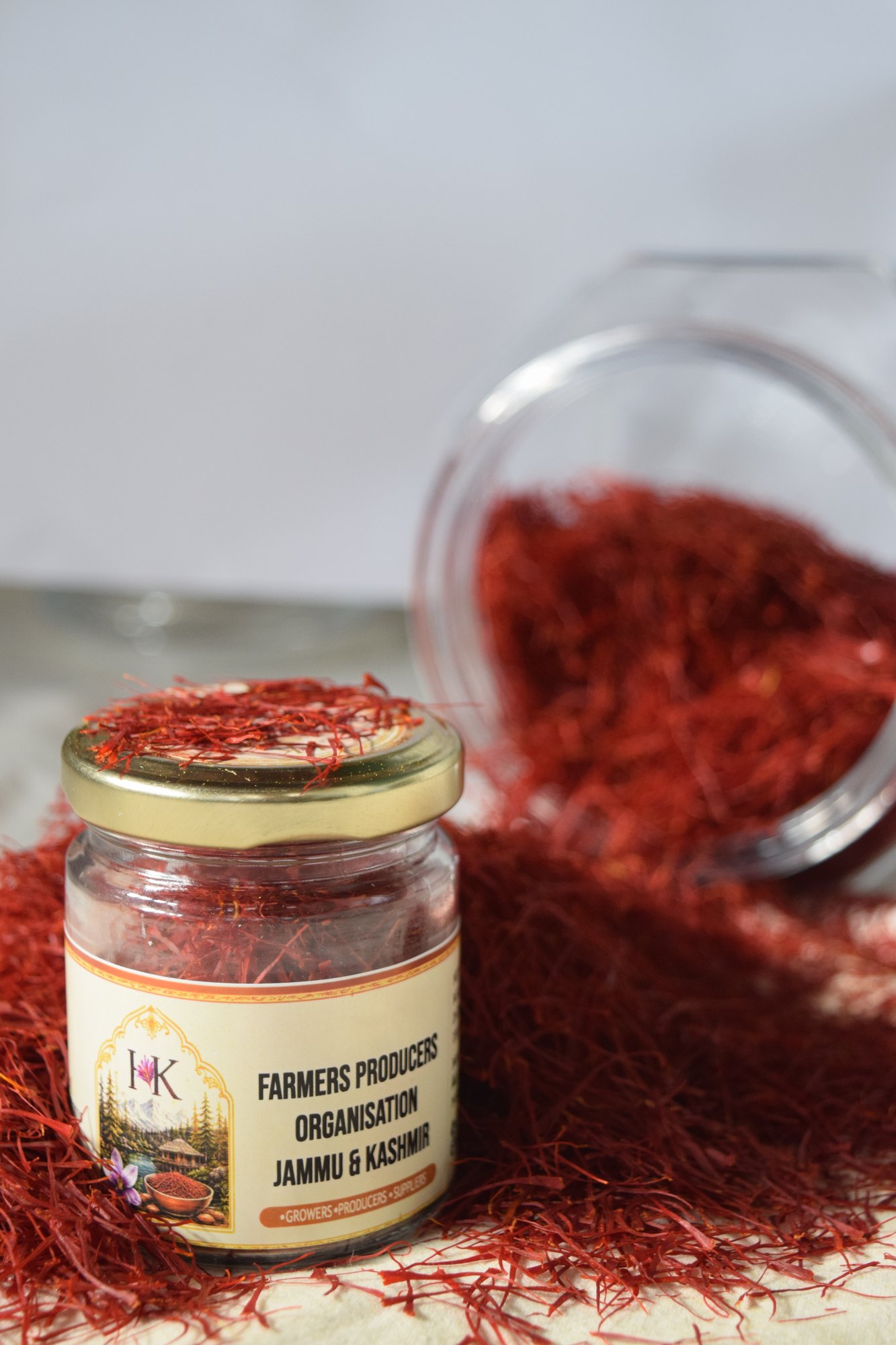
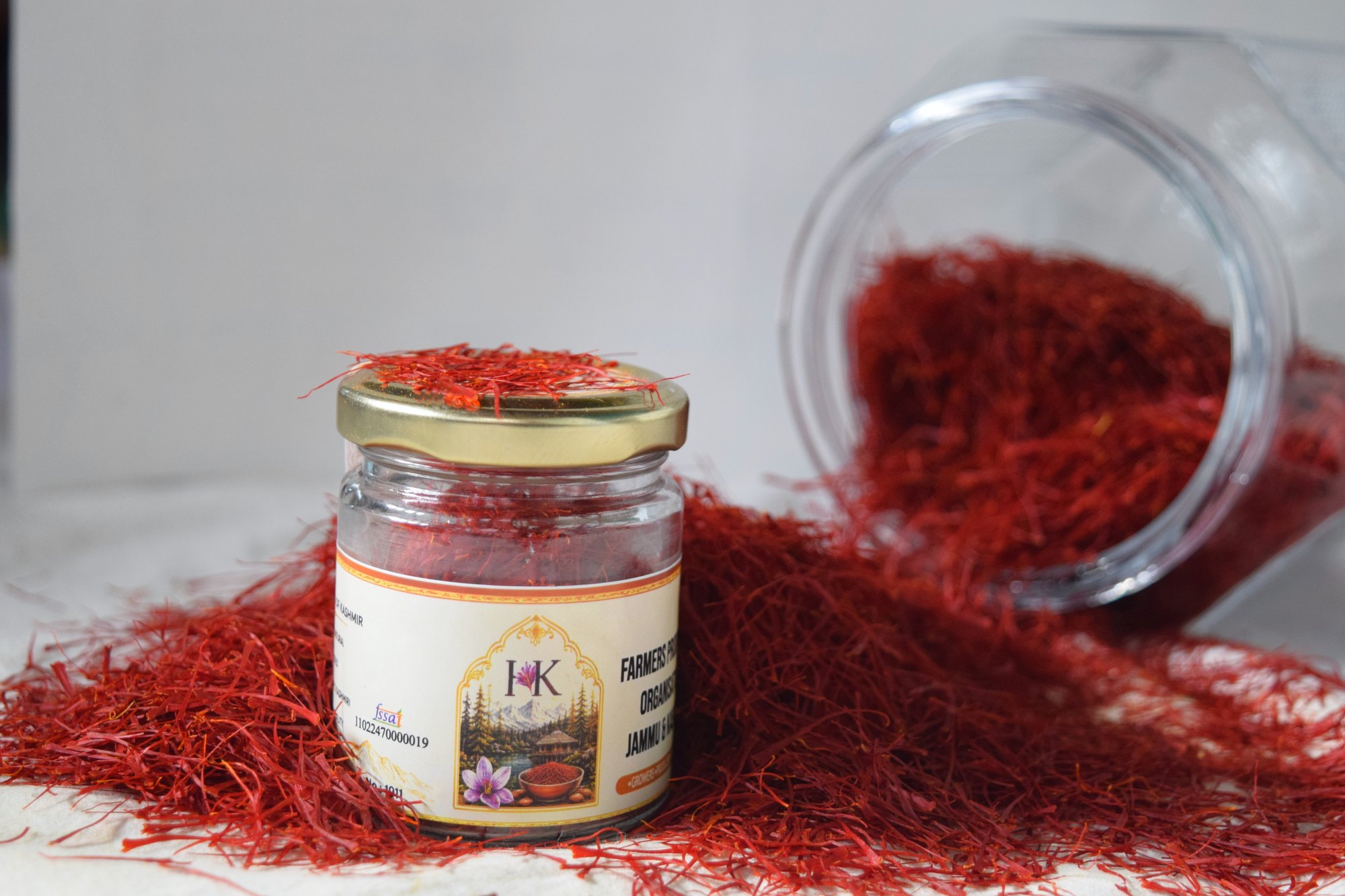
How to verify a GI-tagged jar in two minutes
- Find the QR code on the pack — certified packs carry one linked to the certification database.
- Scan it. A genuine code returns the registration number, producer details and validity — not a random webpage.
- Know the grower. A seller who can name the field, the family and the harvest is accountable for the name; ours are on the our story page.
- Confirm the grade separately. GI proves origin; the ISO 3632 card proves strength. Ask for both.
What the GI tag does NOT tell you
- Grade. GI saffron can still be Lacha (with yellow style) rather than all-red Mongra. Check the ISO 3632 grade.
- Freshness. Ask for the harvest year; saffron holds 2+ years sealed, but you deserve to know.
- The seller’s honesty downstream. A genuine GI pack can sit beside a counterfeit one on the same marketplace listing. Buy from a traceable source.
It also tells you nothing about what saffron sells for where you live. Rates, local names and the usual adulteration tricks differ from one market to the next, so we document them state by state — what kesar costs and what to watch for in all 36 states and union territories.
Origin you can watch, not just scan
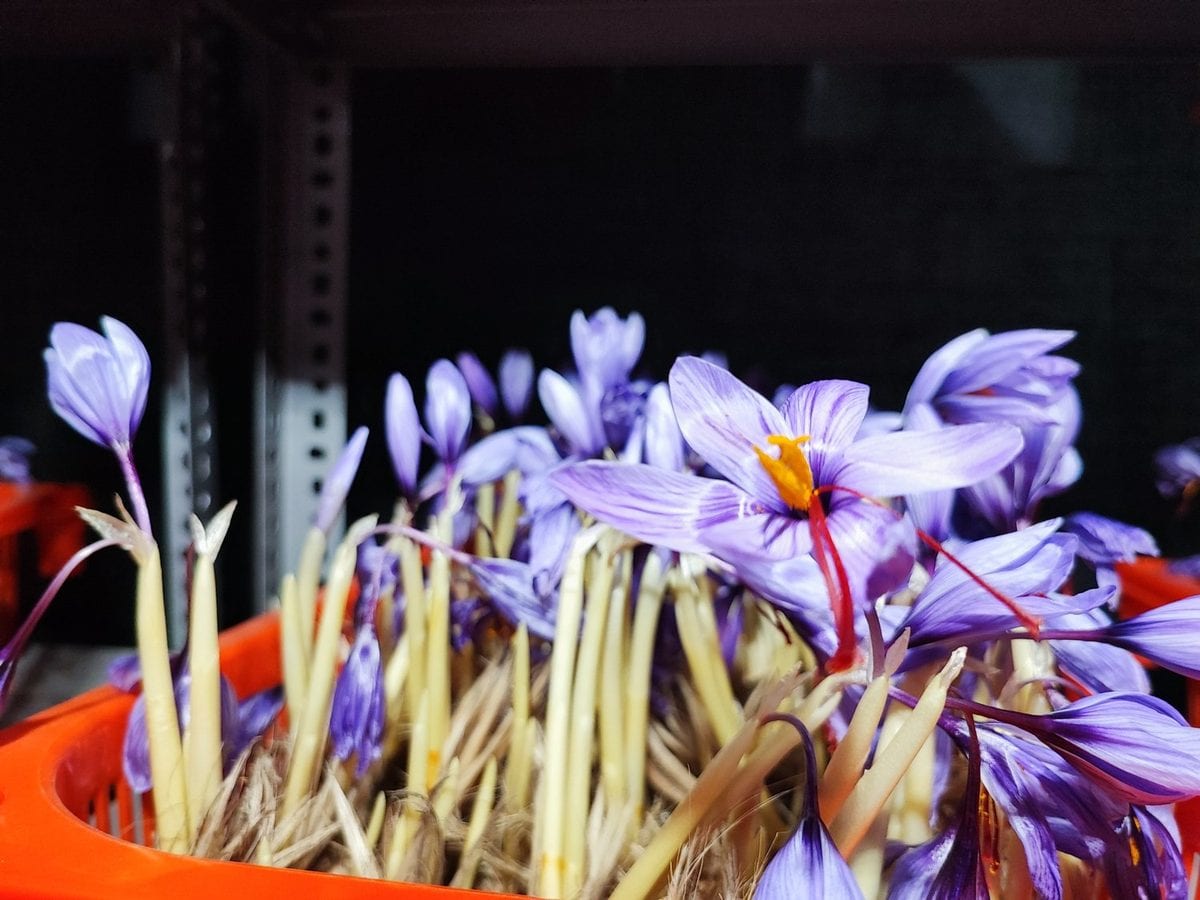
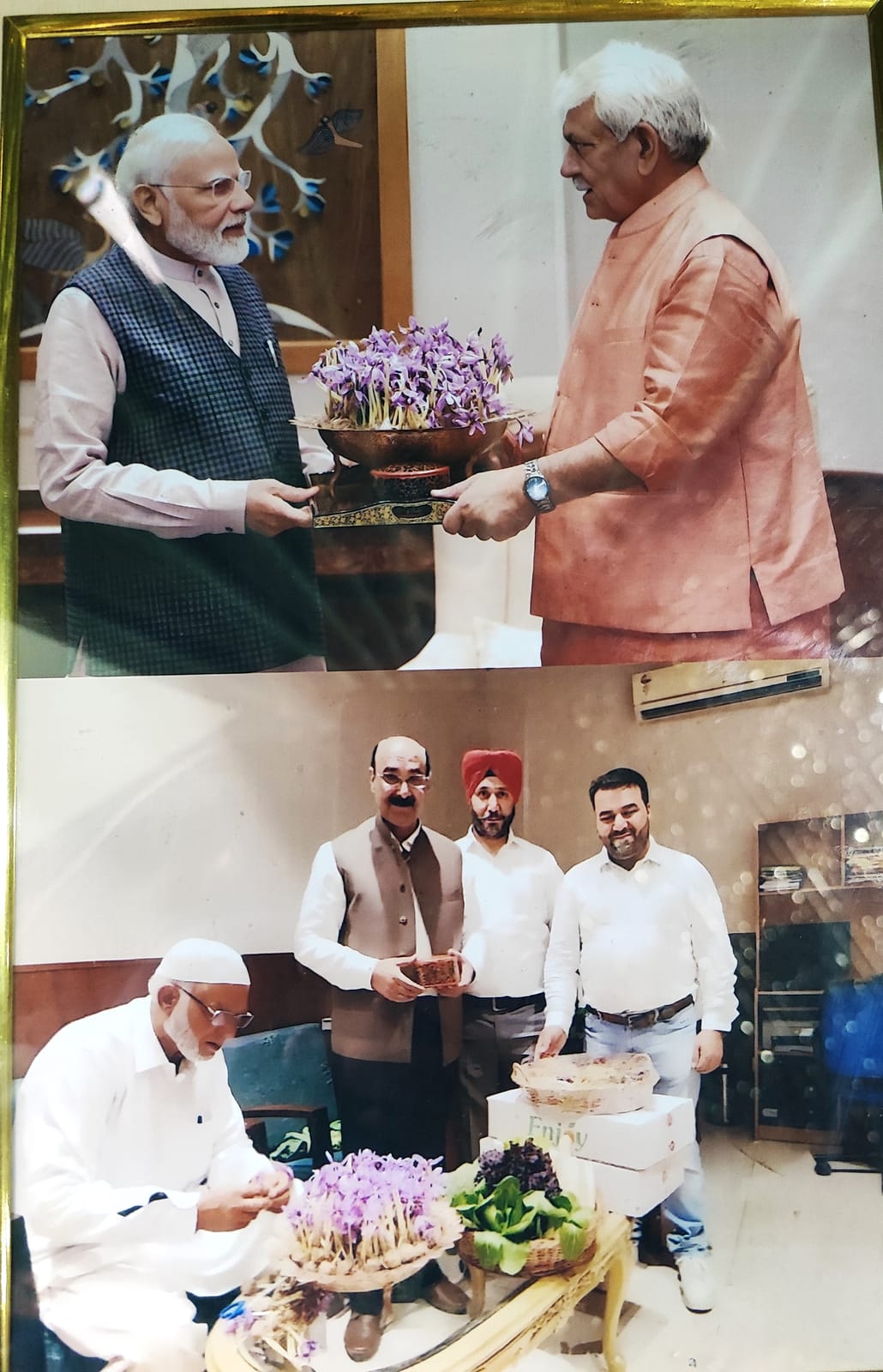
Certification matters most when you cannot see the source. We try to make the source visible anyway: the corm-to-crimson cycle is documented on our growing process page, and decades of felicitations — from Prime Ministers to the Directorate of Agriculture — are on record under awards & media.
The registration, in specifics
Vague references to “the GI tag” are common; the details are checkable and worth having:
| GI registration number | 635 |
| Granted | 2020, by the Geographical Indications Registry, Government of India |
| Covers | Saffron grown in the notified areas of Kashmir — chiefly Pampore, Budgam, Srinagar and Kishtwar |
| Global standing | India is the only country whose saffron carries a GI registration; Iran, at ~88% of world production, has none |
That last row is the one people miss. The GI tag is not a claim that Kashmiri saffron is chemically superior to everything else — although the crocin figures do favour it, at roughly 8.72% against 6.82% for Iranian material. It is a claim about origin, legally enforceable, in a market where origin is the thing most often lied about.
What the GI tag does not do
Worth stating plainly, because a certification mark is easy to over-read:
- It does not grade quality. That is ISO 3632’s job, and the two are independent — GI-tagged saffron could in principle be Category III. Ours is Category I, which is a separate claim requiring separate evidence.
- It does not stop mislabelling. It makes mislabelling actionable, which is not the same thing. Iranian saffron sold as Kashmiri did not disappear in 2020.
- It does not travel with loose threads. A GI claim attaches to a registered producer and packaging. Saffron scooped from an open tin carries nothing, whatever the shopkeeper says.
Which is why the GI tag is best used as one of several checks rather than the only one. Pair it with grade evidence, a named grower, and the water-bloom test you can run yourself. The difference between origins, and why the substitution is so profitable, is set out in Kashmiri vs Iranian saffron.
Why growers pushed for it
The tag arrived after a long decline, not during a boom. Kashmiri saffron output fell from roughly 16 tonnes to about 5.6 tonnes over two decades, on an area of around 3,715 hectares — against Iran’s 30,000. When your total production is a rounding error beside your competitor’s and your name is worth more than your harvest, legal protection of the name is the only asset that scales.
That is the growers’ case for it, and it is ours: we are a Farmer Producer Organization in Pampore rather than a trading company, so the name being defended is the one on our own fields.
When you are ready, our Kashmiri Mongra Saffron and Kashmiri Mongra Saffron (Short Thread) jars are the same all-red Pampore harvest, hand-sorted, tested ISO 3632 Grade I by IIKSTC and sealed by the family that grew it. Browse everything from the home page or the shop. Buying saffron online for the first time? Our guide to buying Kashmiri saffron online covers what to check before you pay.