From corm to crimson, in the saffron fields of Pampore
The Heritage Kashmir is the shop of a saffron-growing family in Pampore, Kashmir. This page shows how our saffron is planted, picked by hand, graded and sealed before it ships across India.
Honoured by leaders & the press
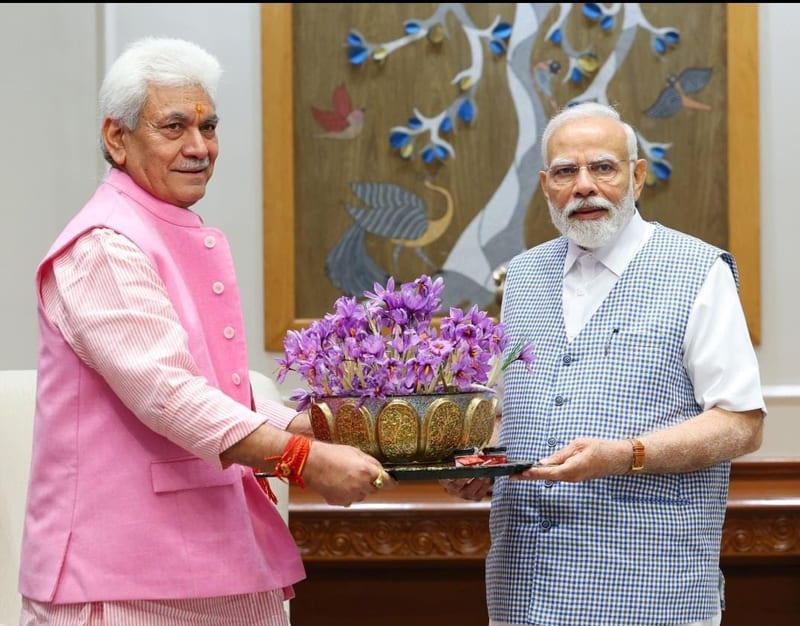 PM Narendra ModiWith our Pampore saffron
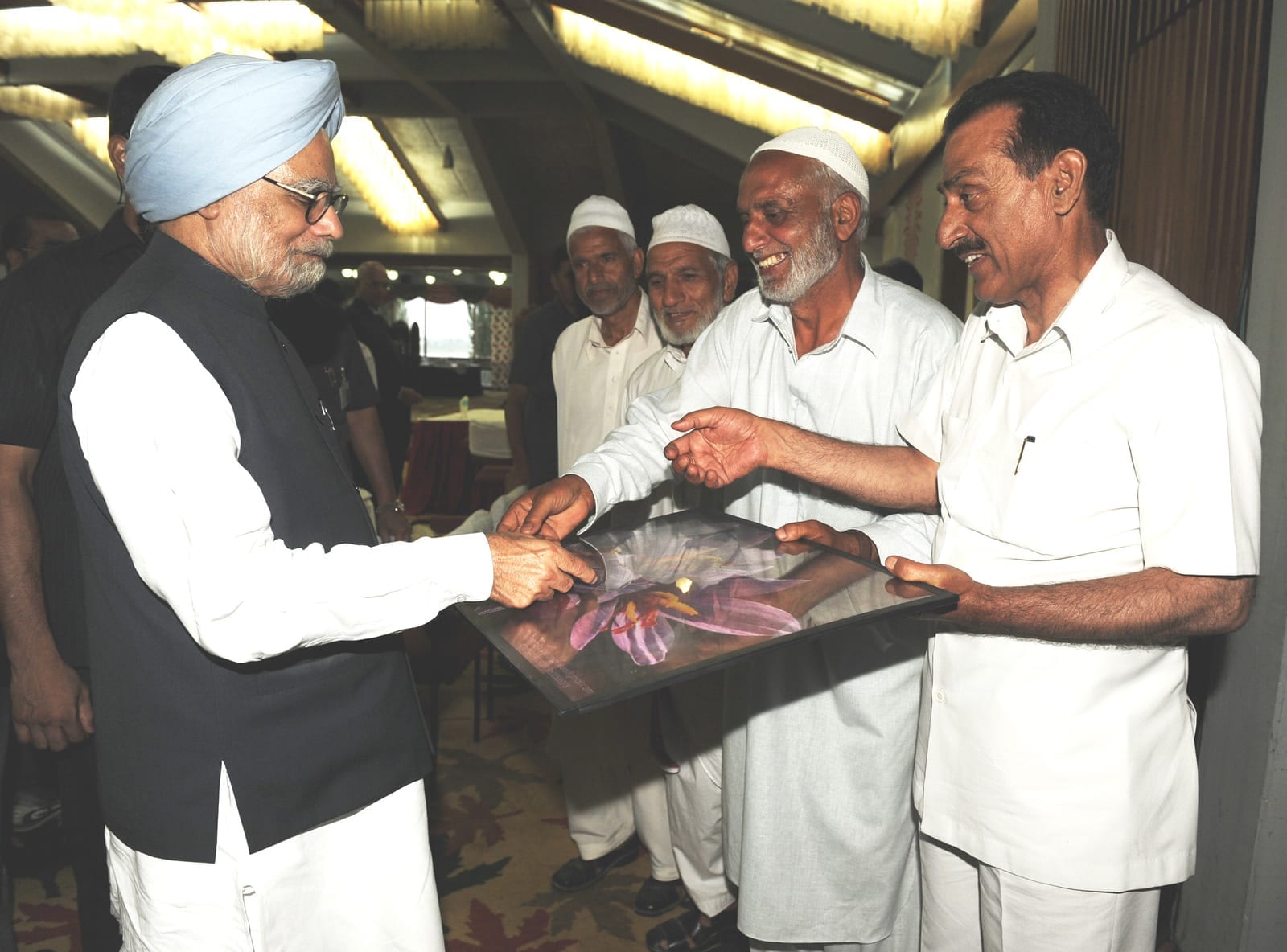
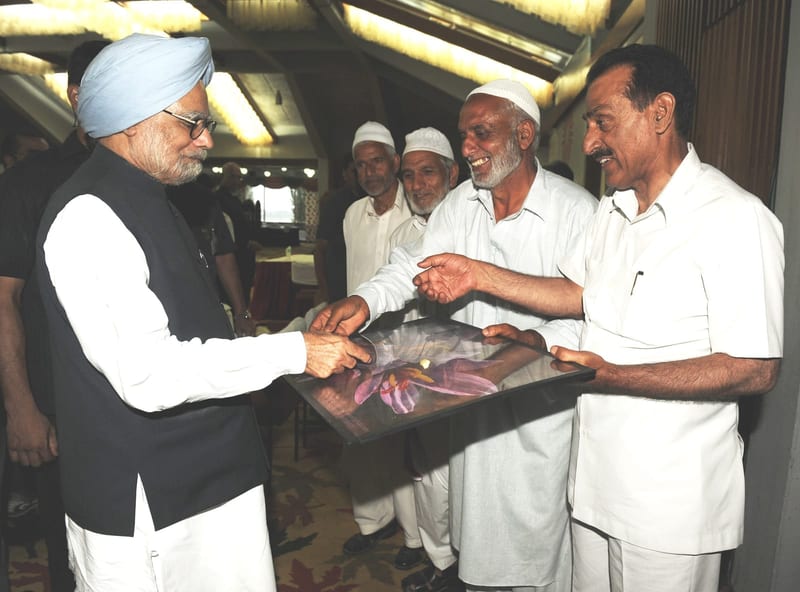 Former PM Manmohan SinghReceiving our saffron
 With Rahul GandhiSaffron growers' interaction
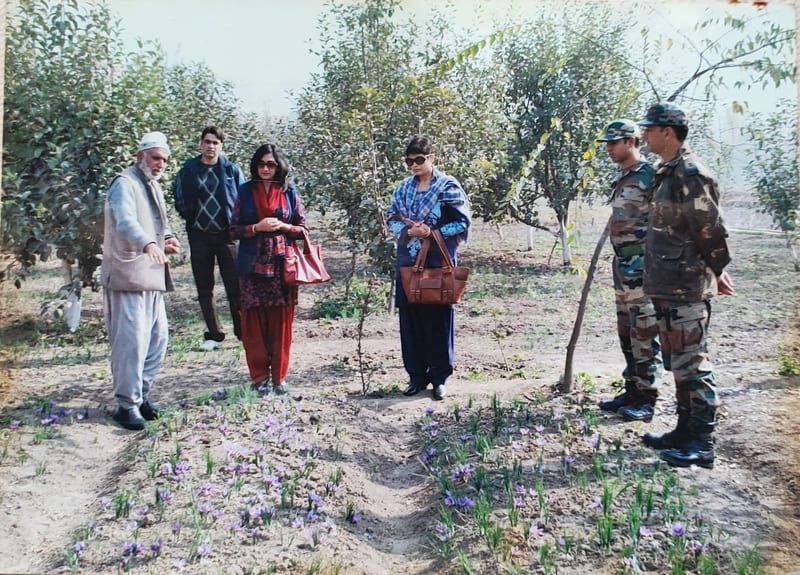 The Indian ArmyAt our saffron fields
 Sikkim CM Prem Singh TamangHonoured in his presence
 VAIGA award, KeralaFrom the Agriculture Minister
 National pressSaffron, a GoI priority
Summer — the corms are lifted, graded and planted
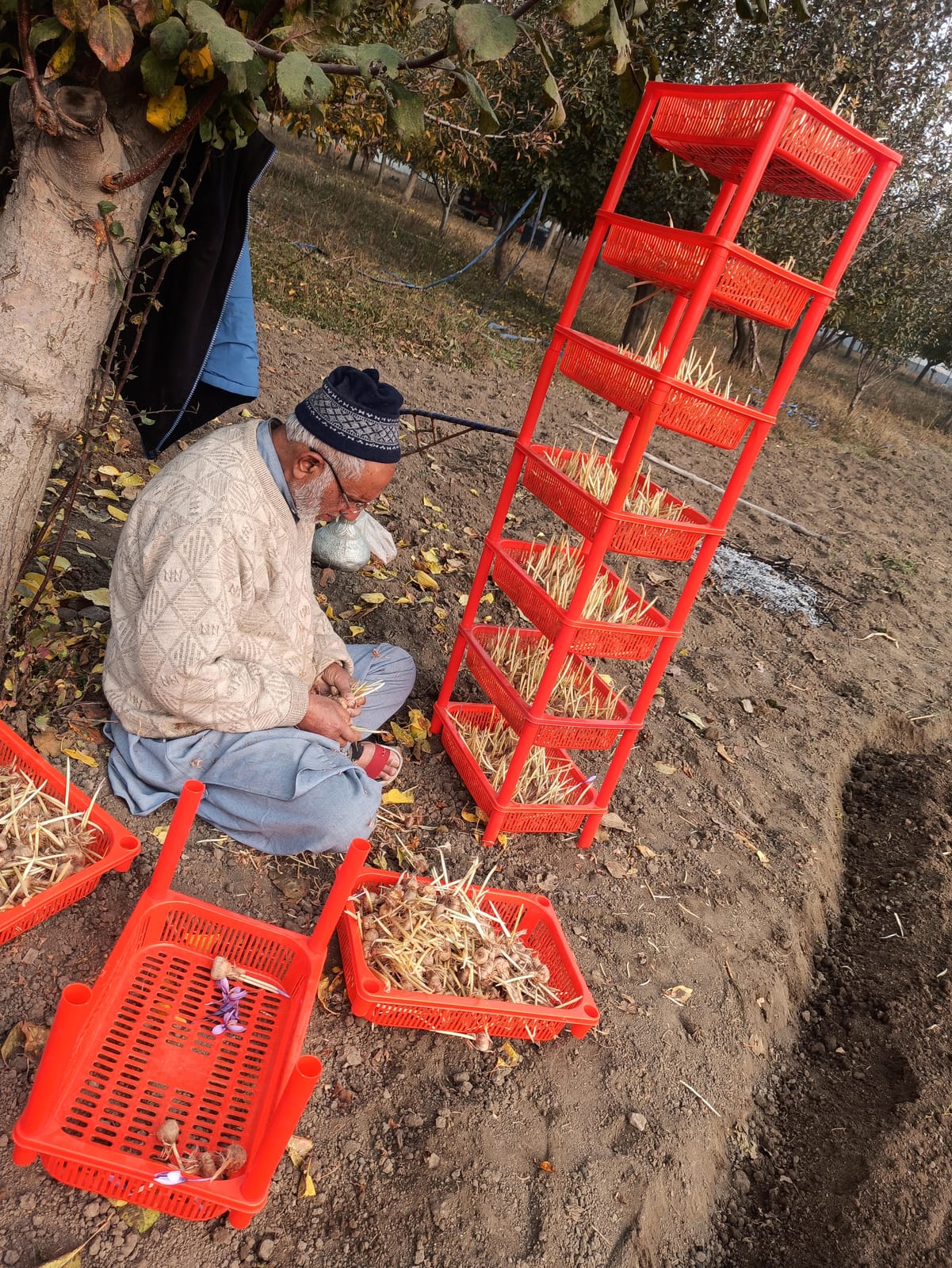 Saffron corms laid out before planting
Our grandfather hand-sorts every corm before planting.
Our grandfather sitting under a tree, sorting saffron crocus corms into trays before planting in Pampore
Cured in shade — never in direct sun — before replanting.
Saffron corms spread under a shade tent to cure before replanting, Pampore
Thousands of corms, each one checked by hand.
Thousands of saffron crocus corms spread out to dry under a canvas tent
Stored cool and dry until the August planting.
Saffron corms in cool covered storage awaiting the planting season
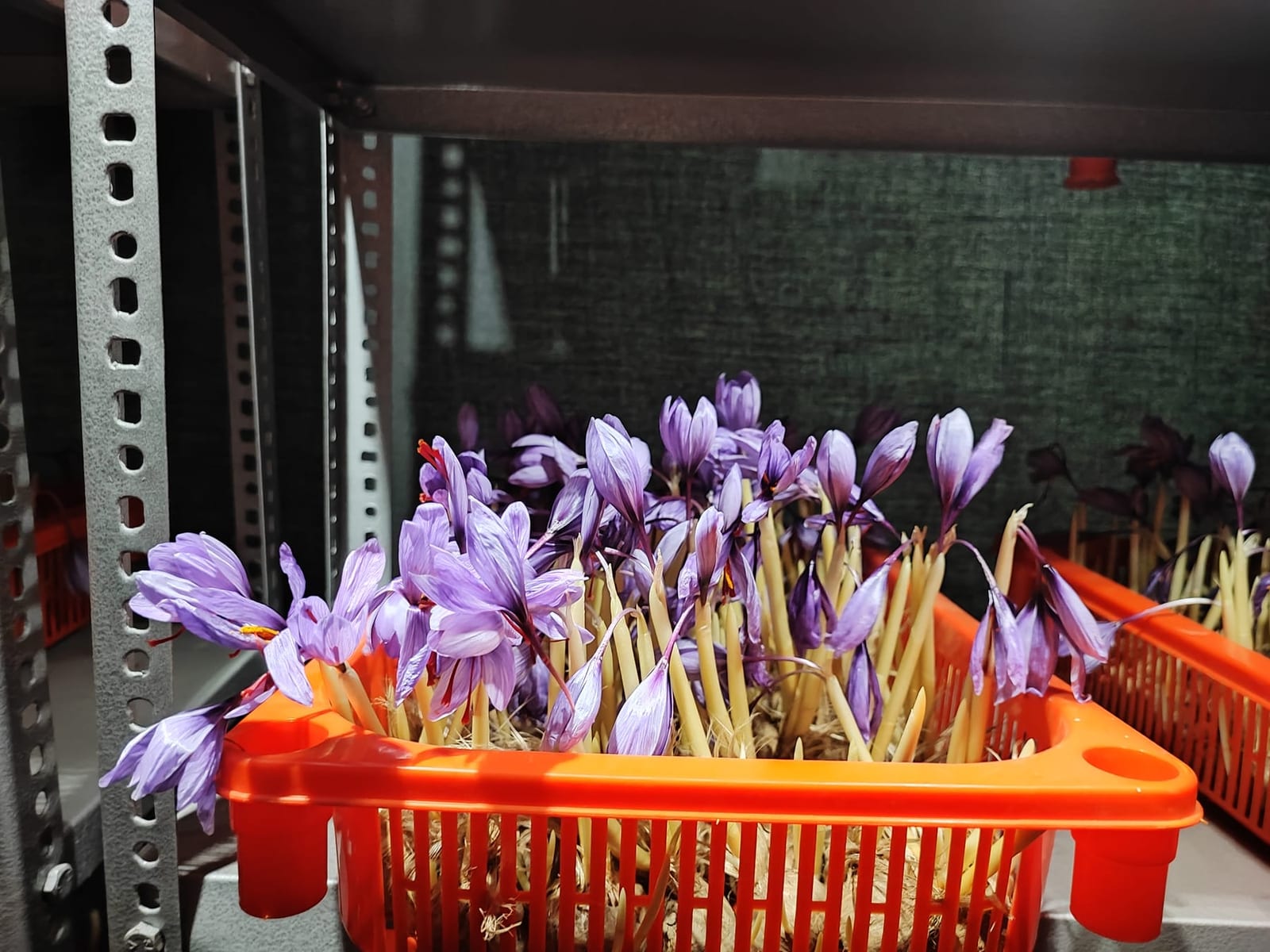
From this corm: the flower, and inside it, the saffron.
A saffron crocus corm with its purple flowers — from bulb to bloom
Autumn — the karewa fields turn violet for two to three weeks
Late October: the first flowers open on the karewa.
Pampore saffron field at early bloom with rows of purple crocus flowers
Each flower carries three crimson stigmas — the saffron.
First saffron crocus flowers of the season with deep red stigmas visible
Crocus sativus — colour you can already see in the field.
Macro close-up of Kashmiri saffron crocus flowers with red stigmas and yellow styles
Bloom comes in waves; the field is picked daily.
Cluster of blooming saffron flowers in our Pampore field
The same family fields, beside the same village.
Green saffron fields beside our village in Pampore before full bloom
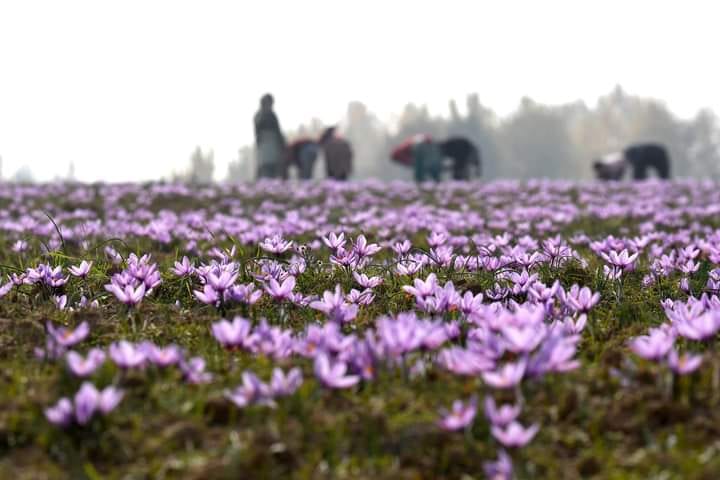
For two to three weeks, the fields become a violet carpet.
Carpet of purple saffron flowers with pickers working in the Pampore field
Everyone picks — it has been this way for generations.
Our family hand-picking saffron flowers at dawn beside our home in Pampore
Picked at dawn, while the flowers are still closed.
A young family member holding freshly hand-picked saffron flowers over a collection sheet
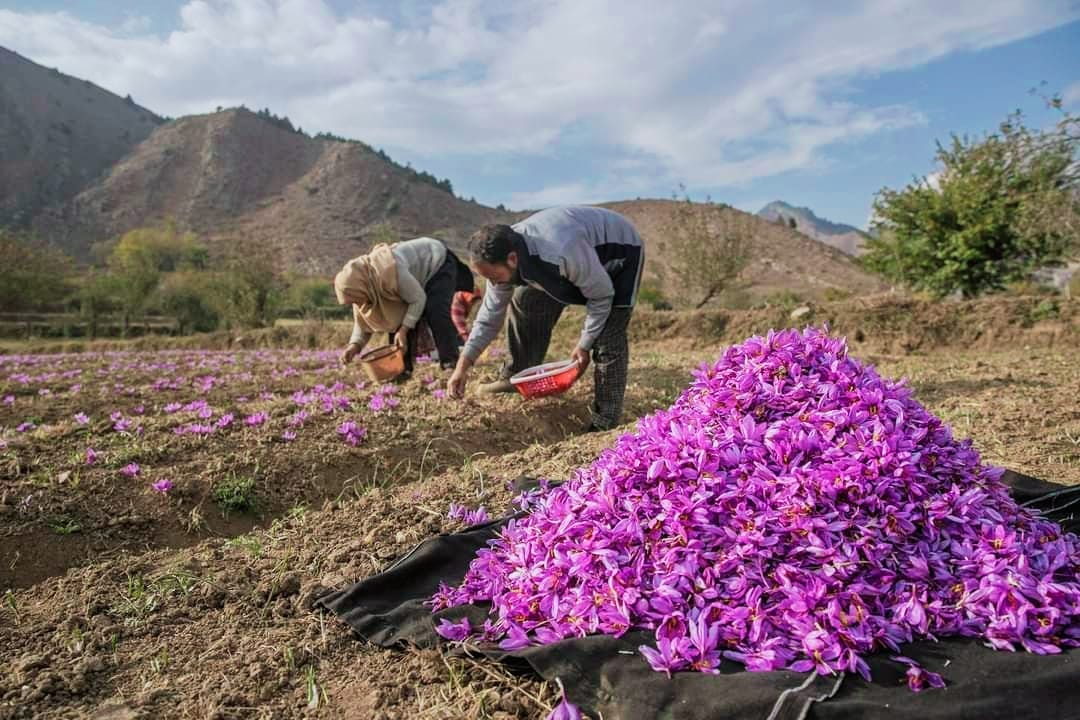
The day's harvest, gathered before the sun is high.
Harvesting saffron flowers into baskets with the Kashmir mountains behind
Flowers head home the same morning for separation.
Baskets of saffron flowers laid out on a cloth in the field
The next generation grows up in these rows.
Children of our family in the blooming saffron fields of Pampore
A single tray holds hundreds of flowers — and a few grams of saffron.
Tray of freshly picked saffron crocus flowers
The stigma is separated, graded, and verified — then sealed
Every flower is logged by harvest day before separation.
Trays of harvested saffron flowers collected for stigma separation, dated harvest 2022
Three stigmas per flower, separated by hand the same day.
Hand-separating the crimson saffron stigma from the crocus flower
Separation is slow, skilled work — no machines touch it.
Our team hand-separating saffron stigmas from heaps of crocus flowers
Flowers rest in ventilated crates before extraction.
Saffron flowers in crates on drying racks awaiting stigma extraction
Racks are checked flower by flower — nothing wilted goes forward.
Inspecting saffron flower crates on storage racks for quality
Fresh stigma, minutes after separation.
Freshly separated crimson saffron stigmas on a steel tray before drying
Dried threads are weighed, graded, and batch-coded.
Dried Kashmiri saffron threads laid on paper for grading and batch notes
The Directorate of Agriculture inspects our facility.
Officials of the Directorate of Agriculture inspecting our saffron facility in protective wear
Independent quality checks, in full hygiene protocol.
Quality audit team in hairnets reviewing saffron processing at our facility
Sealed cartons, verified and stacked for dispatch.
Sealed saffron cartons stacked in our packing warehouse during verification
Every carton is opened, checked, and re-sealed by inspectors.
An official verifying packed saffron cartons in the warehouse
Officials review the stock room with our family.
A visiting official reviewing saffron flower stock with our family elder
A dispatch flagged off from the agriculture office.
Flag-off ceremony of a saffron dispatch vehicle at the agriculture office
1/5 Our grandfather hand-sorts every corm before planting.
The crocus blooms for two to three weeks. We work all year.
It starts in summer, when the corms — the small bulbs the crocus grows from — are lifted, graded by hand, and replanted in the karewa soil. Every autumn, the fields around Pampore then turn violet for two to three weeks, from late October to mid-November. Each flower is picked by hand at dawn, and the three crimson stigmas inside are separated the same day — it takes about 150 flowers, roughly 450 threads, to make a single gram of saffron.
Then comes the part most brands skip: grading, batch-coding, and verification — including inspections by the Directorate of Agriculture, Kashmir. Our family has done this work for generations, and our grandfather, Abdul Majeed Wani, is the chairman of the Pampore Saffron Farmers Producer Company and the president of the Jammu & Kashmir Saffron Growers Association. The Heritage Kashmir exists to ship that same harvest directly to your kitchen — graded, sealed, and traceable to its batch.
The year at a glance
A year of work for two to three weeks of bloom
Recognised by leaders, ministers & the press
Decades of felicitations and coverage for our family’s saffron — see the record.
The company behind the jar
What a farmer producer company changes
The Heritage Kashmir is a brand of Pampore Saffron Farmers Producer Company, J&K. A farmer producer company is owned by the growers themselves rather than by a trader who buys from them, and for a buyer that difference shows up in one specific place: the number of hands between the field and the jar. Saffron that reaches a retail counter has usually changed hands three or four times, and each of those hands is an opportunity for it to be blended, re-weighed, or re-labelled with a better origin than it has.
Ours goes from our own fields in Pampore to a sorting table, into tamper-evident packaging, and out. That is why we can name the town and answer questions about a specific harvest, and it is also why we can charge less than a Delhi or Mumbai dry-fruit counter for the same grade: there is no chain of margins to spread.
The other thing worth knowing is which standard applies. Saffron is sorted by what part of the flower is in the jar — Mongra is all-red stigma with the pale style cut away — and graded separately by ISO 3632, a laboratory standard measuring colour, flavour and aroma into Category I, II or III. They are different claims and a jar should be able to make both. Anything sold as “A++” or “tested on 8 parameters” is using a scale that does not exist.
Straight answers
What we don’t claim
We only call a jar GI-tagged when you can check it. The Kashmir saffron Geographical Indication is a real protection granted by the Government of India, and it protects the name by origin. Our GI Tag Saffron is a lot coded, laboratory-graded and sealed at the trading centre at Dussu under the IIKSTC Kashmir Saffron GI label, with a lot code on the jar you can ask the centre about. Our other grades are grown inside the same GI region but are not sold under the tag, and we do not put the mark on them.
We don’t make medical claims. Saffron, honey, shilajit and cold-pressed oils are foods and cosmetics here, not treatments. Where our writing describes traditional use — kesar milk in pregnancy, kahwa for winter — it says so as tradition, and it tells you to ask your own doctor. Anyone selling you saffron as a cure is selling you something else.
We don’t invent reviews. There is no star rating on our product pages until real, verified buyers leave one, which is why you will see product pages here with no rating at all while competitors show four thousand. That is a choice, and it costs us.
Cash on delivery comes with a WhatsApp check. We pack a COD order only after the buyer confirms it with us, so every order that leaves Pampore is one somebody actually wanted. Paying online gets priority dispatch, and delivery is ₹60 prepaid or ₹99 cash on delivery below ₹3,000, and free for either from ₹3,000.
Pampore Saffron Farmers Producer Company · FSSAI Lic. No. 11022470000019 · Lethpora, Pampore, Pulwama, J&K 192121 — Near J&K Bank, Lethpora
What we stand for
01
Grow, don’t trade
We sell only what our family cultivates and grades — never blended, never re-packed imports.
02
Prove, don’t promise
FSSAI licensed, a named village, and film from our own fields — plus a water-bloom test you can run yourself. Claims you can check.
03
Direct, not diluted
From Pampore to your kitchen with no middlemen — the reason our saffron stays pure and honestly priced.