Grade I
Our shop is rated 5.0 out of 5 from 63 Google reviews
₹329/g₹450−27%
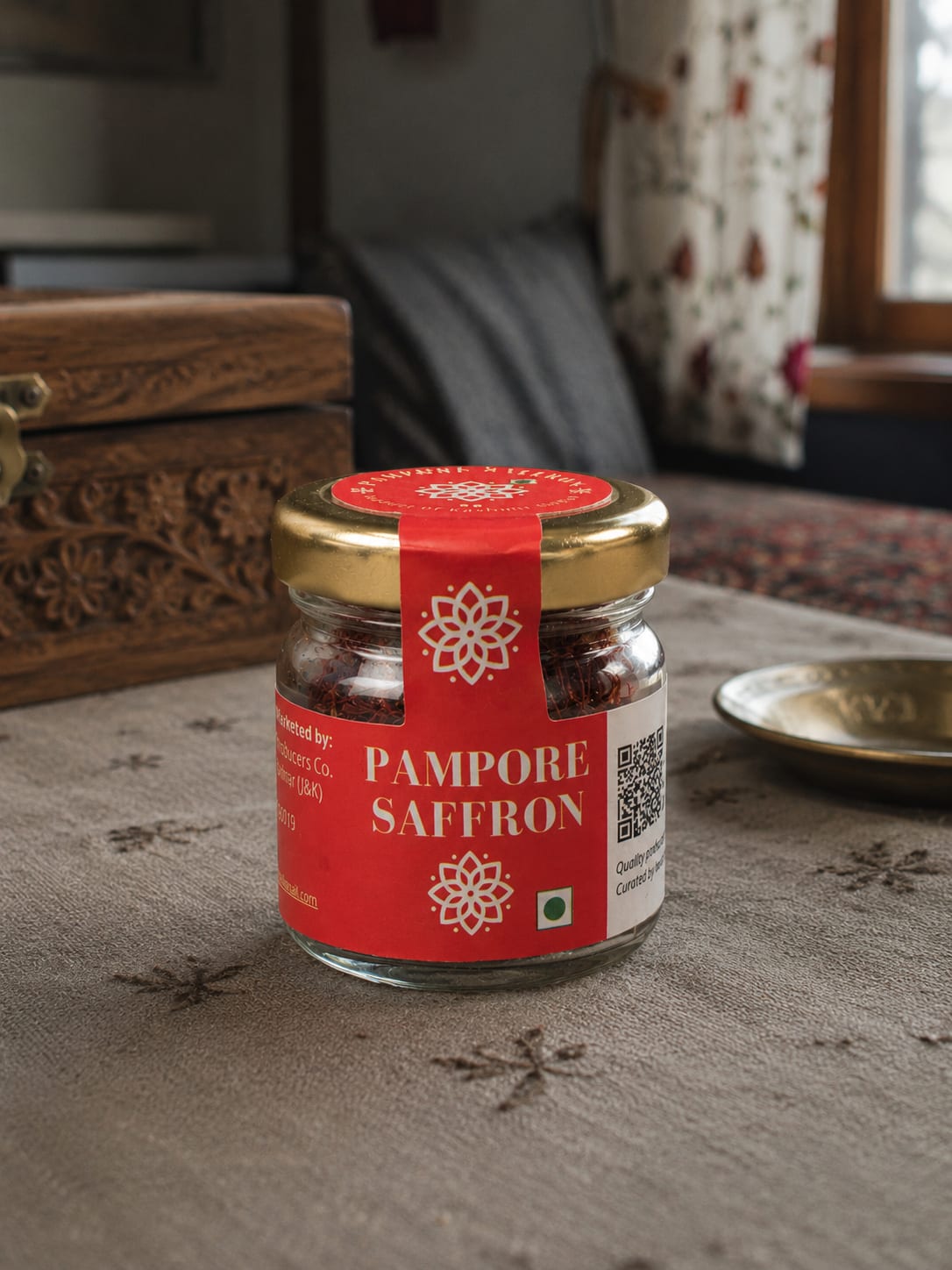
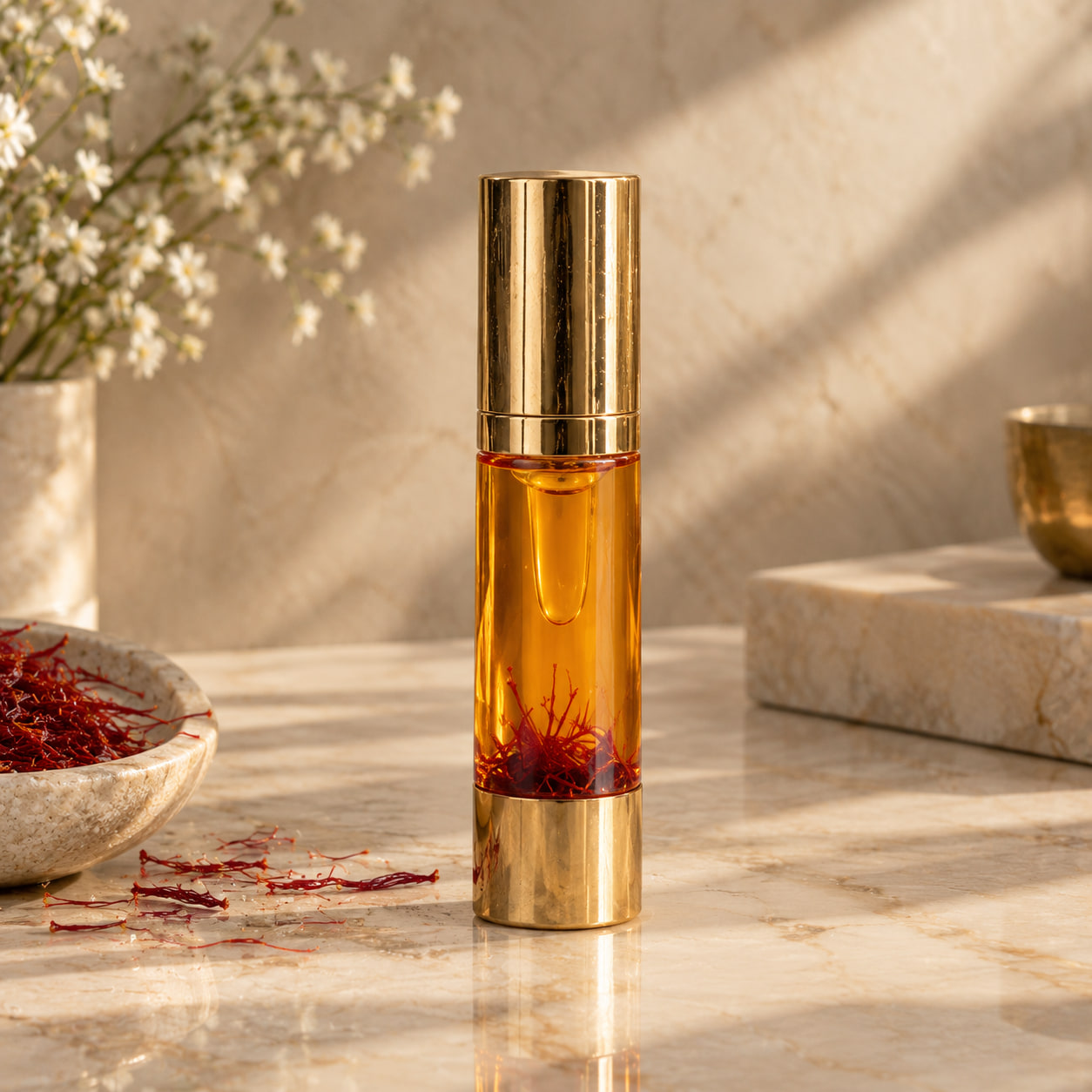
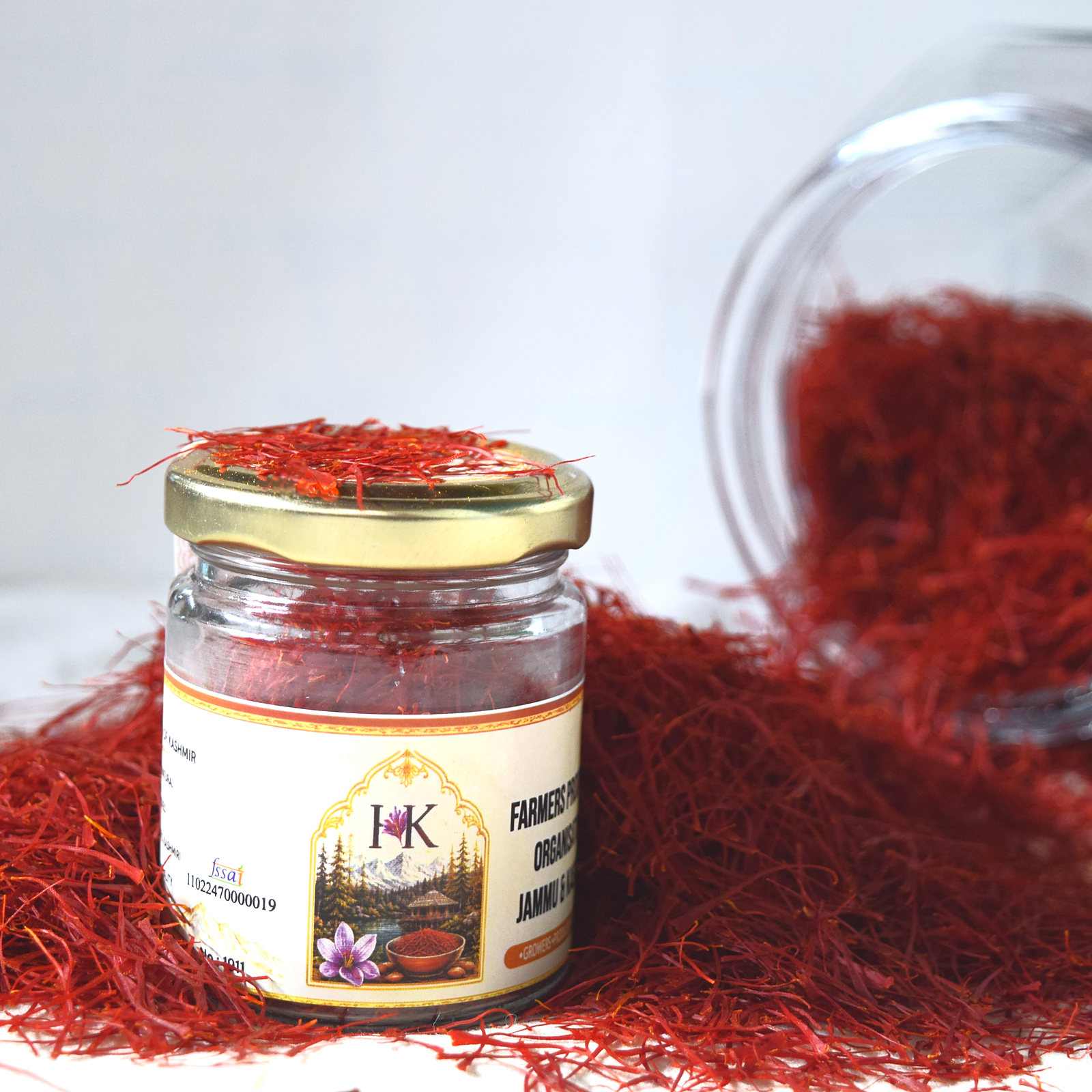
Raw Kashmiri honey infused with our own Mongra saffron from Pampore. Whole threads you can see in the jar.
Choose weight
₹649
500 g · GST-inclusive
FSSAI licence 11022470000019. The Heritage Kashmir — a brand of the Pampore Saffron Farmers Producers Organization, J&K.
The same Kashmiri Saffron Honey in every pack — only the quantity changes. The per-kg column is the honest comparison, and it is the one worth making against any other seller.
| Pack | Price | Per kg |
|---|---|---|
| 500 g | ₹649 | ₹1,298/kg |
| 1 kg | ₹1,249 | ₹1,249/kgbest value |
Prices as of 14 October 2026, GST included.
Kashmiri saffron honey — kesar honey, or kesar shahad (केसर शहद) — is raw single-origin honey from the Acacia and Kikar forests of Kashmir, infused with Mongra saffron from our own family fields in Pampore: half a gram of saffron in every 500 g jar. Nothing else goes in: no sugar, no glucose syrup, no colour and no flavouring, and the saffron threads stay in the jar where you can see them.
The honey is raw: never heated above hive temperature and only coarsely sieved, so it keeps the aroma it had when it left the comb. Steeped with Mongra threads, it slowly takes on a deeper gold and a warm, earthy saffron note over the light floral sweetness of the acacia bloom.
Why the threads matter. Saffron honey is easy to imitate with yellow colour and saffron flavouring. Whole threads you can see and lift out of the jar are the simplest check a buyer has that real saffron went in.
How to use: stir a teaspoon into warm — not boiling — milk or kahwa. Drizzle over toast, yoghurt, oatmeal or kheer. Each 500 g jar holds roughly 30-40 servings.
Storage: keep the jar sealed at room temperature, out of sunlight. Raw honey can granulate over time; stand the jar in warm water to liquefy it. Never microwave honey.
Compare on facts, not marketing.
| The Heritage Kashmir | Typical online sellers | |
|---|---|---|
| Where it comes from | Raw honey from Kashmiri beekeepers, infused with Mongra saffron from our own Pampore fields | Outsourced from mandis, importers or re-packers. Most brands, however big, do not own a farm. |
| Proof of what you get | Whole saffron threads you can see in the jar, FSSAI-licensed, origin details on every order | No verifiable proof — just a label |
| Freshness | Packed and dispatched within 48 hours of your order, tamper-sealed | Unknown stock age, often months old |
| Purity | Single-origin — never blended | Often honey or syrup with saffron colour and flavouring, no threads |
| Price | Best rate when you book direct on WhatsApp | Marked up by middlemen & marketplace fees |
Booking a larger order? Message us on WhatsApp for the best direct-from-farm rate.
Order on WhatsAppThis is raw Kashmiri honey infused with our own Mongra saffron, with the threads left in the jar. It is not a jar of saffron threads, and it is not plain honey.
Compare price per kilogram and the ingredient line, which should name honey and saffron and nothing else. Visible threads describe what went into the jar; they are not a substitute for a batch test report.
Read the seal, packing date and label. If testing determines your purchase, ask for the report covering the batch you are being sent rather than relying on a general purity slogan.
Kashmiri saffron honey — also called kesar honey or kesar shahad — is raw honey with real saffron threads steeped in it. Ours starts as raw single-origin honey from the Acacia and Kikar forests of Kashmir, never heated, and is infused with Mongra saffron from our own family fields in Pampore. The threads stay in the jar. Nothing else goes in: no sugar, no syrup, no colour and no flavouring.
Real honey and real saffron, and the jar shows you the saffron: whole threads you can see and lift out. Imitation saffron honey gets its gold from colour and its taste from flavouring, and has no threads to show. The honey underneath is raw single-origin acacia bloom, and the ingredient line names honey and saffron and nothing else. What we have not done is commission an NMR test on the honey, so we do not claim a lab result we do not have.
Raw acacia honey — called kikar locally, and often sold as Kashmiri white honey because it is so pale — from the Acacia and Kikar forests of the Kashmir valley, collected by traditional beekeepers and never heated. Acacia is the lightest and mildest of the valley's honeys and slow to crystallise, which is why it carries the saffron well. Our shop jar is this one, with Mongra saffron from our own fields in Pampore steeped in it; plain Kashmiri acacia (white) honey and black honey are available on request — ask on WhatsApp.
Half a gram (0.5 g) of Mongra saffron from our own fields in Pampore goes into every 500 g jar, so about a gram per kilo. At what Mongra saffron sells for, roughly ₹330-360 a gram, that is ₹165-180 of saffron in each 500 g jar, which is most of the difference between saffron honey and plain raw honey. The threads stay in the jar, so you can see them.
Yes, it is still good. Crystallisation is the glucose in raw honey coming out of solution, and heated, heavily filtered honey is processed specifically so that it never happens. Acacia honey is slower to granulate than most because of its high fructose share, so it may stay liquid for a long time. If it does set, stand the sealed jar in a bowl of warm, not boiling, water for fifteen to twenty minutes. Never microwave honey. The saffron threads are unaffected either way.
A teaspoon stirred into warm — not boiling — milk is the classic way: the honey sweetens it and the saffron turns it gold. It also goes into kahwa, over toast, yoghurt, oatmeal or kheer, and anywhere you would use honey and want the saffron to come through. Keep it away from boiling heat, which dulls the aroma of both. A 500 g jar holds roughly 30-40 servings.
Ours is ₹649 for a 500 g jar and ₹1,249 for a kilogram, so the kilo saves ₹49 against two 500 g jars. It costs more than plain raw honey because of the saffron in it: half a gram goes into every 500 g jar, and Kashmiri Mongra saffron sells at roughly ₹330-360 a gram. Saffron honey offered at plain-honey prices is worth asking about — what went into the jar, and how much of it.
Yes. Kesar is the Hindi and Urdu word for saffron and shahad is honey, so kesar honey, kesar shahad (केसर शहद) and saffron honey all mean honey with saffron in it. Zafran is the same spice under its Persian and Kashmiri name. What differs between jars is not the name but what is actually in them: real threads or colour and flavouring.
Not babies: no honey of any kind, saffron honey included, should be given to a child under 12 months old, because honey can carry spores that cause infant botulism. Older children can have it as food, the way they would have any honey — a little in warm milk or on toast.
No sugar is added to ours, but honey itself is mostly natural sugars — fructose and glucose — so a spoon of saffron honey counts as sugar in your diet the same way any honey does. If you are managing diabetes or blood sugar, ask your doctor how much honey suits you; the saffron does not change that.
Sealed and kept at room temperature out of sunlight, honey keeps for a very long time; use it within the best-before date on the jar. Crystallising is not spoiling. What to watch for is moisture: keep the lid tight and use a dry spoon, because honey that takes in water can ferment.
Saffron-infused honey: raw acacia honey steeped with our own Pampore saffron. We do not currently sell the honey plain. The pack selector shows the weights and prices.
500 g: ₹649; 1 kg: ₹1,249. Prices include GST. Select a pack to check availability. The store minimum is ₹600 per order. Prepaid delivery is ₹60 on every order, with priority dispatch: DTDC Express, 7–8 days, or DTDC Airmax, 3–5 days.
Reviews from buyers on this website come first, then reviews of the shop on Google.
Packaging is excellent. Delivery was on time. Honey 🍯 was superb... Tasty
Amazing aroma for the honey
 Ahmad basha SyedGoogle review · October 2026
Excellent quality saffron! The strands look fresh and premium, with a beautiful natural aroma and colour. The quality is genuinely impressive, and the packaging was neat and secure. Very happy with my purchase. Definitely worth buying! ❤️
 Danish HameedGoogle review · October 2026
Very goof quality
 Sheikh Tahfeez AhmadGoogle review · October 2026
Quality is superb
 THE KNOWN 1Google review · October 2026
Premium quality stuff 🤌🏻
 Bhat EhsanGoogle review · October 2026
Excellent
 FaizanGoogle review · October 2026
An exceptional experience! The quality of their Kashmiri dry fruits and authentic saffron is unmatched. Everything is incredibly fresh, packed beautifully, and tastes amazing. If you are looking for premium, genuine Kashmiri produce, this is the perfect place. Highly recommended!
 Kaaabir KhanGoogle review · October 2026
Superb Quality! And best price you will ever get Worthy Experience ❤️
 AyaN AmeenGoogle review · October 2026
beyond expectation... quanlity is really superb
 Majid RatherGoogle review · October 2026
Supr quality
 zaid khanGoogle review · October 2026
one of the best experiences.
 Arsalan ShahGoogle review · October 2026
Fresh dry fruits, good quality, and reasonable prices. Highly recommended!
 Rakib ZahoorGoogle review · October 2026
It's a great place. Quality is superb
 magray shakirGoogle review · October 2026
quality to b trusted
 Sheikh SaadGoogle review · October 2026
Very good quality
 suhaib QurashiGoogle review · October 2026
Superb quality 👌
 Kifayat FarooqGoogle review · October 2026
Great quality and awesome hospitality
 Sheikh TawqeerGoogle review · October 2026
Really good quality dry fruits and saffron. Everything felt fresh and authentic, and the service was warm and friendly. Definitely worth visiting if you’re looking for genuine Kashmiri products!
 rahilGoogle review · October 2026
Quality is amazing, loved it
 Zamin BashirGoogle review · October 2026
super quality
 Magandeep SinghGoogle review · October 2026
Quality is top notch and really fabulous! Authentic and amazing! Would recommend to everyone! 😍
 Naveed Mohammad pareyGoogle review · October 2026
“The saffron quality is genuinely impressive. Great aroma, vibrant colour, and a rich flavour. A wonderful product from Heritage Kashmir.”
 Bhat RakibGoogle review · October 2026
This product is just 🔥 Looks aesthetic, feels premium, and works perfectly. Instantly became my favourite. Quality 10/10.
 Kashif ShabirGoogle review · October 2026
Best quality ❤❤
 Yasir HamidGoogle review · October 2026
Outstanding
 moomin magrayGoogle review · October 2026
The overall experience was too good
 Masroor RiyazGoogle review · October 2026
Exceptional quality saffron with deep-red threads, an intense aroma, and rich, natural color in just a few strands
 Hammaad SuhailGoogle review · October 2026
Very good quality and completely pure.The quality is consistently excellent. Definitely one of the best places for genuine, high-quality products. Highly recommended!
 Sheikh AhsanGoogle review · October 2026
Great quality
 Khass NafarGoogle review · October 2026
Good quality
 XeropXGoogle review · October 2026
Best experience
 Rujhan RatherGoogle review · October 2026
excellent quality
 Mozin GaniGoogle review · October 2026
Pure saffron quality with genuine prize.
 Moien ShabanGoogle review · October 2026
Really impressed with the quality of the saffron from The Heritage Kashmir. The saffron has a beautiful natural aroma, rich colour, and the quality feels genuinely premium. The packaging was also neat and secure. Overall, a very good experience and I’m definitely satisfied with my purchase. Highly recommended! ❤️
 MOHAMMAD ALEEMGoogle review · October 2026
Good-quality natural products with neat packaging. The saffron has a lovely aroma,Smooth delivery and a great overall experience. Would definitely recommend!
 Shahid NisarGoogle review · October 2026
Good quality stuff
 Shaiq NabiGoogle review · October 2026
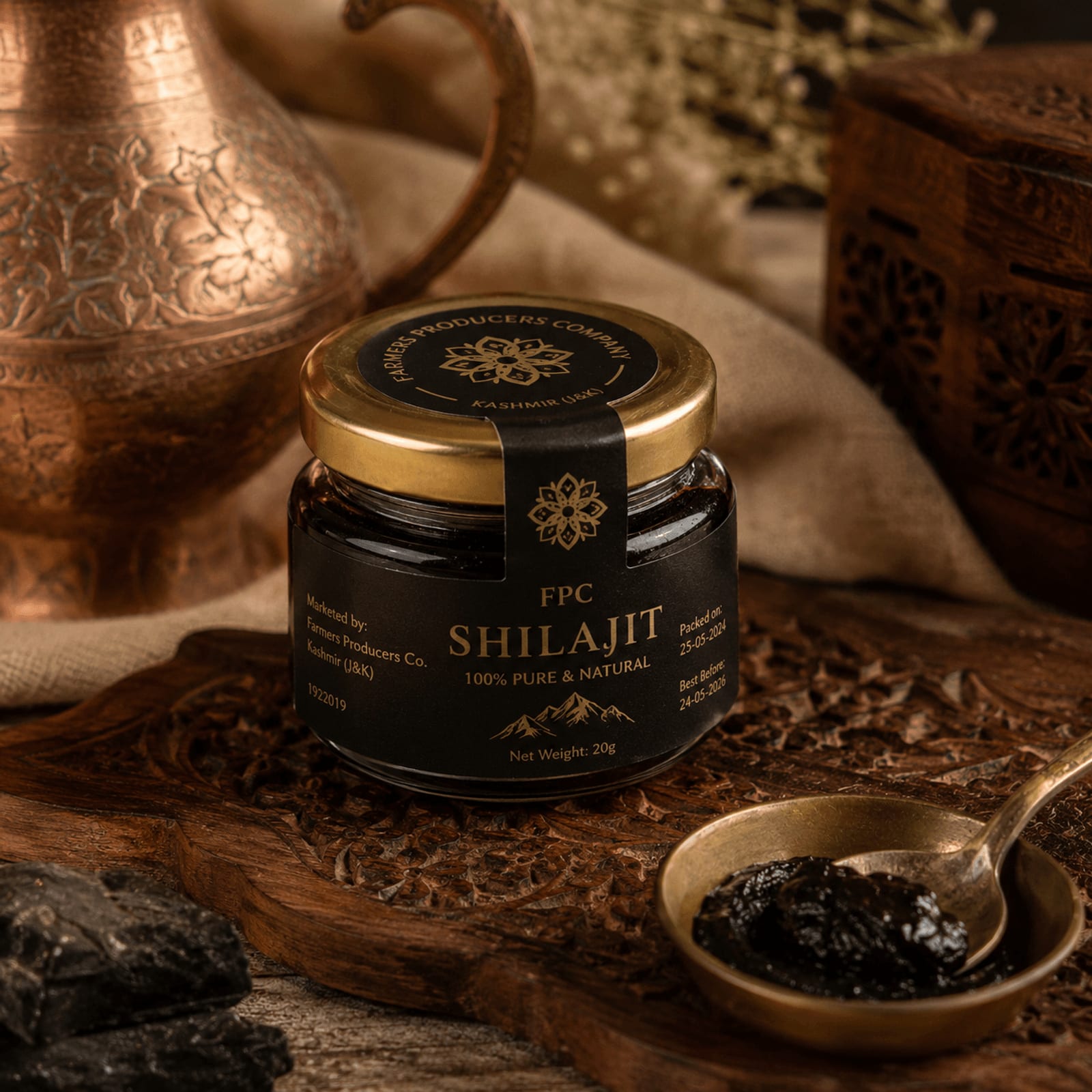
Good-quality natural products with neat packaging. The saffron has a lovely aroma, and the shilajit feels authentic and well-presented. Smooth delivery and a great overall experience. Would definitely recommend!
 PEACE FOUNDATIONGoogle review · October 2026
I purchased saffron from your website.... It was really nice ,authentic.. delivery was on time...... Quality, it was super awesome.......
 wani musavirGoogle review · October 2026
Trustworthy service and quality products.
 Rahul MauryaGoogle review · October 2026
Bought from here a few times now. Always got 10/10 quality saffron & dry fruits. Easily one of the best in Kashmir
 Naveen SonyGoogle review · October 2026
i bought saffron powder and it was extremely good. the quality was excellent and i was really happy with the product. delivery was also smooth and everything was well packed. really satisfied with my purchase and would definitely recommend them.
 Pranav MishraGoogle review · October 2026
Really good stuff icl, greatest saffron and dryfruits seller in the multiverse
 Imad WaniGoogle review · October 2026
They sell iso grade 1 Saffron and that is unheard from other sellers. Wishing you lots of success with this amazing journey.
 Sadaa SadaariyazGoogle review · October 2026
Wishing Kashmir Heritage huge success and hoping it reaches people all across the country. Keep going and keep making Kashmir proud! 🤝✨
 AFTAB WANIGoogle review · October 2026
Proud to see kashmir heritage promoting The saffron, looks authentic, has a beautiful aroma, and gives a lovely natural colour and flavour. The packaging was also good. Highly recommended for anyone looking for quality Kashmiri saffron. 🌸❤️
 Suhaib MirGoogle review · October 2026
Mudasir is a great businessman, I have known him for long and he cares about his customers
 faizan bashirGoogle review · October 2026
Very nice and 100% authentic products💕
 Faisal QayoomGoogle review · October 2026
Excellent quality and freshness! The dry fruits were fresh, tasty, and well-packed. Great quality at a reasonable price. Highly recommended! ⭐⭐⭐⭐⭐
 Maaid Farooq WaniGoogle review · October 2026
Exceptional. Quality is fantastic. I compared your product with top bands out in market and I found your product best. Quality is superb
 Daily Quran_360Google review · October 2026
Original story.
 Kashish KhanGoogle review · October 2026
Thank you
 Ayushi TiwariGoogle review · October 2026
Thank you
 Bhatt YawerGoogle review · October 2026
🔥💝
 lone hashimGoogle review · October 2026
Thank you
 Fahadsajad BhatGoogle review · October 2026
Rated five stars on Google.
 Tawqeer NazirGoogle review · October 2026
Rated five stars on Google.
 Mohsin BhatGoogle review · October 2026
Rated five stars on Google.
 Saqib AltafGoogle review · October 2026
Rated five stars on Google.
 TerminatorGoogle review · October 2026
Rated five stars on Google.
 Shamiq ShafiGoogle review · October 2026
Rated five stars on Google.
 Suhail ShafiGoogle review · October 2026
Rated five stars on Google.
 Jitendra Kumar PradhanGoogle review · October 2026
Rated five stars on Google.
 TawseefGoogle review · October 2026
Rated five stars on Google.
 anit beniwalGoogle review · October 2026
Rated five stars on Google.
Our shop is rated 5.0 out of 5 from 63 Google reviews