Let us start with respect: Iranian saffron is real saffron, grown at remarkable scale, and much of the world’s kesar rightly comes from it. The problem is not Iranian saffron — it is Iranian saffron sold as Kashmiri at a Kashmiri price. As Pampore growers, we sit on one side of this comparison, so we will keep to differences you can verify yourself.
1. The plant is the same; the terroir is not
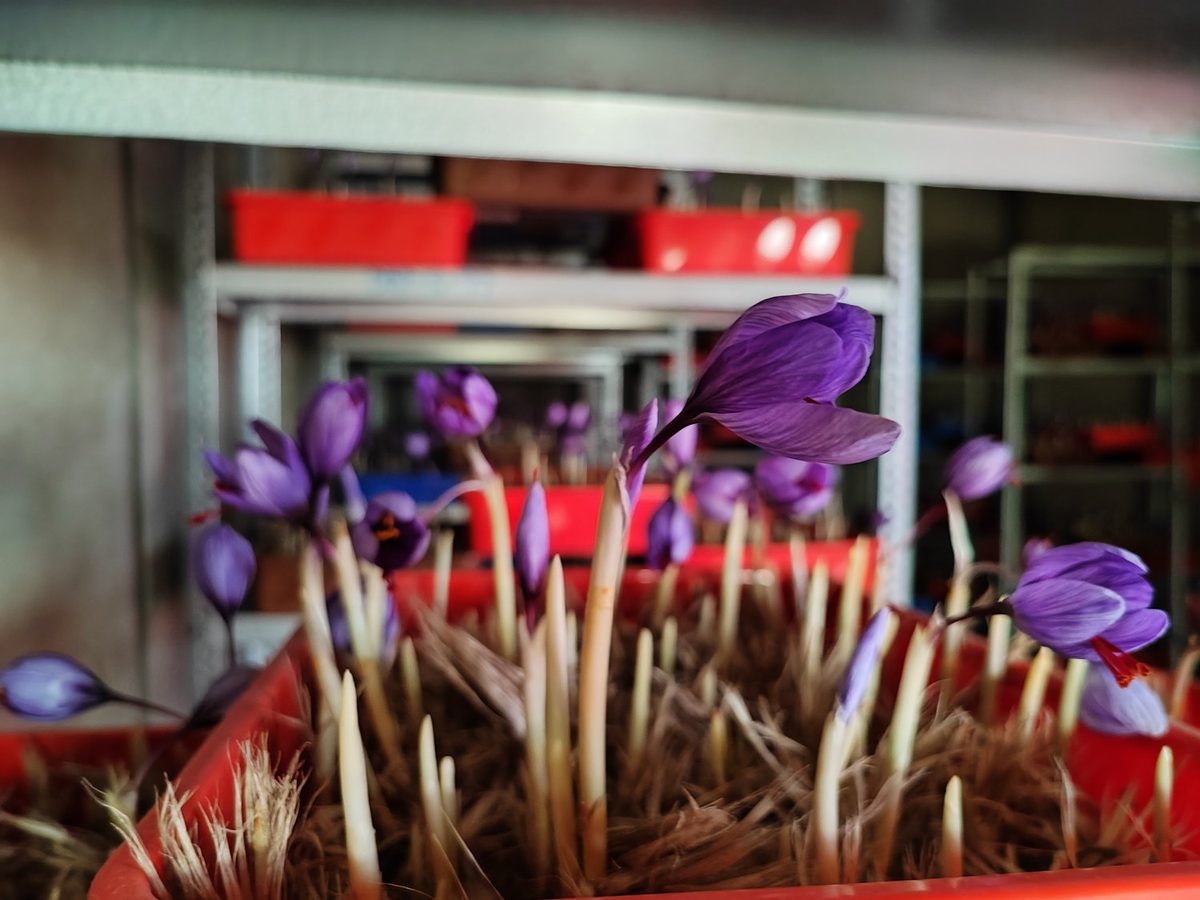
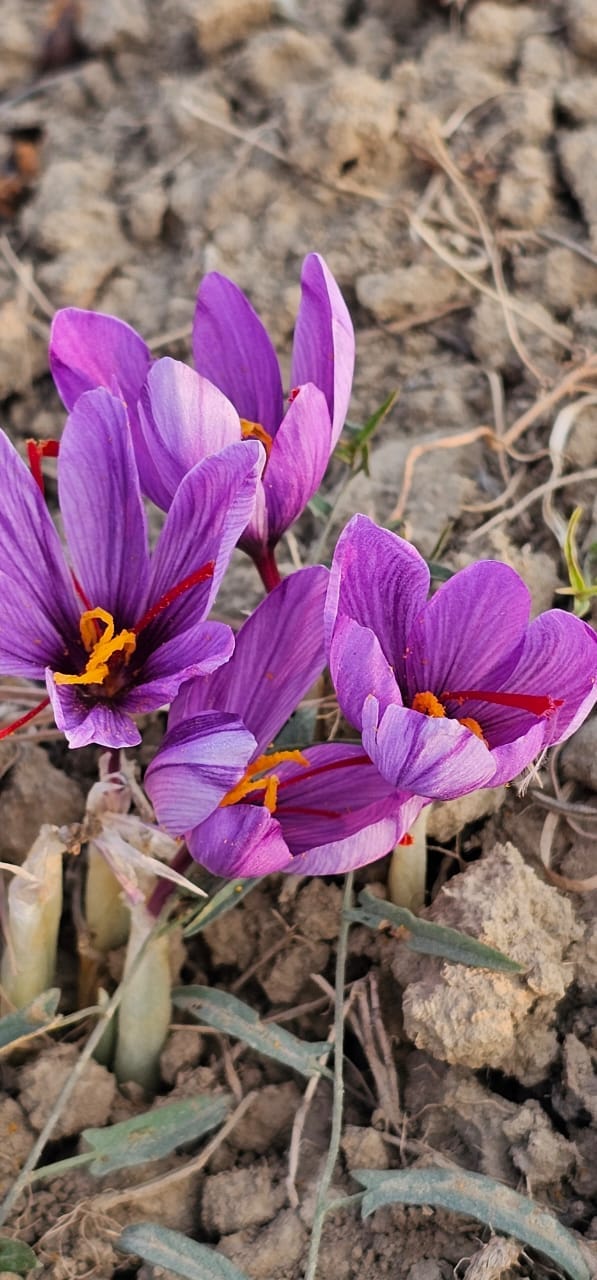
Both origins grow Crocus sativus. What differs is where: the Kashmir valley’s karewa — lacustrine highland soil at ~1,600m with cold autumns — produces a thicker stigma with more concentrated pigment. Iran’s vast Khorasan plains produce longer, thinner threads in far greater volume. Same species, different expression — like Darjeeling and Assam tea.
2. Thread anatomy
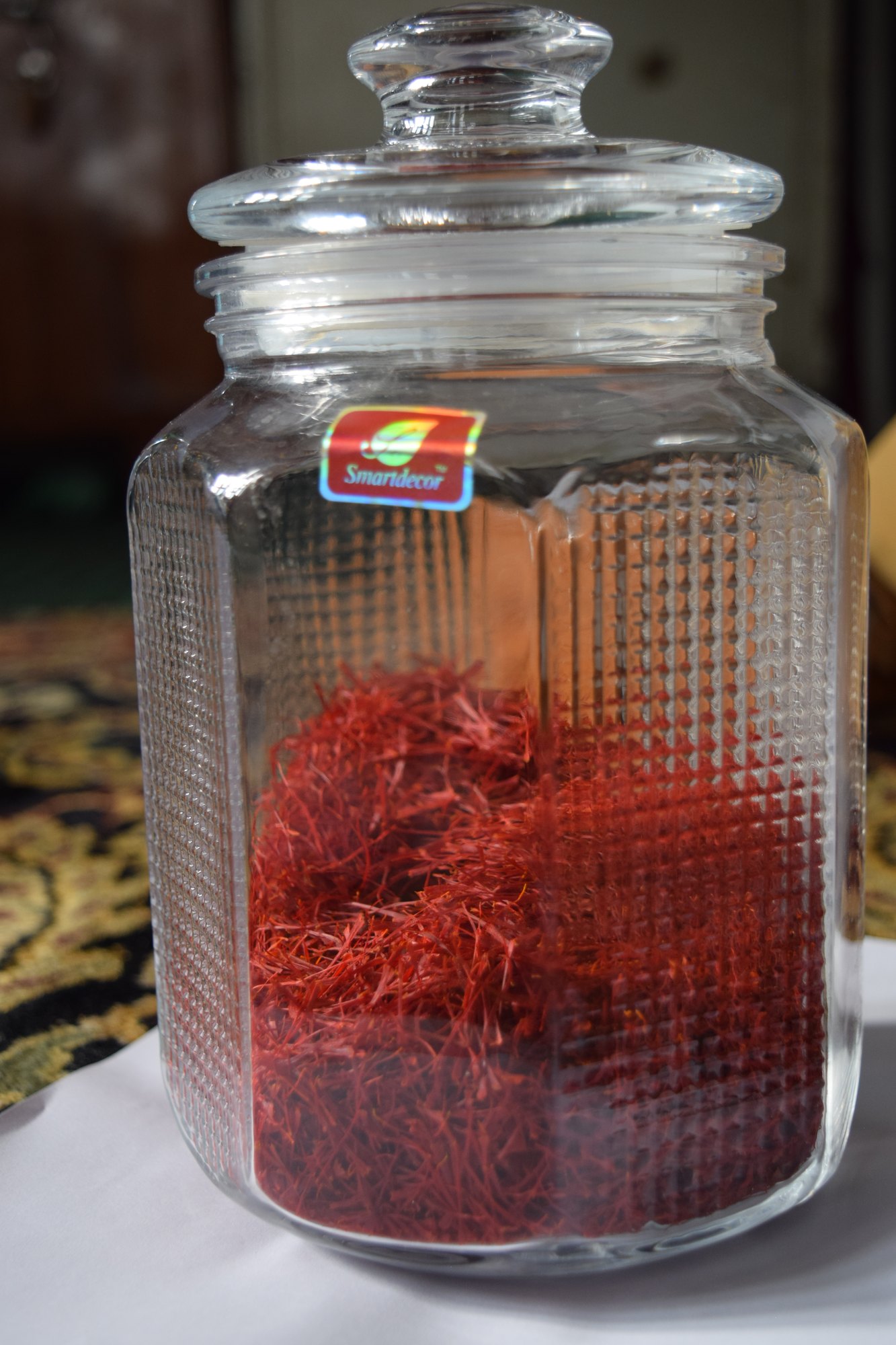
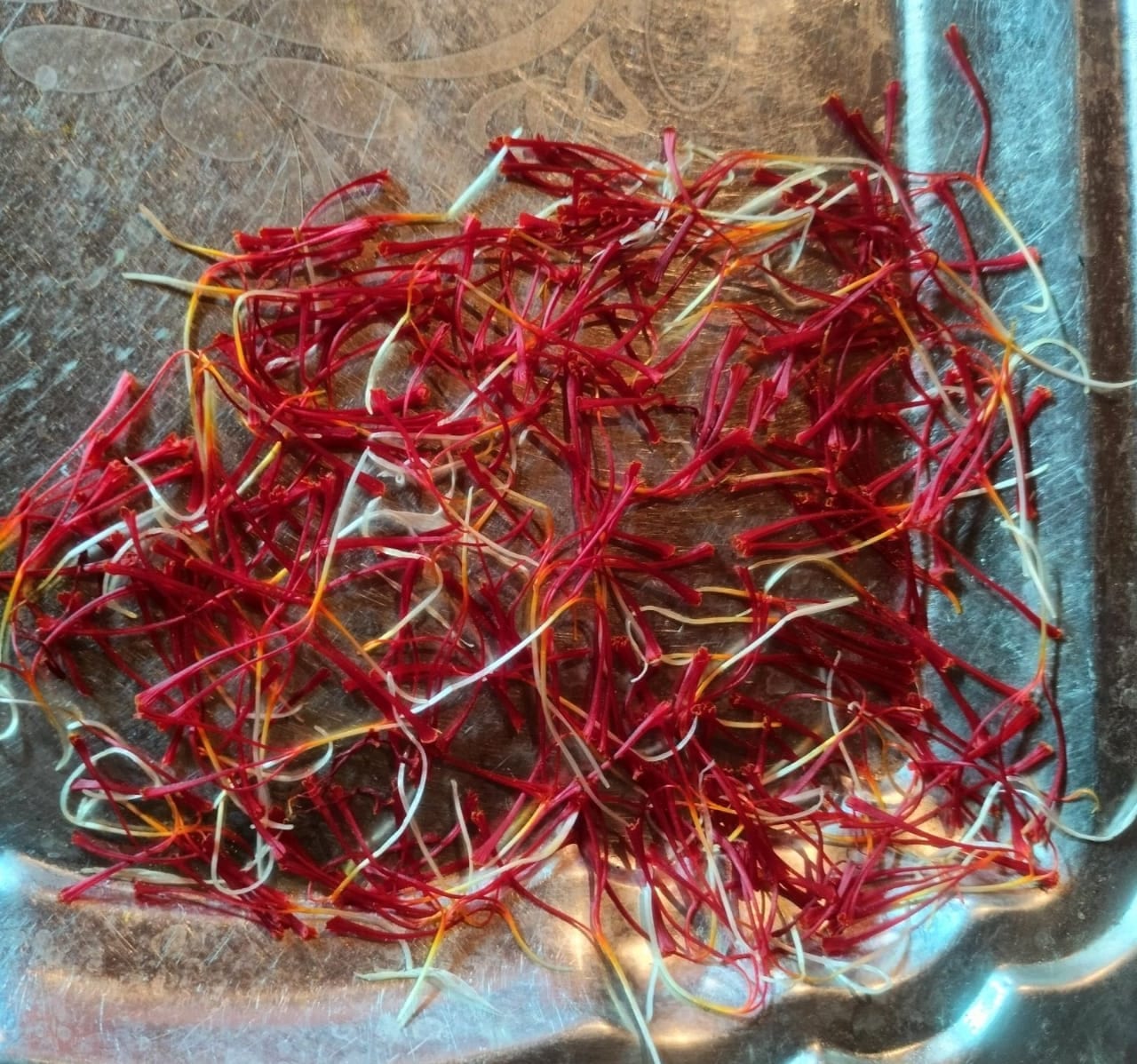
- Kashmiri Mongra: short, thick, deep crimson, flared trumpet head. Only the red stigma tip — the style is cut away.
- Iranian Negin/Sargol: longer, straighter, thinner, lighter red.
Put threads of each on white paper and the difference is obvious even to a first-time buyer.
3. Lab numbers: crocin strength
The ISO 3632 standard measures crocin (colour), safranal (aroma) and picrocrocin (taste). Kashmiri Mongra consistently posts among the highest crocin readings of any origin — which is why a smaller pinch colours a full pot. That strength is the honest justification for its higher price per gram.
4. Aroma profile
Kashmiri saffron smells of honey over fresh hay — warm and rounded. Iranian saffron is brighter and sharper. Neither is “wrong”, but in kahwa and milk-based sweets, the Kashmiri profile is what Indian kitchens expect.
5. Scale — and why it matters to you
Iran harvests hundreds of tonnes a year; the entire Kashmir valley, a few. That scale gap is why genuine Kashmiri saffron cannot be cheap, and why a marketplace flooded with “Kashmiri kesar” at Iranian prices is arithmetically impossible. Someone in that chain is renaming the origin.
6. The legal line: the GI tag
Since 2020, Kashmir saffron holds a Geographical Indication — only saffron grown in the valley (Pampore, Pulwama, Budgam, Kishtwar) may be sold under the name. We’ve explained how the certification and its QR verification work in our GI tag guide. If a “Kashmiri” jar has no GI paperwork and no lab card, treat the origin claim as decoration.
7. Traceability
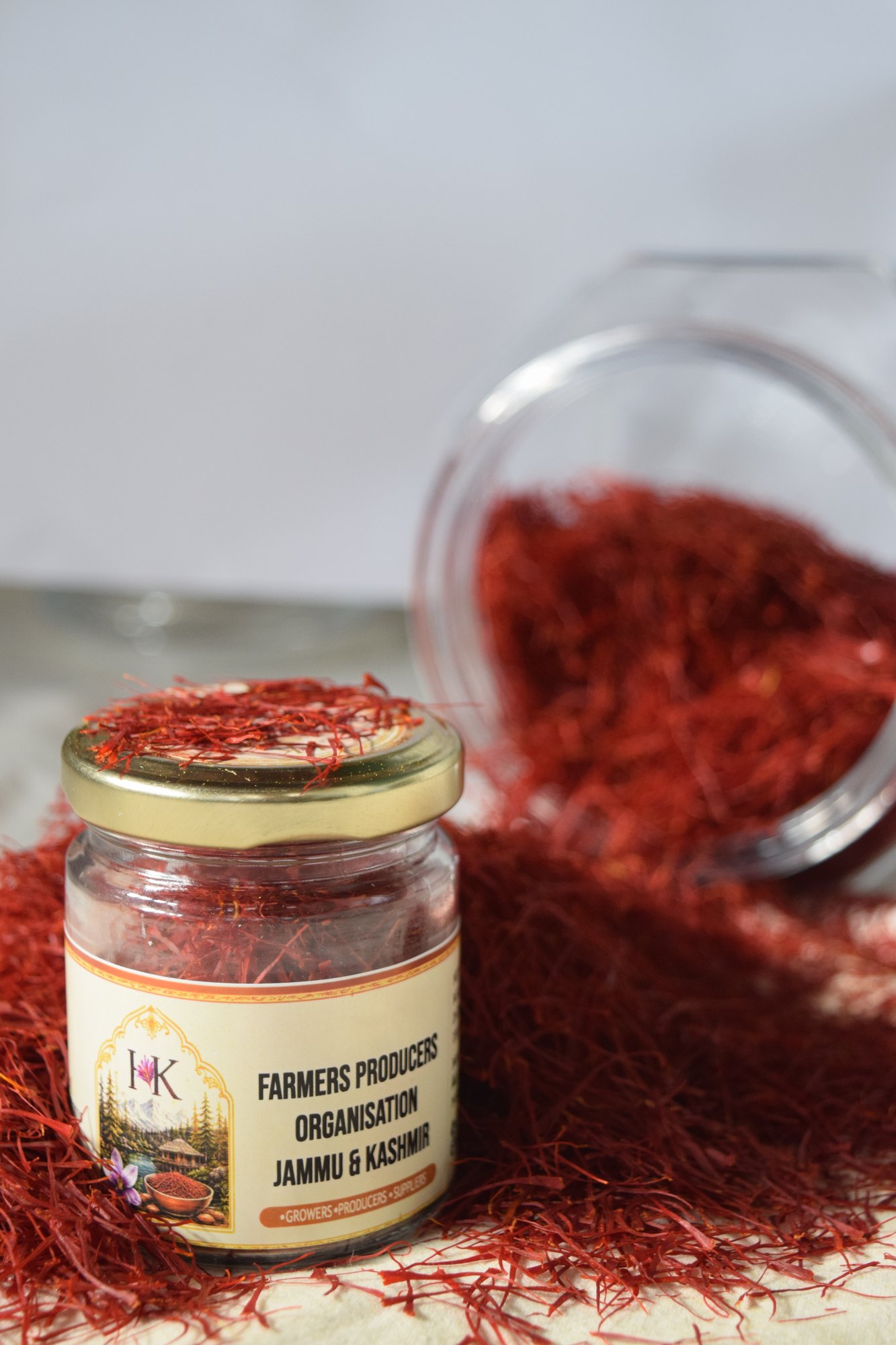
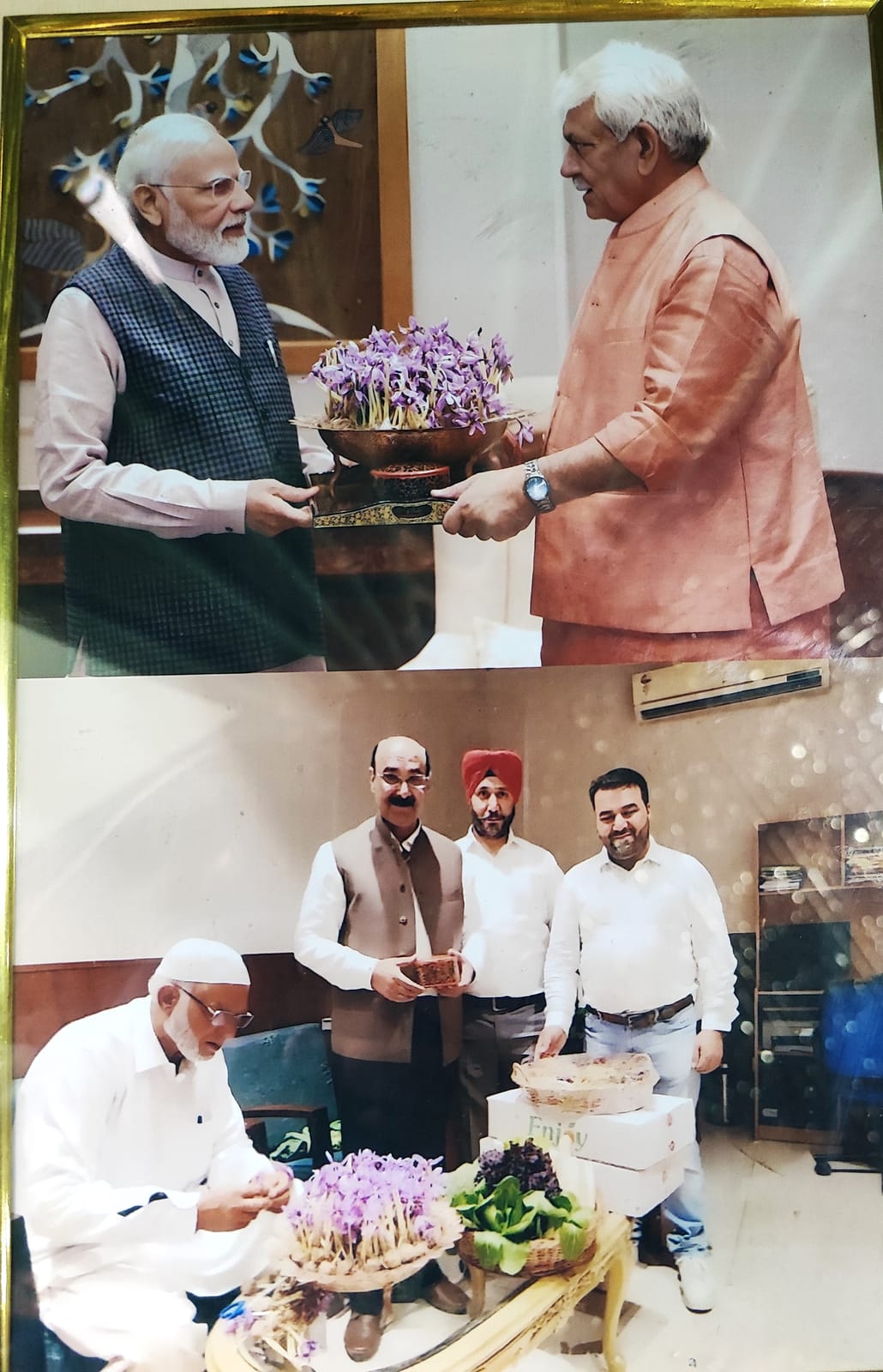
Imported bulk saffron passes through many hands before reaching a jar. Single-family saffron passes through one. Ours is picked, separated, graded and packed by the family you can see on our growing process page — the same harvest that has been honoured nationally (see awards & media), sealed at source by the family that grew it.
The numbers behind the difference
Two figures explain almost everything about this comparison — one about scale, one about chemistry.
| Iran | Kashmir | |
|---|---|---|
| Share of world production | ~88% | ~7% (all of India) |
| Area under saffron | ~30,000 hectares | ~3,715 hectares |
| Annual output | 300+ tonnes | ~5.6 tonnes |
| Crocin content (reported) | ~6.82% | ~8.72% |
| GI protection | None | GI No. 635, granted 2020 |
Crocin is the compound that carries colour, and the roughly two percentage points separating the two origins is the entire practical difference at the stove: fewer Kashmiri threads reach the same colour. That is also precisely why substitution is profitable — Iranian saffron costs a fraction as much, and once threads are in an unmarked jar, only a laboratory can tell them apart.
The scale figures explain the rest. Kashmir grows roughly one fifty-fourth of Iran’s tonnage, and Kashmiri production has itself fallen from about 16 tonnes to 5.6 tonnes over roughly two decades. Demand for the name vastly exceeds what the valley can supply. Arithmetic alone tells you that most saffron sold worldwide as “Kashmiri” cannot be.
What ISO 3632 actually measures
Both origins are graded against the same international standard, and it is worth knowing what the categories mean, because sellers quote “Grade I” freely and few buyers know what it certifies. ISO 3632 sorts saffron by laboratory absorbance readings for three compounds plus moisture:
| Category | Crocin (colour) | Picrocrocin (taste) | Safranal (aroma) |
|---|---|---|---|
| Category I | ≥ 190 | > 70 | 20–50 |
| Category II | ~150–190 | lower | 20–50 |
| Category III | ~110–150 | lower still | 20–50 |
Two things follow. First, ISO 3632 is a quality standard, not an origin standard — Iranian saffron can and often does meet Category I. A Grade I claim says nothing whatsoever about where the crocus grew. Second, the only origin claim with legal weight behind it is the GI tag, which is why we keep returning to it in the GI tag explainer. Grade answers “how good”. GI answers “from where”. You need both, and most sellers quote only the first.
The bottom line
Buy Iranian saffron when you want good saffron at volume — just buy it labelled as what it is. Buy Kashmiri Mongra when you want maximum colour and aroma per thread, and insist on the paperwork that proves the name: the Government of India’s GI tag on the origin, and a licensed grower who will tell you which field it came from — both true of our Kashmiri saffron — or explore the whole range from the home page.