Kesar kheer is rice slow-cooked in full-cream milk until the milk thickens and the grains melt into it, sweetened, scented with cardamom and finished with saffron. The one rule: steep the saffron separately and stir it in at the end, off the heat — never boil it hard with the rice. Forty minutes on the flame burns off the aroma you paid for, and leaves a pudding that is yellow but smells only of milk.
Kesar kheer recipe (serves 4)
Prep: 30 minutes (rice soak) · Cook: 55 minutes · Total: about 1 hour 25 minutes
Ingredients
- 1 litre full-cream milk, plus 2 tablespoons warm milk for the saffron
- ¼ cup (50 g) short-grain rice, washed and soaked 30 minutes
- ⅓ cup (70 g) sugar
- 4 green cardamom pods, seeds lightly crushed
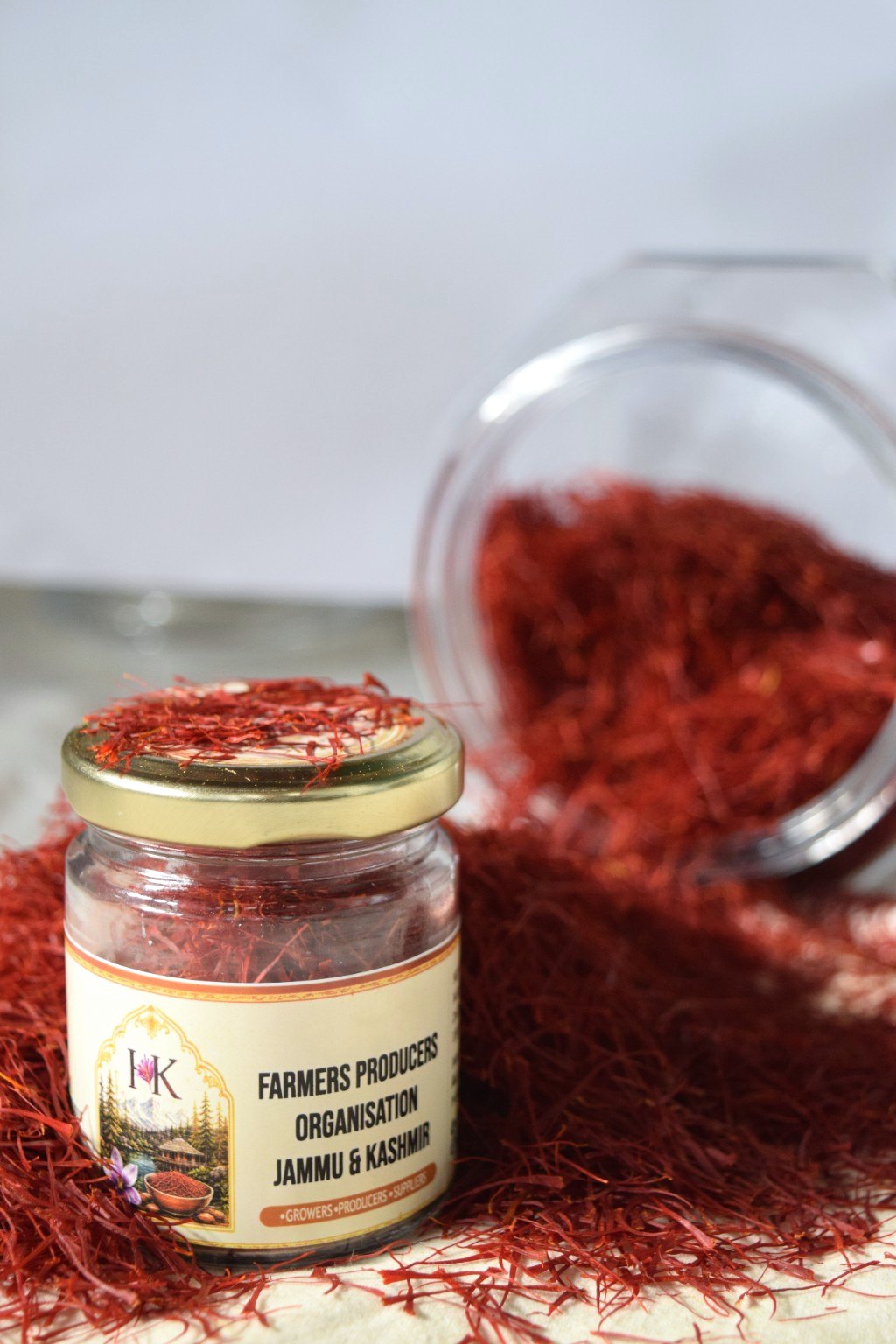
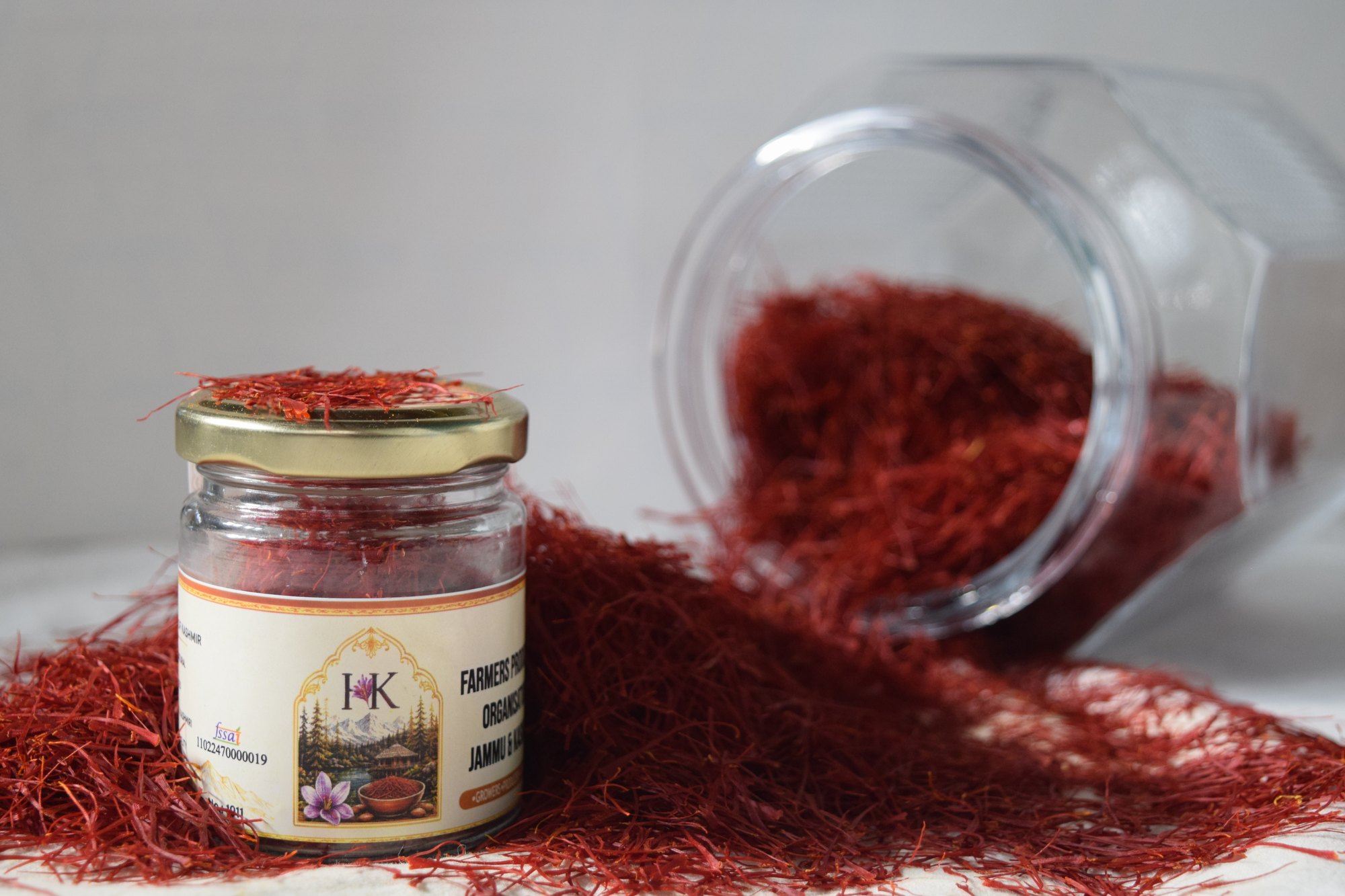
- 10–12 strands Kashmiri saffron
- 12–15 mamra almonds, slivered
- Optional: 4–5 walnut halves, chopped, or 2 dried figs, finely chopped
Method
- Soak the rice. Wash the rice until the water runs clear, then soak it for 30 minutes.
- Boil the milk. Bring the litre of milk to the boil in a wide, heavy-bottomed pan — about 10 minutes on medium heat. Stir so it does not catch.
- Simmer the rice. Drain the rice and add it to the boiling milk. Lower the heat and simmer gently for 35–40 minutes, stirring every few minutes and scraping the bottom and sides, until the rice is completely soft and the milk has reduced by about a third.
- Steep the saffron. While the kheer simmers, put the 10–12 saffron strands in 2 tablespoons of warm milk, cover, and leave for 15 minutes.
- Sweeten. Add the sugar and crushed cardamom and simmer 5 minutes more, stirring, until the sugar has dissolved.
- Finish off the heat. Take the pan off the flame. Stir in the saffron milk with its threads and most of the almonds. Rest 5 minutes, then serve warm or chilled with the remaining almonds (and the walnuts or figs, if using) on top.
How you know it is done: a grain of rice pressed between two fingers crushes to nothing; the kheer coats the back of a spoon and a line drawn through it holds for a second; the milk has turned a faint ivory. Stop while it looks a little looser than you want — kheer keeps thickening as it cools, and thickens a great deal more in the fridge.
Which rice to use
Short-grain rice gives up starch readily, and that starch is what turns a pan of milk into a creamy pudding. Small fragrant varieties such as gobindobhog or sona masoori are ideal; broken basmati works well too, and is cheaper. Long, aged basmati grains look elegant but stay separate and make a thinner kheer. Soaking for half an hour shortens the cooking time and helps the grains soften evenly. Some cooks crush the soaked rice lightly between their palms before it goes in — it releases starch faster and gives a smoother kheer.
How much saffron, and when
For a litre of milk serving four, 10–12 strands is right. That works out to roughly three strands a bowl, comfortably within the 3–5 strands a day (roughly 20–30 mg) that is the sensible household amount. More saffron does not make a better kheer: past a point the bitter compound picrocrocin takes over and the pudding tastes medicinal.
Timing matters more than quantity. Crocin, the colour, survives heat reasonably well; safranal, the aroma, is volatile and leaves with the steam. So the threads steep in warm milk while the rice cooks, and go in only once the pan is off the flame. The general method — for biryani, milk and baking too — is in how to use saffron, and the same principle drives our kesar badam milk.
If 12 good strands leave your kheer pale, the saffron is the problem, not the quantity. Dyed or old saffron bleeds colour instantly and then has nothing more to give; genuine threads release gold slowly over 10–15 minutes. The checks are in how to identify real Kashmiri saffron.
The Kashmiri touch
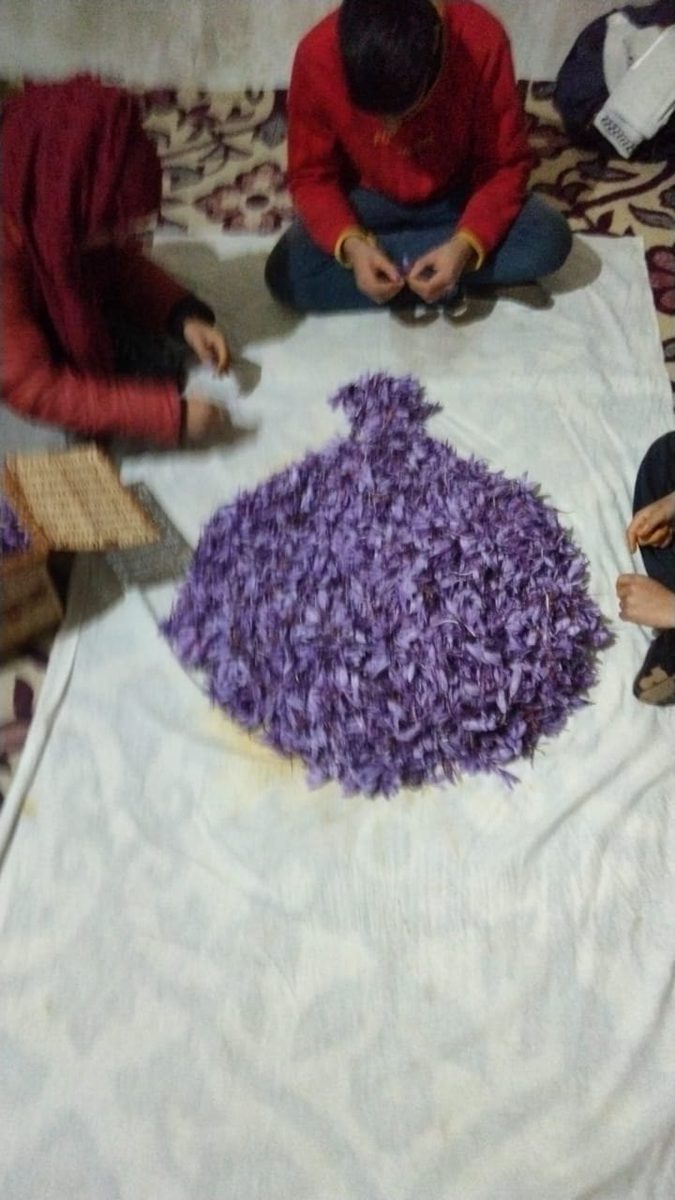
In Kashmiri, saffron is kong, and in Pampore it is the crop the year turns on. Kheer is made across India, but in Kashmiri homes the milk pudding you are more likely to meet at a wedding or on Eid is phirni — made with ground rice rather than whole grains, set in small earthenware bowls and topped with almonds and a few saffron threads. The kheer on this page sits close to it in spirit: generous with nuts, restrained with sugar, and finished with saffron rather than cooked with it.
The way we serve it at home is simple. Slivered almonds and a couple of loose saffron threads on top of each bowl, where they can be seen; in winter, a few chopped Kashmiri walnuts as well. Elsewhere in India kheer is a festival dish above all — it is on many tables, and many altars, at Diwali, and a pot of kesar kheer is one of the easiest things to make ahead for a full house.
Variations
- Jaggery kheer. Swap the sugar for the same weight of grated jaggery, but add it off the heat after the kheer has cooled for 10 minutes. Jaggery is slightly acidic and can split hot milk.
- Dried fig. Two finely chopped dried figs stirred in with the sugar add natural sweetness, so you can cut the sugar by a third.
- Makhana kheer. Replace the rice with a cup of lightly roasted, roughly crushed makhana (fox nuts) and simmer 15–20 minutes instead of 40. Saffron goes in the same way.
- A note on vermicelli. The same milk-sugar-saffron base cooked with roasted vermicelli instead of rice is seviyan — a different dish with its own method, so we leave it for another day.
Storing kheer
Cool it, cover it, and refrigerate: kheer keeps for two to three days. It sets firm overnight, so loosen it with a splash of warm milk and stir before serving, whether you want it warm or cold. The saffron colour deepens a little overnight, which is no bad thing. Freezing is not worth it — the rice turns grainy when it thaws. Keep the jar of saffron itself sealed, away from light and out of the fridge.
Common mistakes
- Boiling the saffron with the rice. Colour survives, aroma does not. Steep separately, add off the heat.
- A thin pan on high heat. Milk scorches on the bottom and the whole pot tastes burnt. Use a heavy pan, keep it at a gentle simmer, and scrape the base as you stir.
- Adding sugar too early. Sugar slows the rice softening. It goes in only once the grains are fully cooked.
- Toned or skimmed milk. There is not enough fat to make it creamy, and you end up reducing it for an hour. Full-cream milk is the recipe.
- Cooking it until it looks finished. If it is as thick as you want in the pan, it will be stodgy in the bowl.
- A pinch of weak saffron instead of a few strong threads. More product, a duller kheer.
Kheer is everyday food, not medicine, and we make no claims for it beyond that. If you are expecting and wondering about saffron, our saffron during pregnancy guide covers it, and your doctor has the final word.
The two ingredients that decide it
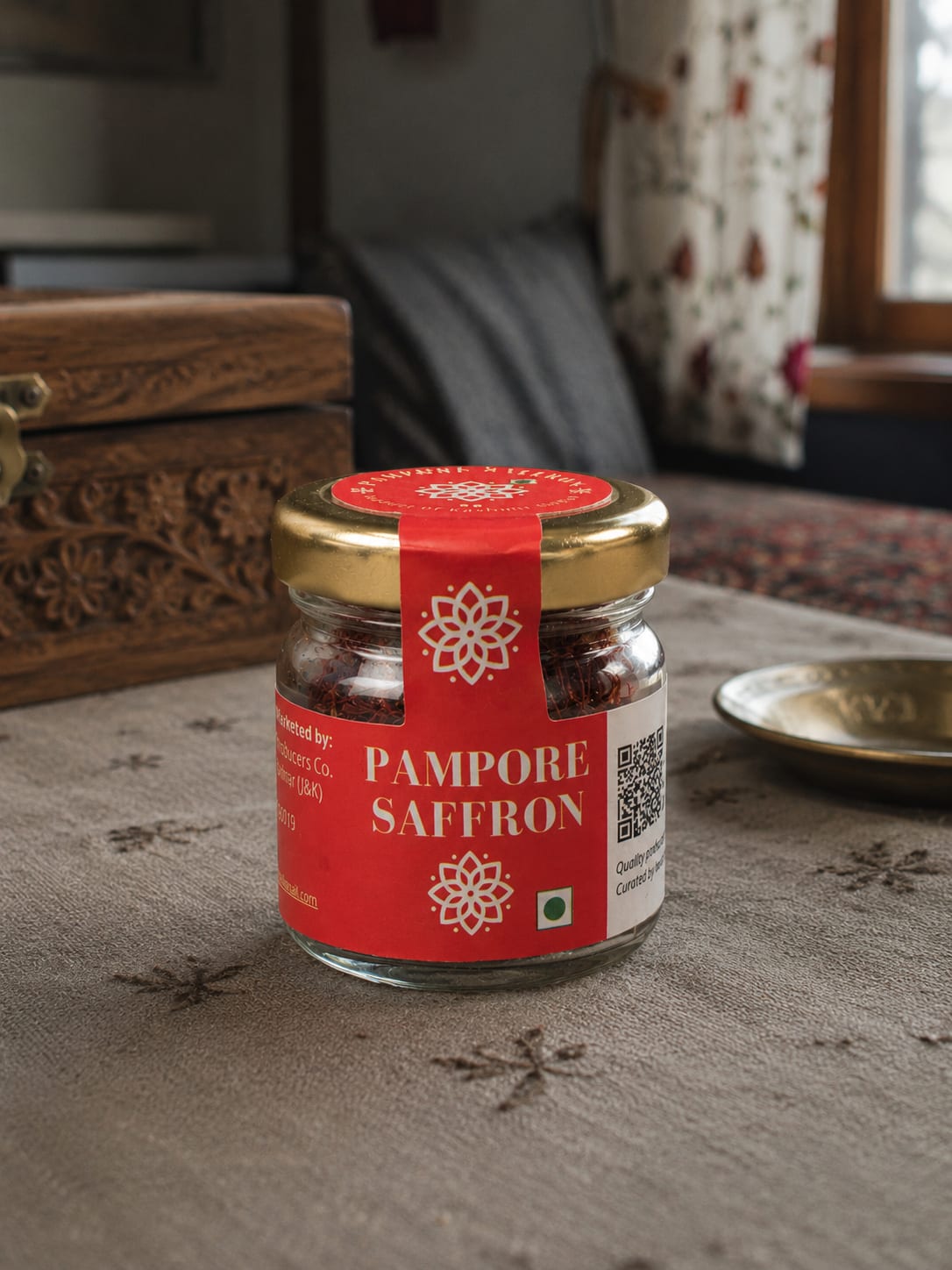
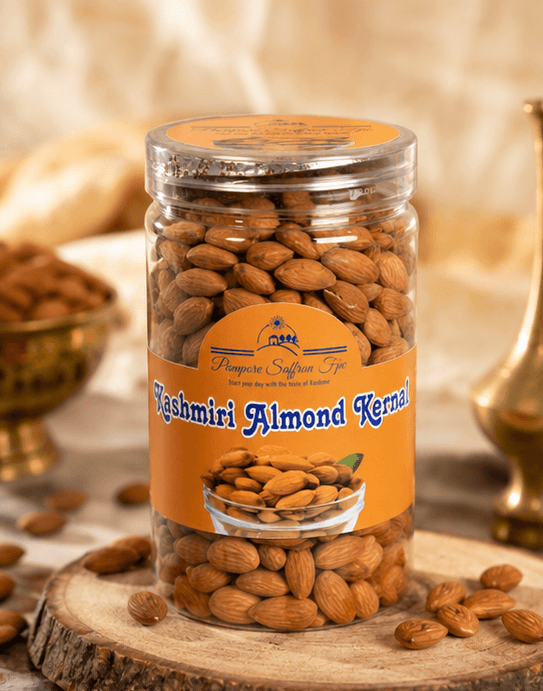
With so few ingredients, the saffron and the almonds have nowhere to hide. Our Mongra saffron is grown and hand-sorted by our family in Pampore, and tested ISO 3632 Grade I by the IIKSTC Quality Evaluation Laboratory — the full report is on our lab reports page. Our mamra almonds are small, wrinkled and oil-rich, and slice into sweet, crisp slivers that hold up on a bowl of warm kheer. Twelve strands and a handful of almonds, and the pot is made.