The short answer first: 3–5 strands of real Kashmiri saffron a day — roughly 20–30 milligrams — is the sensible daily amount. It is the quantity most published studies actually used, it is what saffron-growing households in Pampore consume themselves, and it is enough to turn a full glass of milk deep gold. Everything above that mostly makes the glass more expensive.
Why 30 mg became the standard
Modern research on saffron — for mood, sleep and general wellbeing — overwhelmingly tested 28–30 mg per day, usually split into one or two doses. That was not an accident: researchers copied the traditional kitchen amount, because centuries of daily use in Kashmir and Persia had already established it as safe and effective. Framed honestly, the way we frame all our saffron benefits writing: research suggests, tradition confirms, and neither needs a tablespoon.
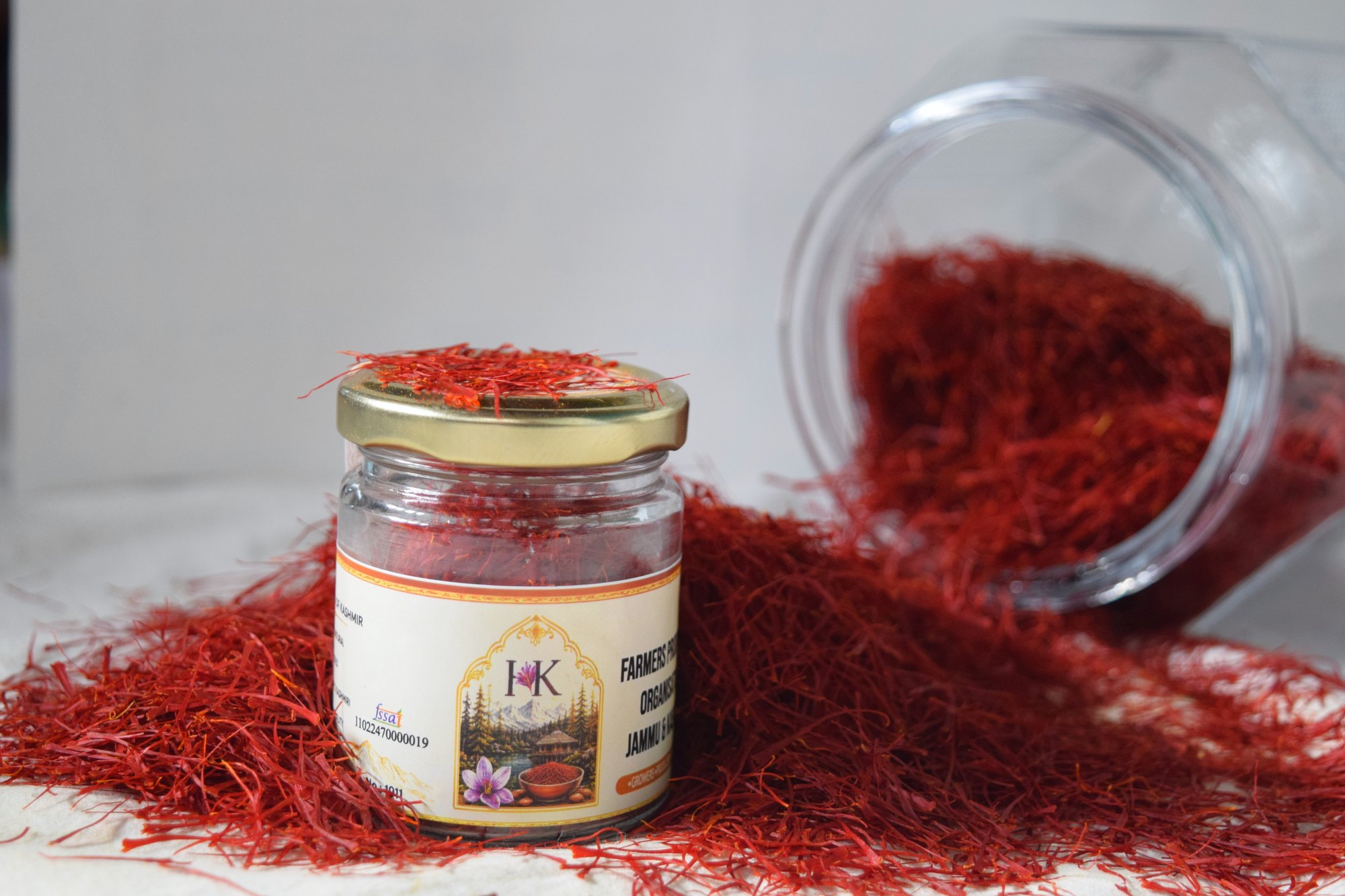
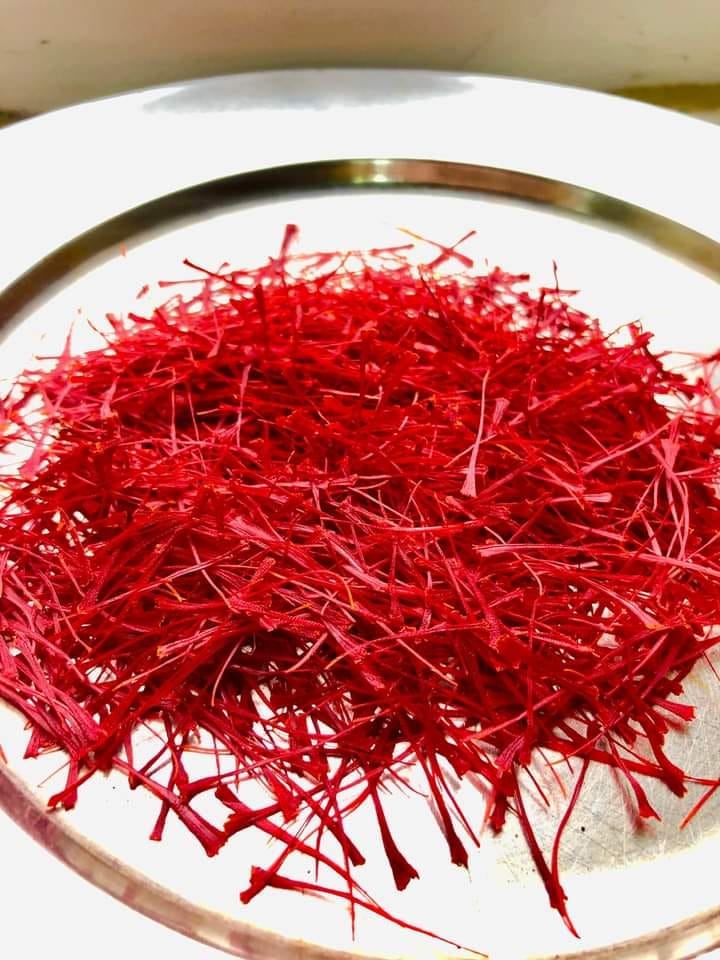
Weight is hard to picture, so here is the kitchen translation we give buyers: a gram of Grade I Mongra is about 160–180 dry threads. 30 mg is 4–6 threads. A 1 g jar used properly is a month of daily saffron, which also reframes the price per gram — real kesar costs less per glass than a cup of chai.
The amounts, situation by situation
- Daily wellness (milk or water): 3–5 strands. Steep, never boil.
- Kesar doodh for two: 6–8 strands in the steeping cup, split between glasses — the full method is in our saffron milk guide.
- Biryani or kheer for a family: 10–15 strands bloomed in warm milk — flavour spread across servings, so per-person intake stays tiny.
- Kahwa: 2–3 strands per cup, added off the boil — our family kahwa recipe explains why boiling wrecks it.
- Pregnancy: a conversation with your doctor first, then modest amounts in the later months — we wrote the honest version in saffron during pregnancy.
Where the actual limit sits
Safety literature places the caution line far above the kitchen: amounts around 5 grams in a day are considered unsafe, and even 1.5 g daily is more than anyone needs. For scale, 5 g is an entire premium jar — over 800 threads — in one day. No recipe on earth calls for that. The practical rule a grower family lives by: if you can count the threads on one hand, you are in the safe, effective zone; if you are weighing spoonfuls, you are doing something saffron was never meant for.
Two groups should involve a doctor before daily saffron: pregnant women (covered above) and anyone on blood-thinning or mood medication, because saffron is mildly active in both directions — which is precisely why it works. Standard line, sincerely meant: this is food writing, not medical advice. The full picture — the mild effects, the four interactions that genuinely matter, and the risk almost nobody writes about, which is what adulterated kesar is made of — is in saffron side effects.
Why purity changes the maths
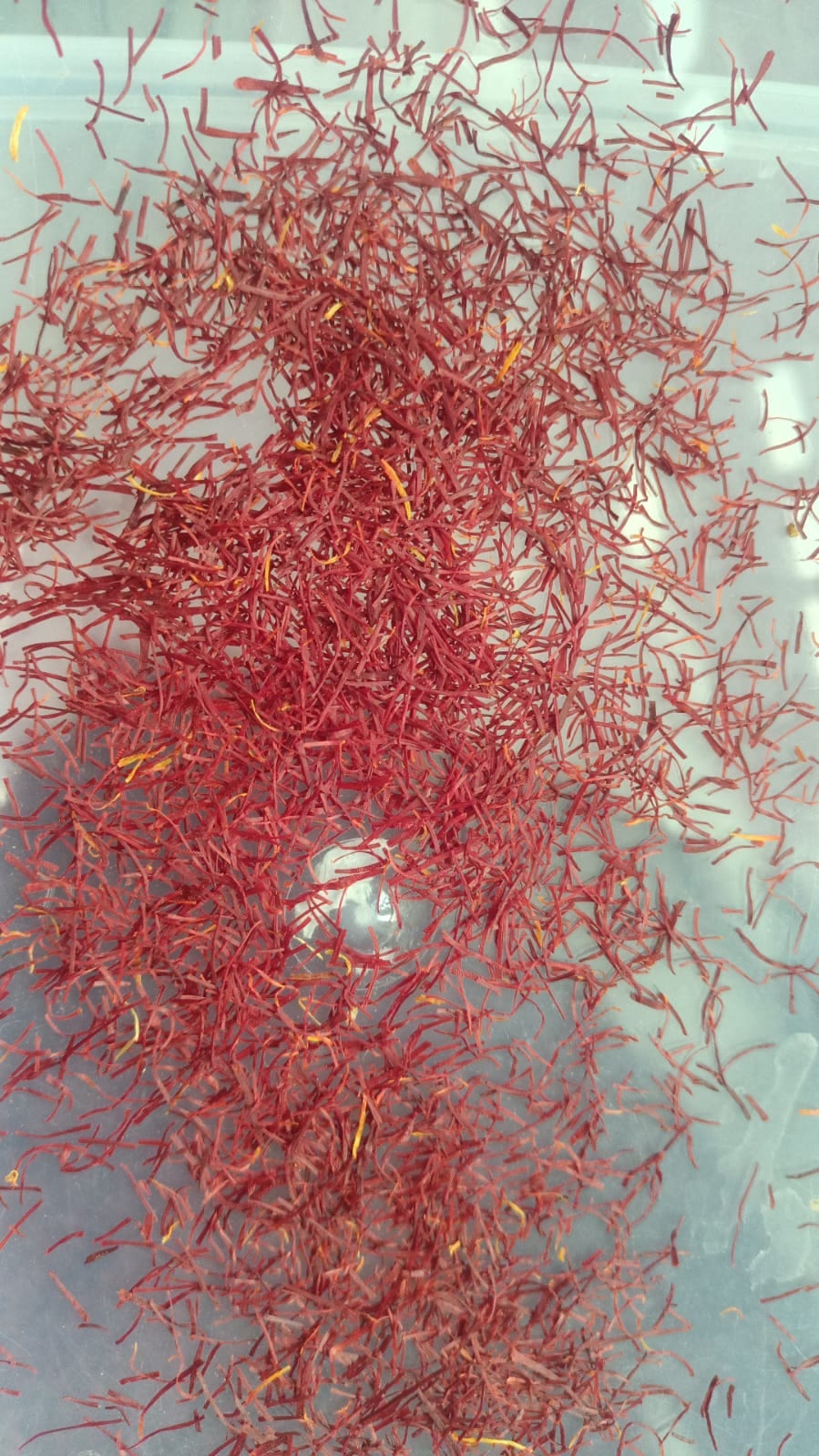
Every rule above assumes real saffron. Dyed corn-silk and safflower “kesar” colour weakly, so people compensate with pinches instead of threads — more product, zero benefit, and unknown dyes in your milk. Real Grade I releases colour slowly and completely: the ISO 3632 standard (the international grading system, iso.org) measures exactly this colouring strength, and India’s GI registry (ipindia.gov.in) protects the Kashmir origin itself. Five minutes with our at-home purity tests will tell you which kind you own.
What the clinical trials actually used
The daily amount most often studied is not a kitchen measure at all — it is 30 mg of saffron per day, which is roughly 8 to 10 threads depending on thread length. That figure is worth knowing because it is where nearly all the human research sits.
Randomised controlled trials using 30 mg/day over six weeks have reported improvements in Hamilton Depression Rating Scale scores comparable to fluoxetine at 20 mg/day, and meta-analyses pooling those trials have found saffron superior to placebo, with no significant difference from SSRIs and no serious adverse events reported. A separate line of work has used crocin — one of saffron’s isolated compounds — at 15 mg twice daily alongside SSRIs.
Three honest caveats, because this is exactly the kind of finding that gets oversold by people selling saffron. The trials are mostly small. Several were conducted in Iran, where saffron research is a national speciality and publication bias is a live concern. And none of this means saffron treats depression, nor that anyone should replace prescribed medication with a spice. It means a well-studied dose exists, and that dose is small.
What that looks like in a jar
| Daily use | Threads/day | Approx. weight | How long a 1 g jar lasts |
|---|---|---|---|
| Kesar milk at night | 3–4 | ~12 mg | ~4 months |
| The studied dose | 8–10 | ~30 mg | ~5–6 weeks |
| A pot of biryani (shared) | 8–10 per dish | ~30 mg | ~50 dishes |
Where the ceiling actually is
The other end of the range matters more than most articles admit. Intakes up to around 1.5 g per day are generally described as tolerated in the literature — roughly fifty times the studied dose, and far more than any recipe calls for. Above that the picture changes sharply:
- ~5 g — toxic effects have been reported, including purpura, thrombocytopenia and bleeding.
- Over 10 g — historically used as an abortifacient, with serious maternal risk. This is the origin of the folk belief that saffron “affects pregnancy”, and the dose involved is nothing like a pinch in milk.
- ~20 g — described in the literature as a lethal dose, though documented human fatalities from saffron alone are vanishingly rare.
Put in perspective: 5 g is five one-gram jars eaten in a day, at a cost of roughly ₹1,700. Nobody reaches a harmful dose of real saffron by accident, and the price is the safety mechanism. The realistic risk is the opposite one — adulterated material, where what harms you is the dye rather than the spice. That is covered in saffron side effects and in the purity tests.
If you are pregnant, the honest answer is more cautious than the marketing: the traditional practice is real and widespread, the evidence base is thin, and some animal work gives reason for care. That deserves its own page, and it has one — saffron during pregnancy — with the caveats stated rather than buried.
Ours is the crop itself: Grade I Mongra from our family fields in Pampore, ISO-graded, batch-coded, sold by the gram in the shop — or browse everything grown around it from the home page. At 4 threads a day, the smallest jar is a long, honest habit.