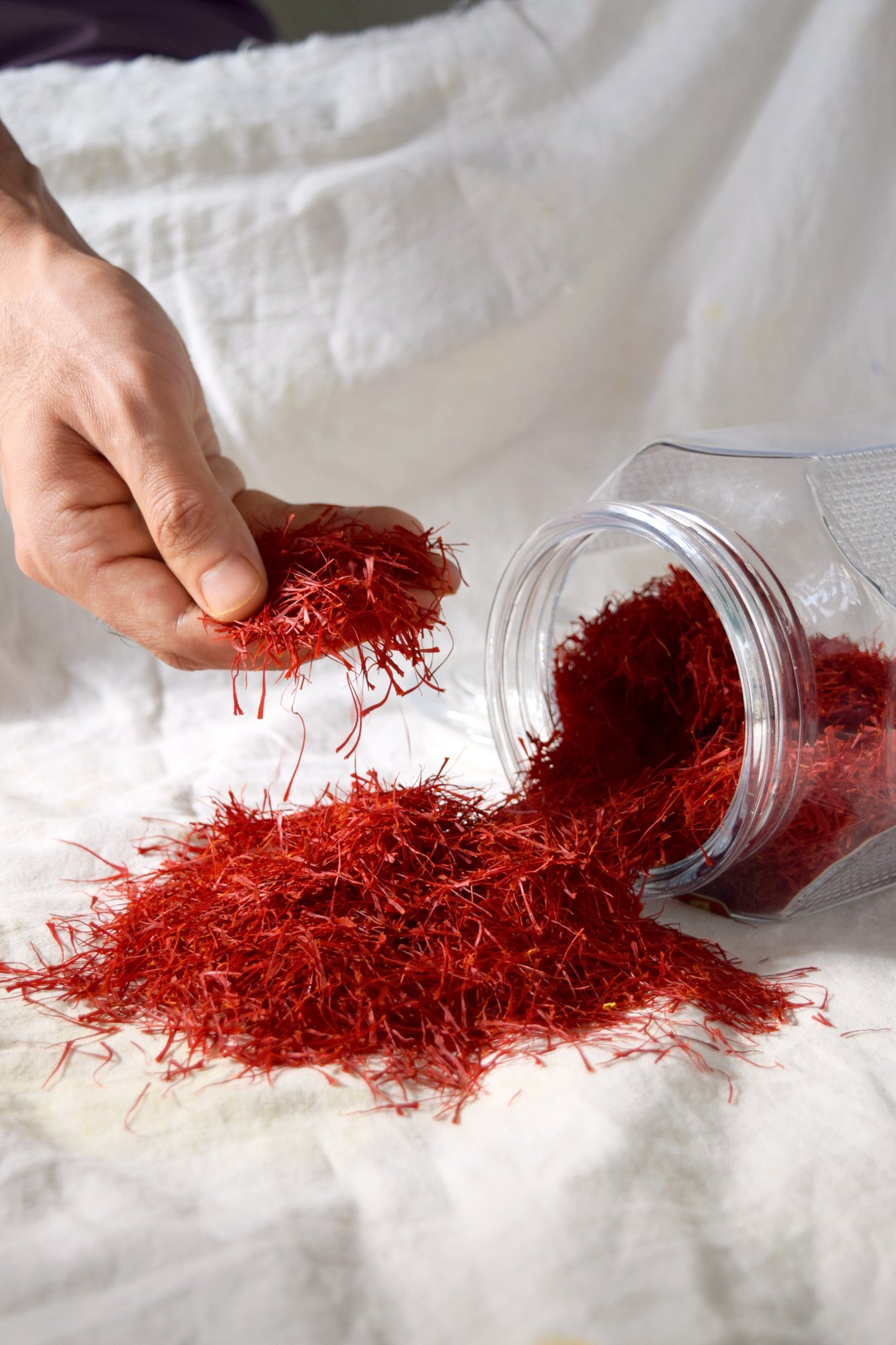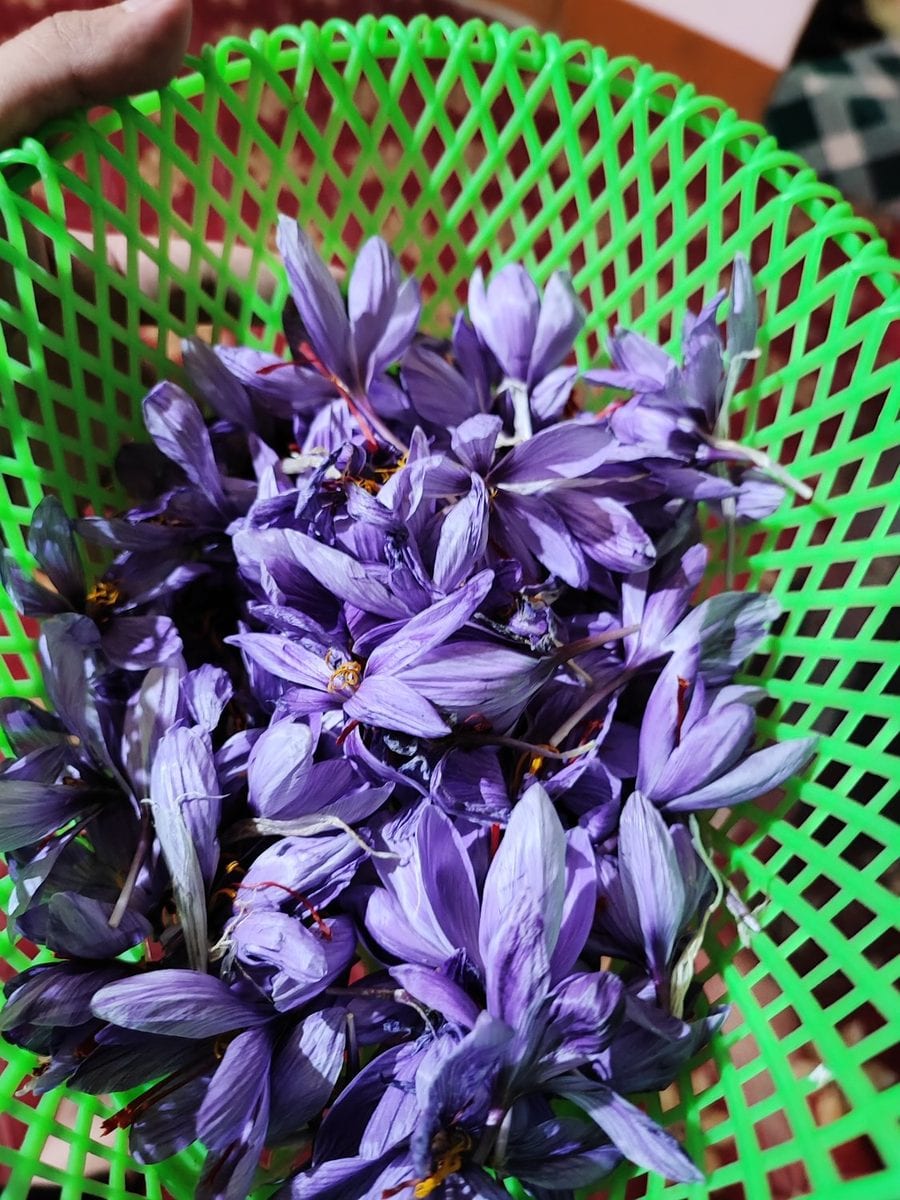
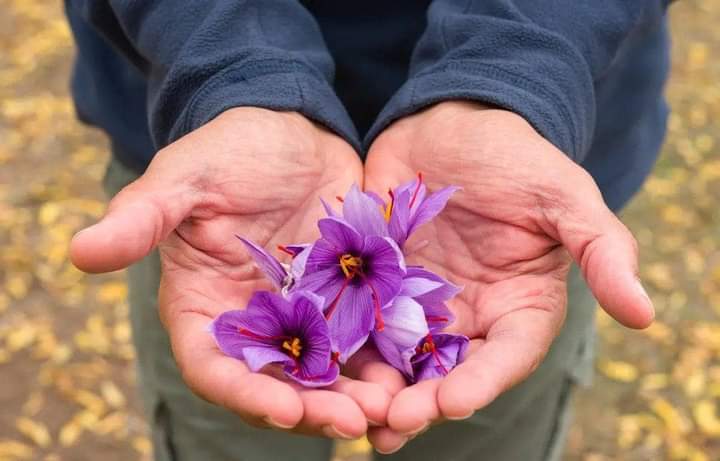
Kesar doodh predates every wellness trend by a few thousand years: warm milk, a few threads of saffron, sometimes honey or crushed almonds. In Kashmiri households — ours included — it is winter fuel, a bridal-glow ritual, and the standard prescription for a bad day. Here is the grower’s version of how to do it properly, and what the research suggests it offers. (A note first: we grow saffron; we are not doctors. For medical decisions, ask yours.)
What saffron actually adds to milk
Three compounds do the work — the same three an ISO 3632 lab measures:
- Crocin — the golden pigment, a carotenoid antioxidant studied for mood and cognition support.
- Safranal — the honey-hay aroma, associated in research with relaxation and sleep quality.
- Picrocrocin — the gentle bitter note that gives kesar doodh its grown-up taste.
Research on saffron for mood and sleep commonly uses ~30mg per day — conveniently, about the weight of 8–10 threads. That is why tradition and trials land on the same pinch.
The benefits, honestly stated
Evening calm and sleep
Warm milk is already a wind-down signal; saffron’s safranal appears to deepen the effect. Studies suggest modest improvements in sleep quality with regular use — “research suggests”, not “guaranteed”, but the tradition of drinking it at night exists for a reason.
Skin, from the inside
Crocin’s antioxidant activity is the basis of saffron’s skin folklore. Consistent culinary use, alongside a normal healthy diet, is the realistic frame — a glass of kesar doodh is not a procedure, it is nutrition with a 5,000-year marketing head start. (For topical use, see our saffron oil for skin guide.)
Winter comfort and digestion
In Kashmir, kesar doodh and kahwa are the two warm answers to a cold evening. Saffron’s traditional role as a digestive after heavy meals survives because it works gently and tastes like an occasion.
The right method (the steep is everything)
- Steep first. Put 4–10 strands in 2–3 tablespoons of warm milk. Wait 10–30 minutes — the liquid should turn deep gold.
- Warm the milk, one cup, to drinking temperature. Never boil the saffron itself; high heat burns off safranal.
- Combine the steeped concentrate with the cup, threads and all.
- Sweeten if you like — a teaspoon of honey (ours pairs well: Kashmiri saffron honey) or jaggery. A crushed almond or two on top is the classic finish.
For the richer cousin — ground soaked almonds simmered into the milk itself — the full method is in kesar badam milk, made properly.
Dosage, limits, and who should ask a doctor
- Daily culinary use: a few strands — comfortably safe for most healthy adults.
- Upper bound: stay far below gram-level daily intake; very high doses of saffron are harmful.
- Pregnancy: small food amounts are traditional, but large doses must be avoided — read our full saffron in pregnancy guide and talk to your obstetrician.
One honest caveat: the milk is only as good as the kesar
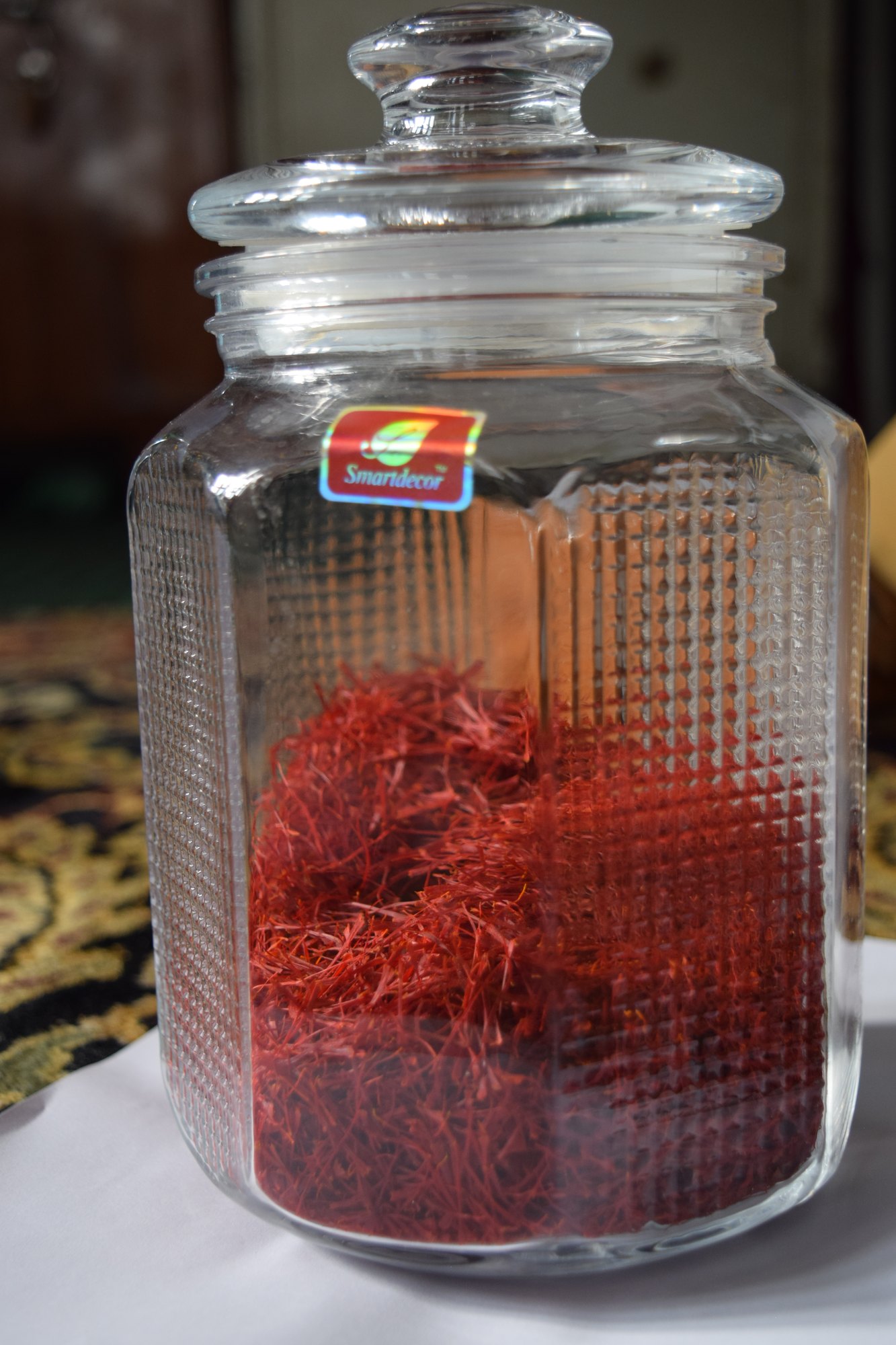
Every benefit above assumes real saffron. Dyed or blended threads add colour and nothing else. Real Kashmiri Mongra releases its gold slowly, smells of honey and hay, and holds its shape in liquid — the full checks are in how to identify real Kashmiri saffron. Ours is grown by our own family in Pampore (see the process), tested ISO 3632 Grade I by IIKSTC’s government lab, and sealed at source in Pampore — start with the 5g jar if kesar doodh is becoming a habit, or browse the full range.
The evidence, at the dose people actually drink
Kesar doodh is a tradition first and a studied intervention a distant second. Conflating the two is how a warm glass of milk ends up being sold as medicine, so here is the gap stated plainly.
Human trials of saffron cluster around 30 mg a day — roughly 8 to 10 threads. At that dose, randomised controlled trials running six weeks have reported depression-rating improvements comparable to fluoxetine at 20 mg/day, and meta-analyses pooling those trials find saffron better than placebo, with no significant difference from SSRIs and no serious adverse events reported. A typical glass of kesar doodh carries 3 to 4 threads, about 12 mg — well under half the studied amount.
So the honest framing is this: the tradition is not doing what the trials did. It is a small, well-tolerated amount of a spice that has a real evidence base at higher doses, taken warm at night as part of a household ritual that has its own worth. That is reason enough to drink it. “Boosts immunity” and “detoxifies” are not, and you will not find them on this page.
One thing the milk genuinely changes is delivery. Crocin, which carries the colour, is water-soluble and lifts readily into warm milk; saffron’s carotenoids are fat-soluble, and whole milk carries those better than water can. That is the real argument for milk over saffron water — chemistry, not folklore. The temperature rule follows from the same fact: warm, never boiling, or the volatile safranal leaves with the steam.