Long before “glow serums”, Kashmiri households steeped saffron threads in oil through the winter and used the golden infusion for bridal skincare. The modern version of that ritual holds up reasonably well under scrutiny — saffron’s actives are genuinely studied for skin — provided two things are true: the saffron is real, and the expectations are honest. This guide covers both.
What’s actually in saffron that skin cares about
- Crocin — the carotenoid pigment, an antioxidant studied for brightening and for calming oxidative stress from sun and pollution.
- Kaempferol — a flavonoid in the petals and stigma studied for anti-inflammatory activity; the reason saffron preparations feel calming on irritated skin.
- Safranal — the aroma, with antioxidant activity of its own and the reason real saffron oil smells of honey-hay rather than perfume.
Honest expectations: consistent use is associated with a more even, luminous tone — the traditional claim, gently supported by research. It will not erase deep pigmentation, replace sunscreen, or treat acne. For diagnosed conditions, a dermatologist beats any oil.
The routine that works
Night (main use)
- Cleanse; leave skin slightly damp.
- Warm 2–4 drops between fingertips.
- Press — don’t rub — over face and neck as the last step. It absorbs in minutes.
Day (optional)
One drop mixed into moisturizer or foundation for glow. Sunscreen still goes on top.
Hair
A small amount massaged into the scalp 30 minutes pre-wash, weekly.
Patch-test first — inner arm, 24 hours — as with any botanical. And check the carrier: almond-based infusions are not for nut-allergic skin.
Real infusion vs fragrance fake
Most “kesar oil” on marketplaces is carrier oil + synthetic fragrance + orange dye. The tells:
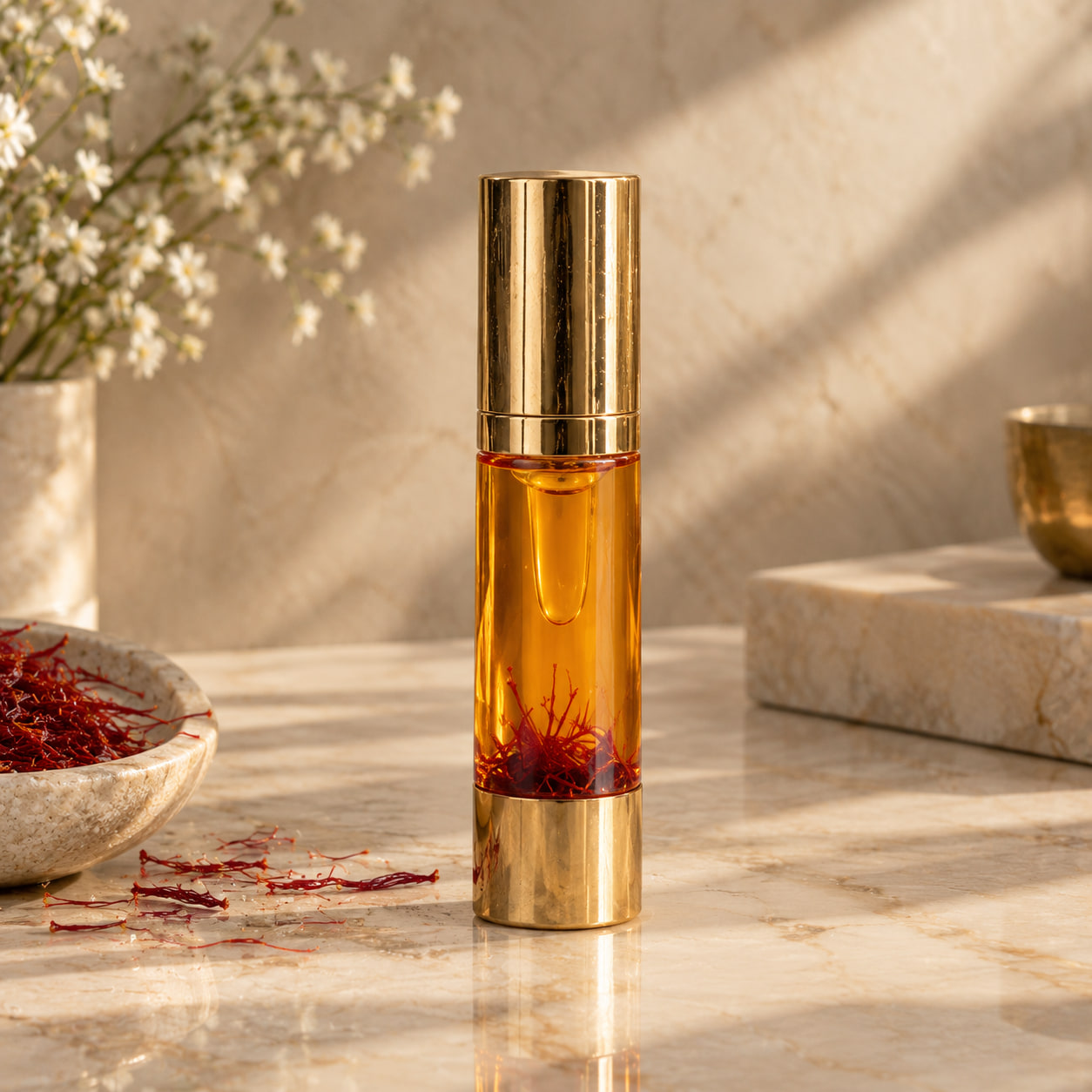
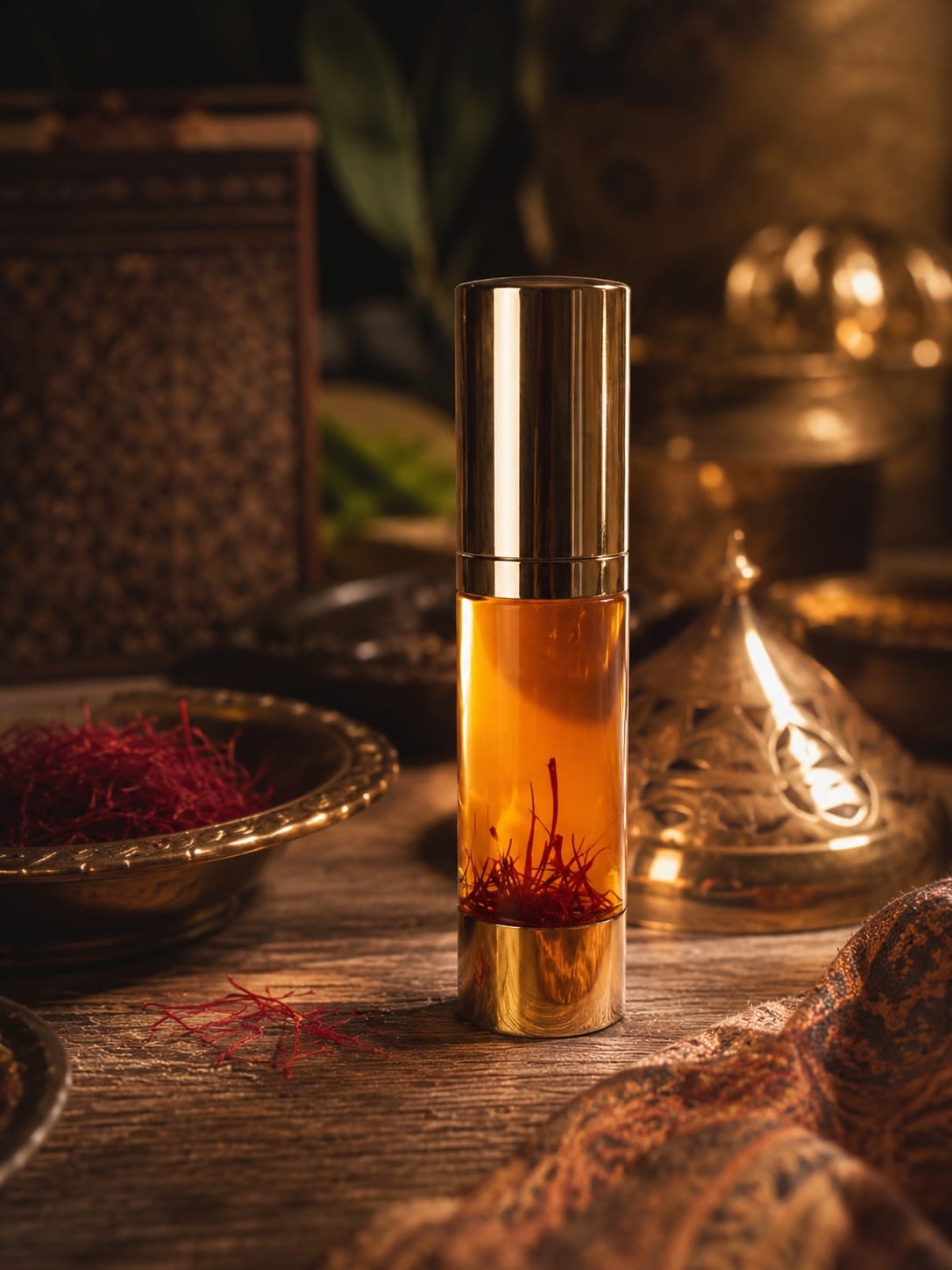
- Threads: a genuine infusion shows saffron threads in the bottle. No threads, no infusion.
- Scent: real saffron is subtle honey-hay. Loud, sweet, perfume-like = synthetic.
- Colour: warm amber-gold, not neon orange.
- Label: “fragrance/parfum” in the ingredients ends the conversation.
- Price: real saffron in real quantity cannot retail at ₹99. (See our price guide for why.)
How ours is made
We steep our own ISO 3632 Grade I Mongra — the same threads from the saffron jars, grown in the fields on our growing process page — in cold-pressed carrier oil for 40 days at controlled temperature, then filter and bottle in amber glass with the harvest date. Threads stay visible in every bottle. It comes as a 200ml amber-glass bottle on the saffron oil page. Browse everything else from the home page or the shop.
What crocin does on skin, and what it does not
Saffron’s skincare reputation rests almost entirely on crocin, the carotenoid that gives the spice its colour. Carotenoids are antioxidants, and antioxidants applied topically can help limit oxidative stress in skin. That is the mechanism, and it is a modest one.
What the category actually delivers, honestly ranked:
- The carrier oil does most of the work. An infused oil is 99%-plus carrier. Softer, better-hydrated skin comes from the cold-pressed base and its fatty acids — the same emollient effect you would get from almond oil or walnut oil. Saffron is the interesting minority ingredient, not the engine.
- Antioxidant support: plausible, modest. A real direction of effect, a small magnitude, and nothing that changes a face in a week.
- Skin lightening: no. This is the claim that sells the category and it is the one we will not make. An oil that improves barrier function makes skin look healthier and more even. It does not change your complexion, and we have written at length about why that belief persists in does saffron make a baby fair.
The fragrance problem in this category
Saffron oil is unusually easy to fake, for a simple economic reason: saffron costs more per gram than almost anything else that could go into the bottle. A synthetic saffron fragrance plus a drop of colourant produces something that smells and looks right at a fraction of the cost, and the buyer has no way to tell by nose.
Three checks that survive scrutiny:
- Visible threads. A genuine infusion leaves the evidence in the bottle. Uniform colour with nothing suspended in it means the colour came from somewhere else.
- Colour that developed rather than arrived. Real crocin infuses slowly and unevenly over weeks; dye is uniform from day one.
- An ingredient list of two things. Carrier oil and saffron. “Fragrance”, “parfum” or “saffron extract” with no thread in sight is a different product.
Ours steeps our own Grade I Mongra — the same saffron sold in our jars — for forty days in cold-pressed carrier oil at controlled temperature, with the threads left in. The infusion date goes on the label.