Saffron has been used as medicine, dye, and delicacy for over three thousand years — long before anyone could name the compounds inside it. Modern research is now catching up to what Kashmiri households always knew. This guide covers the real, evidence-informed Kashmiri saffron benefits — for skin, mood, sleep, and everyday wellness — plus how to use it, how much is safe, and why grade and origin decide whether you feel anything at all.
What gives Kashmiri saffron its benefits
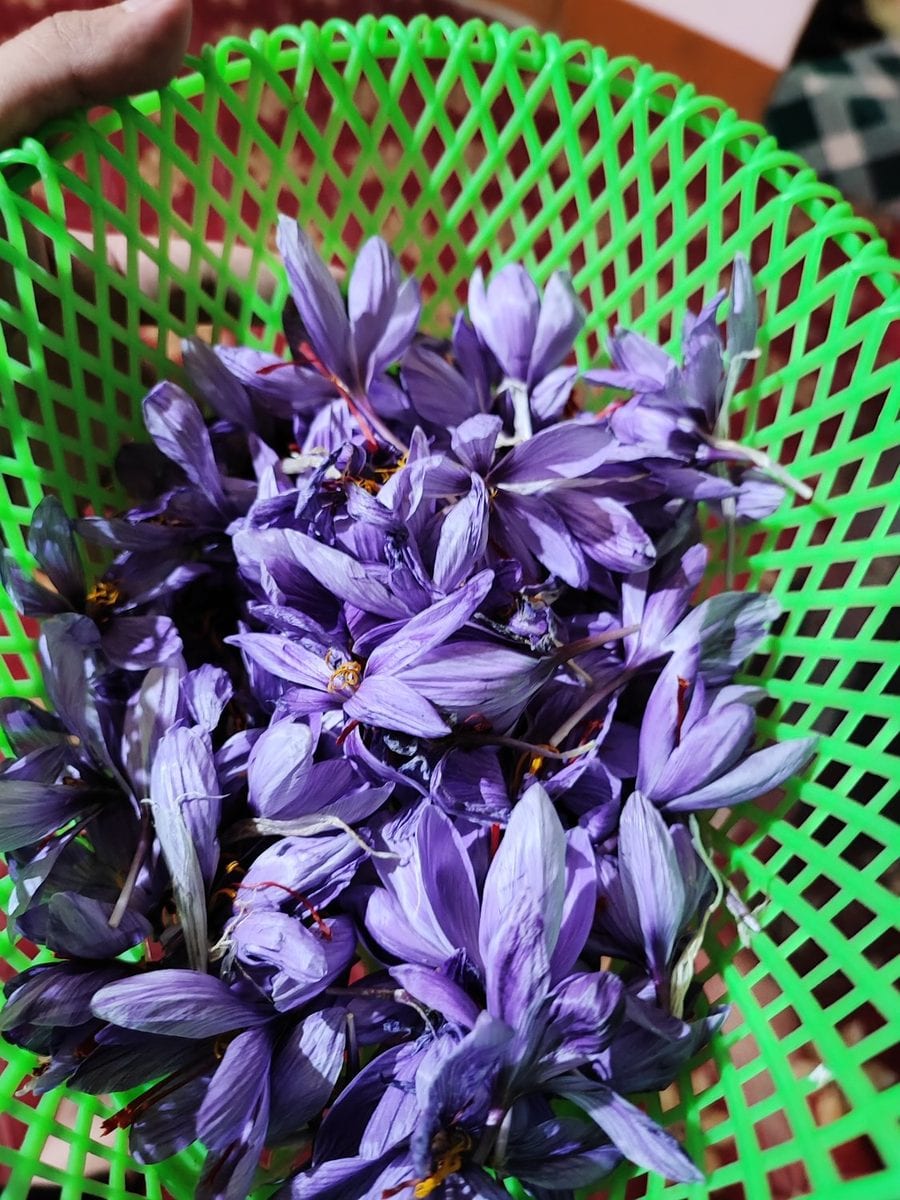
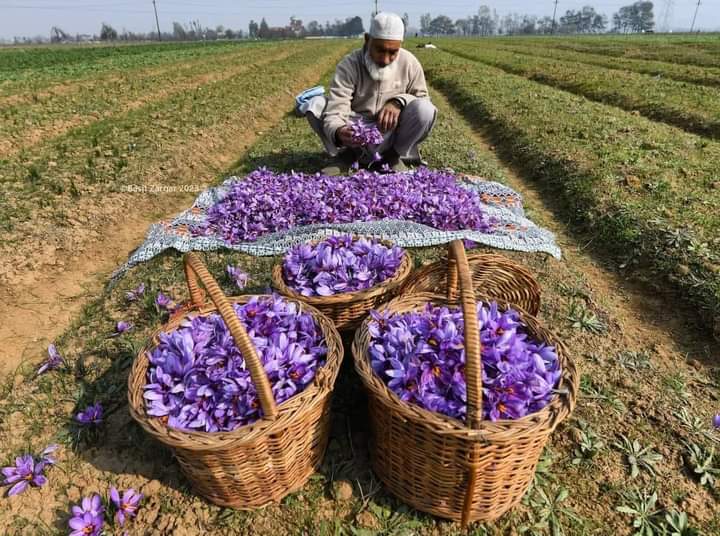
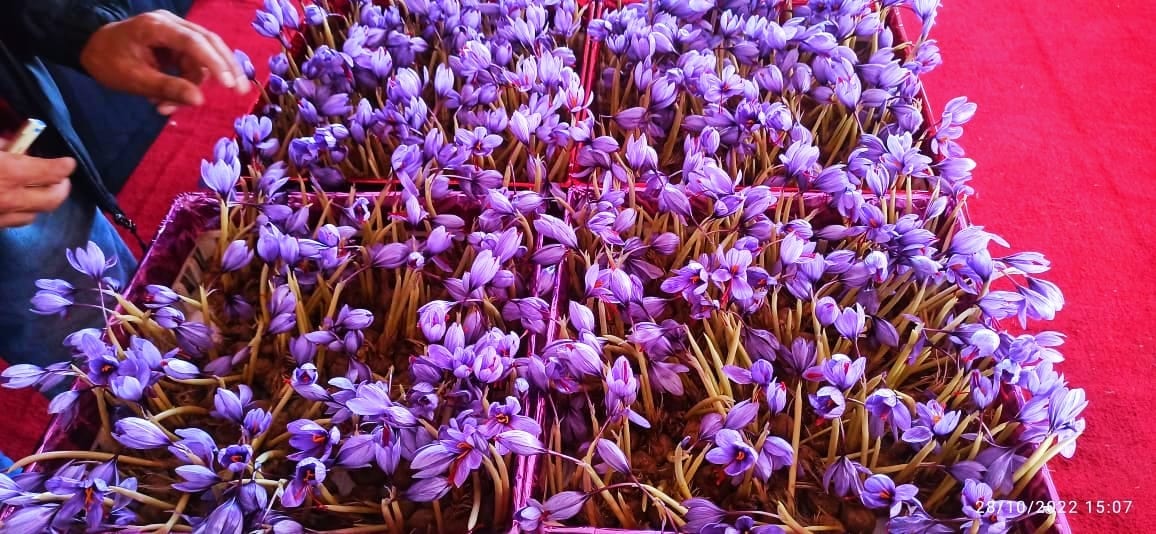
Almost every benefit traces back to three or four active compounds concentrated in the crimson stigma of the Crocus sativus flower: crocin (a powerful antioxidant that also gives saffron its colour), safranal (responsible for the aroma and much of the mood effect), picrocrocin (the honeyed, slightly bitter flavour), and kaempferol. You can read more about these on the saffron overview at Wikipedia. Kashmiri Mongra saffron is prized precisely because it carries these compounds at unusually high levels — which is exactly what an ISO 3632 lab test grades.
That is the single most important thing to understand about Kashmiri saffron benefits: they are dose-dependent and quality-dependent. A few threads of genuine Grade I saffron deliver far more crocin and safranal than a larger pinch of dyed or blended saffron, which may contain almost no real saffron at all.
Most of these compounds are antioxidants, and that word matters. Everyday living — pollution, stress, sun, processed food — generates unstable molecules called free radicals that damage cells over time, a process known as oxidative stress. Antioxidants help neutralise them. Saffron happens to be unusually rich in them, which is the common thread running through nearly every benefit below, from skin to mood to long-term wellness.
Saffron in traditional medicine
Long before clinical trials, saffron was a pillar of traditional medicine across Persia, India, and the Mediterranean. In Unani and Ayurvedic practice it was prescribed as a warming tonic for the heart and mood, a digestive aid, and a remedy for coughs and cramps. Kashmiri families have stirred a pinch into winter milk and kahwa for generations — not as a cure, but as a daily habit believed to strengthen the body against the cold. What is striking is how often modern research now points in the same directions the old traditions did. Tradition pointed the way; the lab is starting to explain the mechanism.
Kashmiri saffron benefits for mood and sleep
Saffron is one of the few spices with a genuine body of clinical research behind it, most of it focused on mood. Several randomised trials and reviews suggest that around 30 mg of saffron a day may help support a positive mood; you can browse the studies via PubMed. Safranal, the aroma compound, is thought to play a role here, which is why the smell of freshly bloomed saffron is itself calming.
The same calming quality is why a cup of saffron milk at night is a centuries-old Kashmiri ritual. If you are looking at saffron for sleep and mood, consistency matters more than quantity — a small daily amount over weeks, not a single large dose. Saffron is a food, not a sedative, and it works gently.
Saffron benefits for skin
The saffron benefits for skin are the reason it appears in so many traditional beauty routines across Kashmir and the subcontinent. Crocin and kaempferol are antioxidants studied for their skin-brightening and anti-inflammatory potential, and saffron has long been used to even skin tone and add a natural glow. You can take it internally — a few threads in milk — or apply it topically as a saffron-infused milk or oil.
- Steep 4–5 threads in a tablespoon of warm milk, cool it, and dab onto clean skin as a brightening mask.
- Use a saffron-infused oil at night as the last step in your routine.
- Always patch-test first, particularly if you have sensitive skin or nut allergies.
Saffron benefits for women
Among the most searched saffron benefits for women is relief from menstrual discomfort. Some studies suggest saffron may ease PMS symptoms and cramping, again at modest daily amounts. In pregnancy, small culinary quantities of saffron in food are traditional in many Indian homes — but large medicinal doses should be avoided, because saffron can stimulate the uterus in high amounts. If you are pregnant, confirm the quantity with your doctor before using saffron regularly.
Saffron also has a long traditional association with skin and hair care during and after pregnancy, and with general vitality — again, as a food and a ritual rather than a medicine. The sensible rule for every one of these saffron benefits for women is the same: small, regular amounts in food are the tradition; large medicinal doses are not, and are best cleared with a doctor first.
Digestion and everyday wellness
Beyond the headline uses, saffron is traditionally taken to support digestion and appetite, and its antioxidant load makes it a pleasant addition to a balanced diet. In Kashmir it is woven into daily life — in kahwa after meals, in festival rice and desserts, and in wintertime milk. None of this is a substitute for medical care, but as part of a varied diet, pure Kashmiri saffron is an easy, enjoyable way to add antioxidants.
Other benefits researchers are exploring
Saffron science is young but growing, and several other areas are under active study. Early research has looked at saffron’s crocin and crocetin for eye health — particularly age-related macular changes — because these antioxidants are thought to help protect retinal cells from oxidative stress. Other work has examined saffron’s role in supporting healthy blood-sugar and cholesterol levels, memory and focus, and recovery after exercise. None of these are settled, and none make saffron a treatment for any condition. But together they add to a consistent picture: a spice whose antioxidant compounds have measurable, gentle, whole-body effects when it is taken regularly and in modest amounts.
How to choose and store Kashmiri saffron for wellness
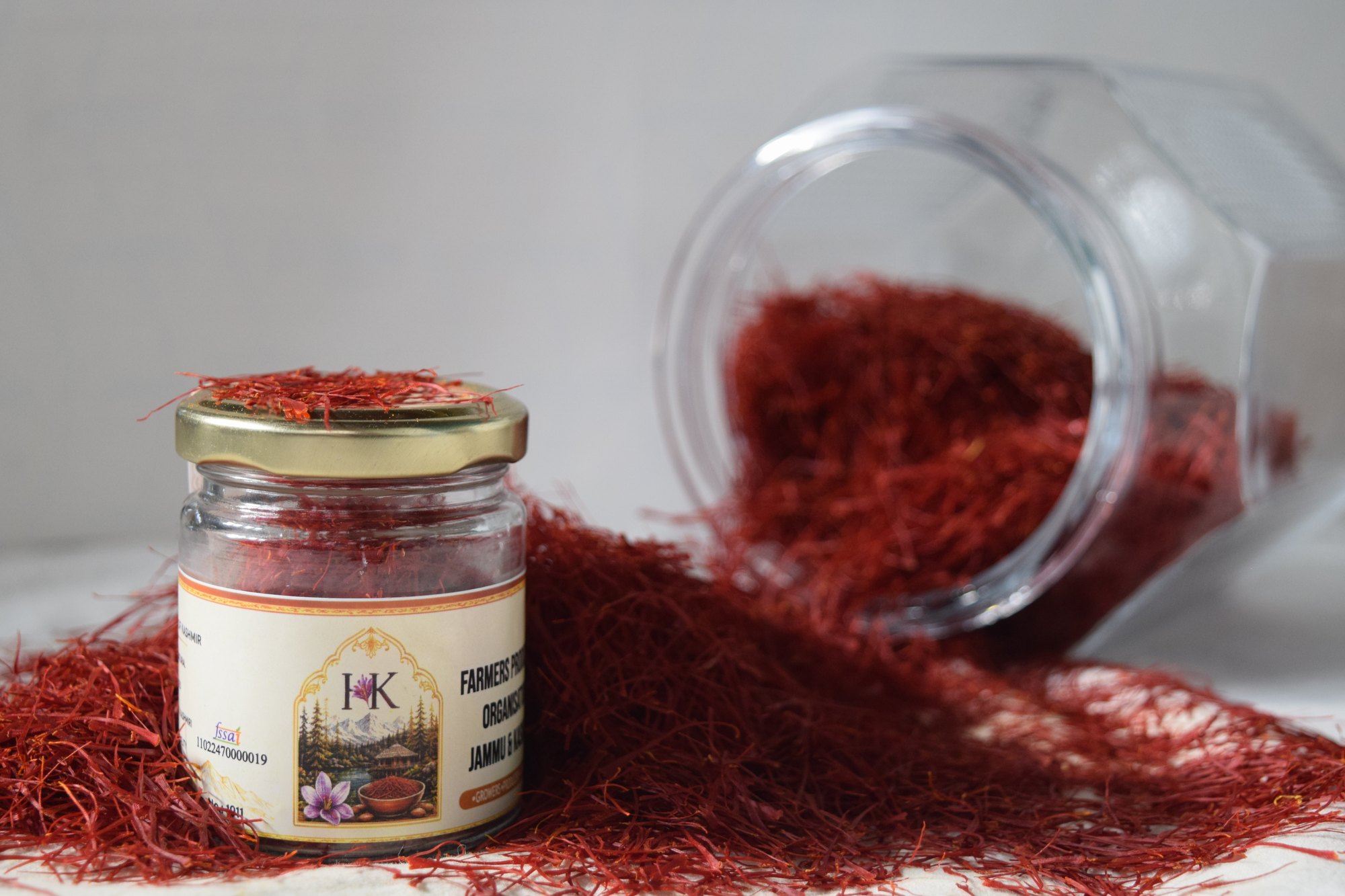
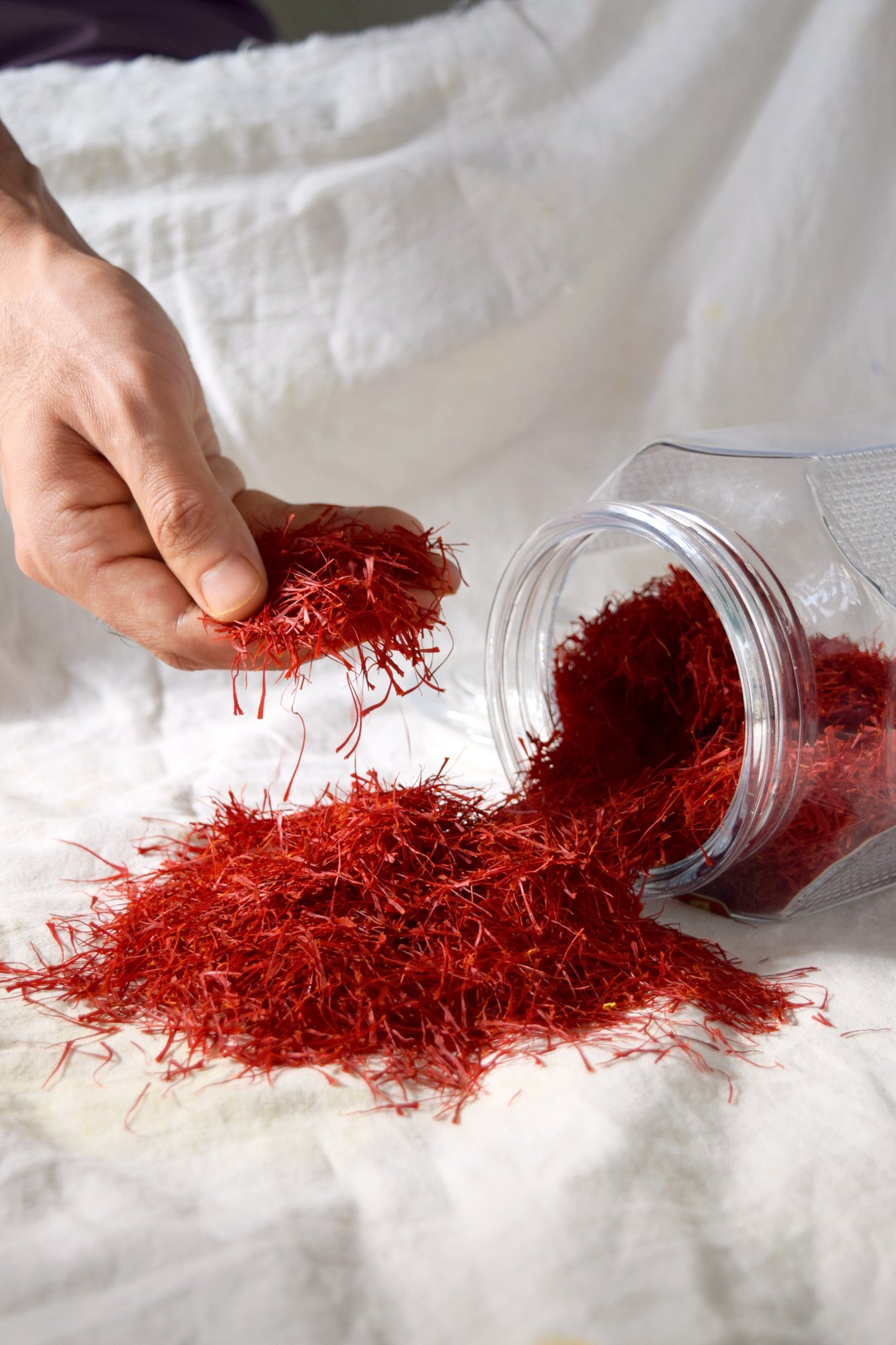
If you are buying saffron for its benefits rather than just for colour, two things decide how much you actually get: grade and freshness. Choose pure Kashmiri saffron that is Grade I and comes with an ISO 3632 report and, ideally, a GI certificate — that paperwork is your proof of crocin, safranal, and picrocrocin levels. Look for short, deep-red threads with a trumpet-shaped end and a strong honeyed aroma; avoid anything cheap, bright, and uniform, or sold loose without any grading.
Store your saffron in its sealed jar, away from light, heat, and moisture — a cool, dark cupboard, not the fridge. Kept well, Grade I saffron holds its colour and aroma for two years or more, so its benefits do not fade between uses. Buying a small jar of the real thing will always outperform a large bag of the fake.
How to use saffron to actually feel the benefits
Knowing how to use saffron matters as much as the saffron itself, because the active compounds need to be released properly:
- Take 8–10 threads (about 15–30 mg) — you do not need more.
- Steep them in two tablespoons of warm (not boiling) milk or water for 10–15 minutes, until the liquid turns golden-orange.
- Stir the whole infusion — colour, aroma, threads and all — into your milk, kahwa, or dish.
- For cooking, add the infusion near the end so the aroma survives the heat.
A single 5 g jar of Grade I saffron holds roughly 2,500 threads, so daily use still lasts months. We’ve since written the deep-dives: exact amounts in how much saffron per day, every method in how to use saffron, and the lightest ritual of all in saffron water benefits.
A simple saffron milk recipe
The easiest way to make saffron a daily habit is kesar doodh — saffron milk. Warm a cup of milk gently (do not boil it). Meanwhile, crush 8–10 threads of Mongra saffron between your fingers and steep them in a tablespoon of the warm milk for ten minutes, until it turns deep gold. Stir the infusion back into the cup, add a little honey or a crushed cardamom pod if you like, and drink it warm — ideally in the evening, when its calming quality is most welcome. Do this most nights for a few weeks and you will find saffron is not a quick fix but a gentle, cumulative one.
Why grade and origin decide the benefits
Here is the catch that most benefit guides skip: none of this works if the saffron is not real. Because every benefit depends on crocin, safranal, and picrocrocin, adulterated saffron — dyed threads, corn silk, or Iranian saffron blended and mislabelled — delivers little or nothing. That is why pure Kashmiri saffron, graded to ISO 3632 and GI-tagged, is worth the price. Our saffron comes from our own Pampore fields — the family and the harvest are on our our story page, and you can read how we grow it on the our family story. Compare grades and jar sizes on the Kashmiri saffron page, or pair it with our saffron honey for a daily wellness habit.
A note on health: this article is for general information and reflects traditional use and published research; it is not medical advice. Saffron is a food, and benefits come from moderate, regular use. If you are pregnant, nursing, on medication, or managing a health condition, talk to your doctor before using saffron medicinally.