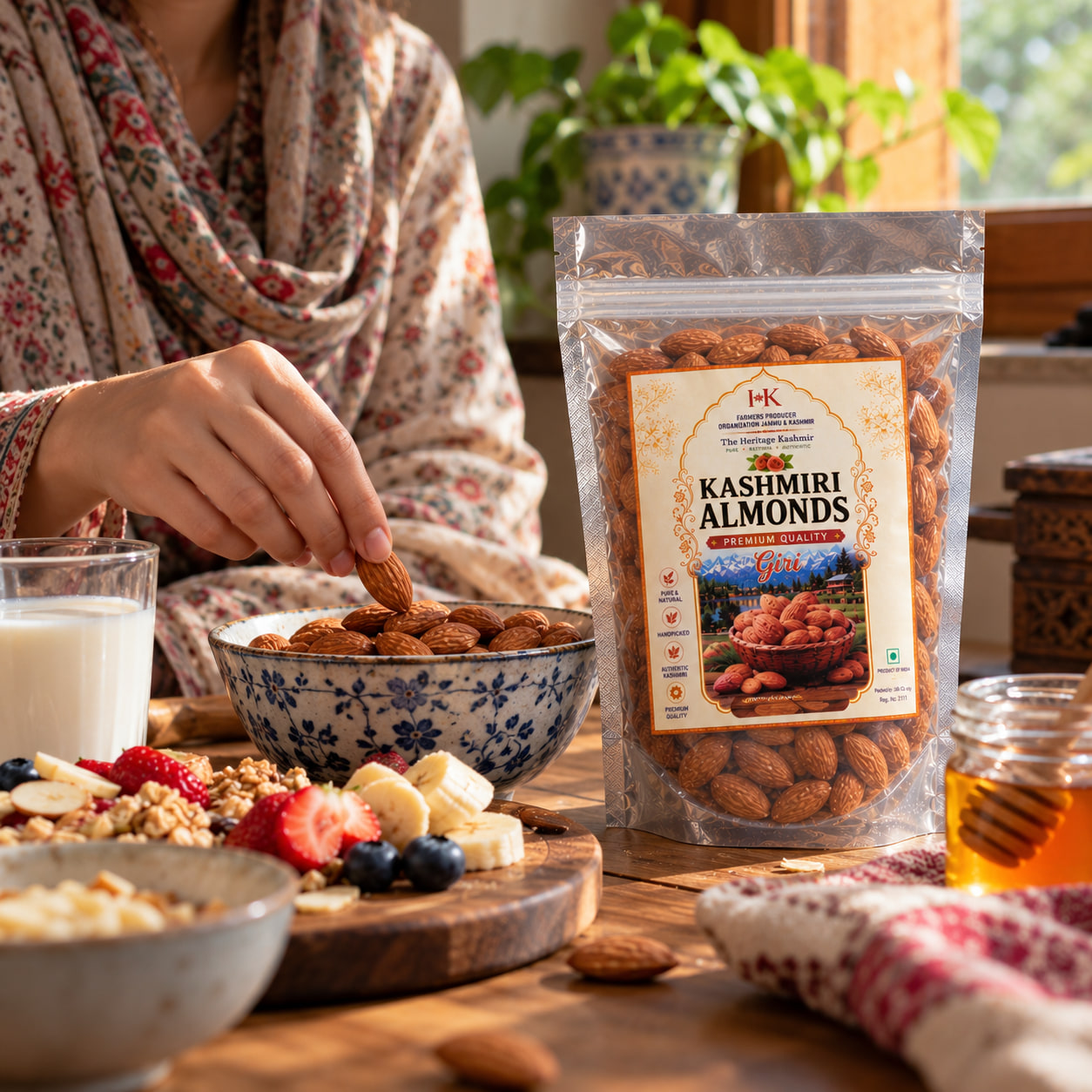
Kesar badam milk is soaked-and-ground almonds simmered in milk, finished — off the heat — with saffron that was steeped separately. That last clause is the entire secret. Most households boil the kesar with the milk and wonder why the glass smells of cardamom alone. Done properly, it is India’s finest nourishing drink: almond substance, saffron perfume, one gentle glass.
The proper recipe (two glasses)
- Soak 8–10 almonds overnight. Peel — the skins slip off. Soaking softens the kernel and mellows it for grinding (the same logic as the morning soak ritual).
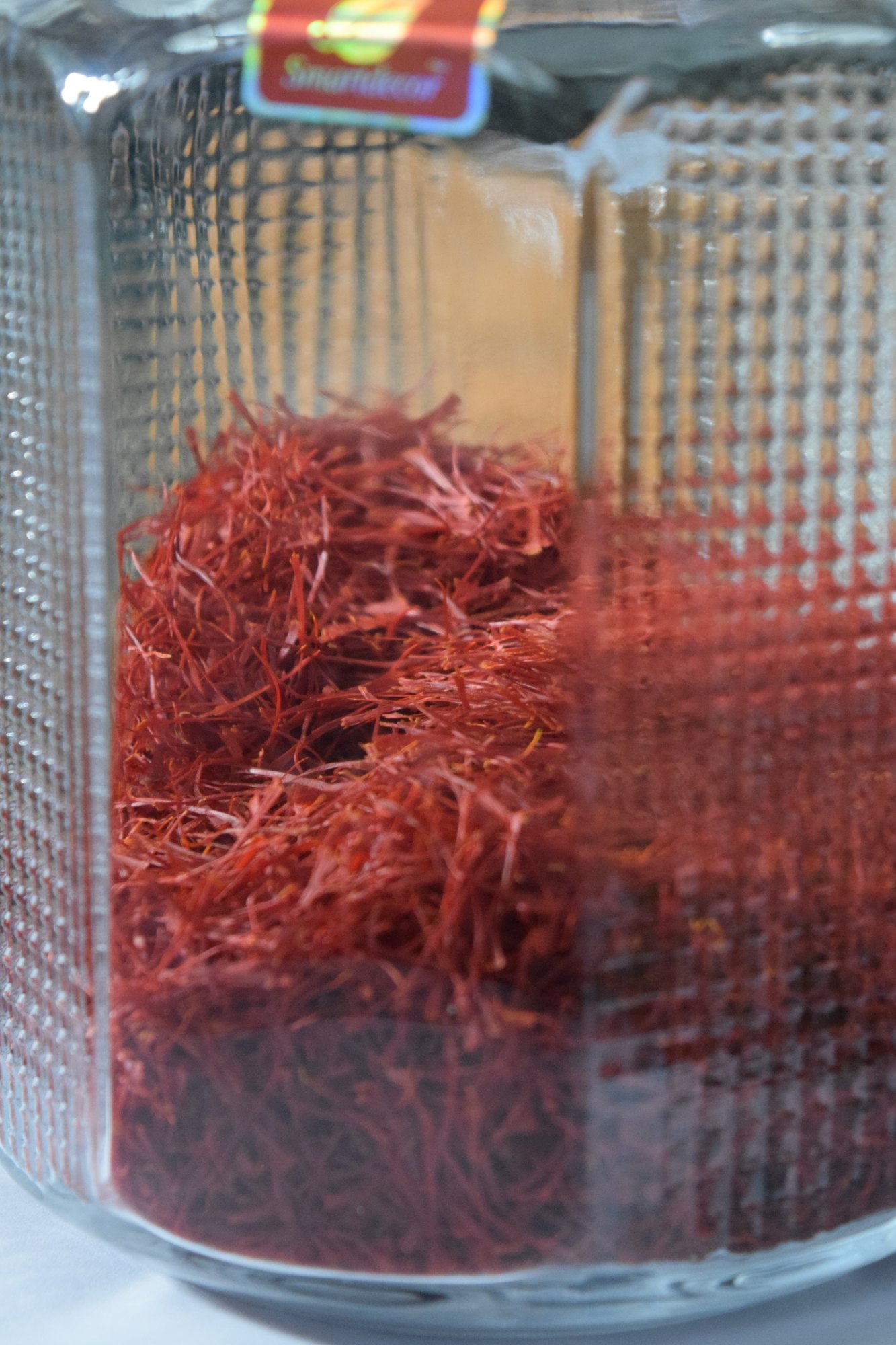
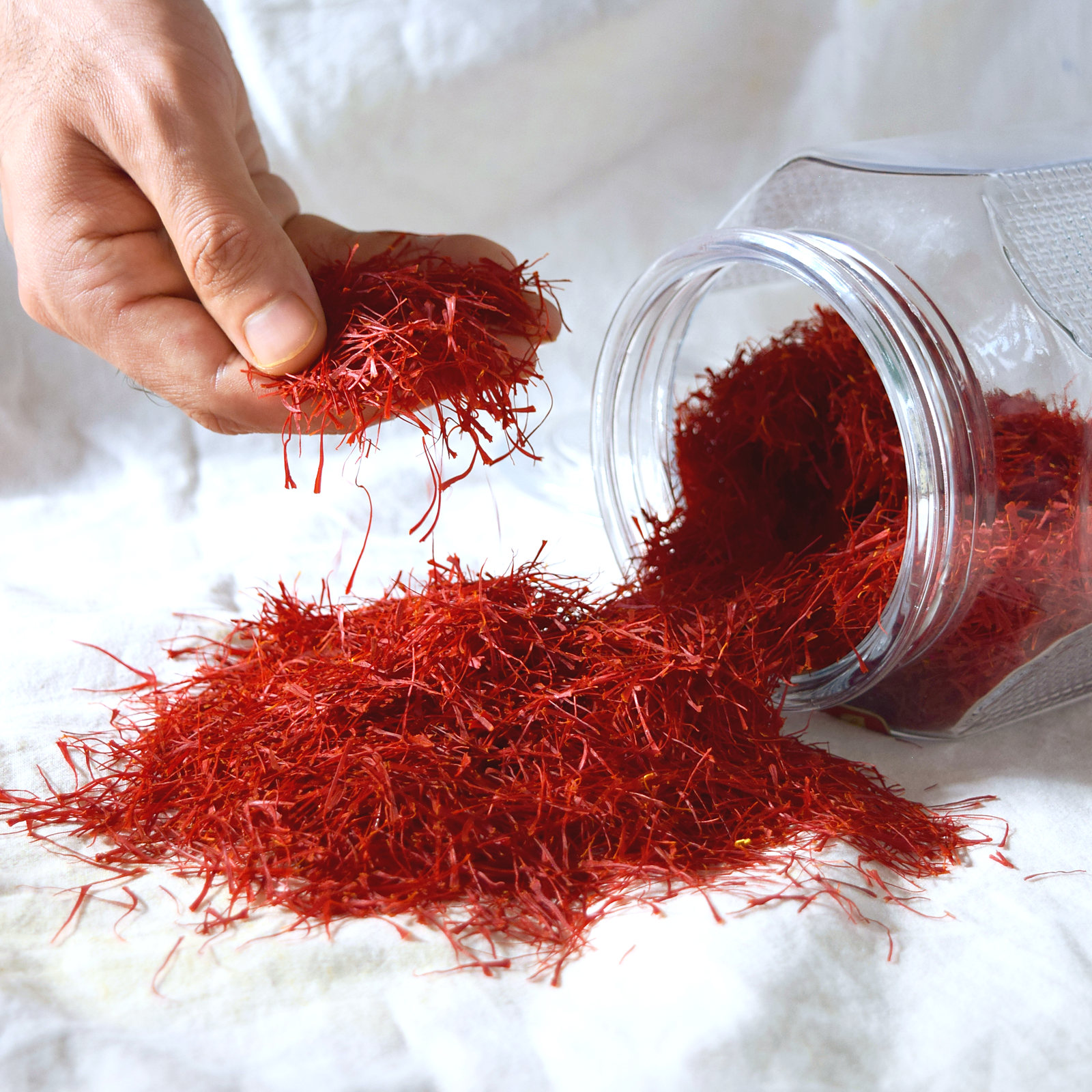
- Steep the saffron first: 4–5 strands in two spoons of warm milk, covered, 10 minutes — while you do everything else. Never into the boiling pot; the full physics is in how to use saffron.
- Grind the peeled almonds with a splash of milk to a fine, creamy paste.
- Simmer the paste in two cups of milk, 5–7 minutes on low, with a crushed cardamom pod. Stir; almond paste catches.
- Finish off the heat: stir in the steeped saffron — golden milk, threads and all — and sweeten lightly (a spoon of saffron honey once the milk is drinkably warm is the elegant version).
The overnight shortcut: grind soaked almonds in bulk, freeze the paste in an ice tray, and a weeknight glass becomes: one cube, hot milk, steeped kesar, done in five minutes.
What the glass honestly delivers
- From the badam: protein, vitamin E, magnesium and good fats — the almond’s case, concentrated and easy to take. High-oil mamra kernels grind creamier and taste naturally sweet (why mamra differs). Five almonds add about 35 kcal and 1.3 g of protein to the glass (almond calories and protein, counted).
- From the kesar: crocin and safranal — the researched calming, antioxidant pair. The nightly 4–5 strands sit exactly at the sensible daily amount.
- From the ritual: a warm, screen-free full stop to the day — underrated, and arguably half the benefit.
The honest frame, always: this is superb daily food with centuries of use — support, not treatment. Medical questions (pregnancy included — see the pregnancy guide) belong with your doctor.
Portions: children, adults, winter
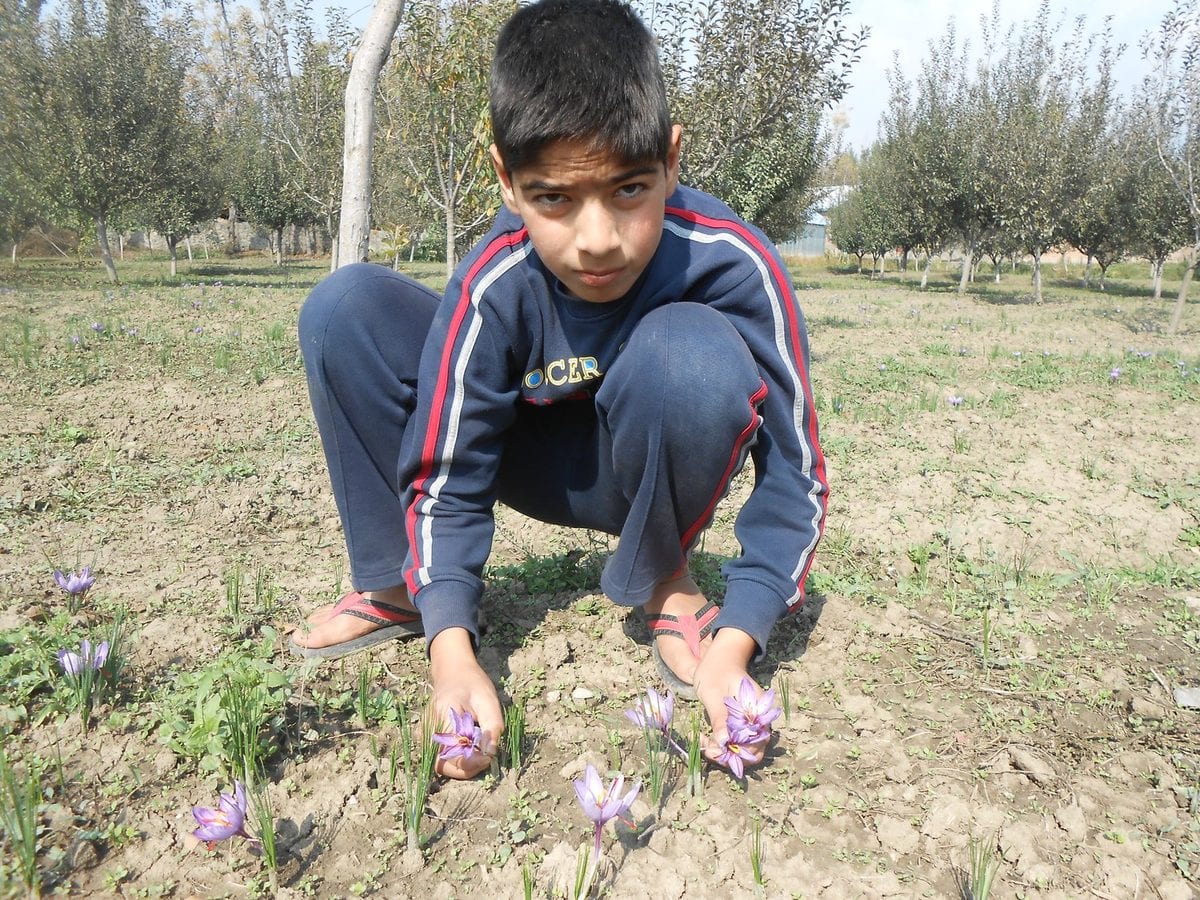
Children (5+): half a glass, 1–2 strands, almonds always fully ground. Adults: a nightly glass as written. Winter: the drink graduates to daily staple alongside the rest of the cold-weather pantry — in Kashmir, kesar doodh and kahwa are the two warm bookends of a January day. Chilled with a pinch of cardamom, the same recipe is the classic summer badam milk; the saffron rule doesn’t change with the thermometer.
Why the almonds are soaked, and why it is not superstition
Every Indian grandmother soaks the badam overnight and peels the skin before grinding. There are two real reasons behind the habit and one that gets overstated.
- Texture, which is the honest main reason. A soaked kernel grinds to a smooth paste; a dry one grinds to grit that never fully disperses in milk.
- The skin is genuinely bitter. Almond skin carries tannins, and removing it changes the flavour of the finished glass noticeably. This is a taste decision, and it is the correct one.
- Digestibility — real but modest. Soaking softens the kernel and is easier on some stomachs. Claims that soaking “unlocks” nutrients otherwise unavailable are stronger than the evidence supports.
Which almond you soak matters more than most recipes admit. Mamra-type Kashmiri kernels carry substantially more oil than commodity California almonds — reported at roughly 42–50% against 35–40% — and oil is what makes badam milk taste rich rather than thin and chalky. That difference is the whole subject of mamra vs California almonds.
The saffron half: quantity and temperature
For a two-glass pot, 8 to 10 threads is right — around 30 mg, which happens to be the amount used in most saffron trials, though a shared pot means each glass carries less. More is not better: past a certain point saffron turns medicinal and slightly bitter, because picrocrocin is doing the talking rather than crocin.
Steep the threads in two tablespoons of warm milk for ten to fifteen minutes before they go anywhere near the pot. Never drop dry threads into boiling milk and never fry them — safranal is volatile and leaves with the steam, taking the aroma you paid for with it. The full method for every preparation is in how to use saffron.
Ingredients decide the glass
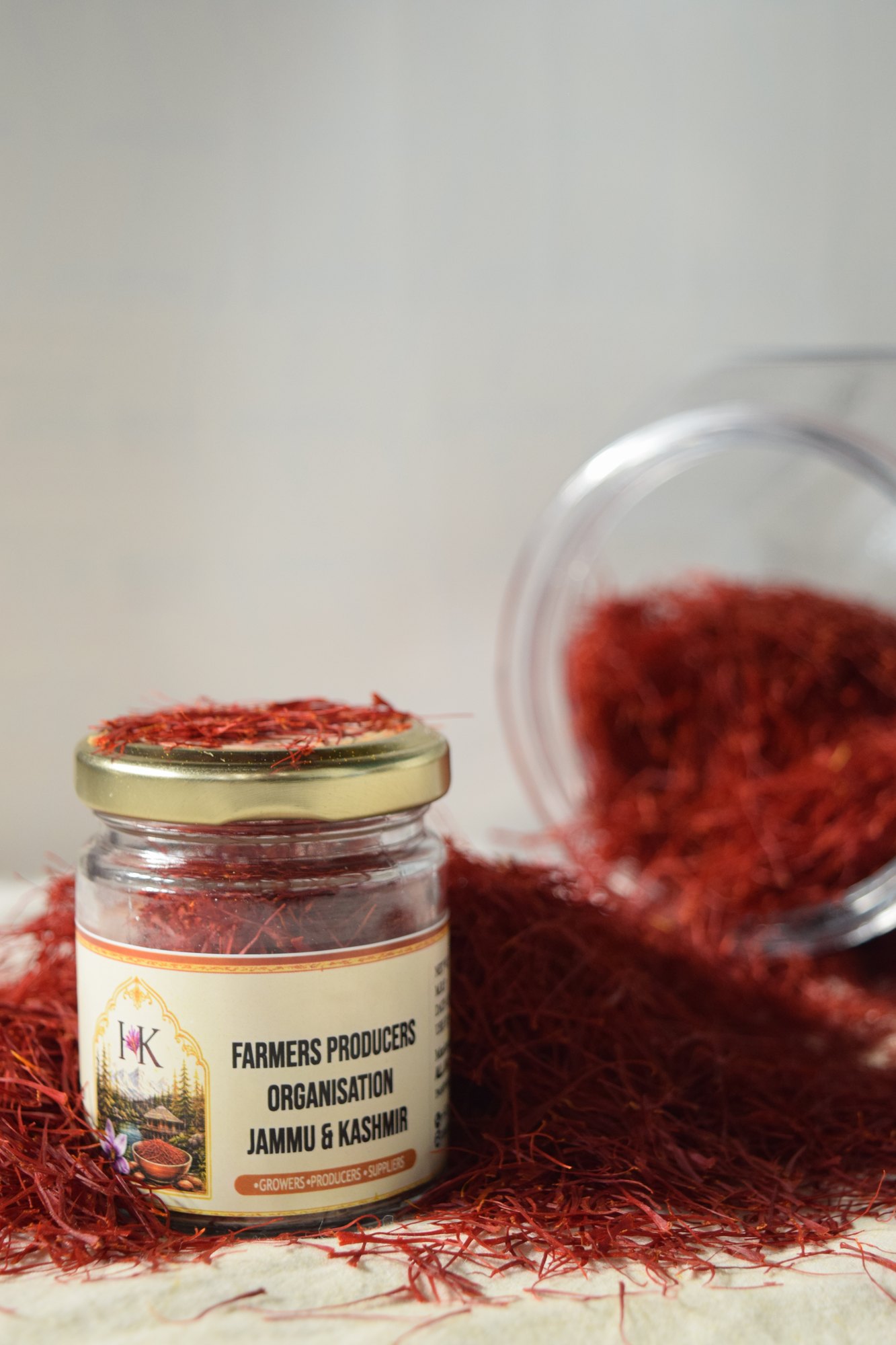
Two ingredients, so quality is naked here: pale weak threads or bitter plains almonds have nowhere to hide. Ours are the pair the recipe was invented around — mamra-grade almonds and Grade I Pampore saffron hand-sorted to Grade I, both sealed at source, both in the shop (the pantry overview starts at the home page). Tonight: soak ten almonds, and let tomorrow’s glass argue the rest.