
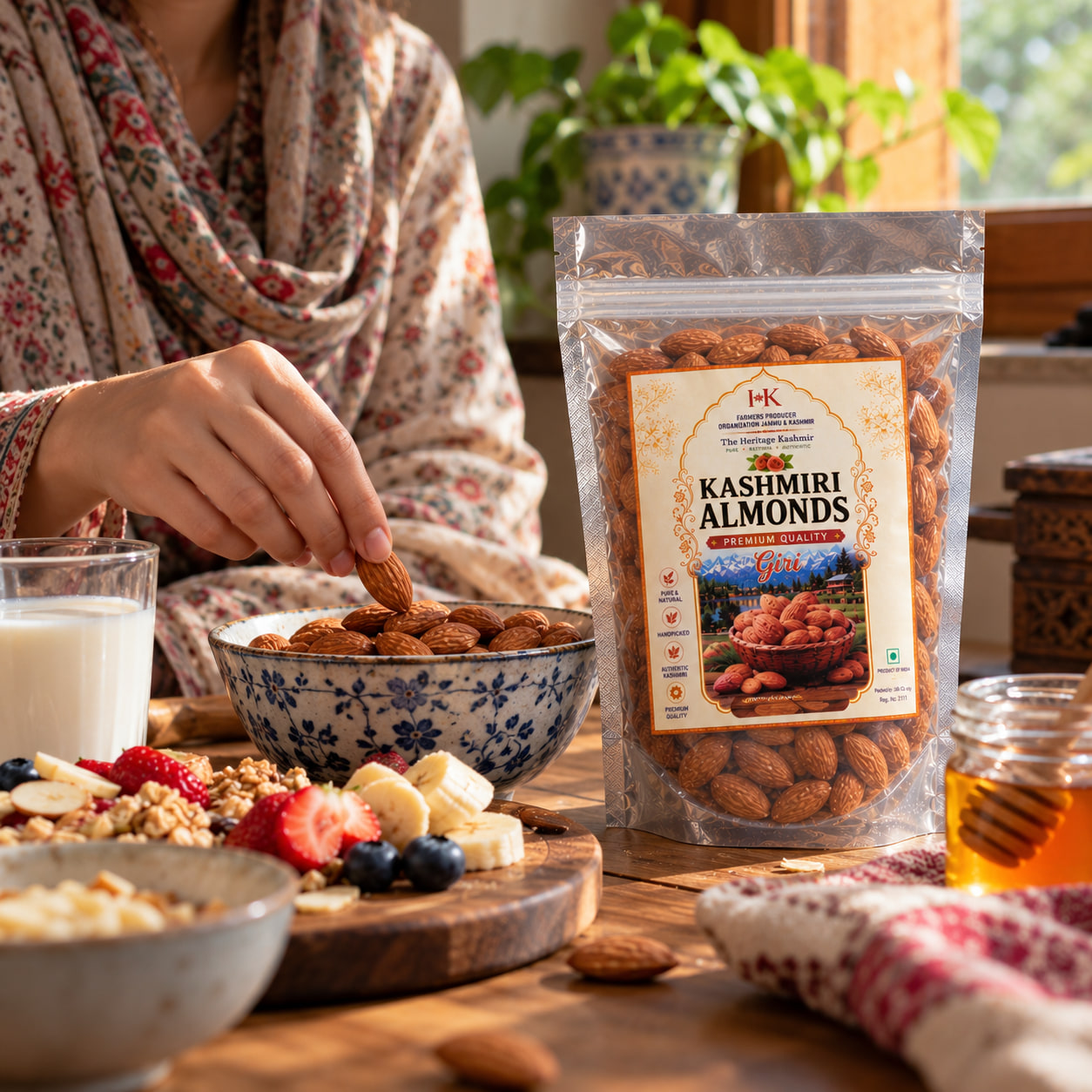
About 30 grams a day — one small handful — is the right amount of dry fruits for most adults. In practice that means 4–6 almonds, 2 walnut halves, 2–3 figs or a small mix of them, not all of them at once. Dry fruits are fruit with the water removed and the nutrition compressed; the handful is the dose, the bowl is dessert pretending otherwise. Here is the chart we actually follow at home.
The daily chart
- Almonds: 4–6 kernels. Protein, vitamin E, good fats. Soaked overnight and peeled is the classic; mamra-grade almonds (the high-oil heirloom — see mamra vs California) make the difference tastable.
- Walnuts: 2 halves (1 whole nut). The only common nut rich in plant omega-3 — the full case is in Kashmiri walnuts benefits.
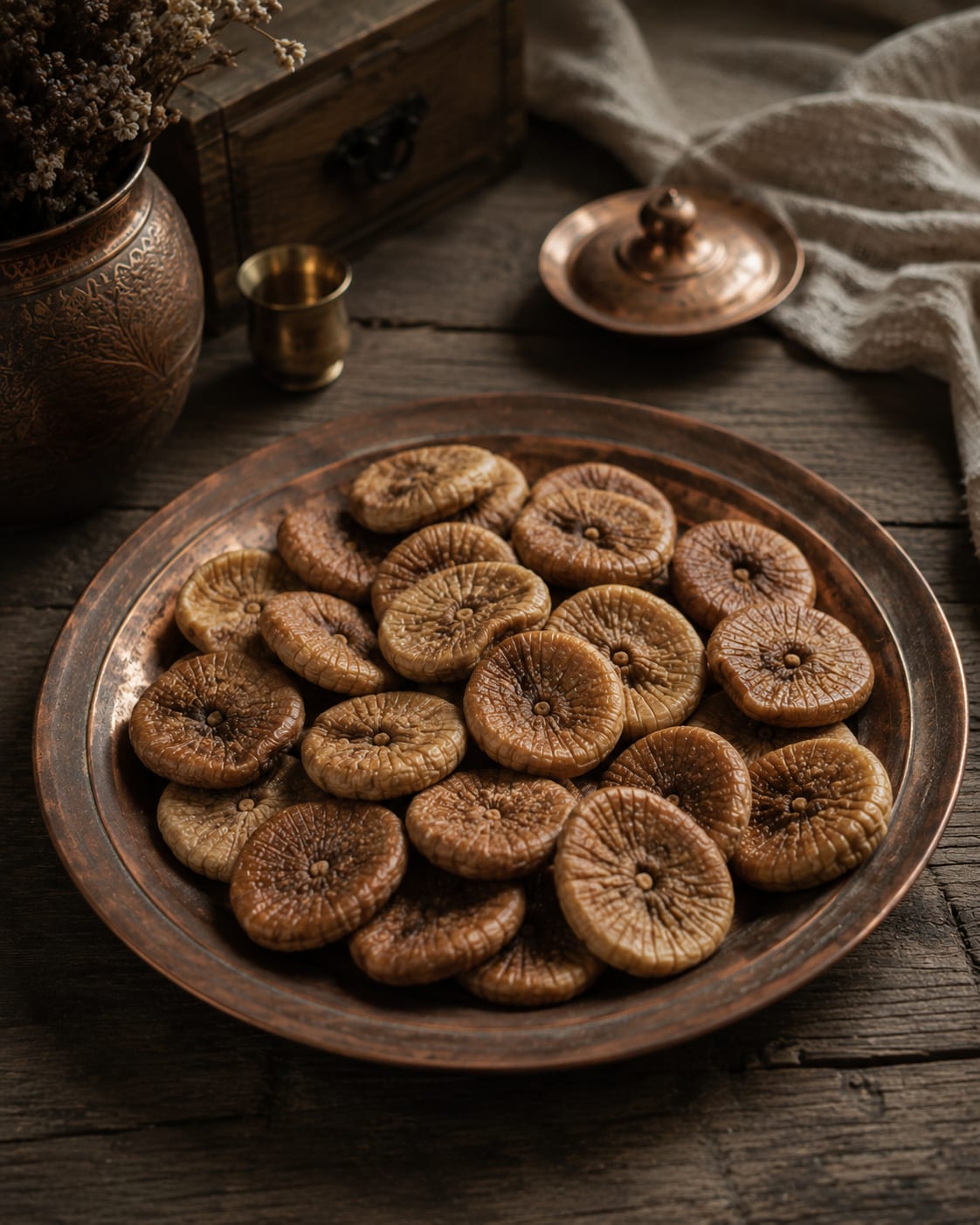
- Dried figs: 2–3, ideally soaked. Calcium and fibre — the anjeer guide covers the soak ritual.
- Raisins: a small spoon (15–20). Quick energy, iron, natural sweetness for oats and kheer.
- Rotate, don’t stack. Mon/Wed/Fri almonds+walnuts, Tue/Thu figs+raisins works; or a measured 30 g scoop mixed from the shop and zero arithmetic.
Soaked, raw or roasted?
Soaking wins mornings: overnight water softens almonds and figs, mellows the sugar hit and treats the gut gently — which is why every Indian grandmother’s counter has a katori of soaking badam. Raw is a perfectly good snack. Light dry-roasting deepens flavour in walnuts. The only real loss is commercial frying and heavy salting — at that point you are eating namkeen with a health halo.
Timing that actually matters
Morning empty-stomach for the soaked set; nuts as the 4 pm snack that replaces fried food; and at night, if anything, warm milk with a few strands of saffron rather than a late fistful of dates. The honest truth: which hour matters far less than how much and instead of what. Thirty grams of nuts replacing a packet of chips is a health decision; the same nuts on top of the chips is just more calories.
Who should moderate
Blood-sugar management: keep to the nut side of the chart, count sweet dried fruit inside the fruit allowance, prefer soaked, and let your doctor set the numbers. Kidney or digestive conditions: same doctor-first rule. Small children: chop or grind nuts (whole nuts are a choking risk under five) — a spoon of mixed dry-fruit powder in milk is the traditional solve. General principles echo the dietary guidance of India’s food authority, FSSAI; personal conditions belong with a professional, not a blog — ours included.
Quality changes what 30 grams buys
The chart assumes real kernels. At the same weight, high-altitude produce simply carries more: Kashmir’s 1,600 m orchards grow slower, denser almonds (roughly double the oil of plains crops), paler and sweeter walnut halves, and figs dried soft instead of baked hard. That is the entire argument of our Kashmiri dry fruits page. Everything we pack is graded and vacuum-sealed in the valley and shipped once — browse the shop, start from the home page, or mix two or three packs from the range and let those do the choosing. One measured handful a day, from trees that took their time — that is the whole plan.
A portion, in numbers rather than handfuls
“A handful” is the standard advice and it is useless as a measure, because hands differ and dried fruit is calorie-dense enough for the difference to matter. A 30 g serving is the portion size most nutrition guidance is built around. In counted pieces:
| Item | ~30 g looks like | Worth knowing |
|---|---|---|
| Almonds | 20–23 kernels | Mostly oleic acid; soak overnight if digestion is the goal |
| Walnuts | 7–9 halves | ~1.9 g of ALA omega-3 — the reason to eat them |
| Dried figs | 2–3 figs | ~9.8 g fibre and ~162 mg calcium per 100 g — and concentrated sugar |
| Mixed | A small cupped palm | Variety beats volume; rotate rather than doubling up |
India’s own dietary guidance, from ICMR-NIN, places nuts and oil seeds as one of the eight food groups a day should draw on — a modest portion alongside vegetables, whole grains and pulses, rather than a category to load up on. That framing is more useful than any specific kernel count: dry fruits are a component of a plate, not a supplement regimen.
Where the “more is better” instinct goes wrong
- Energy density. Nuts and dried fruit are among the most calorie-dense foods in an ordinary kitchen. Three handfuls is not three times the benefit; it is three times the calories with most of the benefit already banked at the first.
- Fibre without water is uncomfortable. This is the real reason behind the soaking tradition, and it applies most to figs and raisins.
- Dried fruit is sugar. Drying removes water and concentrates everything left, sugar included. Worth knowing if you are managing blood glucose.
If you would rather rotate than commit to a kilo of any one thing, every pack comes in 250 g and 500 g — take a look at the range and the seasonal argument for which to favour when is in best dry fruits for winter.