
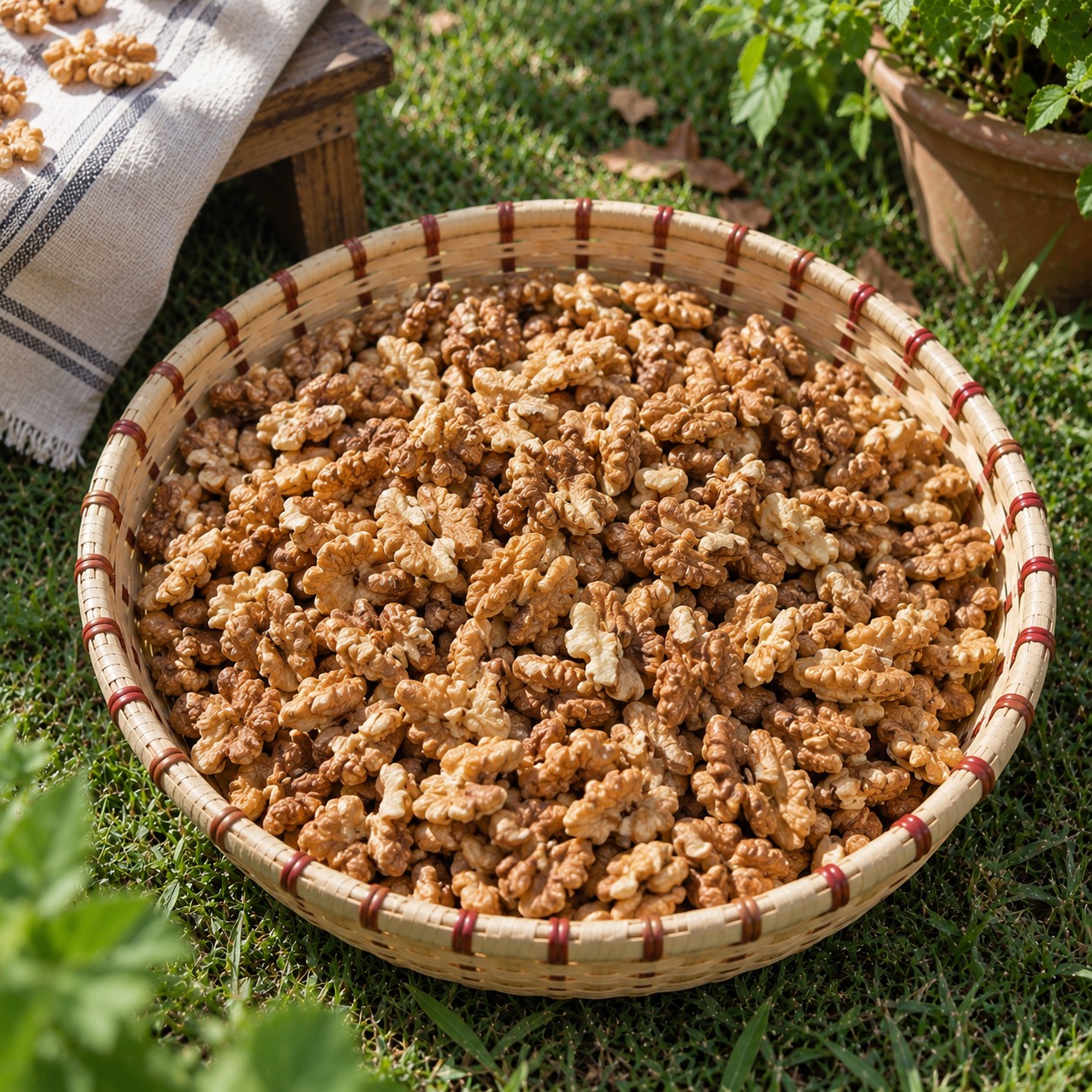
Walnuts hold a genuinely unusual position in nutrition: they are the only common nut with serious amounts of ALA omega-3 — the plant form of the fatty acids most diets lack. And within walnuts, altitude changes the product: Kashmir’s slow-grown, cold-climate akhrot is paler, plumper and markedly less bitter than plains stock. Here is what the kernel offers and how to buy it well.
What the research supports
- Heart: regular walnut intake is consistently associated with healthier cholesterol profiles and cardiovascular support — the ALA + polyphenol combination is the working theory.
- Brain: the same omega-3s, plus vitamin E, underpin walnuts’ long association with cognitive health. (The kernel even looks the part.)
- Bones and general upkeep: emerging work links ALA-rich diets with lower markers of bone breakdown.
Frame it honestly: walnuts are supportive daily nutrition, not treatment. The well-studied serving is ~30g a day — 6–8 halves — ideally as a habit, not a spree.
Why Kashmiri akhrot specifically
Altitude slows the tree down
At 1,600m+ with cold winters, the kernel fills slowly and evenly — plumper halves, higher oil, and the pale golden colour buyers prize. Heat-stressed, fast-grown walnuts darken and turn astringent.
Paper shells, whole halves
Kashmir’s kagzi (paper-shell) varieties crack clean, so kernels come out as intact halves rather than fragments — which also means less surface area exposed to air, and slower staling.
Freshness is structural, not incidental
Walnut oil oxidises fast. Kernels that sail, sit in customs, and bake in warehouse heat arrive already tired — the source of the “walnuts are bitter” belief. Cold-stored, current-harvest Kashmiri kernels taste like a different food.
How to eat them (Kashmiri household edition)
- Straight, daily: 6–8 halves, morning or as the evening snack.
- Soaked: a few hours’ soak softens tannins — gentler on digestion, milder in taste.
- In kahwa & desserts: crushed over kahwa, kheer and halwa.
- With honey: halves steeped in saffron honey is a Kashmiri winter classic.
Buying checklist
- Colour: pale gold to light amber. Dark brown = old or heat-damaged.
- Smell: mild and nutty. Paint-like or sharp = rancid; walk away.
- Halves, not fragments: whole halves stale slower and signal careful handling.
- Packaging: vacuum-sealed with a pack date beats open trays every time.
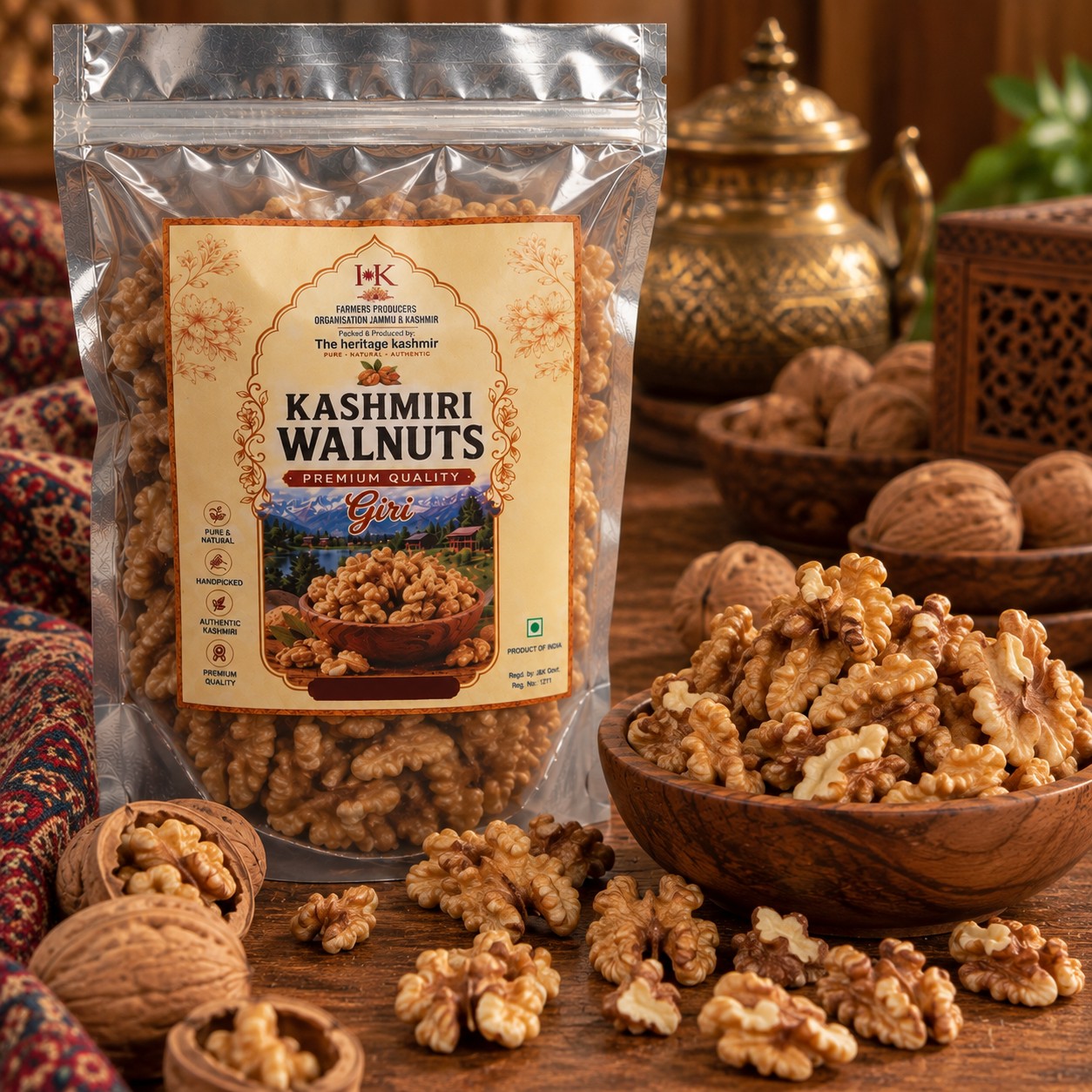
Our Kashmiri walnut kernels are current-harvest halves, cold-stored and sealed in the valley — the same sourcing discipline behind our almonds and saffron (how we work). Pick them up alone, or with the figs and almonds they share a shelf with — everything ships across India from the shop, and our page on buying Kashmiri dry fruits online sets the whole range side by side.
The omega-3 number, and what it is worth
Walnuts are the only common tree nut with a genuinely meaningful omega-3 content, and it is worth being precise about the size of that claim rather than repeating it as a slogan.
A 30 g handful — roughly 7 to 9 walnut halves — carries about 1.9 g of alpha-linolenic acid (ALA), the plant omega-3. Walnut kernels run near 9 g of ALA per 100 g. For context, intakes between roughly 1 g and 2.5 g of ALA per day are the range most often discussed in the cardiovascular literature. A single handful sits inside it.
The honest caveat that most walnut marketing omits: ALA is not the same as EPA and DHA, the long-chain omega-3s found in oily fish. The human body converts ALA to EPA and DHA inefficiently — conversion rates reported in the literature are low, and lower again in men. So walnuts are an excellent plant source of omega-3, and they are not a replacement for fish or an algal supplement if EPA and DHA are specifically what you are after. Both things are true, and only one of them usually gets printed.
Why altitude changes the kernel
Kashmiri walnuts are largely seedling-grown trees on high-altitude slopes rather than grafted commercial orchards, and they grow slowly. Slow growth in a cold climate concentrates oil and produces a paler, plumper kernel with less of the tannic bitterness that comes from a thin, fast-grown nut. The same logic separates mamra almonds from California almonds.
It also means the same nut is unusually perishable. Oil is what makes the kernel good and oil is what goes rancid, so cold storage is not a premium feature in this category — it is the difference between a walnut and a disappointment. A kernel that tastes sharp, bitter or like crayon has oxidised, and no amount of soaking rescues it.
Storage, honestly
- Shelled kernels: airtight, refrigerated, 3–6 months. Freeze for longer.
- In shell: cool and dry, up to about a year — the shell is the best packaging ever designed.
- The rancidity test: smell before you taste. Fresh walnut is faintly sweet and buttery; oxidised walnut is sharp and paint-like.
If you want the same kernels as a finishing oil rather than a snack, the pressing is covered in walnut oil benefits — and the storage problem there is worse, for exactly the same reason. If you are weighing up what to pay, our Kashmiri walnut price per kg guide lays out the market rates, in shell and shelled.