
The short list first: walnuts, almonds, dried figs, raisins and dates are the best dry fruits for winter — dense fats, minerals and slow energy matched to cold-weather appetite. In Kashmir we don’t theorise about this. Through Chillai Kalan, the forty coldest days from late December, the valley runs on exactly this list, warmed by kahwa and kesar milk. Here is the winter pantry, ranked by people who live inside the season.
The winter ranking, and why
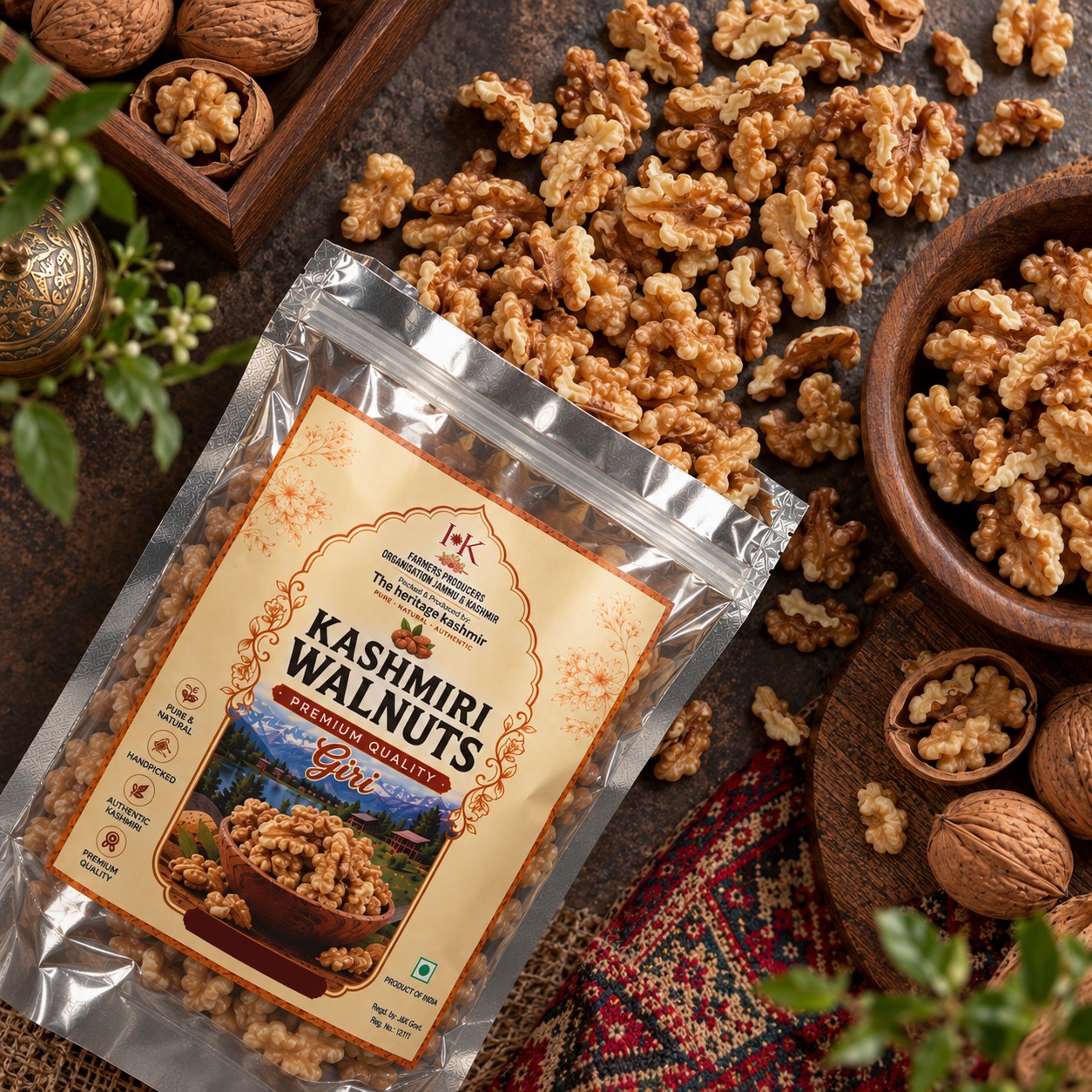
- 1. Walnuts (akhrot). Winter’s signature nut — the only common one rich in plant omega-3, traditionally eaten for warmth and, all winter in Kashmir, cracked fresh around the bukhari stove. Two halves a day; the full case is in Kashmiri walnuts benefits.
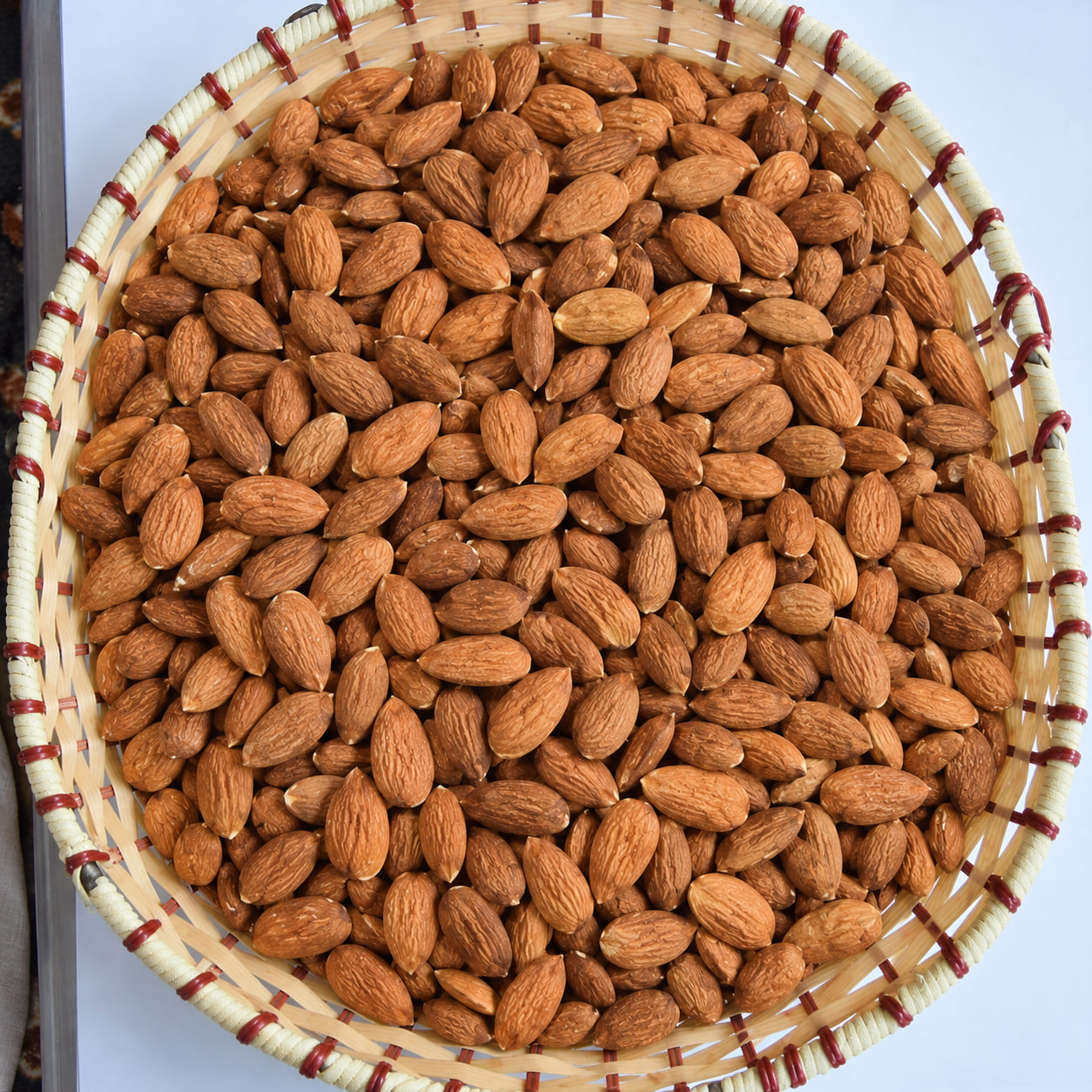
- 2. Almonds (badam). The daily spine, winter or not — but cold months favour the oil-rich mamra grade (why mamra differs). 5–6 kernels, soaked mornings or roasted evenings.
- 3. Dried figs (anjeer). Calcium and fibre when winter diets go heavy; 2 soaked figs each morning — the ritual is in the anjeer guide.
- 4. Raisins & dates. Iron and instant warmth for the 4 pm slump; a small spoon, or simmered into kheer.
- 5. The saffron layer. Not a dry fruit, but winter’s binding thread: 3–4 strands in night milk (kesar doodh) and 2–3 in every cup of kahwa.
Winter amounts
Cold weather earns a slightly bigger handful: 30–40 g total per day against the year-round 30 g baseline (the item-by-item chart lives in how many dry fruits per day). The traditional claim that nuts “generate heat” is folk shorthand for something real: winter bodies burn more, and calorie-dense kernels are steady fuel. What it is not is a licence for the half-kilo namkeen mix — winter weight arrives by exactly that road.
The rituals that make it stick
- Morning: overnight-soaked almonds and figs, peeled and eaten before breakfast.
- Afternoon: kahwa at 4 — green tea, cardamom, cinnamon, crushed almonds, saffron off the boil. The blend we pack is this recipe in a jar.
- Evening: walnuts cracked warm, or a spoon of saffron honey in warm water after dinner.
- Night: kesar doodh — the day’s gentlest full stop.
Buying for the season
Winter is when dry-fruit demand peaks and when re-packed, last-season stock floods marketplaces — kernels that spent summer in warm warehouses, oils quietly oxidising. The tell is taste: stale nuts bite bitter and papery. Fresh high-altitude kernels — the kind Kashmir’s 1,600 m orchards produce — taste sweet and buttery with no seasoning at all. Everything on our Kashmiri dry fruits page is current-harvest, graded and vacuum-sealed in the valley, shipped once. For a winter pantry, the almonds, walnuts and figs can all be ordered together. Stock the pantry from the shop or the home page — and eat the season the way the valley does: one warm handful at a time.
What actually changes in winter
The traditional case for dry fruits in winter is usually made in terms of “heat” — garam taseer. That framing is culturally real and physiologically vague, so here is the version that survives scrutiny.
- Energy density suits cold weather. Nuts are among the most calorie-dense foods available, and cold weather raises energy needs. This is the honest core of the tradition.
- Dry indoor air is hard on skin. The fat in nuts and the oils pressed from them support barrier function from inside and out. Hence the winter oiling habit as much as the eating one.
- Fresh produce narrows in a Kashmiri winter. Historically, dried fruit and nuts were what remained when the valley was under snow. The tradition is a storage strategy that became a nutrition habit.
- What it is not: a way to raise body temperature. Thermoregulation does not work that way, and a walnut will not warm you the way a blanket will.
A winter rotation, with reasons
| Item | Portion | Why it earns a place |
|---|---|---|
| Walnuts | 7–9 halves | ~1.9 g ALA omega-3 per 30 g — the highest of any common nut |
| Almonds | 20–23 kernels | Vitamin E and oleic acid; soaked, they are gentler first thing |
| Dried figs | 2–3, soaked | ~162 mg calcium and ~9.8 g fibre per 100 g |
| Kahwa with saffron | 1–2 cups | The Kashmiri winter drink; method in the kahwa recipe |
Total across the day: roughly one 30 g serving, rotated, not stacked. The portion arithmetic is in how many dry fruits per day, and the winter drink that goes with them is in the kahwa recipe.
One storage note that matters more in winter than people expect: central heating and rancidity are close friends. Keep kernels airtight and cool, away from the room you heat most.