Kesar phirni is rice that has been soaked and coarsely ground, cooked in full-cream milk until it thickens, finished off the heat with steeped saffron and cardamom, and set cold in bowls. The grind is what makes it phirni rather than kheer; the steeped saffron is what makes it kesar phirni rather than a pale milk pudding. In Kashmiri homes it is the dessert of Eid and of weddings, and the method below is the one we use in Pampore.
The recipe (4–6 bowls)
- 1 litre full-cream milk — skimmed milk will not set properly.
- 1/4 cup (about 50 g) rice — short-grain or basmati.
- 1/2 cup (about 100 g) sugar, or to taste.
- 4 green cardamom pods, seeds ground.
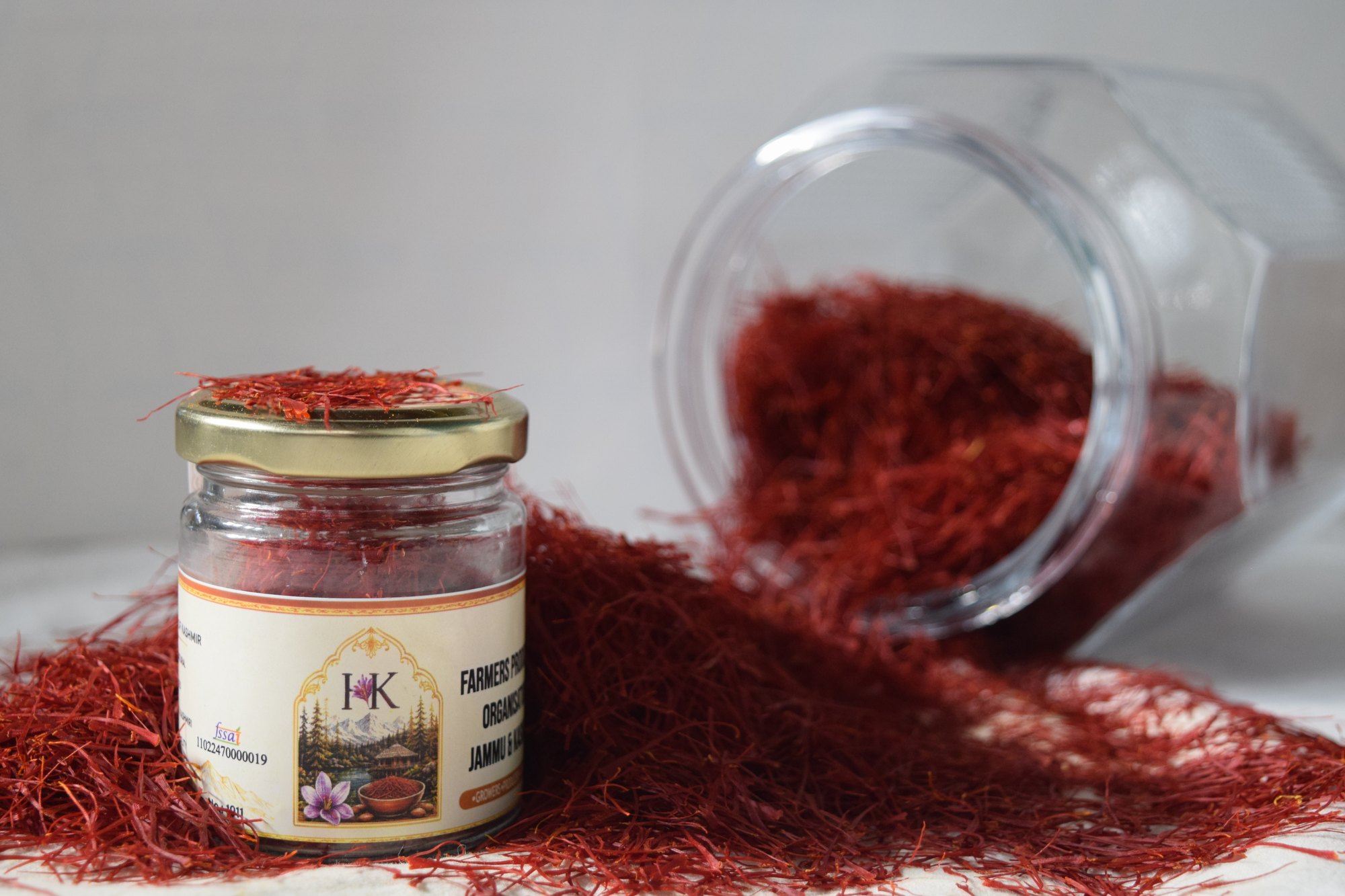
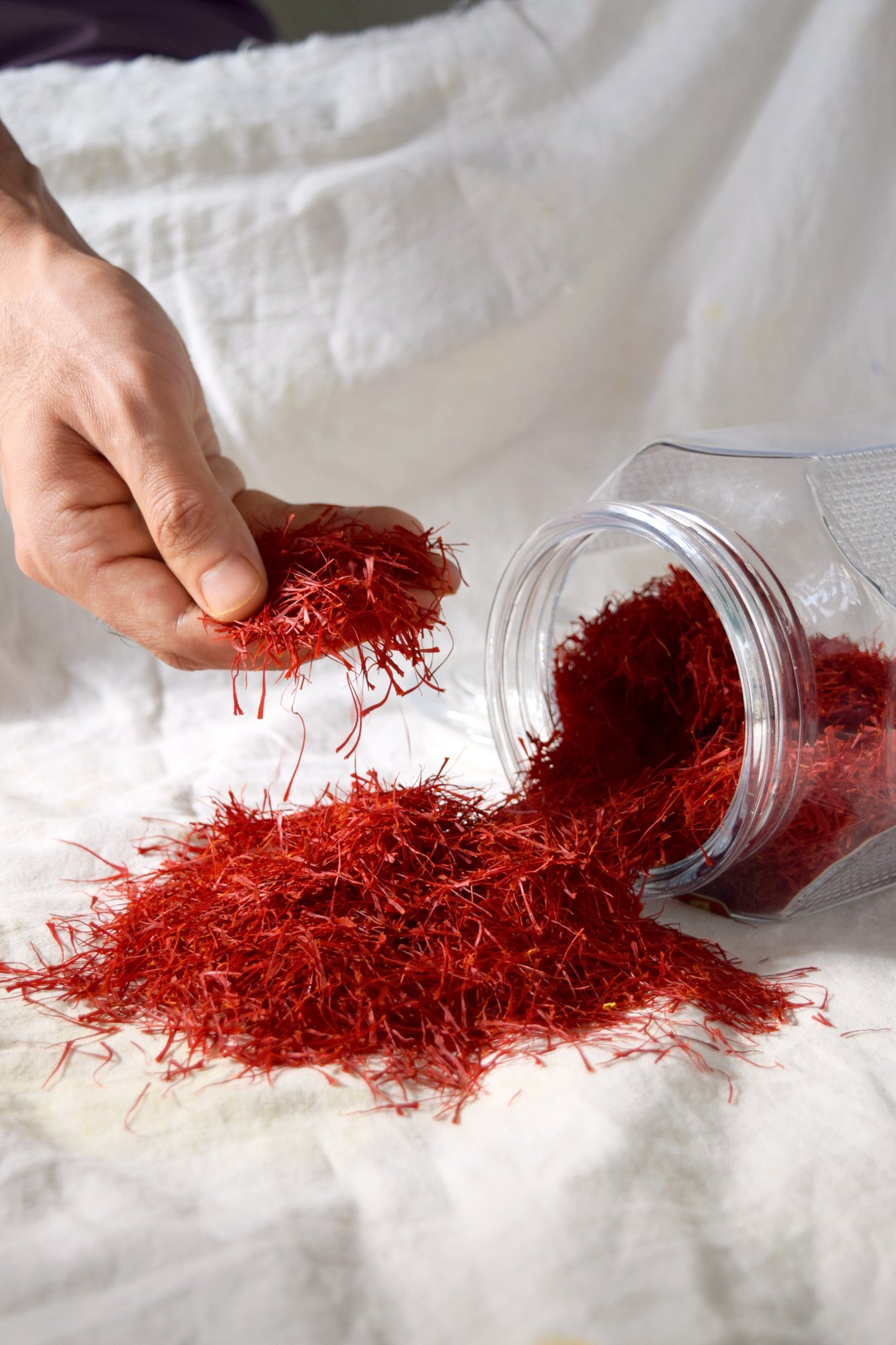
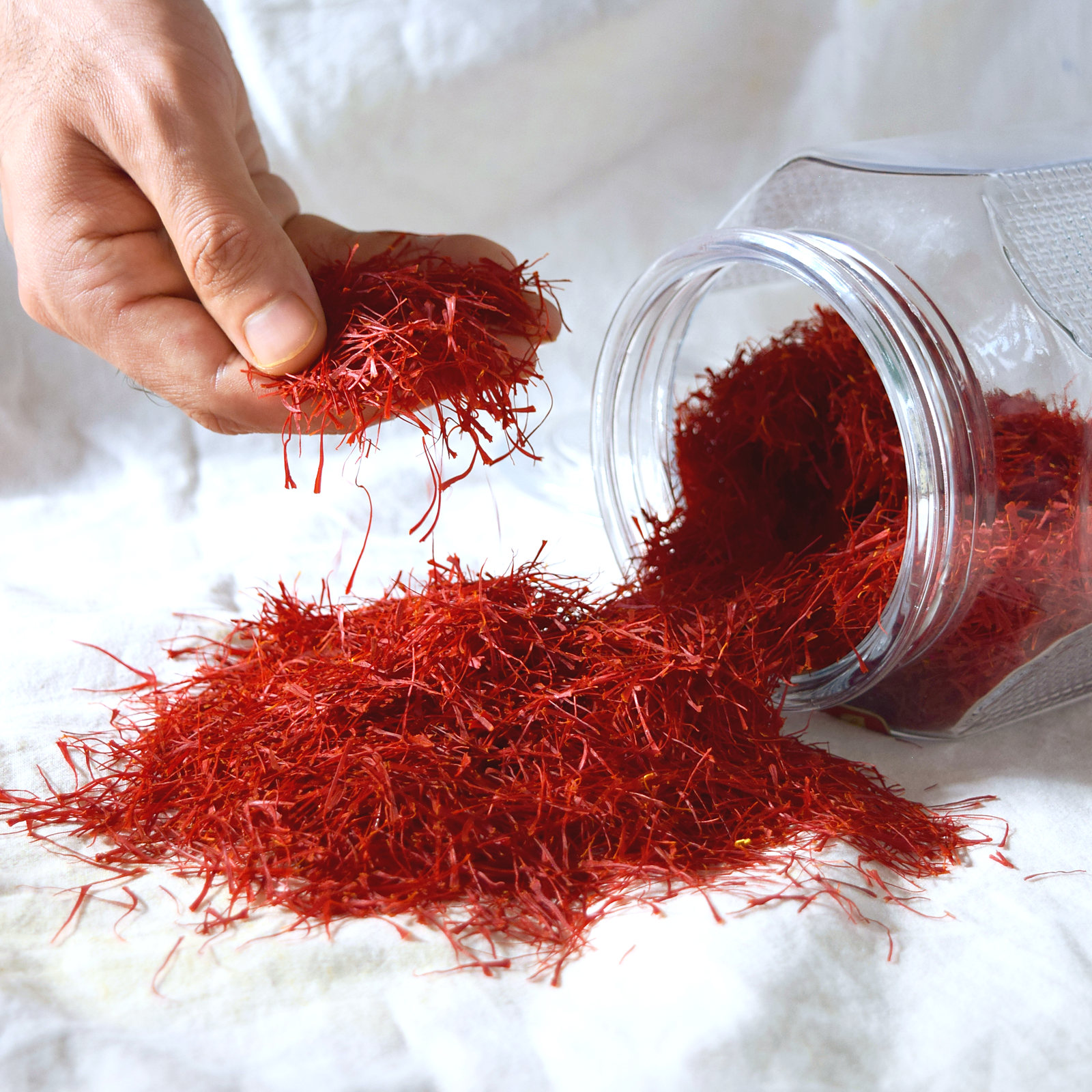
- 10–12 strands Kashmiri saffron, steeped in 2 tablespoons of warm milk.
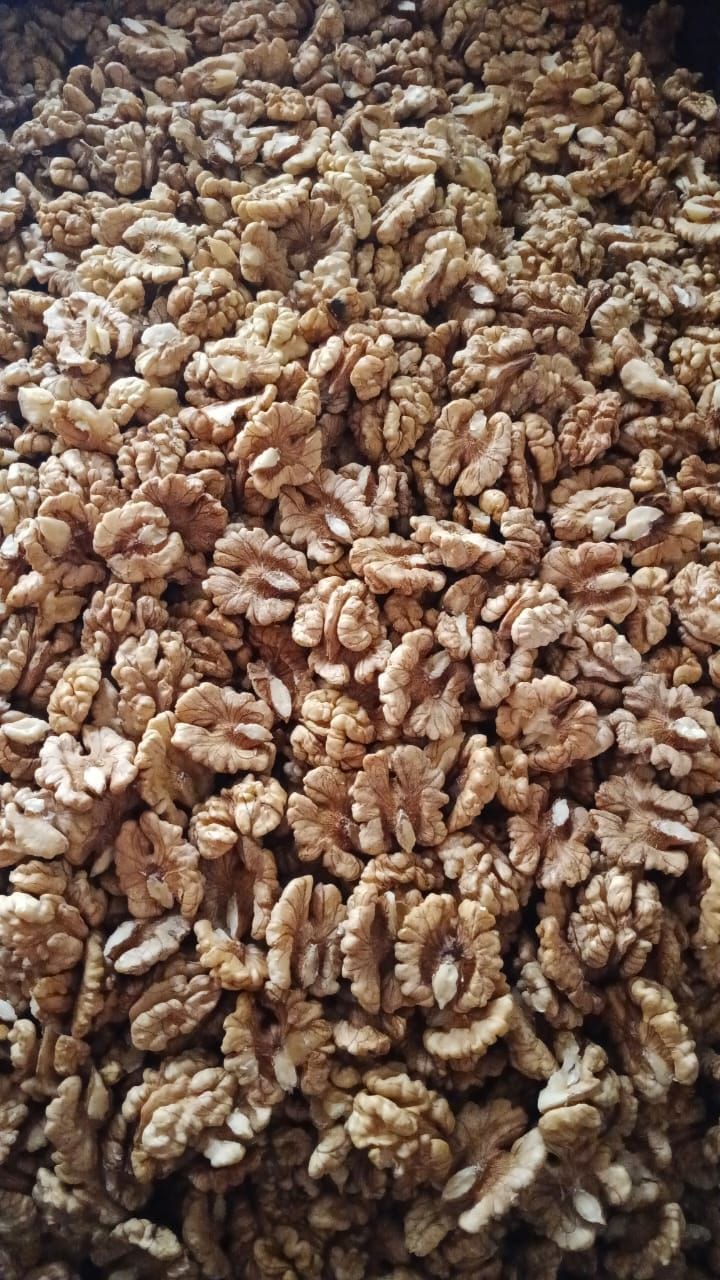
- 8–10 almonds, slivered, and 4–5 walnut halves, chopped — the Kashmiri finish.
- Soak and grind. Rinse the rice, soak it 30 minutes, drain well and grind it coarse — the texture of fine semolina, not flour.
- Steep the saffron. 10–12 strands in 2 tablespoons of warm milk, covered, 10–15 minutes. It does its work while you cook.
- Make a slurry. Stir the ground rice into 1/2 cup of the cold milk until there are no dry pockets.
- Cook. Bring the rest of the milk to a boil, lower the heat, and pour in the slurry while whisking. Cook 15–20 minutes, stirring often and scraping the base, until the phirni thickly coats the back of a spoon and a grain pressed between your fingers is soft.
- Sweeten. Add the sugar and cook 3–4 minutes more. Sugar loosens it for a moment, then it thickens again.
- Finish off the heat. Stir in the ground cardamom and the steeped saffron — milk, threads and all.
- Set. Pour into bowls, scatter the almonds and walnuts, cool, then chill at least 2 hours. Overnight is better.
Active time is about 70 minutes including the soak; the set takes at least two hours more, unattended.
Phirni vs kheer: the grind decides
Both are rice, milk and sugar. Kheer uses whole grains, cooked slowly until they soften and the milk reduces around them; it can be served warm and stays loose. Phirni uses rice that is soaked and ground, so the starch releases quickly and the milk thickens into a smooth, spoonable pudding that sets as it cools. Phirni is always served cold. If you want the whole-grain version, our kesar kheer recipe uses the same saffron rule. Some Kashmiri households make phirni with fine semolina instead of rice; the method is the same.
Getting the texture right
Good phirni is thick enough to hold a spoon’s edge but still soft, with a faint graininess from the rice. Three things decide it:
- The grind. Coarse, like semolina. Ground to flour, the phirni goes pasty; left in pieces, it stays gritty.
- The slurry. Ground rice dropped into hot milk seizes into lumps on contact. Loosened in cold milk first, it disperses evenly.
- The stopping point. Phirni thickens a great deal as it cools. Take it off the heat when it coats the spoon thickly but still pours — if it already holds its shape in the pan, it will set like rubber in the fridge. Too thick? Whisk in a splash of warm milk before pouring.
The saffron: how much, and when
10–12 strands for a litre of milk is enough for a clear gold colour and the aroma you want to smell when the bowl is uncovered. Steep them in 2 tablespoons of warm milk for 10–15 minutes and add them only once the pan is off the heat. Safranal, which carries saffron’s aroma, is volatile: boil the threads in the pot for twenty minutes and most of it leaves with the steam. The full reasoning, and how to steep for every dish, is in how to use saffron.
Leave the threads in. A few red strands set into the surface are how a guest knows it is kesar phirni before the first spoonful.
The earthen bowl
At Kashmiri feasts phirni is set and served in small unglazed clay bowls — shikoras, also called kunals. The clay draws a little moisture out of the pudding as it cools, which helps it set firm, and many people find it adds a faint earthy note. Soak new clay bowls in water for an hour and let them dry before the first use, or they will drink too much from the phirni. At home, glass or steel bowls work perfectly well; the recipe does not depend on the clay.
Serving at Eid and weddings
For Eid, phirni is usually made the night before and comes out of the fridge as guests arrive, which makes it one of the easier festive desserts to scale. The recipe doubles cleanly: 2 litres of milk, 1/2 cup of rice and 20–24 saffron strands for 10–12 bowls, cooked in a wide, heavy pan so the base does not catch. Our Eid guide covers the rest of the festive table. At weddings phirni often follows the main meal in rows of clay bowls; garnish just before serving so the nuts stay crisp.
Storage
Covered, in the fridge, phirni keeps for two days. Cover each bowl so it does not pick up other smells. It does not freeze well — the texture turns grainy and watery as it thaws.
Common mistakes
- Skipping the slurry. The single biggest cause of lumps.
- Cooking on high heat. Milk and rice catch on the base and the whole pan tastes scorched. Low heat, stir often.
- Boiling the saffron. Colour survives, aroma does not. Steep separately, add off the heat.
- Over-thickening in the pan. Judge it by the spoon, not by how firm it looks; it sets much harder cold.
- Sugar too early. Added at the start, it slows the rice from softening. Add it once the rice is cooked.
- Weak or dyed saffron. If the colour bleeds out red within seconds of hitting warm milk, the threads are dyed. Here is how to check yours.
What goes in our bowls
The saffron in our phirni comes from our family’s own fields in Pampore: Mongra saffron (Super Negin), all-red threads graded ISO 3632 Grade I by the IIKSTC laboratory, with the full lab report published. At 10–12 strands a litre, a 1 g jar sets a good many batches. The slivers on top are mamra almonds from our valley orchards and Kashmiri walnut kernels — more on those in Kashmiri walnuts. Soak the rice tonight, and the bowls will be ready by tomorrow.