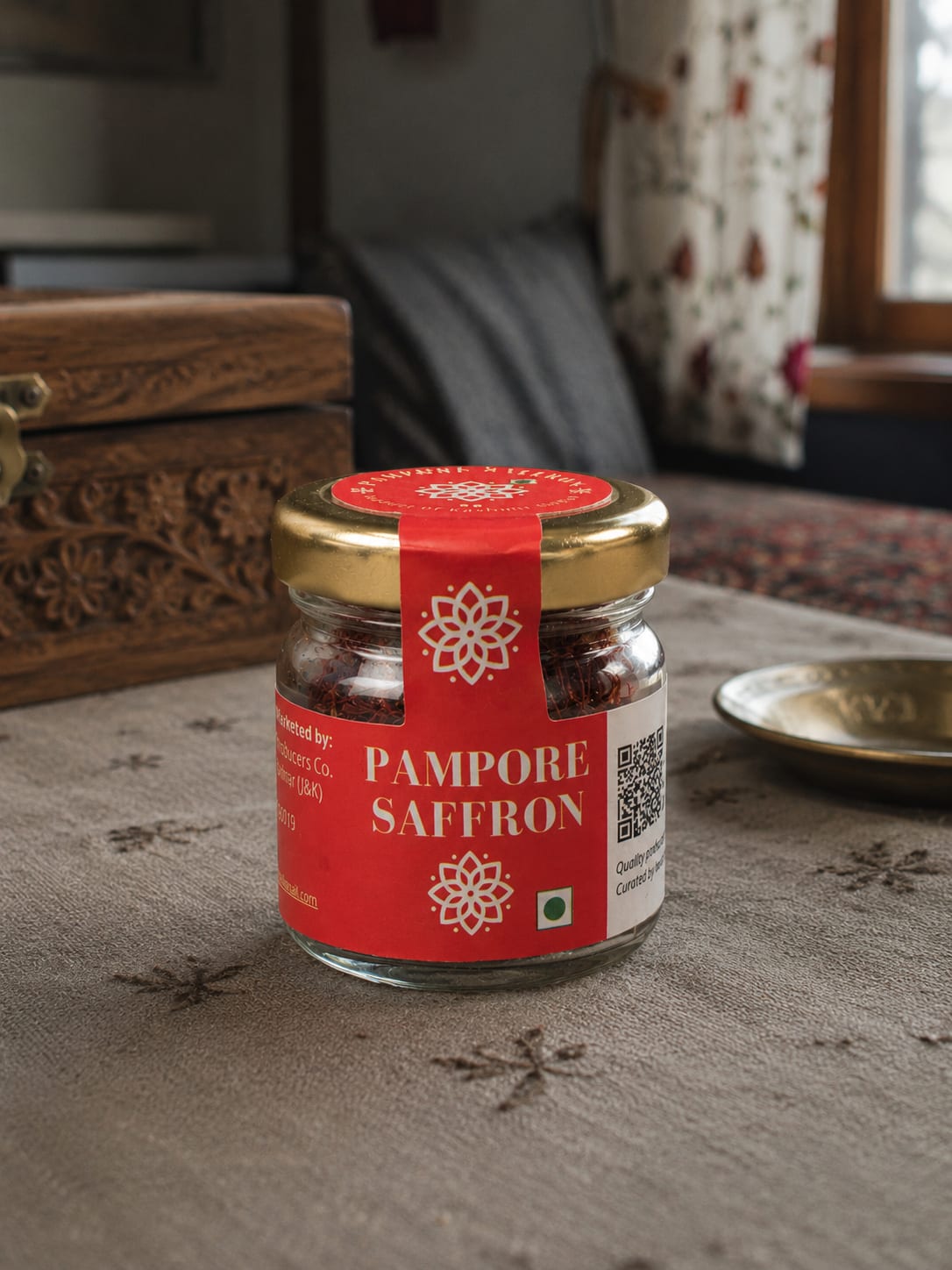
Zarda is basmati rice par-boiled, finished in sugar syrup with ghee, whole spices and dry fruits, then coloured and perfumed with saffron steeped in warm milk and cooked on a slow dum. It is the sweet rice of Eid tables and wedding feasts across North India and Pakistan, named after the Persian word for yellow. You may know it as meethe chawal, kesari chawal or zarda pulao. Done well, every grain is separate, glossy and golden; done badly, it is sweet orange mush.
Zarda rice recipe (serves 4–6)
- Rice: 2 cups (about 400 g) aged basmati.
- Saffron: 12–15 strands, steeped in 3 tablespoons of warm milk.
- Syrup: 1 cup (about 200 g) sugar and ½ cup water.
- Fat: 4 tablespoons ghee.
- Whole spices: 4 green cardamom pods, lightly crushed; 4 cloves; 1 inch cinnamon stick.
- Dry fruits: 15 almonds, slivered; 8 walnut halves, broken, or 4 dried figs, chopped; 2 tablespoons raisins.
- Salt: a pinch, for the boiling water.
This is a medium-sweet zarda. Wedding cooks often go up to equal volumes of sugar and rice; start here and add a few spoons next time if your family likes it sweeter.
The method: par-boil, syrup, saffron, dum
- Soak and steep. Wash the rice until the water runs clear and soak it 30 minutes. In the same half-hour, steep the saffron in the warm milk, covered, for 15 minutes. Never drop dry strands into the pot; why is explained in how to use saffron.
- Par-boil. Boil the drained rice in plenty of water with the salt for 5–6 minutes, until about 70% cooked: soft outside, a firm core when you press a grain. Drain at once.
- Spices and nuts. Heat the ghee in a heavy pan. Fry the cardamom, cloves and cinnamon for 30 seconds, add the almonds and walnuts or figs until just golden, then the raisins until they puff, about 3 minutes in all. Lift out half the nuts for the top.
- Syrup. Add the sugar and water to the same pan, stir until dissolved and simmer 2 minutes.
- Rice into syrup. Fold the rice in once, gently, and cook on medium for about 4 minutes until most of the syrup is absorbed and the grains look glossy. Do not stir again.
- Saffron and dum. Pour the saffron milk over in streaks, scatter the reserved nuts, seal the pan with foil and a lid, and cook on the lowest heat for 15 minutes. A flat tawa under the pan stops the bottom catching.
- Rest. Turn off the heat, leave the lid on for 5 minutes, then fluff with a fork. The streaks are the point: gold and white grains together is how proper zarda looks.
The same dum logic, with saffron going in at the end rather than the start, runs through saffron biryani.
Saffron colour or food colour: the honest answer
Most zarda you see at weddings is bright, even orange. That colour almost always comes from food colour, sometimes with a few saffron strands on top for show. Food colour is cheap and gives a uniform shade; it adds no aroma and no taste.
Saffron does something different. It gives a softer, uneven gold, deeper where the milk landed, paler between, and it brings the honeyed smell that makes zarda read as a festive dish rather than sugared rice. It will not give you neon orange, and adding more strands to chase that colour only makes the dish bitter. If you want the look and the aroma, some cooks add a drop of colour and still steep the saffron. If you want the real thing, saffron alone, and accept gold rather than orange.
How much saffron for 500 g or 1 kg of rice
| Rice (dry) | Serves | Saffron strands | Warm milk to steep |
|---|---|---|---|
| 400 g (2 cups) | 4–6 | 12–15 | 3 tablespoons |
| 500 g | 6–8 | 15–20 | 4 tablespoons |
| 1 kg | 12–15 | 30–40 | ½ cup |
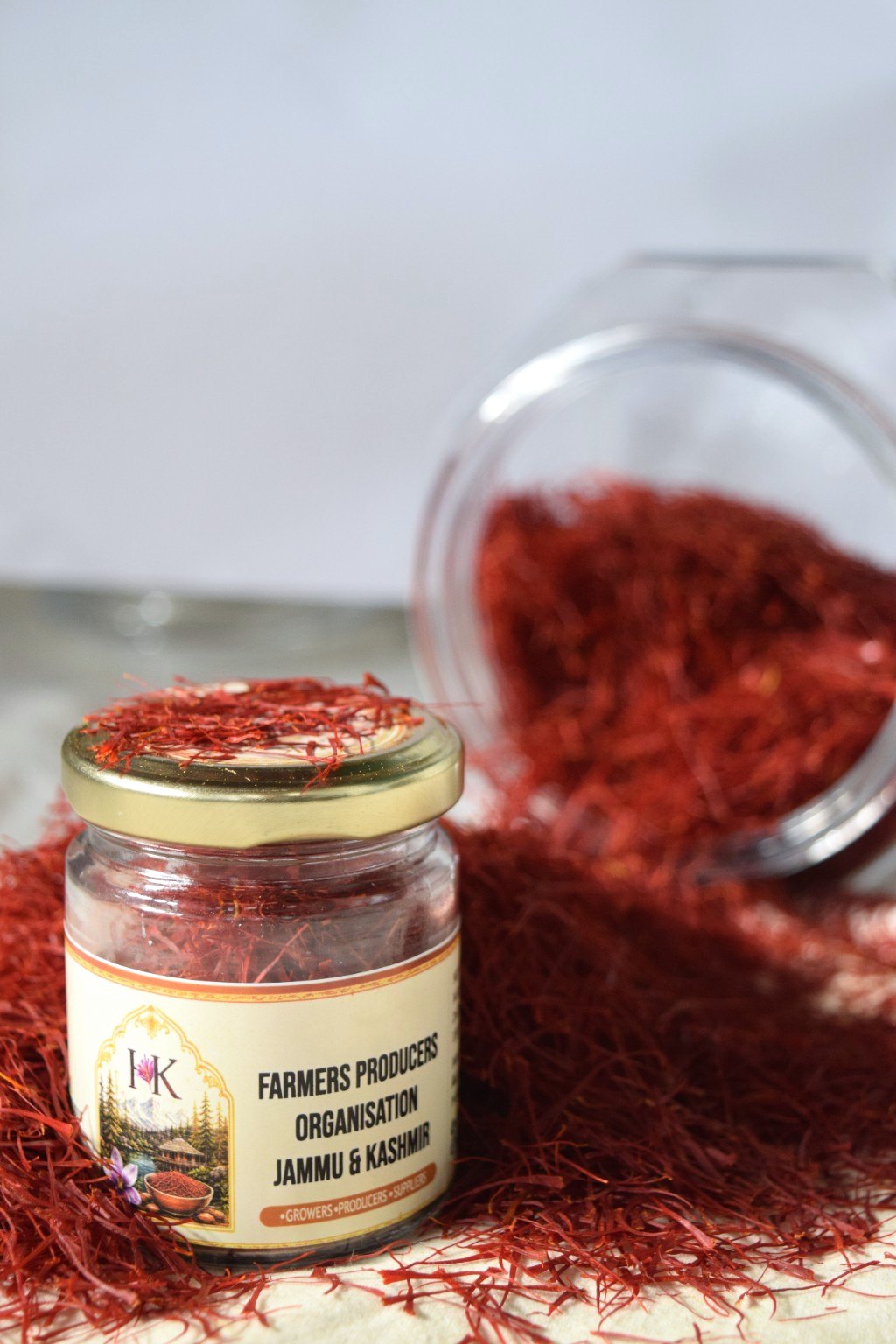
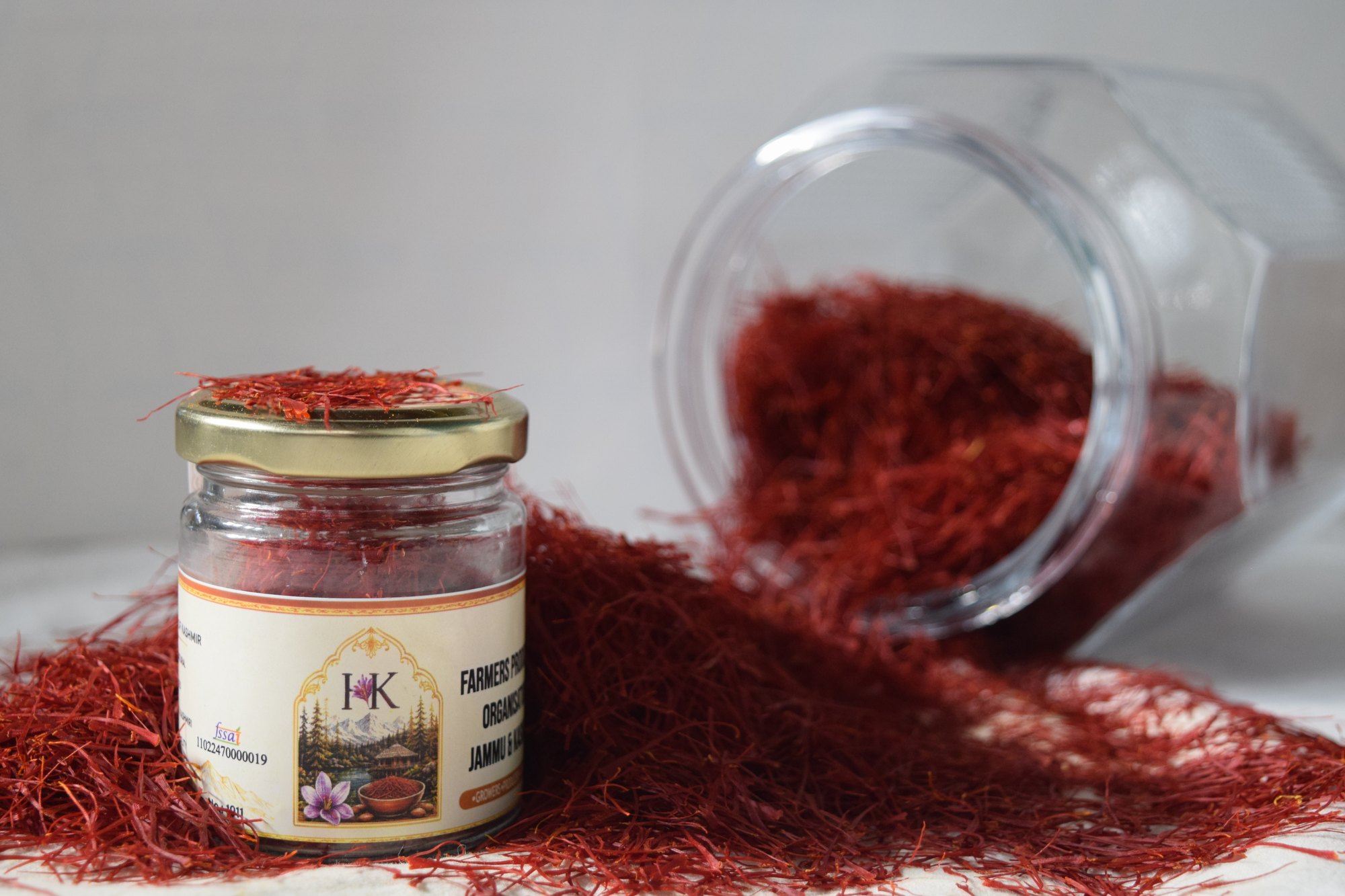
A gram of saffron holds roughly 450 threads, so even a 1 kg wedding pot uses less than a tenth of a gram. These numbers assume all-red Grade I threads; weaker saffron needs more and still smells of less. Our everyday cooking jar is the Mongra Short Thread, the same harvest and the same all-red sort as the long-thread Mongra Super Negin, tested ISO 3632 Grade I by the IIKSTC government lab in Pampore.
Which rice to use
Aged basmati, long grain. Ageing dries the grain, so it drinks up syrup without splitting. Sella basmati (parboiled) is firmer still and forgiving in big pots; it is what many wedding cooks use. Avoid new-crop rice, short-grain rice and broken basmati: all three turn sticky the moment they meet sugar.
The dry-fruit finish
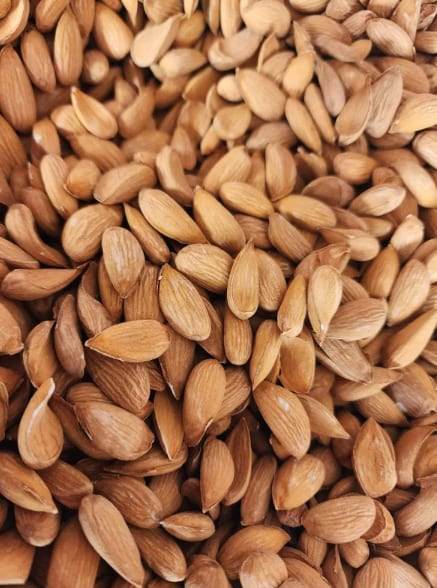
The nuts are half the pleasure of zarda, and they are fried in the spiced ghee before the syrup goes in, so they carry its flavour. Mamra almonds from our valley orchards are small, wrinkled and oil-rich, and fry to a richer crunch than ordinary almonds. Kashmiri walnut kernels are pale and low in bitterness, which matters in a sweet dish. Dried figs, sun-dried with no added sugar or sulphur, add a soft, jammy chew in place of walnuts. Raisins go in last; they puff in seconds and burn soon after.
“Zarda” saffron is something else
If you searched for zarda saffron, note the overlap. In the Kashmiri saffron trade, zarda is also the name of the lowest grade: the pale yellow style, the lower part of each thread, cut away when all-red Mongra is sorted and sold on its own. It has almost no colour and little aroma. Lacha sits in between, with the yellow style still attached. For zarda rice you want the opposite of zarda saffron: all-red Mongra, the deep-red tips only. How Kashmiri grades compare with imported saffron is in Kashmiri vs Iranian saffron.
Common mistakes
- Over-boiling the rice. Past 70% done, the grains break in the syrup. Drain early.
- Stirring after the syrup. One fold, then hands off. Every stir breaks grains and releases starch.
- Too much water in the syrup. The rice is already part-cooked; extra water makes porridge.
- Saffron straight into the pot. Dry strands give a fraction of their colour. Steep first, add at dum.
- High heat on dum. Sugar catches fast. Lowest flame, and a tawa under the pan.
Storage and reheating
Zarda keeps 3 days in the fridge in a closed box. It firms up when cold; sprinkle a spoon of milk over, cover, and warm gently in a pan or the microwave. It is also good at room temperature on the day it is made, which is why it travels well to a Eid table alongside sheer khurma. Keep the saffron jar itself sealed, dark and out of the fridge, so the next pot smells as good as this one.