Simmering petals in water makes a rose infusion. Condensing steam off those petals makes a hydrosol. Both are commonly called gulab jal, they look different, they keep for different lengths of time, and only one of them resembles what you buy in a bottle. The method below covers both, in order of effort, with an honest account of what each produces — including why your homemade version will probably come out pink when the shop’s is clear.
What you need before you start
- Strongly scented, unsprayed roses. Desi or damask garden roses, the kind used for gulkand and attar. Not florist roses: bred for looks and vase life, usually treated with things you should not simmer and then apply to your face.
- Distilled or filtered water. Hard tap water carries minerals that shorten how long the result keeps.
- A sterilised glass bottle. Boil it, dry it fully. Any residual moisture or residue is where spoilage starts.
- Petals only. Pull them off the stem, discard the green base — it is bitter and adds nothing.
Rinse the petals gently in cool water and let them drain. Everything that follows takes about half an hour of attention.
Method one — the simmer (easy, makes an infusion)
- Put the petals in a pan and add just enough water to cover them. More water does not make more rose water; it makes weaker rose water.
- Cover and heat on the lowest possible flame. You want a bare simmer, never a rolling boil — hard boiling drives off the aromatic compounds you are trying to keep, and can turn the result faintly stewed.
- Wait until the petals have surrendered their colour and gone pale, roughly 20–30 minutes.
- Take it off the heat and let it cool with the lid on.
- Strain through muslin, pressing gently, and bottle. Refrigerate immediately.
You now have a pink, fragrant rose infusion. It is genuinely useful — as a face mist, in a face pack, over kheer — and it is not what a distillery produces.
Method two — pot distillation (more work, much closer to the real thing)
- Put the petals in a wide pan and add water to just cover. Place a small heatproof bowl in the centre, sitting clear of the petals — a trivet or an upturned steel katori underneath works.
- Invert the pan lid so its handle points down into the bowl, and put the lid on. Steam will rise, hit the cold lid, run to the low point and drip into the bowl.
- Pile ice on top of the inverted lid. The temperature difference is the whole mechanism — the colder the lid, the more efficiently steam condenses.
- Keep the heat low. Replace the ice as it melts. Over 30–45 minutes the bowl fills slowly.
- Stop while the drips still smell of rose. Push it too far and you begin diluting what you have collected.
What lands in that bowl is condensate: it never touched the petals directly, so it carries almost no pigment. It will be clear or barely tinted, and it will smell markedly cleaner than the simmered version. That is the difference between an infusion and a hydrosol, demonstrated in your own kitchen.
The two methods, side by side
| Simmered | Home-distilled | Commercial | |
|---|---|---|---|
| Colour | Pink | Near clear | Clear |
| Aroma | Softer, slightly cooked | Clean, bright | Clean, consistent batch to batch |
| Yield | High | Low | Controlled |
| Keeps | ~1 week, refrigerated | ~1–2 weeks, refrigerated | Months, sealed |
| Effort | Low | Moderate, needs attention | None |
The part most recipes leave out: it does not keep
This is the honest limitation and it deserves more than a footnote. Homemade rose water has no preservative and has been made in a domestic kitchen. Refrigerate it in a sterilised airtight bottle and treat about a week as the sensible ceiling for the simmered version.
Throw it away at the first sign of cloudiness, floating sediment, or any sour or fermented note. Rose water that has turned does not announce itself dramatically; it just stops smelling of roses. Do not use spoiled rose water on your skin and certainly do not cook with it.
If you want it to last, make small quantities often rather than a large batch once. An ice-cube tray in the freezer works well for skincare use.
Which is worth your time
Make it yourself when you have access to genuinely fragrant unsprayed roses — a garden, a neighbour’s hedge, a good local flower market in season. Fresh is a real advantage, and knowing exactly what went in is worth something no label can match.
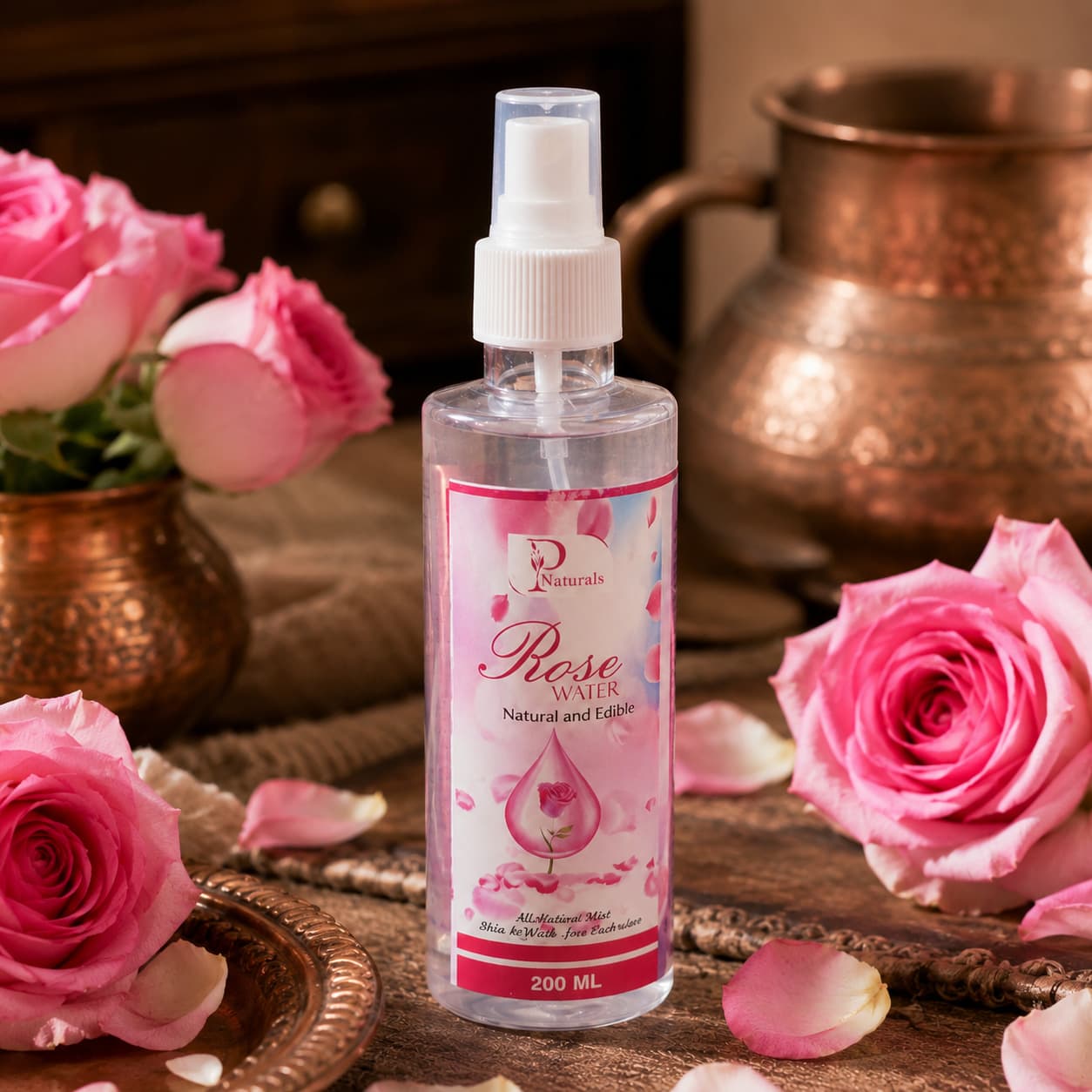
Buy it when you want consistency, shelf life, or rose water in February. And buy it if you are going to use it in food regularly: commercial distillation under controlled conditions is a genuine food safety advantage over a kitchen pot, and it is silly to pretend otherwise.
We no longer bottle rose water ourselves. If you are buying rather than distilling, and you want to know how to judge a bought bottle — including how to spot a synthetic one, which is a real problem in this category — the buying guide covers the tests, including the rose-water-versus-kewra mix-up that catches people out. If it was the distillation itself that drew you here, our kesar attar is the same principle carried much further: saffron distilled into a carrier oil rather than into water. Questions on WhatsApp at +91 95966 08297.