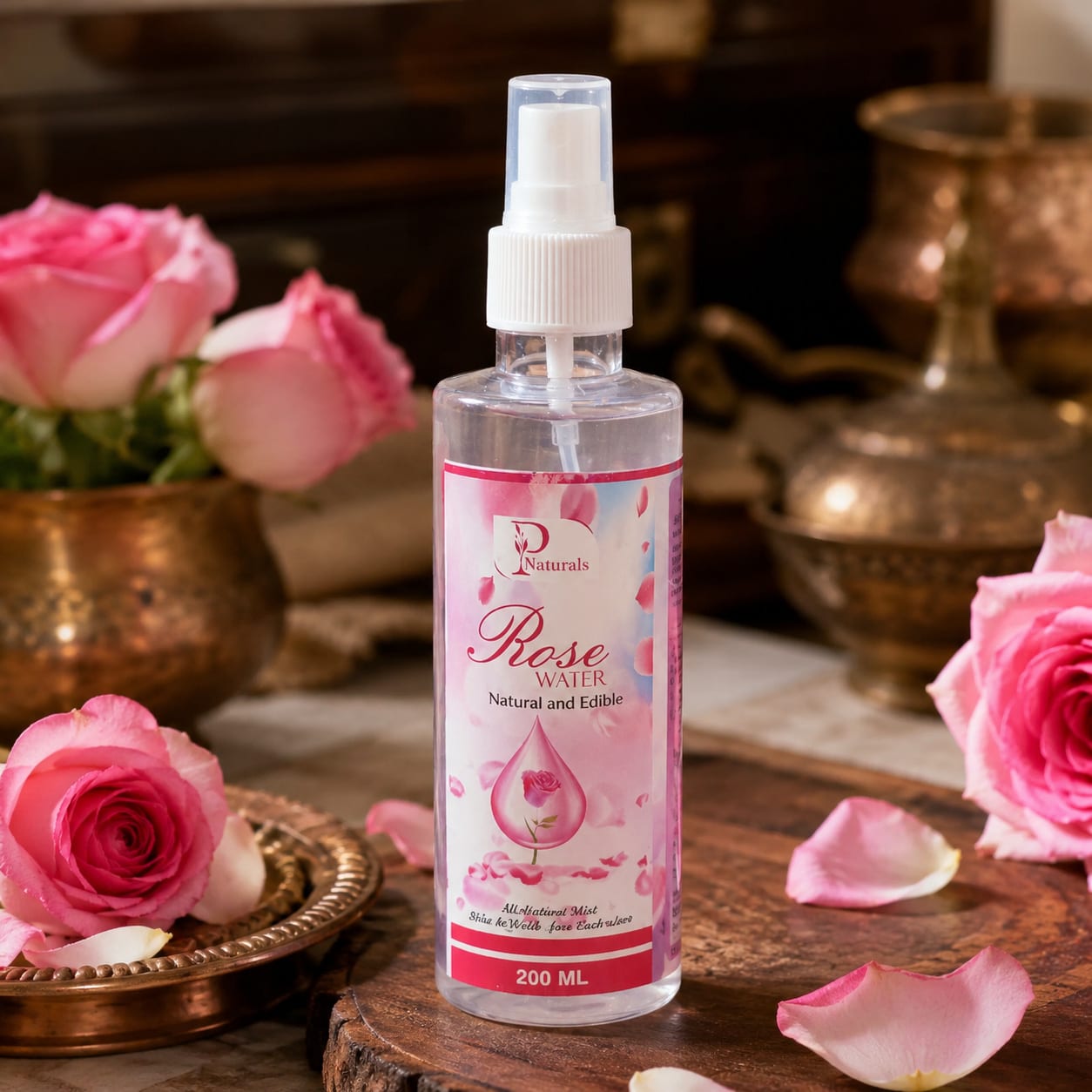
Kashmiri rose water should contain exactly one ingredient: rose. Nothing else. It’s the aromatic water collected when rose petals are steam-distilled — the same process that produces rose oil, minus the oil — and in a Kashmiri kitchen it does double duty: a splash in kheer or sharbat, a mist on the face after washing. Most bottles sold as “rose water” online are something else entirely: a fragrance oil diluted in water, never meant to be eaten. The difference is easy to check once you know what to look for.
What real rose water actually is
Steam is passed through fresh rose petals in a still. The steam picks up the rose’s aromatic compounds and oils, then condenses back into liquid — the top layer is rose oil (attar of roses, sold in tiny, expensive vials), and the water left underneath is rose water: lightly scented, water-clear to faintly straw-coloured, and genuinely food-grade because nothing was added to make it. No alcohol, no preservative, no synthetic fragrance. That’s the entire product, and it’s why the ingredient label should say exactly that — “rose water” or “Rosa damascena distillate” — and nothing longer.
Edible uses — the kitchen side
In Kashmiri and North Indian cooking, rose water is a finishing ingredient, added at the end rather than cooked hard, so its scent survives:
- Kheer and phirni — a teaspoon stirred in once the rice pudding is off the heat, alongside a few threads of saffron.
- Sharbat — a tablespoon in a glass of cold water or milk with sugar, the base of a rose sharbat.
- Gulab jamun syrup — a splash stirred into warm sugar syrup after it’s off the heat, so the aroma doesn’t cook off.
- Lassi — a teaspoon whisked into sweet lassi for a Mughlai-style rose lassi.
- Gulkand and mithai — a few drops worked into rose-flavoured sweets and preserves for a rounder, less perfumed flavour than rose essence alone gives.
The rule that keeps it from tasting like soap: add it after the dish is off direct heat, and start with less than you think you need. A teaspoon changes a whole pot of kheer; a tablespoon can overwhelm it.
How to tell real rose water from a synthetic one
Rose water is one of the easiest “natural” products to fake, because a drop of synthetic rose fragrance in tap water looks identical in a bottle. Three checks, in order of how fast they work:
- Read the ingredient list. It should say “rose water” or “Rosa damascena distillate” and stop there. “Fragrance,” “parfum,” or a longer chemical list means it’s reconstituted, not distilled — and not something to cook with, whatever the front label claims.
- Smell it properly. Real rose water is soft and a little green, with a faint bitterness underneath the floral note — it smells like a flower, not like rose-flavoured candy. Synthetic versions are usually sweeter, flatter, and more one-dimensional, closer to a soap aisle than a garden.
- Check the colour. Genuine rose water is clear to very faintly straw-coloured. A distinctly pink tint is almost always added colour — real distillation doesn’t produce that shade from petals alone, regardless of how deep pink or red the roses were.
If your food safety questions go beyond this, the FSSAI publishes India’s standards for food additives and edible botanicals, including what a product must disclose to be sold as a food ingredient rather than a cosmetic fragrance.
Rose water vs kewra water — the mix-up worth clearing up
The two most common “flower waters” in Indian cooking get swapped by mistake more often than you’d expect. Rose water comes from rose petals and tastes floral and slightly sweet — it’s the one for kheer, gulab jamun, and rose lassi. Kewra water comes from the screw pine (pandanus) flower and has a sharper, greener, almost musky note — it’s the traditional choice for biryani and some Mughlai gravies, not desserts. They aren’t substitutes for each other in a recipe: kewra in kheer reads as medicinal, and rose water in biryani reads as perfumed. If a recipe just says “flower water” without specifying, dessert usually means rose and rice/meat dishes usually mean kewra.
Using it on skin
Rose water’s other job is as a gentle facial mist: pat or spray it onto clean skin as a toning step, or use it in place of plain water to mix a clay or saffron face pack — it dilutes the pack without diluting the ritual. It layers naturally with our saffron oil in a simple two-step routine: mist, then a few drops of oil pressed in while the skin is still damp, which is closer to how these two ingredients have actually been used together in Kashmiri bridal skincare than most modern “rose and saffron” product blends bother to explain.
Buying rose water online — what to check
Beyond the label test above, ask directly whether a rose water is sold as edible or cosmetic-only — a genuine seller will say plainly. A single-ingredient, food-grade distillate will name rose and water and nothing else; a cosmetic-only one will hedge, and a synthetic one will list a fragrance compound. We no longer bottle rose water ourselves, so this section is advice for buying someone else’s — apply the same tests to ours as to theirs. The rest of our Kashmiri wellness range is still here, including the saffron honey rose water pairs well with in warm milk.
For the saffron side of that same kitchen-and-skin pairing, see how we use it in saffron oil for skin, or head back to the home page for the full range. Questions about sourcing are always welcome on WhatsApp.