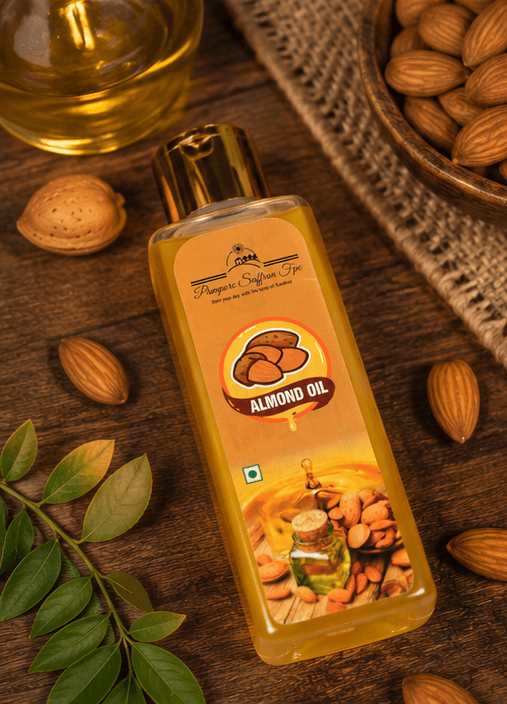
Almond oil earns its reputation on two compounds: oleic acid, which makes it absorb and hold moisture in the skin barrier, and vitamin E, which protects both your skin and the oil itself from oxidation. Cold pressing is what keeps the second one intact. That is the whole mechanism. Everything else written about almond oil is either a consequence of those two facts or a marketing claim that will not survive being asked for a source.
What is actually in the bottle
Sweet almond oil is dominated by oleic acid — a monounsaturated omega-9 fatty acid, typically the majority of the oil — with linoleic acid (omega-6) as the main supporting player, plus tocopherols and phytosterols. Oleic acid is a large, slow-absorbing molecule, which is exactly why almond oil feels cushioning rather than dry-touch, and why it suits dry skin better than oily skin.
One correction worth making, because it is repeated constantly across this category and we have been guilty of it in our own older product copy: almond oil is not a meaningful source of omega-3. Almonds contain only trace alpha-linolenic acid. The Kashmiri oil that genuinely carries plant omega-3 is walnut oil, and if omega-3 is what you are after, that is the bottle to buy. We would rather correct the record than keep a flattering claim.
Why altitude shows up in the oil
The case for Kashmiri almonds specifically is the same one that separates mamra almonds from California almonds: slow growth in a harsh climate produces a denser kernel with a higher oil fraction and more of the protective compounds the tree makes to survive cold. Higher oil fraction is the part that matters for pressing — more oil per kilogram of kernel, and a nuttier, less neutral finished oil.
Be sceptical of the precise multipliers that circulate in this market — “eight times the vitamin E” and similar figures are repeated by sellers without a citation attached, ours included until now. The directional claim is sound and well understood in horticulture. The exact number is not something we can stand behind, so we are not going to print one.
Sweet or bitter: the distinction that actually matters
Two different almonds share the name. Sweet almond oil (Prunus dulcis var. dulcis) is the edible one, and it is what every cosmetic and culinary almond oil is made from. Bitter almond oil comes from a variety containing amygdalin, which breaks down into hydrogen cyanide; the unrectified oil is toxic and has no place on skin or in food. Rectified bitter almond oil exists as a flavouring under strict controls, but it is a different product with a different purpose.
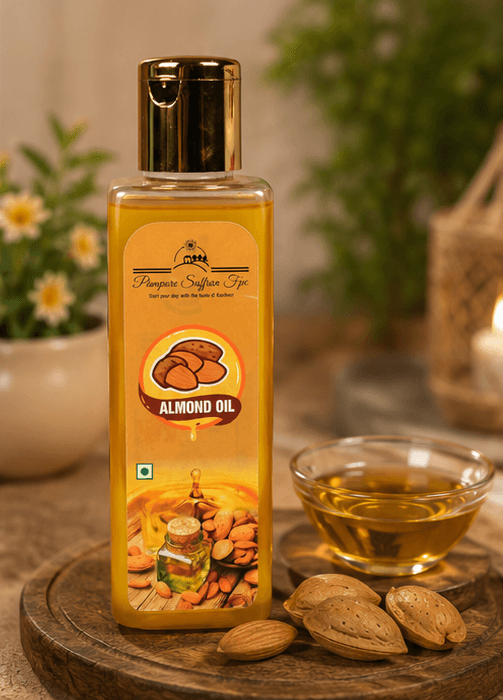
If a bottle does not say which it is, that is a reason to ask. Ours is sweet almond oil, cold-pressed from hand-graded Kashmiri kernels.
On skin: the honest version
Almond oil is an emollient and a mild occlusive. It softens the skin surface and slows water loss through it. Those two effects, applied consistently, produce softer, less flaky, more comfortable skin — which is a real benefit and a modest one.
- Cleanse, and leave the skin slightly damp.
- Warm 4–5 drops between your palms.
- Press it in rather than rubbing — pressing wastes less and irritates less.
- Use at night. Dry and mature skin can go daily; oily or acne-prone skin should start on alternate nights and patch-test first.
What it will not do: erase scars, lighten your complexion, or treat eczema. Skin-lightening claims in particular are worth naming as the nonsense they are — the same claim gets attached to saffron, which we have already written about at length. An oil that improves barrier function can make skin look better. It does not change what colour it is.
On hair: conditioning, and the malish tradition
A weekly pre-wash treatment is where almond oil does its clearest work. Warm a tablespoon, massage into the scalp and along the lengths, leave thirty minutes to an hour, then shampoo out. Oil applied before washing reduces how much water the hair shaft absorbs, and a shaft that swells less breaks less — that is the actual mechanism behind “oiling makes hair stronger”.
The infant-massage tradition — malish — is the other use most Indian households know almond oil for. It remains a reasonable choice for that: bland, well tolerated, no fragrance. Warm the bottle in a bowl of hot water rather than a microwave, and as with any oil on a baby, patch-test first and stop if the skin objects.
How to tell cold-pressed from refined
The refined version of this oil is a genuinely different product sold under the same name. Four things separate them:
| Cold-pressed | Refined | |
|---|---|---|
| Colour | Pale gold, faint cloudiness acceptable | Near-colourless, perfectly clear |
| Smell | Distinctly nutty | Almost none |
| Label | Pressing date, one ingredient | Long expiry, sometimes “almond oil blend” |
| Shelf life | 6–12 months from opening | Years |
That last row is the counterintuitive one. A long shelf life is a warning sign in a cold-pressed oil, not a feature. The compounds that make the oil worth buying are the same compounds that make it perishable.
What we sell, stated plainly
Our Kashmiri Almond Oil is sweet almond oil, cold-pressed in small batches from hand-graded Kashmiri kernels, bottled in 200ml amber glass with a tamper-evident seal and its pressing date on the label. No solvents, no heat, one ingredient.
We are an FSSAI-licensed Farmer Producer Organization in Pampore — licence 11022470000019, printed so you can check it rather than trust it — and our work with the Directorate of Agriculture Kashmir and at national agricultural events is documented here. What we have not done is commission a laboratory fatty-acid profile or tocopherol assay on this oil. When we do, the numbers go on the product page. Until then we describe the process, not results we do not have.