The short answer, from people whose living depends on selling saffron: no, saffron milk does not make a baby fair. A baby's skin colour is set by the genes inherited from both parents, fixed at conception, governed by a large set of genes that determine how much melanin the skin produces. Nothing a mother eats or drinks during pregnancy alters them. Kesar doodh in the later months is a pleasant, traditional, generally harmless drink — and that is the whole of what it is.
Why we are answering this the unprofitable way
Search "kesar for fair baby" and you will find sellers who will happily let the belief stand. It moves a great deal of saffron every year, particularly to first-time mothers and to mothers-in-law buying for them. We grow this spice in Pampore and we would like to sell you some. We are still not going to sell it to you for this.
Two reasons. The first is simply that it is not true, and a brand that will tell you a comfortable lie about genetics has told you something about how it handles every other claim on its label — including the origin claims you cannot verify. The second is that the belief does real harm. It puts a price on a baby's complexion before the child is born, and it sets up a mother to feel she failed at something when the baby arrives looking exactly as its parents' genes said it would.
What actually determines a baby's skin colour
Melanin. How much of it the skin produces, which type, and how it is distributed — all controlled by genes inherited from both parents. Researchers have identified well over a hundred genes involved in human pigmentation, interacting in combinations that make prediction genuinely difficult even when you know both parents. That is why two siblings can differ noticeably, and why a baby's eventual colouring often is not settled for months after birth: newborn skin frequently darkens or lightens as melanin production establishes itself.
The one dietary factor with a real, documented effect on a pregnancy outcome is folic acid, which reduces neural tube defects, and it works because it participates in a specific biochemical pathway during a specific window. There is no equivalent pathway by which a food pigment eaten by the mother reaches the fetus and changes gene expression for melanin. Crocin — the compound that makes saffron gold — is metabolised like any other carotenoid. It does not tint a baby.
Where the belief came from
It is older than India's modern fairness-cream industry, and it is not only Indian. Versions of it exist in Iran and Afghanistan, both saffron cultures. The logic is sympathetic magic — one of the oldest patterns in folk belief anywhere: the golden thing produces the golden child, the way a red food is said to build blood, or a walnut is said to be good for the brain because it is shaped like one.
Saffron was a particularly good candidate. It is the colour of dawn and of gold; it is ritually auspicious across Hindu, Persian and Central Asian tradition; and it was expensive enough that giving it to a pregnant woman was an unmistakable act of care. A tradition that says "feed the expectant mother the most precious thing in the house" is a good tradition. The explanation that grew up around it is simply wrong.
What keeps it alive today is colourism, and it would be dishonest not to name that. In a society that has for a long time treated fair skin as an advantage, an intervention that sounds affordable, natural and traditional will always find buyers. We would rather not be one of the people taking their money.
What saffron in pregnancy genuinely offers
A short and modest list, which is the only kind worth publishing on a topic like this.
- Mood. Saffron has more evidence behind it for mood than for anything else it is sold for, and the later months of pregnancy are hard on a lot of people. This is not a treatment for depression and should never replace one — but a warm, pleasant ritual at the end of a difficult day is worth something.
- Sleep. Small studies have looked at saffron and sleep quality with modestly encouraging results. Third-trimester sleep is famously poor. Again: modest.
- The milk. Most of the benefit in kesar doodh is the doodh. A glass of full-fat milk is calcium, protein and calories at a point in life when all three matter.
- The ritual. Being handed something expensive and carefully prepared, every evening, by someone who wants you to be well, is a real thing. It just is not a pigmentation intervention.
The safe amount, and the honest cautions
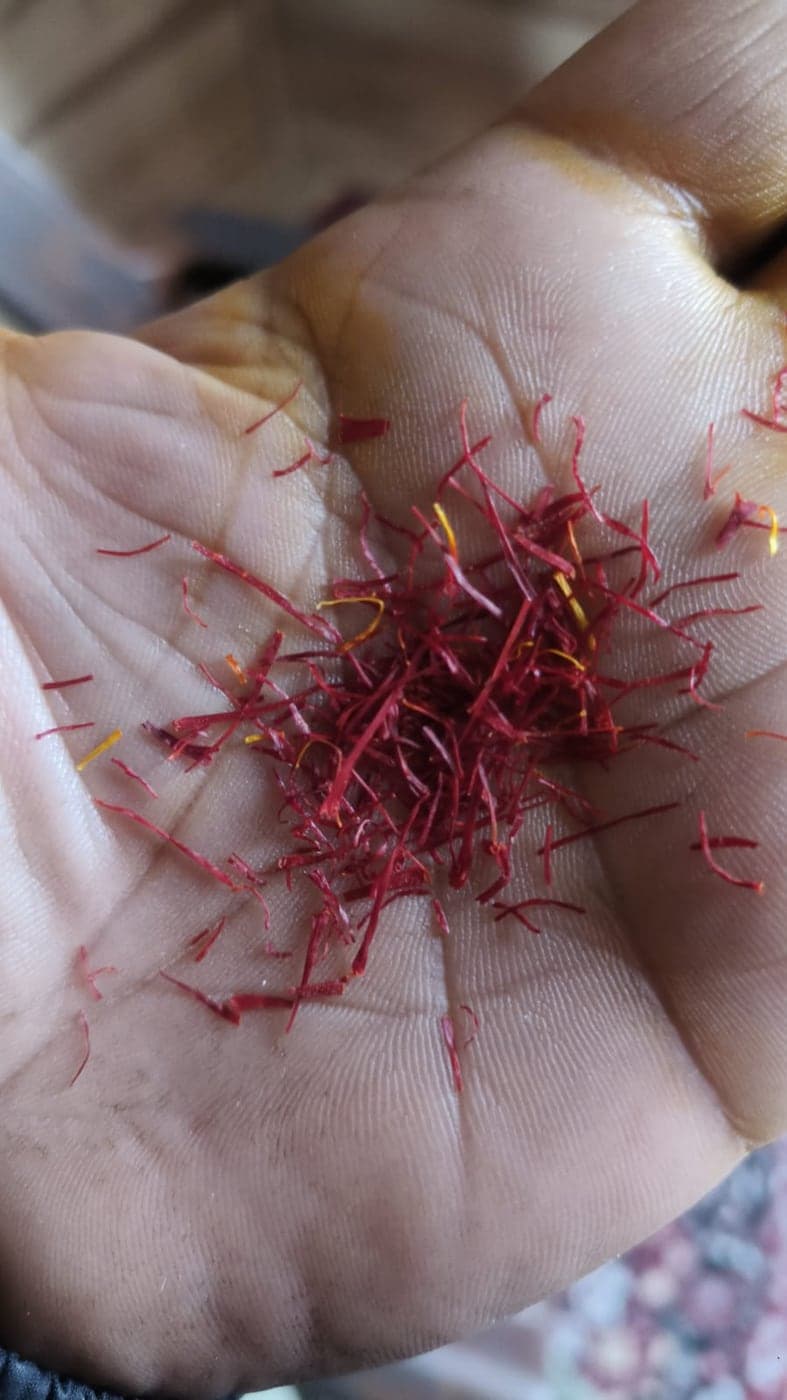
The widely used guidance in India is 2–3 threads a day, after the first trimester, crushed and steeped in two tablespoons of warm — never boiling — milk for ten minutes, then stirred into the glass. That is well under a tenth of a gram a day, and the full method is in our saffron milk guide.
The cautions are real and worth stating clearly. Saffron in large amounts has uterine-stimulant effects in both traditional and pharmacological literature, which is why the first trimester is conventionally avoided and why culinary quantities are the ceiling. Do not take saffron supplements, extracts or capsules during pregnancy without medical supervision — those deliver concentrated doses no kitchen would produce. And talk to your own doctor before starting, especially if you have had complications, are on medication, or have a history of pregnancy loss. Our fuller treatment of the safety question is in saffron during pregnancy.
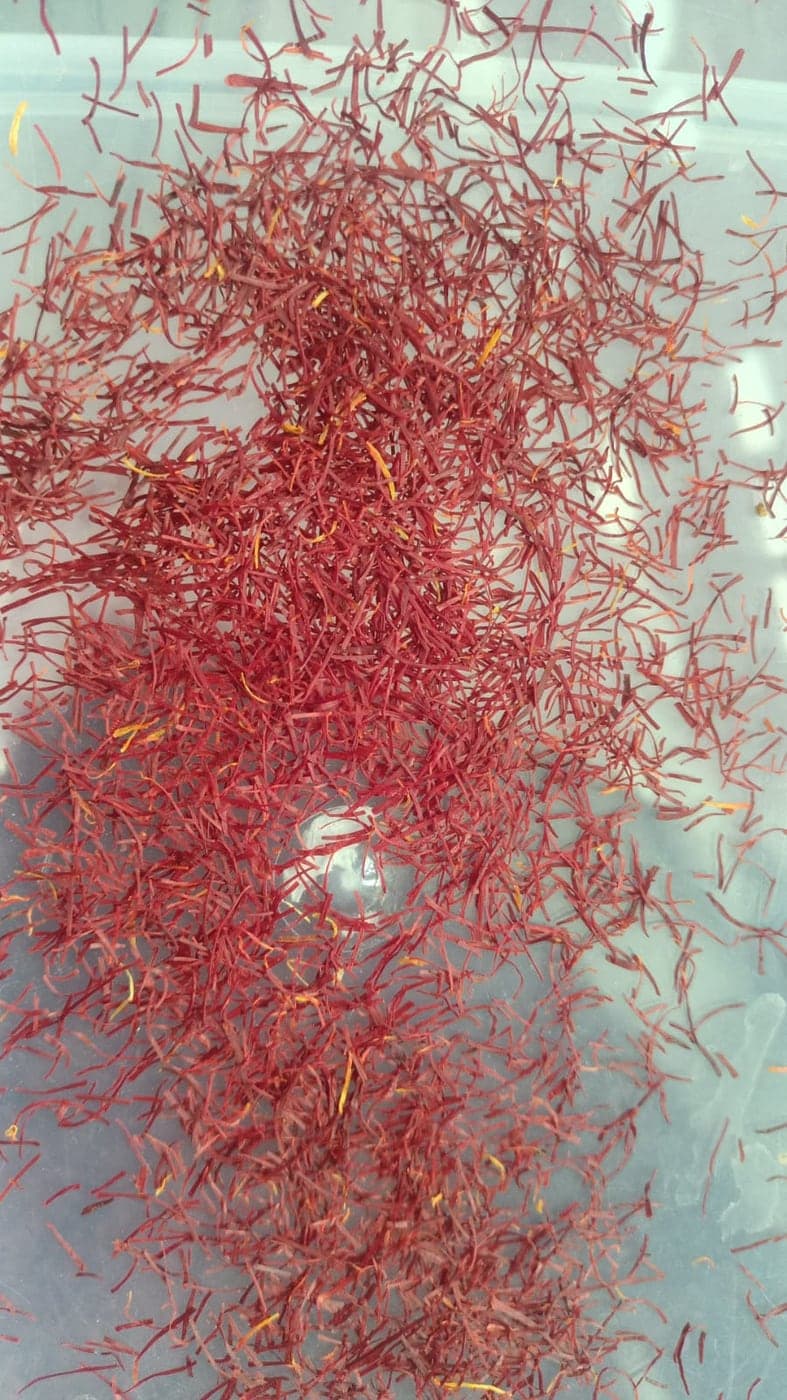
One more practical point that is squarely our business rather than a doctor's: if you are going to drink saffron in pregnancy, the purity of it matters more than it does at any other time. A great deal of what is sold as kesar in India is dyed maize silk, safflower or coloured starch, and pregnancy is not when you want an unlabelled dye in your milk. Our five at-home purity tests take ten minutes and settle it.
What to say to the relative who insists
This question rarely arrives from the person asking it. It arrives from a mother-in-law, an aunt, a neighbour, and it arrives wrapped in genuine affection. The useful move is usually not to argue the genetics, which nobody enjoys, but to keep the good part and drop the claim: yes to the kesar doodh, yes to the care behind it, and no expectation attached to the outcome. Saffron milk is a lovely thing to drink in the eighth month. It is simply not a promise anyone can keep.
This is food writing from a grower family, not medical advice. Please discuss anything you take during pregnancy with your own doctor.