The short answer: at kitchen amounts — 3 to 5 threads a day, about 30 milligrams — saffron side effects are uncommon, and where they happen they are mild: dry mouth, mild nausea, headache, drowsiness, a dulled appetite. The serious risks all sit above the kitchen: doses of 1.5 grams a day and up, a small set of real drug interactions, pregnancy, and rare allergy. And in India there is a fifth risk that most articles skip entirely — the side effects of whatever was used to fake the saffron.
The dose is the whole conversation
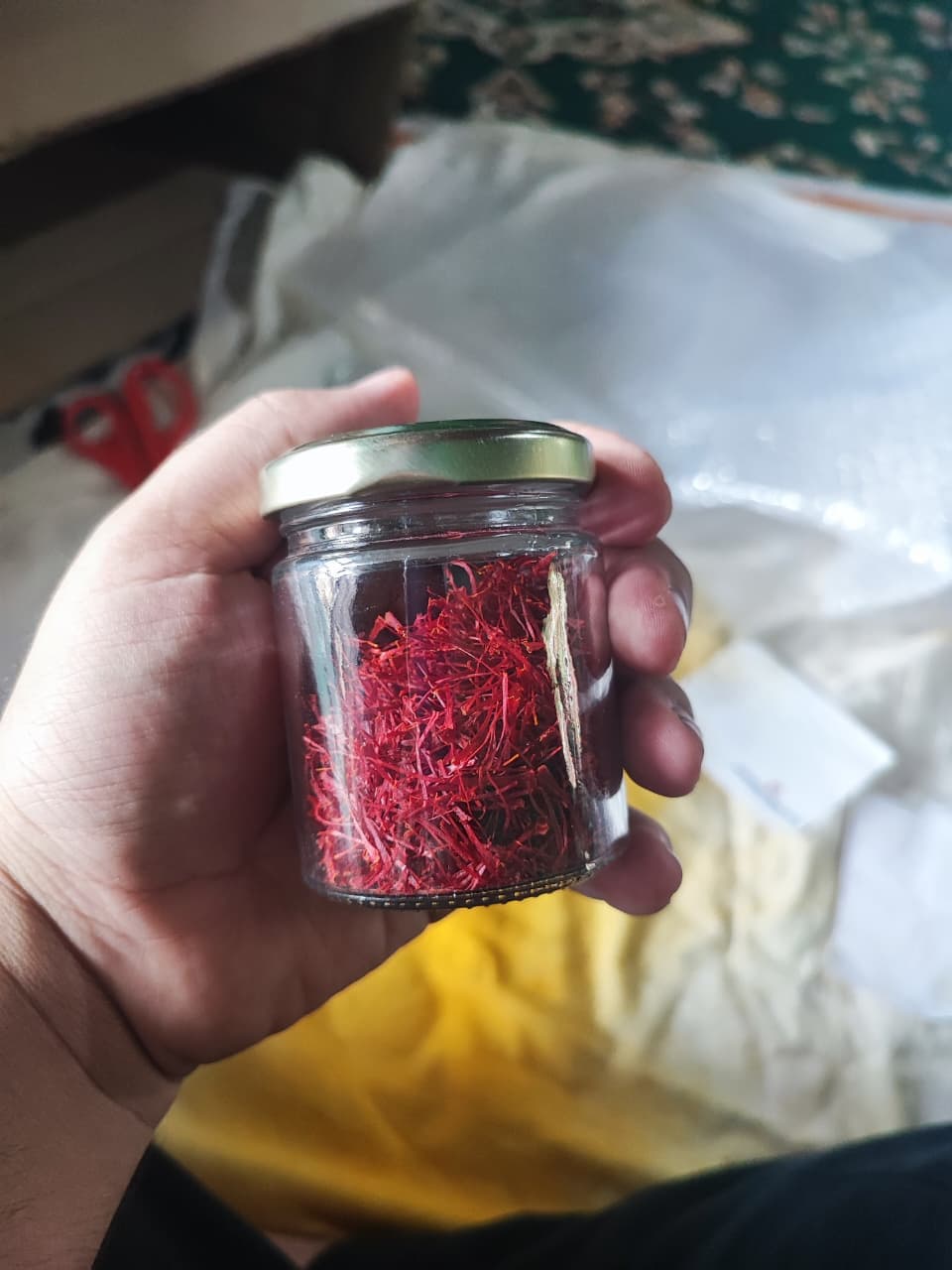
Saffron is one of those substances where the gap between a normal amount and a harmful one is enormous, which makes the safety question much easier than it looks. A gram of Grade I Mongra is roughly 160 to 180 threads. A day's normal use is 3 to 5 of them. So:
- 30 mg a day (3–5 threads): the traditional household amount and the amount most published studies used. Safe for most healthy adults.
- Up to about 1.5 g a day: above anything a kitchen needs, and the point at which caution starts. Nausea, dizziness and bleeding-related effects become more likely.
- Around 5 g in a day: considered genuinely unsafe in the toxicology literature. For scale, that is an entire premium jar — over 800 threads — consumed in twenty-four hours. No recipe asks for it and no one arrives there by accident.
Which is why our answer to almost every "is saffron safe" question begins with counting. The full breakdown by situation is in how much saffron per day.
The mild side effects, honestly listed
Reported at normal and slightly elevated intakes, uncommon, and usually resolving when you stop:
- Dry mouth
- Mild nausea or an upset stomach
- Headache
- Drowsiness — which some people take as a benefit
- Reduced appetite
- Occasionally anxiety, agitation, or a noticeable mood change
That last one is worth pausing on, because it is the flip side of the reason a lot of people take saffron in the first place. Saffron is mildly active on mood — that is the most consistently supported thing about it — and anything that can lift a mood can, in some people, unsettle one.
The interactions that actually matter
Short list, but a real one. Talk to your doctor before taking saffron regularly if you are on:
- Blood thinners — warfarin, aspirin, clopidogrel and similar. Saffron may have a mild antiplatelet effect, so the theoretical concern is additive bleeding risk.
- Antidepressants, particularly SSRIs and MAOIs. Saffron appears to act on serotonergic pathways, which is precisely why it has been studied for low mood, and why stacking it on top of a serotonergic medication is a conversation for a doctor.
- Blood-pressure medication. Saffron may lower blood pressure slightly; if yours is already low or medicated, worth mentioning.
- Sedatives. The mild drowsiness effect can add up.
People with bipolar disorder should be particularly careful with any mood-active substance taken without supervision, saffron included.
Pregnancy: the one clear restriction
Saffron in large amounts has uterine-stimulant effects described in both traditional and pharmacological literature. The conventional guidance in India is to avoid it in the first trimester and keep to 2–3 threads a day thereafter — culinary quantities only, never supplements or extracts, and only after speaking to your doctor. Our full treatment is in saffron during pregnancy, and if you have arrived here because someone told you kesar milk affects the baby's complexion, we answer that separately and bluntly in does saffron make a baby fair.
The side effect nobody writes about: what fake kesar is made of
If you are in India, this is statistically the most likely way saffron causes you a problem — and it is not really saffron doing it.
A large share of cheap kesar sold in Indian markets is not Crocus sativus at all. The common substitutes are dyed maize silk, safflower petals (kusum), coloured starch threads, and shredded dyed plant fibre. Where the material is genuine saffron, it is frequently bulked — with glycerine or honey to add weight, or with the yellow style left attached in Lachha grades so you pay for mass that carries no colour.
The dyes are the actual hazard. Synthetic colourants including tartrazine and, more seriously, metanil yellow have been found in adulterated Indian spices. Metanil yellow is a non-permitted food colourant in India with documented toxicity, and it turns up in food adulteration surveys across several spice categories. Whatever symptoms that material causes have nothing to do with saffron's pharmacology and everything to do with an industrial dye in a paper twist.
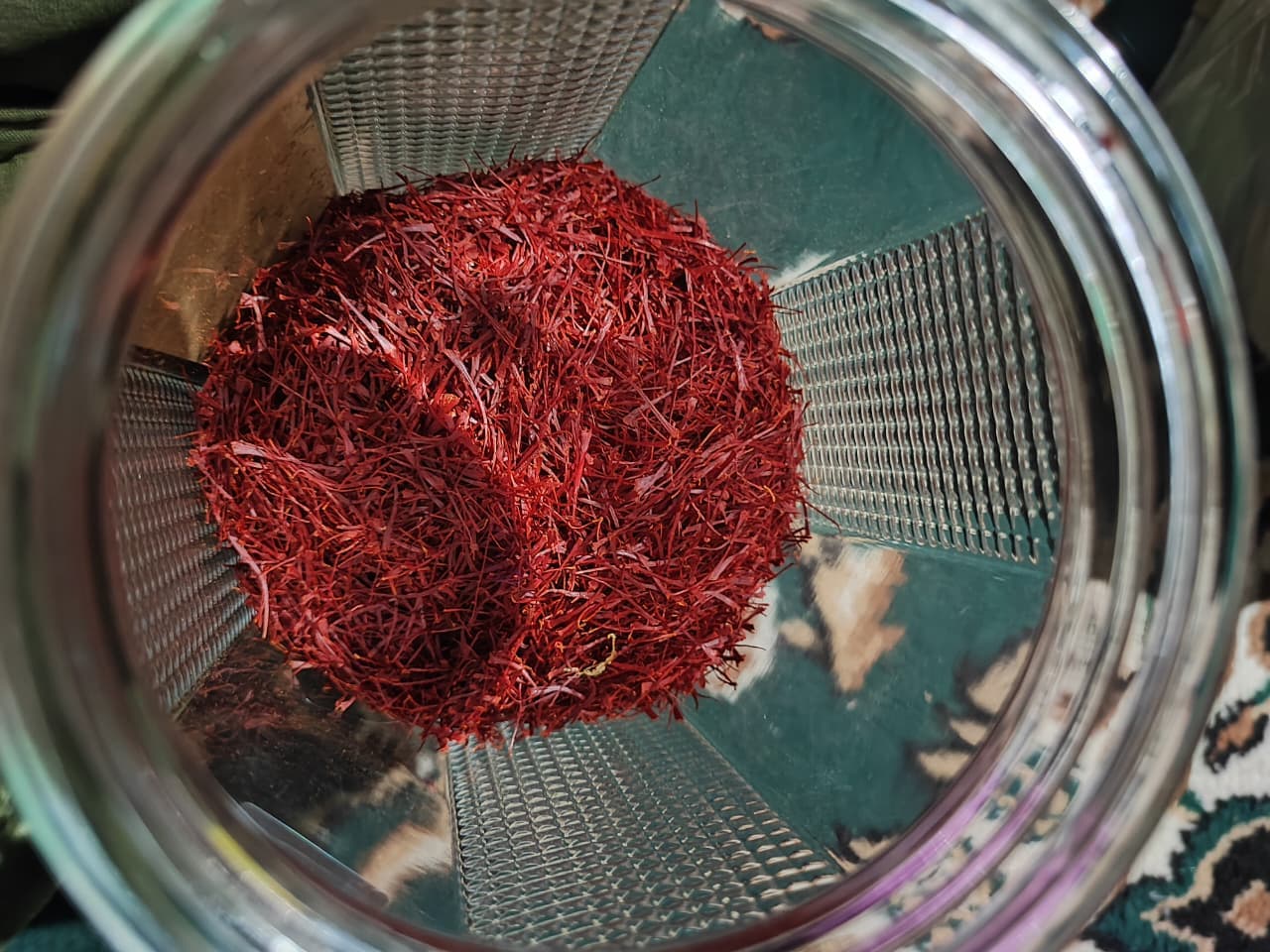
Which is why we treat provenance as a safety question rather than a marketing one. A sealed, tamper-evident, batch-coded jar from a named grower with an FSSAI licence is not a luxury signal — it is the only practical way to know what is in the glass. The ten-minute version of the check is in our five at-home purity tests: real saffron releases gold slowly over ten minutes and the thread stays whole and dark red; dyed material stains the water red within seconds and goes limp and pale.
Allergy, and the one group genuinely at risk
Saffron allergy exists but is uncommon in ordinary consumers. Most documented cases are occupational — reported among people who harvest and handle saffron in bulk, exposed to pollen and dust through the picking season, presenting as rhinitis, itchy eyes or asthma-like symptoms. Cross-reactivity has been described with Olea (olive) and Salsola pollen. Anyone who gets itching, swelling, hives or breathing difficulty after eating saffron should stop and see a doctor.
The practical summary
- 3–5 threads a day is safe for most healthy adults. Steep, never boil — the method is in how to use saffron.
- Stay under 1.5 g a day, which you will never approach in a kitchen.
- Ask a doctor first if you are pregnant, on blood thinners, on antidepressants, managing bipolar disorder, or on blood-pressure medication.
- Buy sealed and traceable. In India, the adulterant is a bigger safety risk than the spice.
This is food writing from a grower family in Pampore, not medical advice. If you are managing a condition or taking medication, discuss saffron with your doctor before making it a daily habit.