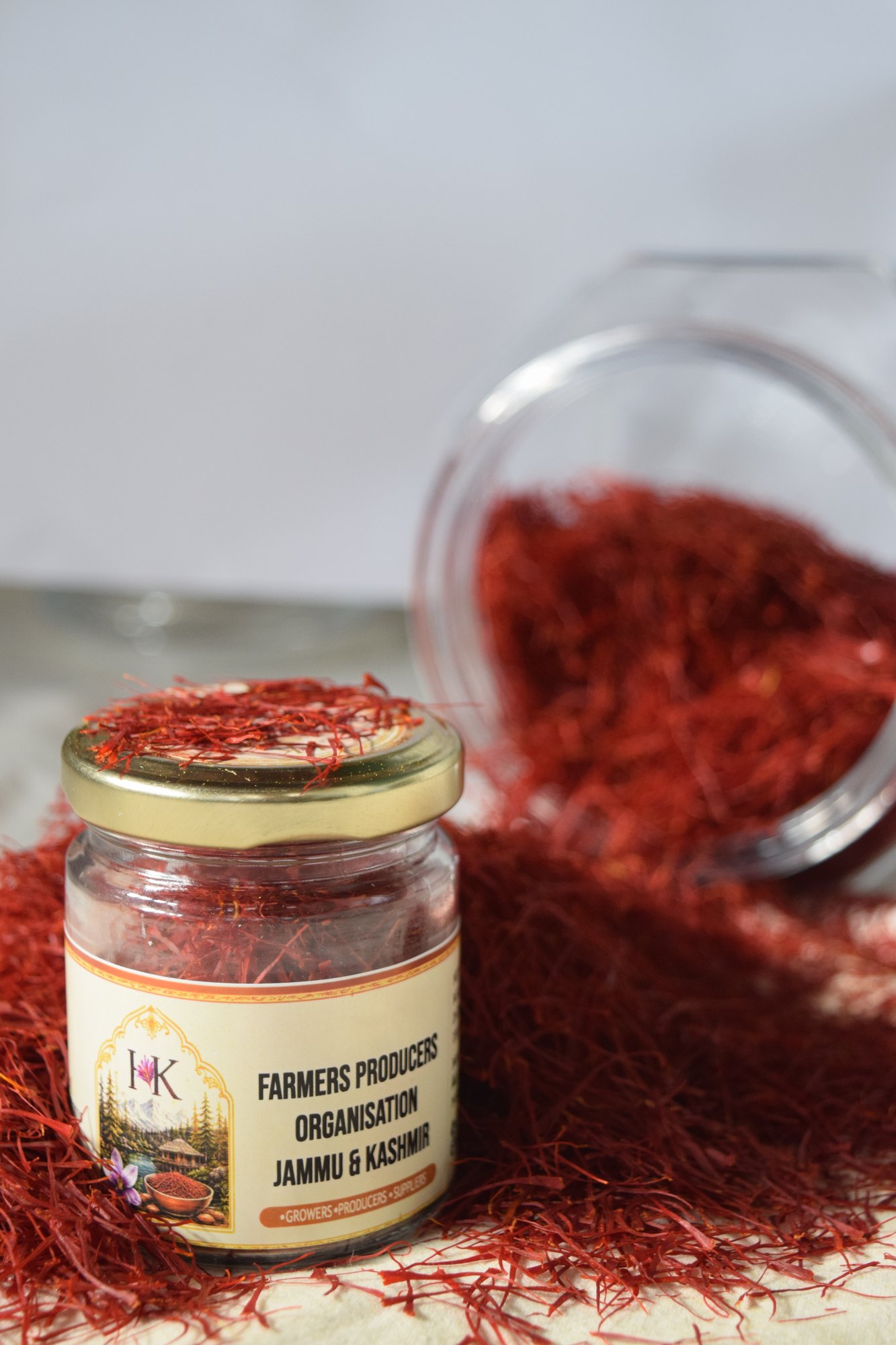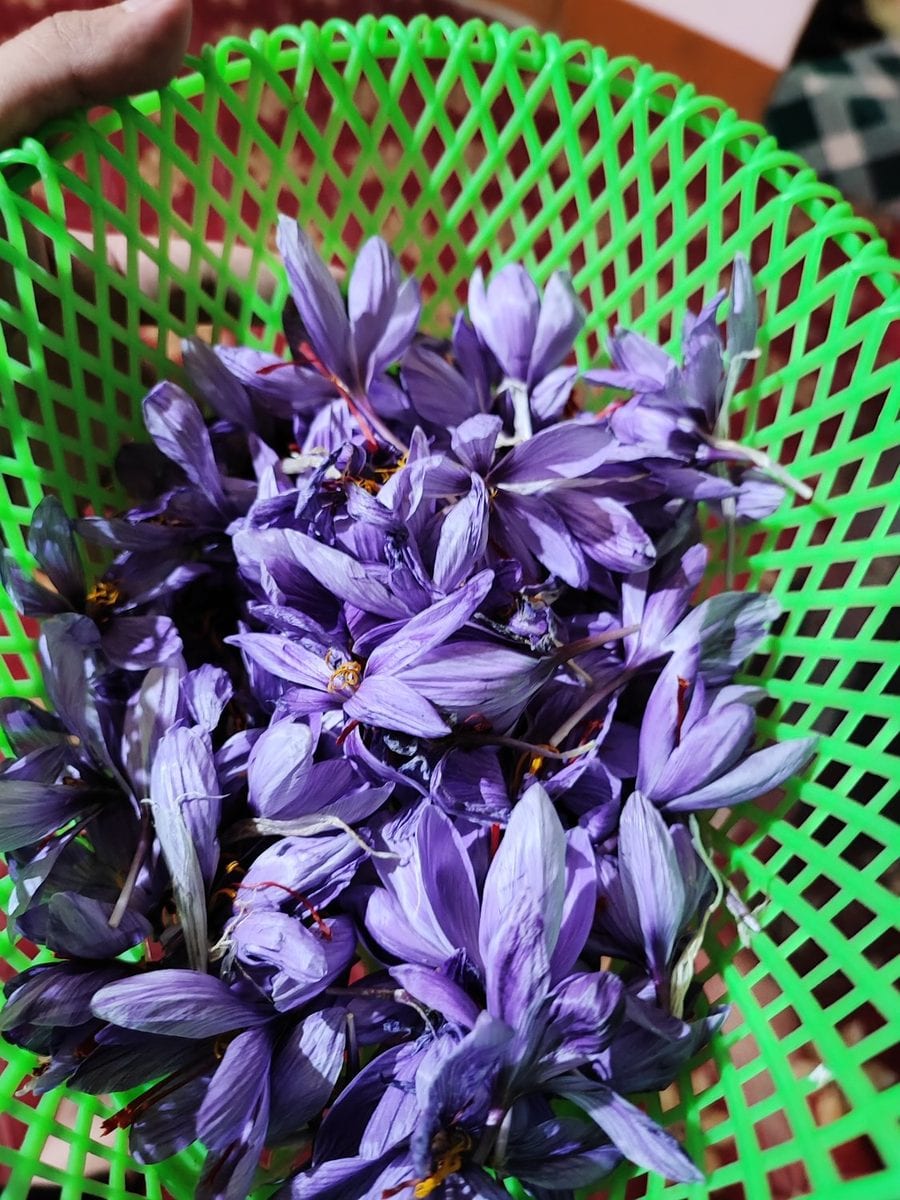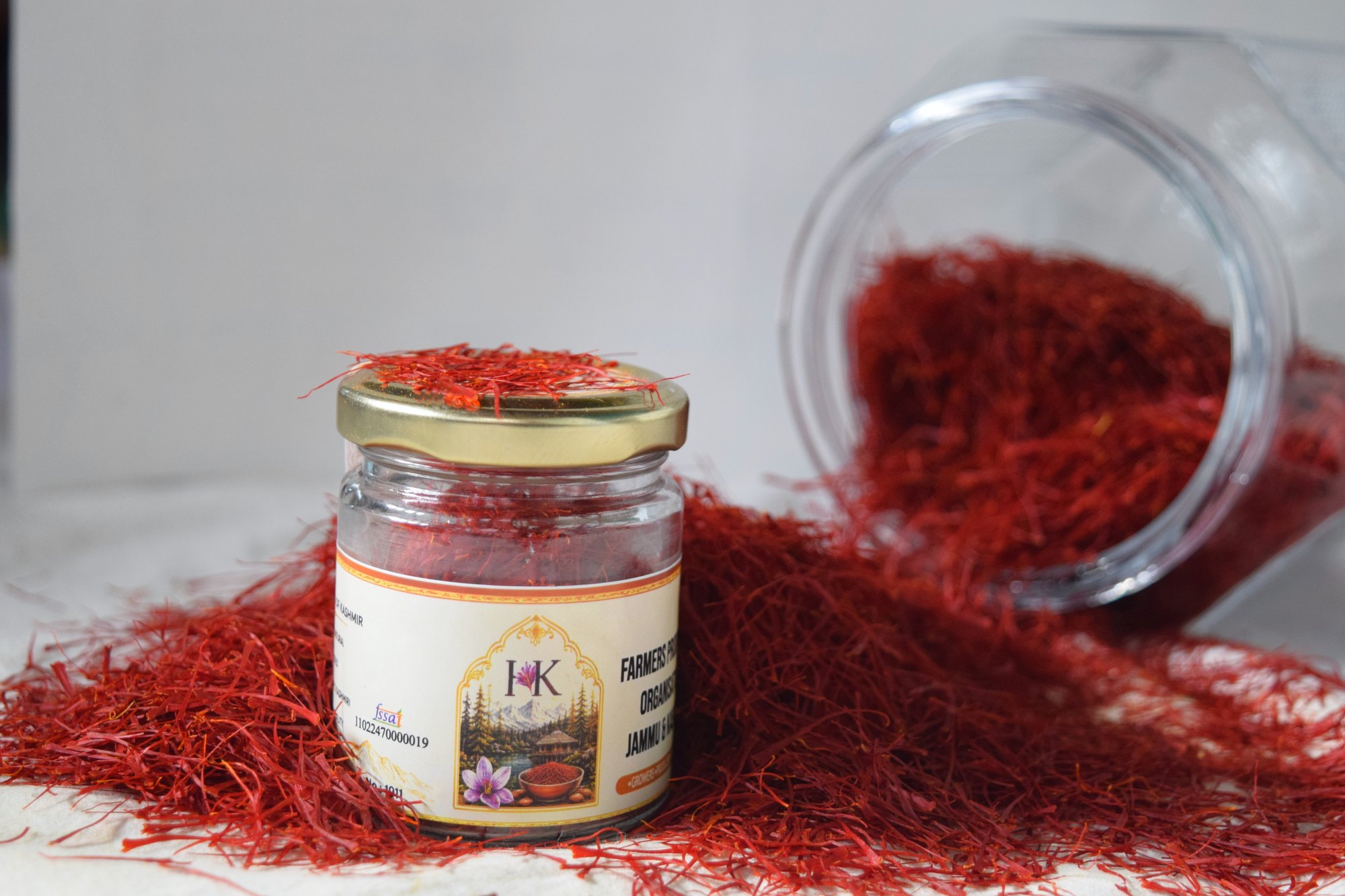
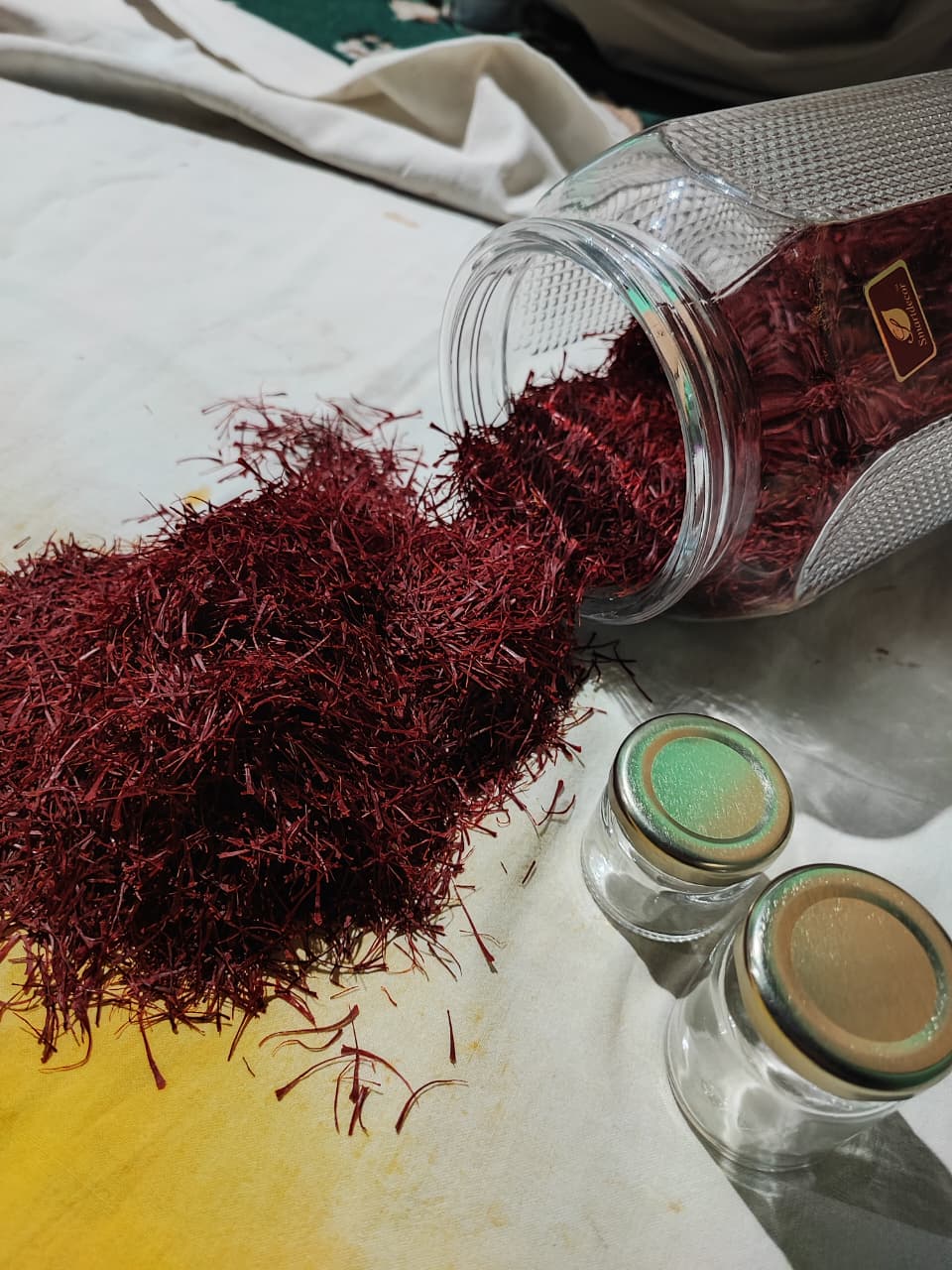
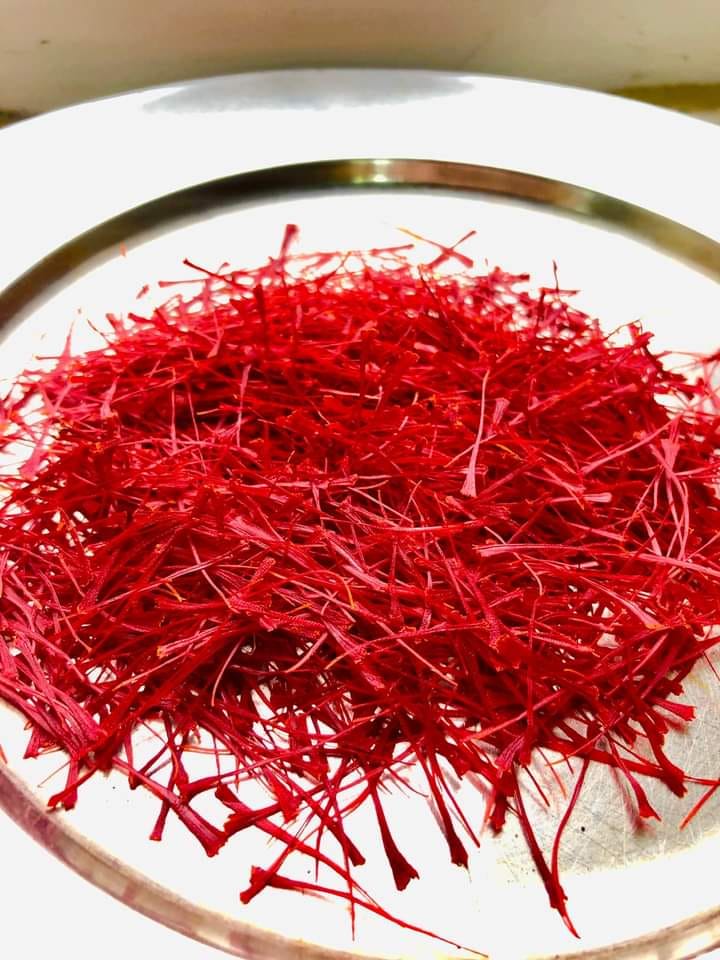
Saffron water is 3–4 strands of kesar steeped in a glass of warm water for 10–15 minutes, drunk on an empty stomach. It is the gentlest way to take saffron daily: the water pulls out crocin, the antioxidant that paints the glass gold, and picrocrocin, the compound you taste. In Pampore we drink it through harvest season the way other households drink lemon water. Here is what it does — and what it doesn’t.
What actually dissolves into the glass
Saffron’s working compounds split neatly by solubility. Crocin and picrocrocin are water-soluble — they give saffron water its colour, mild bitter-honey taste and antioxidant load. Safranal, the volatile aroma, barely dissolves; it rides on steam, which is why the glass smells faint compared to kesar milk (milk fat captures more of it). This is also why saffron water is the purist’s test of quality: nothing masks the thread. Weak or dyed saffron has nowhere to hide in plain water — our five at-home tests are built on exactly this.
The claims, sorted honestly
- Antioxidant intake — solid. Crocin is a genuine carotenoid antioxidant; a daily glass is a small, real contribution, the same category as eating deeply coloured produce.
- Mood and calm — promising. The researched saffron effects on low mood used ~30 mg daily of whole saffron. A 3–4 strand glass delivers part of that dose; pleasant ritual plus plausible chemistry.
- Skin glow — supporting act. Centuries of tradition, believable antioxidant mechanism, but water, sleep and sunscreen remain the main cast. Saffron from within pairs well with saffron oil from outside.
- Weight loss — overclaimed. Saffron may gently curb snacking in some studies; saffron water is not a fat-burner, and anyone selling it as one is selling you the water.
- Detox — marketing. Your liver detoxes; saffron water is simply a good morning habit with better colour than most.
The standing disclaimer, sincerely: this is food writing from a farming family, not medical advice. Conditions and medication belong with your doctor — India’s food regulator FSSAI takes the same line on wellness claims, and so do we.
The method (10 minutes, no boiling)
- Take 3–4 threads of Grade I saffron — the full daily-amount logic is in how much saffron per day.
- Pour a glass of warm water — comfortably drinkable, never boiling. Heat above ~70°C starts burning off aroma.
- Cover and steep 10–15 minutes, until the gold deepens and the threads swell. Overnight in the fridge works beautifully for morning.
- Drink threads and all, ideally on an empty stomach. The softened threads are the most expensive part of the glass — eat them.
Who should skip or ask first
Pregnant women should read our honest pregnancy guide and talk to their doctor before making saffron a daily habit. The same doctor-first rule applies to anyone on blood thinners or mood medication. For everyone else, 3–4 strands is comfortably inside the range with centuries of daily precedent.
One glass, one gram, one month
At 3–4 threads a day, a single gram of Grade I Kashmiri Mongra is roughly a month of morning ritual — the arithmetic that makes real saffron cheaper per glass than café coffee.
Where the research sits, and where it stops
Saffron water is a delivery method, not a separate substance, so the evidence that applies is the evidence for saffron itself. That evidence is real, narrower than the internet suggests, and clustered around one dose.
Most human trials use 30 mg of saffron per day — about 8 to 10 threads. At that dose, randomised controlled trials over six weeks have reported improvements in depression-rating scores comparable to fluoxetine at 20 mg/day, and meta-analyses pooling those trials find saffron better than placebo with no significant difference from SSRIs, and no serious adverse events. Separate reviews have examined saffron for mild cognitive impairment.
What that does not establish: that saffron water burns fat, detoxifies anything, lightens skin, or replaces medication. Those claims travel widely and have no trial behind them at these doses. The honest summary is that saffron has a small, decent evidence base for mood, mostly from small studies, several from a single research culture — and that a glass of saffron water is a pleasant way to take a well-tolerated spice, not a therapy.
A practical note that follows from the chemistry: crocin, which carries the colour, is water-soluble, which is why saffron water works at all and why the colour arrives slowly. Safranal, the aroma compound, is volatile — so steep in warm water, never boiling, and cover the glass. The same rule governs kesar doodh and every other preparation on this site.
On the ceiling: intakes up to roughly 1.5 g/day are generally described as tolerated, toxic effects have been reported near 5 g, and the amounts associated with serious harm are not quantities anyone reaches by drinking saffron water. The realistic risk is buying something that is not saffron — see saffron side effects.
Ours comes from our own fields in Pampore, ISO 3632 graded, batch-coded, shipped from the shop; the story of the fields is on the about page and the home page. If this is your first jar, our guide to buying original Kashmiri saffron online explains the grades and the water-test refund. Steep it tomorrow morning and watch the gold arrive slowly — that patience in the glass is what purity looks like.