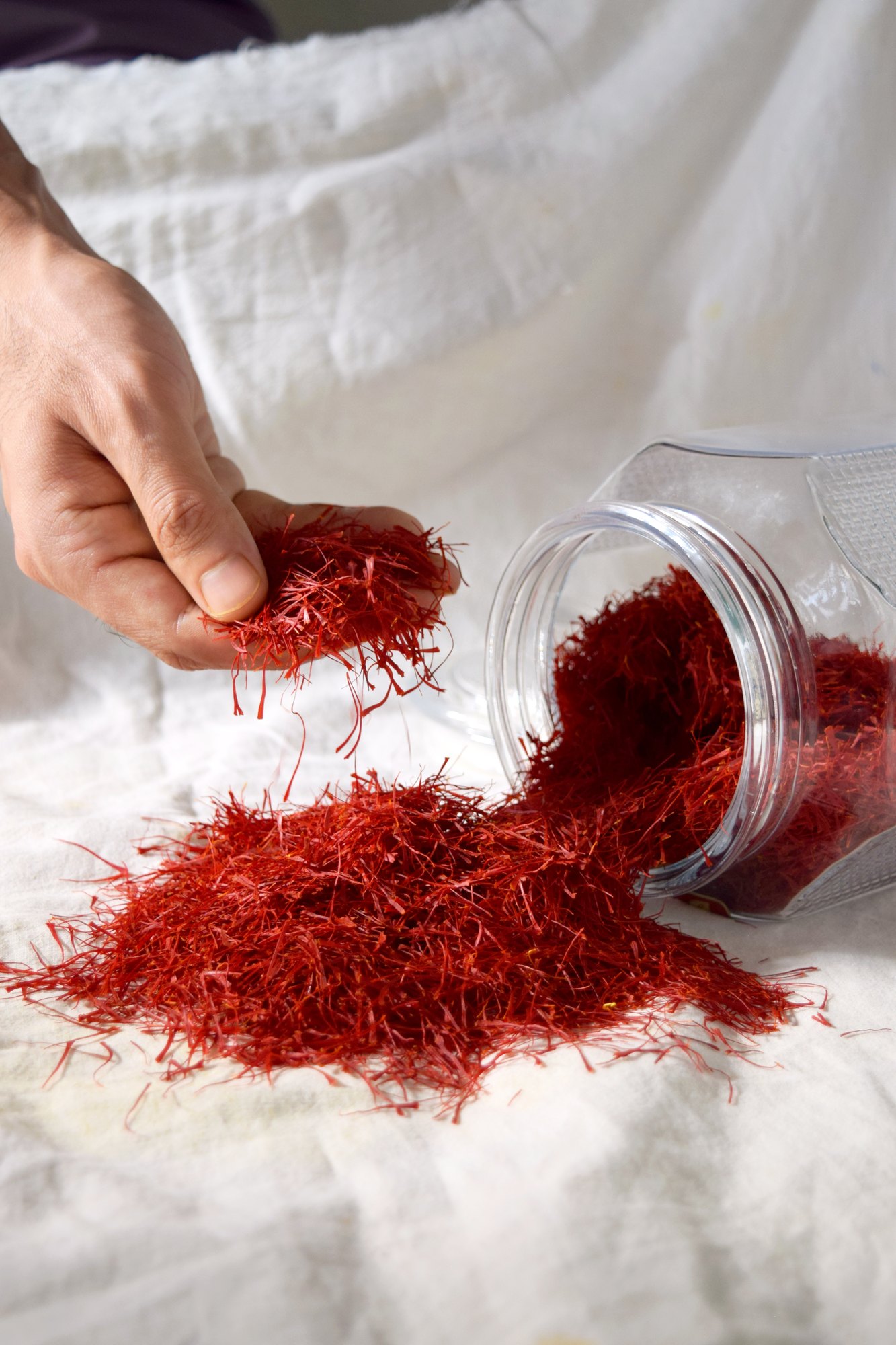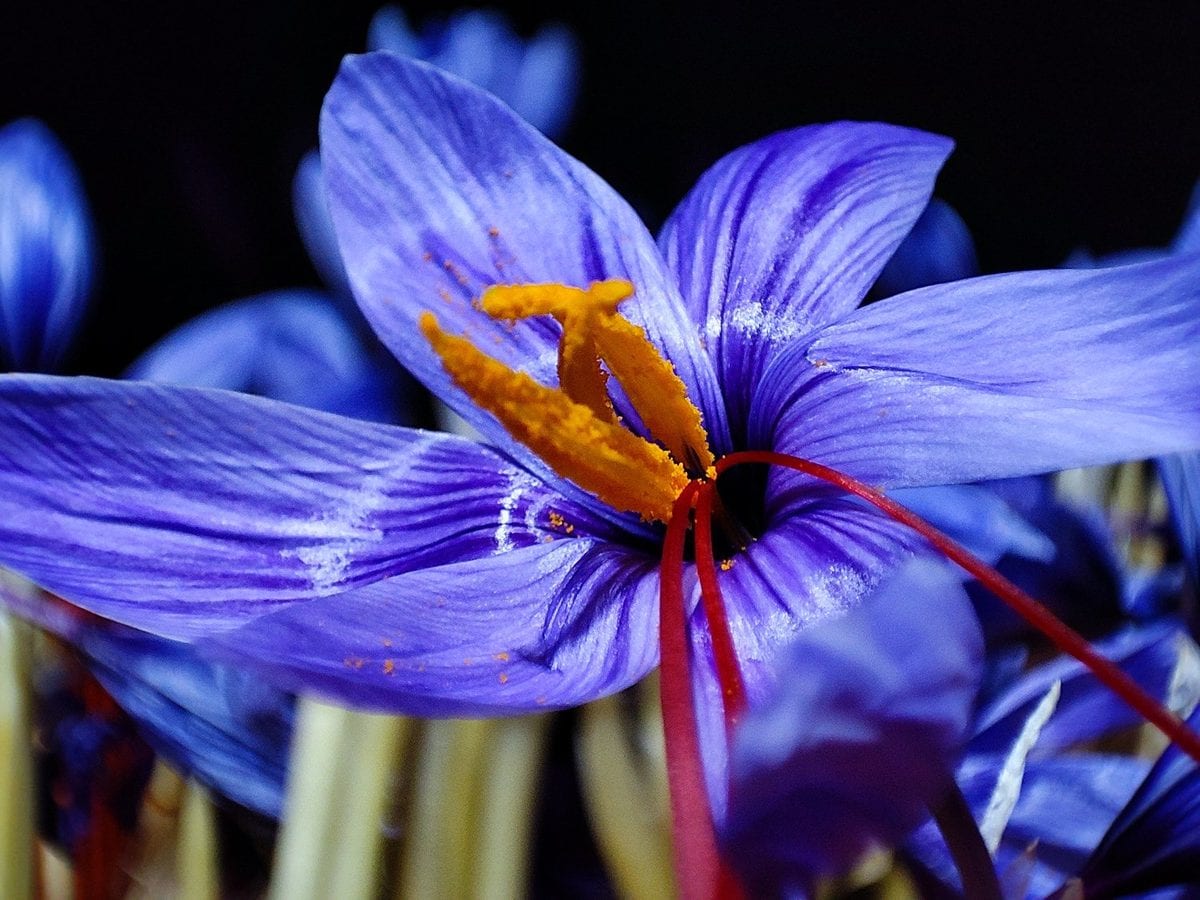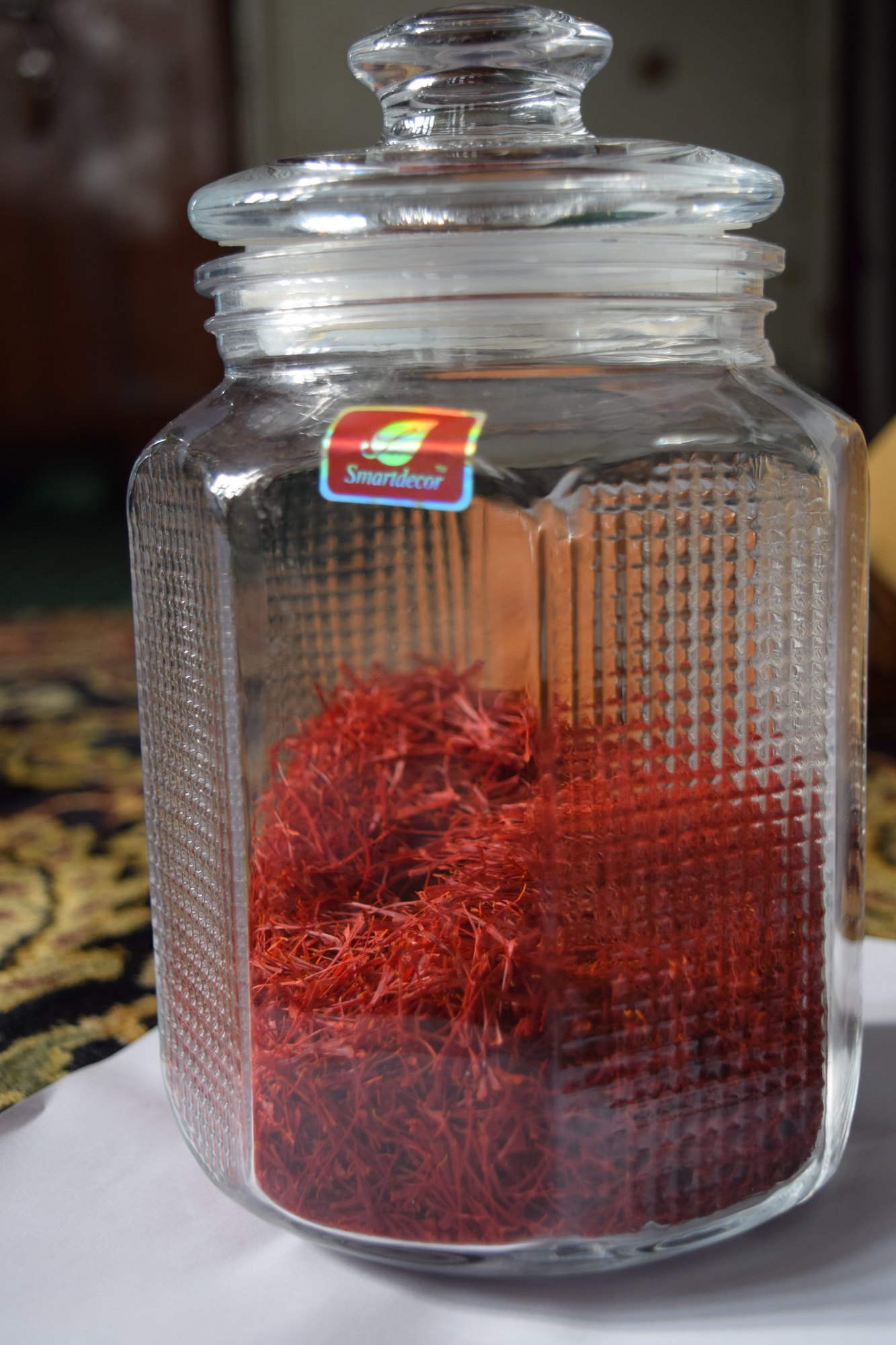
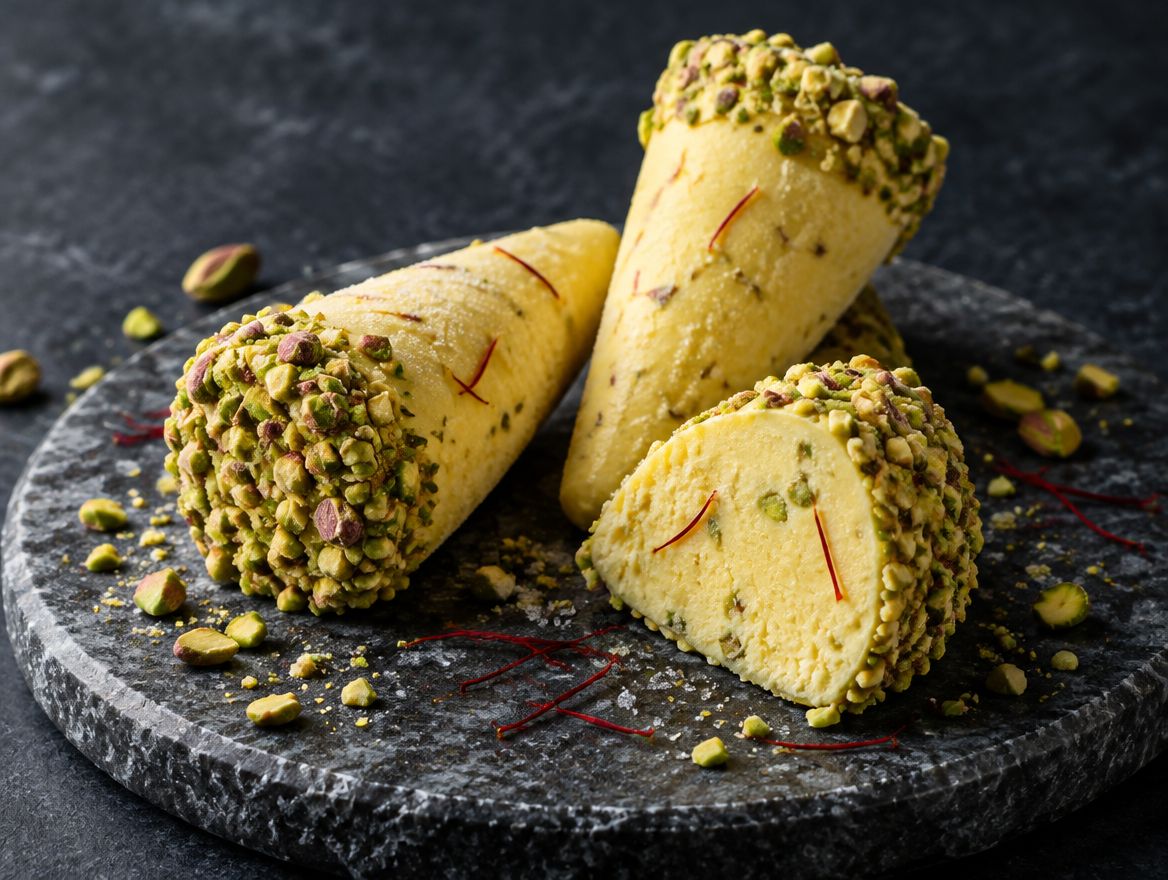
Kesar pista kulfi is full-cream milk reduced slowly to about half, sweetened, thickened with ground pistachio and cardamom, finished off the heat with steeped saffron, and frozen still in moulds or a matka for 6–8 hours. No eggs, no churning, no condensed milk. The reduction does the work an ice-cream machine does elsewhere, and the saffron goes in last, as it does in every milk sweet we make in Pampore. This is the saffron pistachio kulfi we make from our own threads.
Why saffron and pistachio
Cold flattens flavour: a kulfi base tastes stronger in the pan than it will on the plate, and most flavourings fade in the freezer. Saffron and pistachio are the two that hold. Saffron gives the colour and, as the kulfi begins to soften, the honeyed, hay-like smell that tells you it is kesar before you taste it. Pistachio gives the green flecks and the fat that keeps the bite smooth instead of icy; ground fine, it thickens the base.
The saffron rule
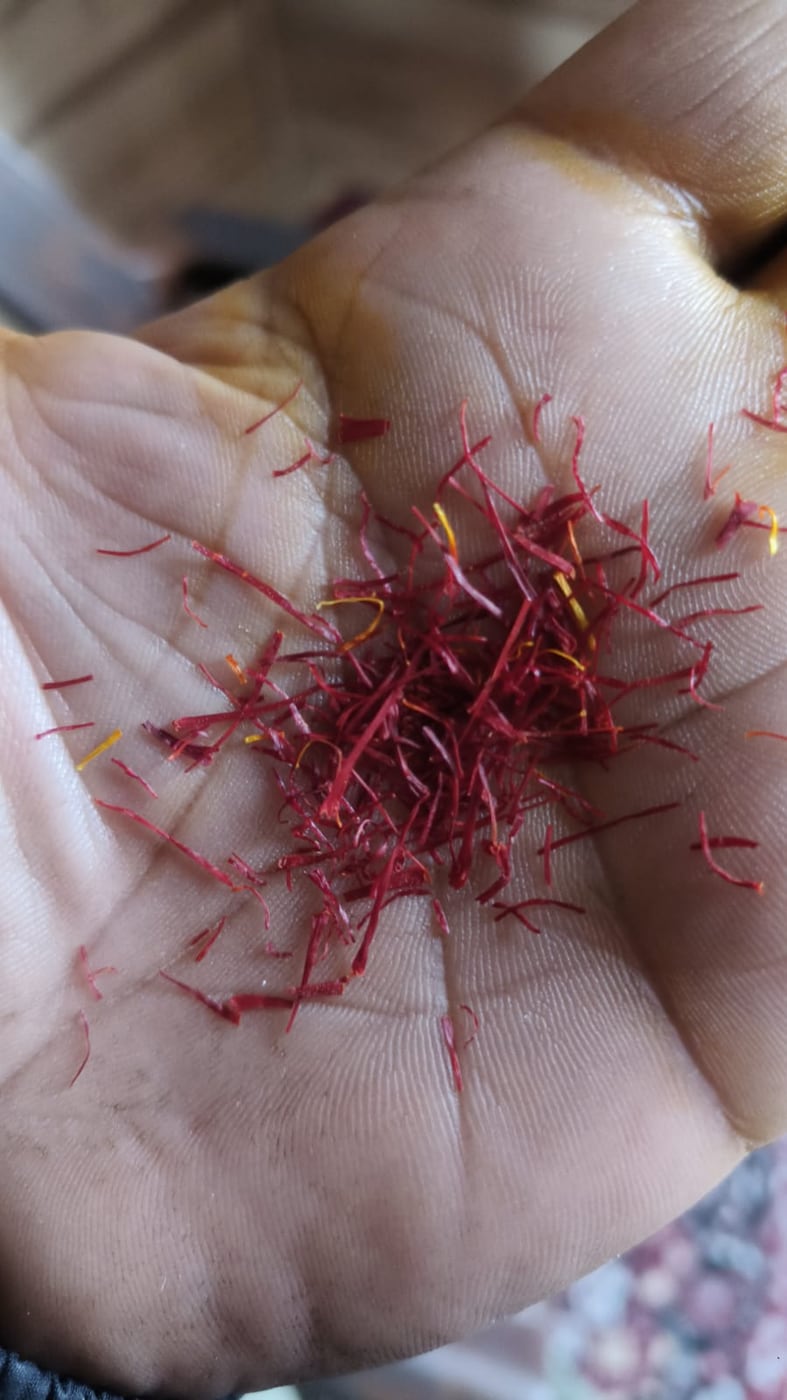
A kulfi recipe with saffron stands or falls on when the saffron goes in. Bloom 8–10 threads for every 500 ml of milk you start with, in 2 tablespoons of warm milk, for 10 minutes. Never boil the threads. Warm means you can hold a finger in it. The aroma in saffron is safranal, and it is volatile: forty minutes in a simmering pan and most of it leaves with the steam. The colour would survive the boil; the smell would not. So the threads sit in warm milk while the pot reduces, and go in, milk and all, once the pan is off the heat.
Kulfi takes a little more saffron than phirni or kheer, 8–10 per 500 ml rather than 5–6, because the freezer dulls everything. Leave the threads in; a few red strands set into the kulfi are how a guest knows it is kesar before the first bite. The reasoning, and the steep for every dish, is in how to use saffron.
How to make kesar kulfi at home: the recipe (makes 6–8)
Time: about 15 minutes of prep (the saffron steep and grinding the pistachios) and 55 minutes at the stove. Then 30 minutes of cooling and 6–8 hours in the freezer, both unattended.
Ingredients
- 1 litre full-cream milk
- 16–20 strands Kashmiri saffron (8–10 for every 500 ml of milk)
- 4 tablespoons warm milk, for steeping the saffron
- 1/2 cup (about 100 g) sugar
- 1/2 cup (about 60 g) unsalted shelled pistachios
- 4 green cardamom pods, seeds ground
Method
- Steep the saffron. Crush 16–20 strands lightly between your fingers into 4 tablespoons of warm (not hot) milk. Cover and leave 10 minutes.
- Grind the pistachios. Pulse three-quarters of the pistachios to a fine powder and chop the rest for the top.
- Reduce the milk. Pour the milk into a wide, heavy pan and bring it to a boil, then lower the heat to a steady simmer. Cook 45–50 minutes, stirring every few minutes and scraping the base and sides, until it has reduced to about half and coats the back of a spoon. Stir the cream that climbs the sides back in.
- Sweeten. Add the sugar and cook 2–3 minutes until it dissolves.
- Add the pistachio and cardamom. Stir in the ground pistachios and the cardamom and cook 2 minutes more, until the base is thick and glossy.
- Add the saffron off the heat. Take the pan off the flame and stir in the steeped saffron, milk and threads together.
- Cool. Leave the base to cool to room temperature, about 30 minutes, stirring now and then so no skin forms.
- Fill. Drop a pinch of chopped pistachio into each mould, then pour in the base, leaving a little room at the top. For a matka, pour the base in and scatter the pistachio over it. Cover with lids or foil.
- Freeze. 6–8 hours in the coldest part of the freezer, or overnight.
- Unmould. Dip each mould in warm water for 10–15 seconds, run a thin knife around the edge and slide the kulfi out onto a plate. Matka kulfi is served from the pot with a spoon.
Kulfi in moulds vs matka
Thin aluminium or steel kulfi moulds freeze fastest. The metal is thin and the cone is narrow, so the base sets before large crystals can form, and the kulfi comes out firm and smooth, on a stick if you push one in after the first two hours. A matka, the small unglazed clay pot, freezes slower. The kulfi sets a little softer, the clay gives it a faint earthy note, and you eat it with a spoon from the pot. Soak a new matka in water for an hour and dry it before first use, or it drinks from the base. Whatever you use, cover it: an open surface in a freezer grows crystals and takes on smells.
Texture fixes
- Ice crystals. Too much free water froze. The milk was not reduced far enough, the vessel was uncovered, or the freezer was not cold. Reduce to a true half; cover; use the coldest shelf. If your milk is thin, 2 tablespoons of milk powder stirred in with the sugar add solids without a tin of condensed milk.
- Grainy. Either the milk caught on the base and the scorched flecks were stirred in, or the pistachios were left coarse; grit that passes in the pan is gritty when frozen. Low heat, a wide heavy pan, scrape often, grind fine.
- Too hard to bite. Sugar is what keeps a kulfi short of rock-solid; do not cut it below the 100 g.
- Will not leave the mould. Warm water, 10–15 seconds. Not hot water, not longer, or the outside melts before the centre lets go.
Serving
Let the kulfi stand five minutes; straight from the freezer it is too hard to taste. Unmould onto a cold plate and cut it into thick rounds, or serve it whole on the stick. Scatter the rest of the chopped pistachio and two or three saffron threads on top.
What goes into ours
The saffron is our family’s own, from our fields in Pampore: Kashmiri Mongra saffron, all-red threads graded ISO 3632 Grade I by the IIKSTC laboratory, with the lab report published. At 16–20 strands for a litre, a 1 g jar freezes a good many batches. The same threads, steeped the same way, go into our kesar phirni and kesar badam milk. Put the milk on tonight, and the moulds will be ready by lunch tomorrow.