Heritage Kashmir · North India
Kashmiri Saffron in Uttarakhand
- केसरkesar · Hindi/Garhwali/Kumaoni
The short answer
Uttarakhand's saffron demand is pilgrimage-shaped: Haridwar, Rishikesh and the Char Dham route move large volumes of kesar for tilak, abhishek and prasad, and the pilgrim-facing shops around Har Ki Pauri are where most of it is bought — at ₹450–800 a gram, frequently for material that is safflower or dyed thread rather than Crocus sativus. Genuine Kashmiri Mongra is ₹330–360 a gram direct from Pampore. For ritual use specifically the distinction matters more than for cooking, because saffron intended for a deity is the one purchase where a buyer least wants to be deceived and is least likely to test.
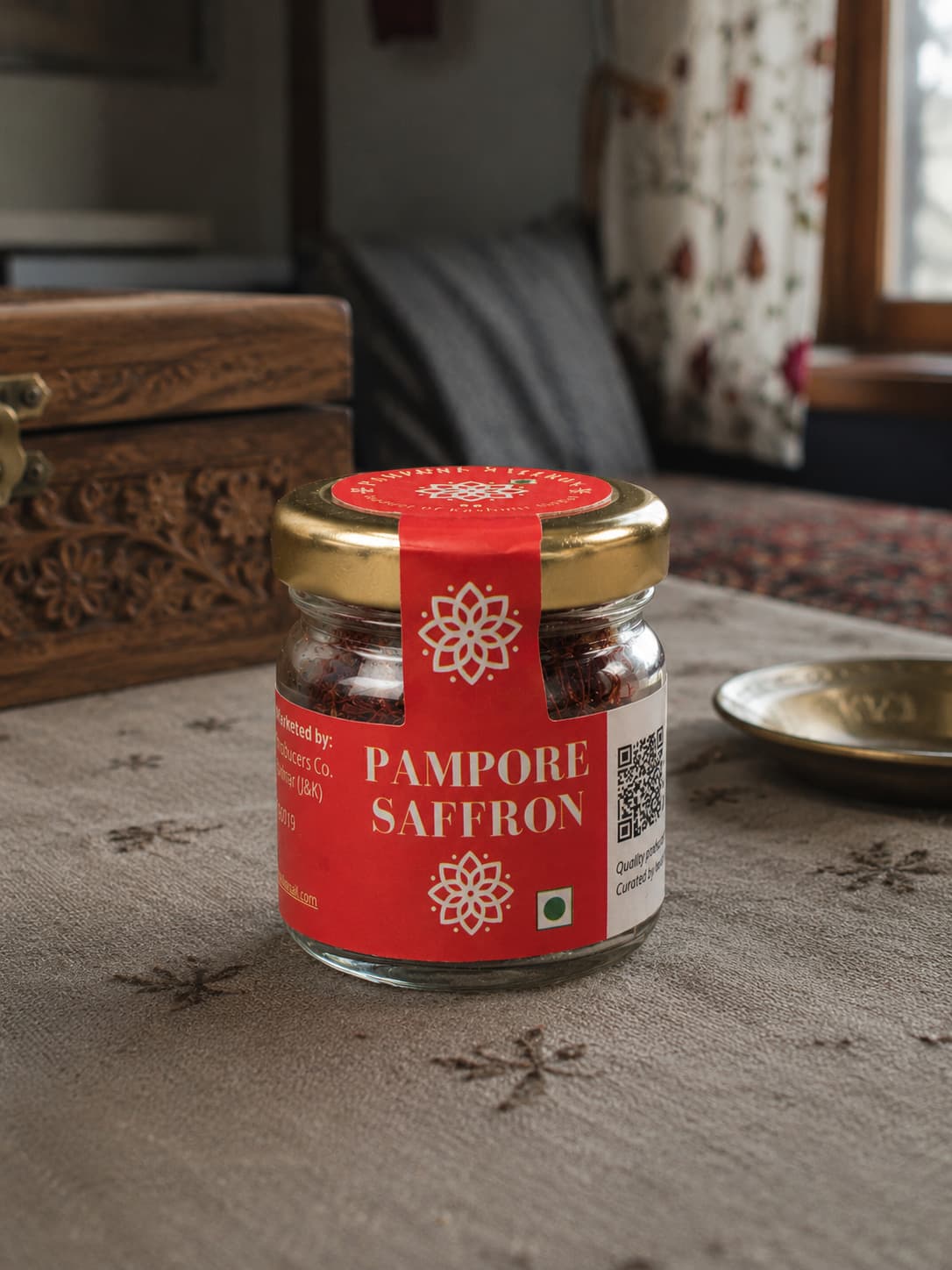
Pilgrim retail, tilak kesar, and what is actually in the packet
Walk the lanes behind Har Ki Pauri in Haridwar or the Ram Jhula market in Rishikesh and you will find saffron in every second shop, sold in tiny quantities alongside rudraksha, gangajal containers and puja kits. Much of what is sold as 'kesar' for tilak in these shops is not saffron at all — it is safflower (kusum), turmeric-and-lime kumkum, or dyed thread, sold at a saffron-adjacent price to people buying in a hurry on a pilgrimage. Safflower is a legitimate traditional substitute with its own name and its own use; the deception is in charging saffron prices for it.
Dehradun's established dry-fruit and provision shops in Paltan Bazaar are a better bet than pilgrim retail and still price at full Delhi-plus-margin. The Kumaon side — Haldwani, Nainital, Almora — has thinner supply again.
There is an honest point to make here that cuts against a hard sell: for pure tilak use, where you are dissolving a trace amount in water and applying it, spending ₹800 a gram at a Haridwar stall is not sensible, and neither is spending ₹360. Buy one good sealed gram from a source you trust and it will outlast years of ritual use. Saffron for the kitchen and saffron for the mandir come out of the same jar.
- Much 'kesar' sold in pilgrim markets is safflower or dyed thread — the water test settles it in ten minutes.
- Safflower has its own legitimate use; the fraud is the price, not the plant.
- One sealed gram covers years of tilak and abhishek — buy quality once.
- Paltan Bazaar, Dehradun beats Har Ki Pauri retail; direct-from-source beats both.
Saffron in Uttarakhand: temple, kitchen, and the Char Dham route
Ritual first, because that is what dominates here. Kesar is used for tilak, for saffron-water abhishek at Shiva shrines, and in the panchamrit and kheer offered at Badrinath, Kedarnath, Gangotri and Yamunotri. The Badrinath prasad tradition and the Haridwar aarti economy both consume saffron steadily through the yatra season from Akshaya Tritiya to Diwali.
In the kitchen, jhangore ki kheer — barnyard millet simmered in milk — is the Garhwali and Kumaoni dish that takes a saffron finish, along with singhal, the sweet fried ring made at festivals. Neither is a heavy saffron dish by tradition; the saffron is a modern, aspirational addition in most households, added at weddings and on Harela and Phool Dei.
Dehradun and Rishikesh have a large wellness and yoga-ashram population that buys saffron for kesar water and Ayurvedic use, which is a genuinely different buying pattern — smaller quantities, higher purity sensitivity, and much more likely to actually run a water test.
- Tilak, abhishek and panchamrit — a trace amount, dissolved in warm water or milk.
- Char Dham prasad and Badrinath offerings through the yatra season.
- Jhangore ki kheer and festival singhal — a steeped-saffron finish.
- Rishikesh wellness use — morning kesar water, 3 threads in warm water for ten minutes.
Delivery to Uttarakhand
Dehradun, Haridwar, Rishikesh, Roorkee, Haldwani and Rudrapur typically arrive 4–7 business days after dispatch. Nainital, Almora, Pithoragarh and the hill districts run 6–9, and the Char Dham valleys are seasonal — Kedarnath and Badrinath addresses are effectively closed in winter. We dispatch within 24–48 hours of a confirmed prepaid order with DTDC tracking emailed on despatch.
We deliver across
- Dehradun
- Haridwar
- Rishikesh
- Haldwani
- Nainital
- Roorkee
- Rudrapur
Every serviceable PIN code in Uttarakhand — not only the cities listed. DTDC Express is ?60 for 7-day delivery, and DTDC Airmax is ?120 for faster air delivery.
Saffron in Uttarakhand — common questions
- Is the kesar sold for tilak in Haridwar real saffron?
- Often not. A large share of what is sold as tilak kesar in Haridwar and Rishikesh pilgrim markets is safflower (kusum), turmeric-based kumkum, or dyed thread. Safflower is a legitimate traditional material with its own name — the problem is that it is frequently priced as saffron. Test it: three threads in warm water. Real saffron releases gold slowly over ten minutes and the thread stays whole and red. Safflower bleeds a yellow-orange colour fast and the petal goes limp and pale.
- How much saffron do I need for puja and tilak at home?
- Far less than most people buy. A trace — two or three threads ground with a little water or sandal paste — is enough for a tilak, and a pinch dissolved in warm water covers an abhishek. One sealed gram of genuine saffron, kept dry and dark, will cover household ritual use for a year or more with plenty left for the kitchen. That is why buying one good gram beats buying five cheap ones.
- What is the price of saffron in Dehradun?
- Paltan Bazaar and Dehradun's established provision shops price Kashmiri-labelled Grade 1 at roughly ₹450–700 a gram; pilgrim-market saffron in Haridwar and Rishikesh runs ₹450–800 for material of far more variable quality. Direct from a Pampore grower family, ISO 3632 Grade I Mongra is ₹330–360 a gram, sealed and batch-coded, delivered to Dehradun in about 4–7 business days after dispatch.
- Can saffron be offered to a deity — is it permitted?
- Yes, and it has been for a very long time. Saffron appears in classical Sanskrit ritual texts as kunkuma, used in tilak, in abhishek water and in naivedya, and it is standard in temple worship across India. It is a flower product, vegetarian, and carries no ritual restriction. What matters practically is purity — many ritual traditions specify that offering material should be unadulterated, which is a further argument for a sealed jar with a stated origin over an unlabelled packet from a stall.
- Do you deliver to Nainital, Almora and the hill districts?
- Yes, to every serviceable PIN code in Uttarakhand. Nainital, Almora, Pithoragarh, Bageshwar and the hill belt typically run 6–9 business days after dispatch against 4–7 for Dehradun and the Terai towns. Char Dham valley addresses are seasonal and effectively unserviceable in deep winter.
- What is the difference between saffron and kumkum?
- They are not the same thing, and the shared Sanskrit root is why people confuse them. Kunkuma originally meant saffron. Modern kumkum — the red powder sold for tilak and archana — is almost always turmeric treated with slaked lime, sometimes with added colour, and contains no saffron at all. Saffron used ritually is the actual dried stigma, dissolved into a paste or water. Both are traditional; they are simply different materials, and one costs three hundred times the other.
We grow and hand-sort this saffron ourselves in Pampore, seal it there in tamper-evident glass, and ship it prepaid to Uttarakhand. One hop, no repacking, a batch code on the jar.
Also shipping to Uttarakhand: Kashmiri kehwa — the winter cup.
Pampore Saffron FPO, J&K · FSSAI 11022470000019