Heritage Kashmir · North India
Kashmiri Saffron in Ladakh
- གུར་གུམgur-gum · Ladakhi/Bhoti
- زعفرانzafran · Urdu/Balti
The short answer
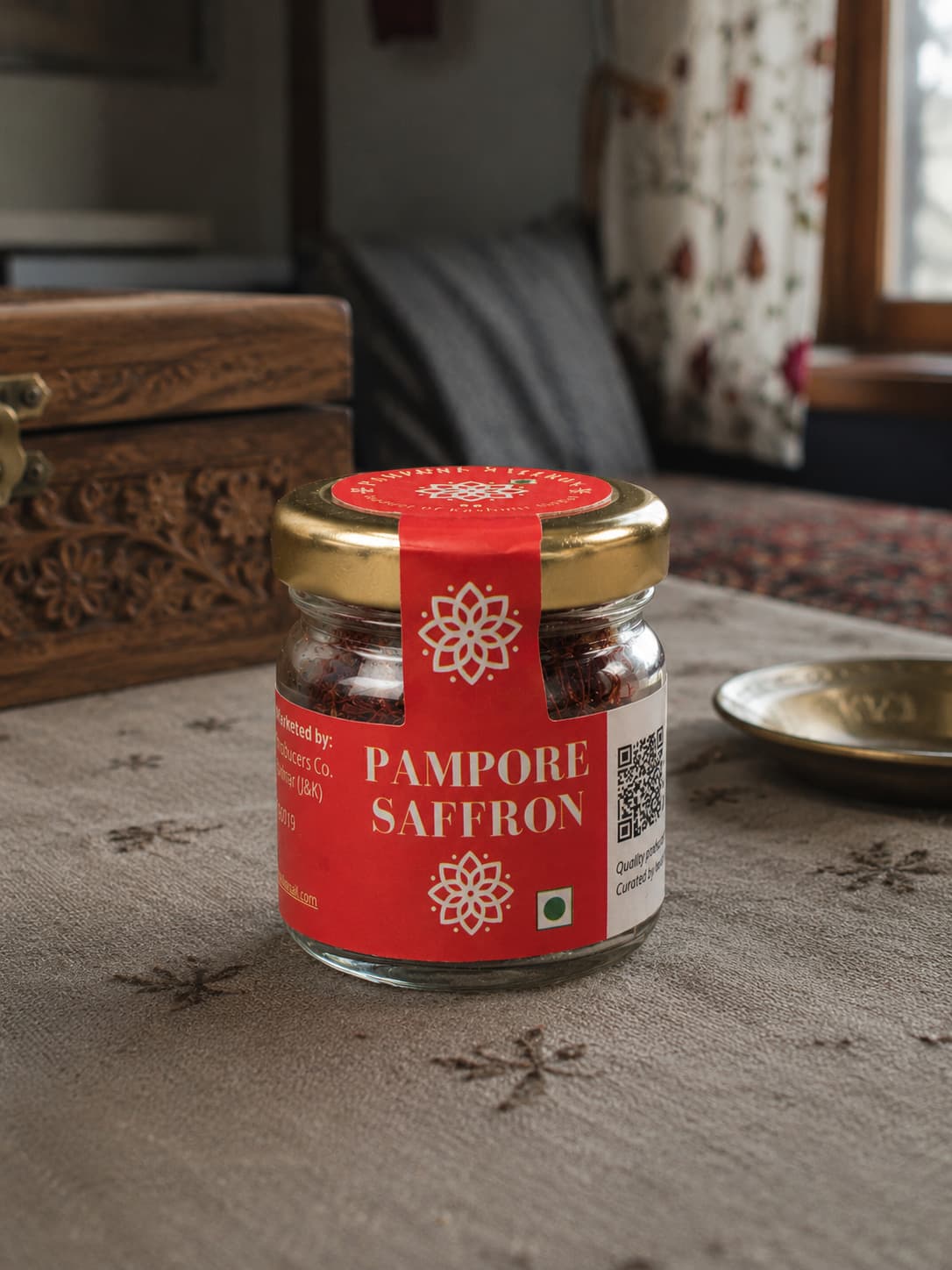
Ladakh has almost no local saffron trade of its own — what reaches Leh and Kargil comes over the Srinagar or Manali road with the rest of the supply chain, and the tourist shops on Leh's main bazaar price it accordingly. Genuine Kashmiri Mongra is ₹330–360 a gram direct from Pampore, which is the nearest actual growing region to Ladakh by a considerable margin. The real Ladakh constraint is not price, it is logistics: road access closes for months, air freight is the only winter route, and delivery timelines to Leh and especially to Nubra, Zanskar and Changthang need to be planned around that rather than assumed.
Supply into Ladakh, honestly
Everything in Ladakh's markets that is not grown or made in Ladakh has come up a road that is closed for part of the year. Saffron is a small, light, high-value good, so it moves easily when the roads are open and by air when they are not — but it also sits in shops for a long time, and saffron that has spent a year in an open jar in Leh's dry air is fine on aroma and questionable on everything you cannot see.
Leh main bazaar's tourist shops sell saffron alongside pashmina and apricot products at prices set by what a visitor to Ladakh will pay. Kargil, on the Srinagar road, is closer to source and sells more sensibly. Neither offers a batch code.
One thing genuinely in Ladakh's favour: the climate is bone dry. Saffron's main storage enemy is humidity, and a sealed jar in Leh will hold its character better than the same jar in Kochi. Buy once, buy well, store it in the dark.
- No local saffron trade — everything arrives over the Srinagar or Manali road.
- Leh bazaar prices are visitor prices; Kargil is closer to source and cheaper.
- Ladakh's dry air is unusually kind to stored saffron — buy a larger jar less often.
- Plan around the roads: order well ahead of winter, and expect air-routed transit.
Saffron in Ladakhi use
Ladakhi cooking is not a saffron cuisine — the staples are barley, butter tea, thukpa, skyu and momos, none of which traditionally take saffron. Where saffron appears in Ladakh is in Buddhist ritual and in the Balti and Purigi Muslim kitchens of Kargil and Nubra.
In the monasteries, saffron water is used in ritual purification and in offering bowls, and saffron is one of the substances placed in a stupa at consecration. The monastic robe colour is often called saffron even though it is dyed with far cheaper material — the word survives from the original.
In Kargil and Nubra, the Balti and Purigi traditions run closer to Kashmiri and Central Asian cooking, and saffron appears in festive pulao and in sweet rice at Eid and at weddings. Butter tea does not take saffron, but the sweet milk tea served to guests sometimes does.
- Monastic ritual — saffron water in offering bowls and in consecration.
- Balti and Purigi festive pulao in Kargil and Nubra.
- Sweet guest tea at Eid and weddings — a few threads, steeped, not boiled.
- Not a traditional part of thukpa, skyu, momo or butter-tea cooking.
Delivery to Ladakh
Ladakh is our slowest lane and we would rather be honest than optimistic. Leh typically runs 7–12 business days after dispatch when the roads are open, and longer in winter when everything routes by air and weather grounds flights. Kargil is broadly similar. Nubra, Zanskar, Changthang and remote addresses can take considerably longer and are seasonally unserviceable. If you need saffron in Ladakh for a specific date, order three to four weeks ahead.
We deliver across
- Leh
- Kargil
- Nubra
- Zanskar
- Diskit
Every serviceable PIN code in Ladakh — not only the cities listed. DTDC Express is ?60 for 7-day delivery, and DTDC Airmax is ?120 for faster air delivery.
Saffron in Ladakh — common questions
- Do you deliver saffron to Leh and Ladakh?
- Yes, to serviceable PIN codes, with a realistic timeline. Leh and Kargil typically run 7–12 business days after dispatch when the roads are open; winter shipments route by air and are weather-dependent, so they can take longer. Nubra, Zanskar, Changthang and remote addresses take longer again and some are seasonally unserviceable. Order three to four weeks ahead of any date you actually need it.
- Is saffron grown in Ladakh?
- No, not commercially. Ladakh is a cold desert at 3,000 metres and above with a very short growing season, which does not suit Crocus sativus — the plant needs a mild autumn to flower and a specific soil-drainage profile that the karewas of the Kashmir valley provide and Ladakh does not. The nearest real growing region to Leh is Pampore in Pulwama, about 400 km away over the Zoji La.
- How much does saffron cost in Leh market?
- Leh main bazaar shops price saffron at visitor rates, commonly ₹600–1,200 a gram for material with no stated grade or harvest. Kargil, being on the Srinagar road, is usually cheaper. Direct from a Pampore grower family the price is ₹330–360 a gram for ISO 3632 Grade I Mongra, sealed and batch-coded — you trade the wait for a price and a provenance the bazaar cannot match.
- How should I store saffron in Ladakh's climate?
- Ladakh is unusually good for it. Saffron's worst enemy is humidity, and Leh's air is extremely dry, so a tightly closed jar kept in a dark cupboard will hold colour and aroma very well — better than in most of India. Keep it away from direct sun and away from the stove; do not refrigerate. Under those conditions good saffron holds two to three years, which makes buying a larger jar less often the sensible approach given the transit times.
- Is saffron used in Ladakhi Buddhist ritual?
- Yes. Saffron water is used in ritual purification and in the offering bowls set before a shrine, and saffron is among the substances placed inside a stupa at consecration. The Sanskrit and Tibetan traditions both treat it as an auspicious and purifying substance. Note that the 'saffron' colour of monastic robes is a colour name rather than a saffron dye — the actual robes have been coloured with far cheaper materials for well over a thousand years.
- Can I pay cash on delivery in Ladakh?
- No — we are prepaid-only everywhere in India, and for Ladakh specifically that is not a policy we can bend. Transit is long, routes are seasonal, and a refused COD parcel on a Leh route is effectively a total loss. Prepaid also means the jar is sealed at source in Pampore and opened by you, with nothing in between over a two-week journey.
We grow and hand-sort this saffron ourselves in Pampore, seal it there in tamper-evident glass, and ship it prepaid to Ladakh. One hop, no repacking, a batch code on the jar.
Also shipping to Ladakh: Kashmiri kehwa — the winter cup.
Pampore Saffron FPO, J&K · FSSAI 11022470000019
Also in North India