ISO 3632 Category I · GI origin
Grade 1 Kashmiri saffron, with the lab card to prove it
All-red Mongra from our family fields in Pampore — ISO 3632 graded, batch-coded, GI-tag origin, sealed at harvest. “Grade 1” is a lab result here, not an adjective.
Hand-sorted to Category I
All-red Mongra stigma only — the yellow style, which carries no strength, is discarded.
GI-tag origin
Kashmir saffron is a legally protected origin since 2020. Ours grows inside it — Pampore itself.
Grower family, one hop
Nationally recognised saffron farmers. From our drying floors to your door, nothing in between.
What “Grade 1” means when a lab says it
Saffron grading is not marketing vocabulary — it is ISO 3632, an international standard that measures three molecules: crocin (colouring strength), picrocrocin (taste) and safranal (aroma). Category I — the band retailers call Grade 1, Grade A or A++ — demands crocin above 200 units. Kashmiri Mongra, the all-red stigma tips our valley is famous for, grades there routinely; that thick, deep-crimson thread is why Kashmir saffron commands the world’s premium in the first place.
Since 2020, “Kashmir saffron” is also a registered Geographical Indication — the origin itself is legally protected, which matters in a market where Iranian bulk saffron is quietly re-packed as Kashmiri (our Kashmiri vs Iranian comparison shows how to tell them apart, and the GI guide explains the certification). Add the five at-home purity tests and the honest price map, and you can audit any “Grade 1” claim in ten minutes — including ours.
Every jar leaves Pampore sealed by an FSSAI-licensed grower family, whose recognition sits on the Awards & Media page and whose fields are on the about page. Once the jar is open: 3–4 threads per glass is all Grade 1 needs — the usage guide makes one gram last a month.
- ISO 3632 Category I (Mongra) — card in every jar
- Batch-coded and verifiable with the growers
- GI-origin Pampore harvest, sealed at source
- Tracked, tamper-sealed pan-India
The thread tells the grade
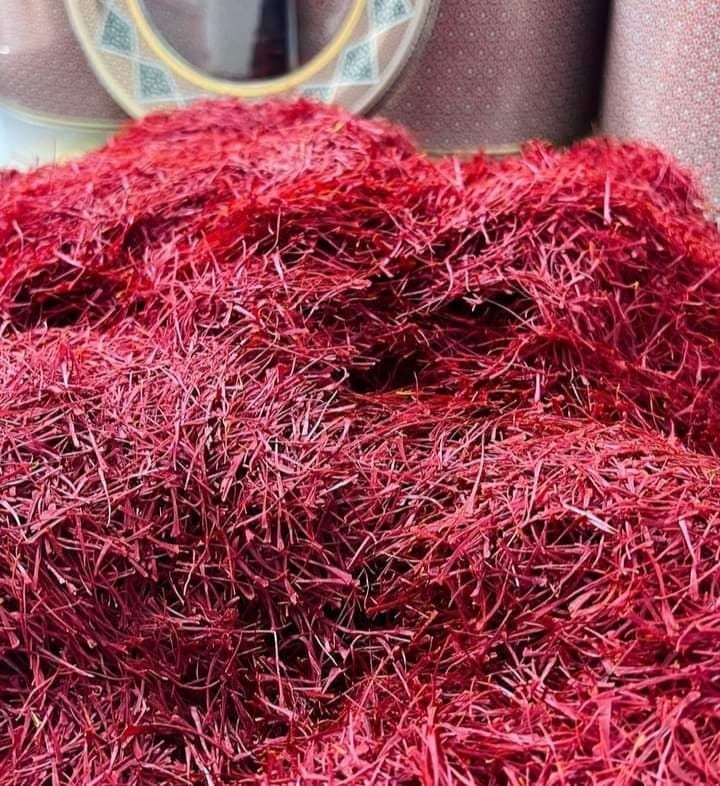
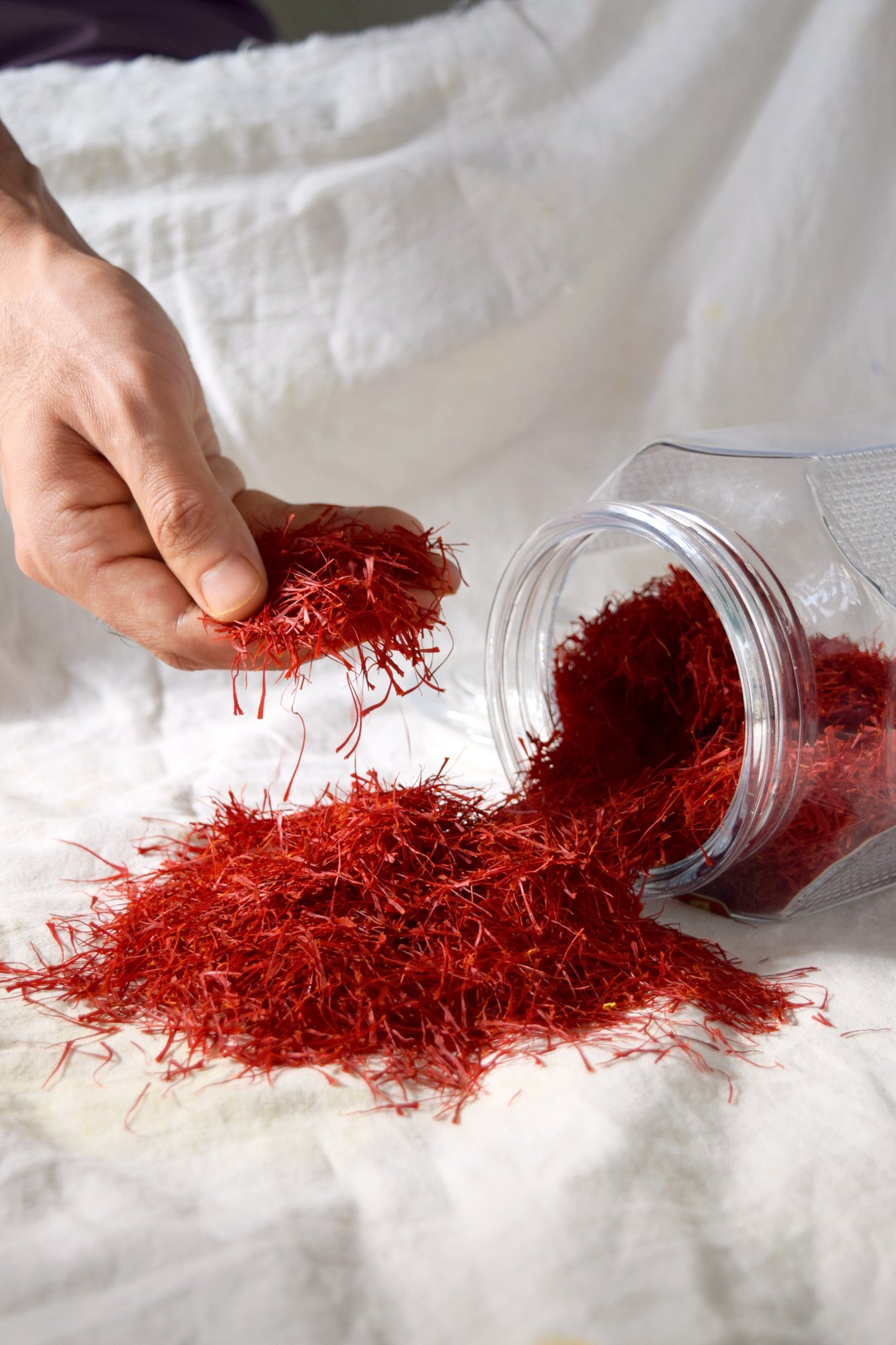
Grade 1 Mongra is unmistakable in the hand: thick trumpet-ended threads, uniformly deep crimson with no yellow tails, a dry honey-and-hay aroma, and slow gold in warm water that keeps deepening for a quarter hour. Anything instant, papery or pale is telling you its own story — believe it.
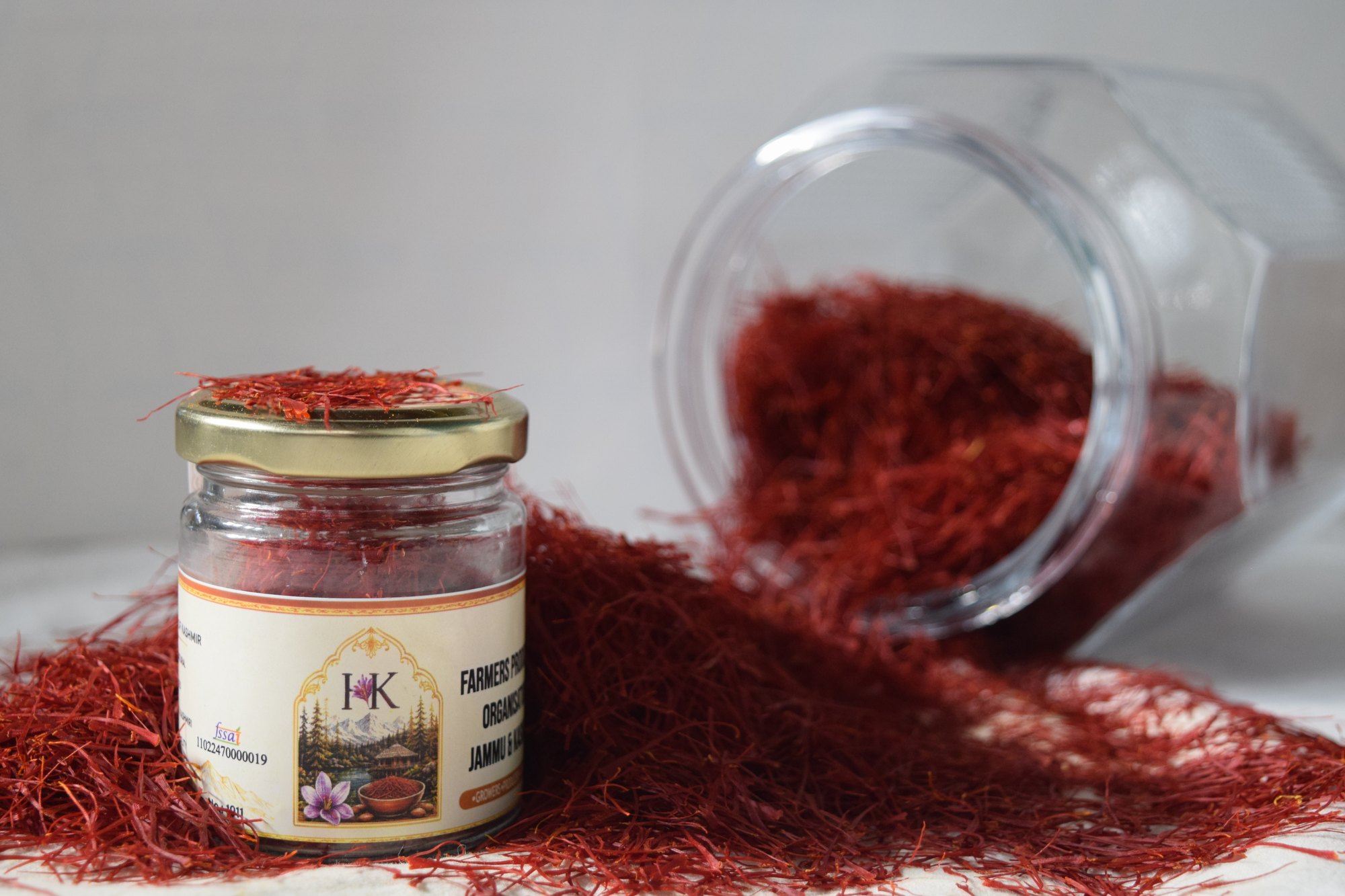
From our fields, in our jars
Grade 1 Kashmiri saffron — FAQs
What does Grade 1 (Grade A / A++) saffron actually mean?
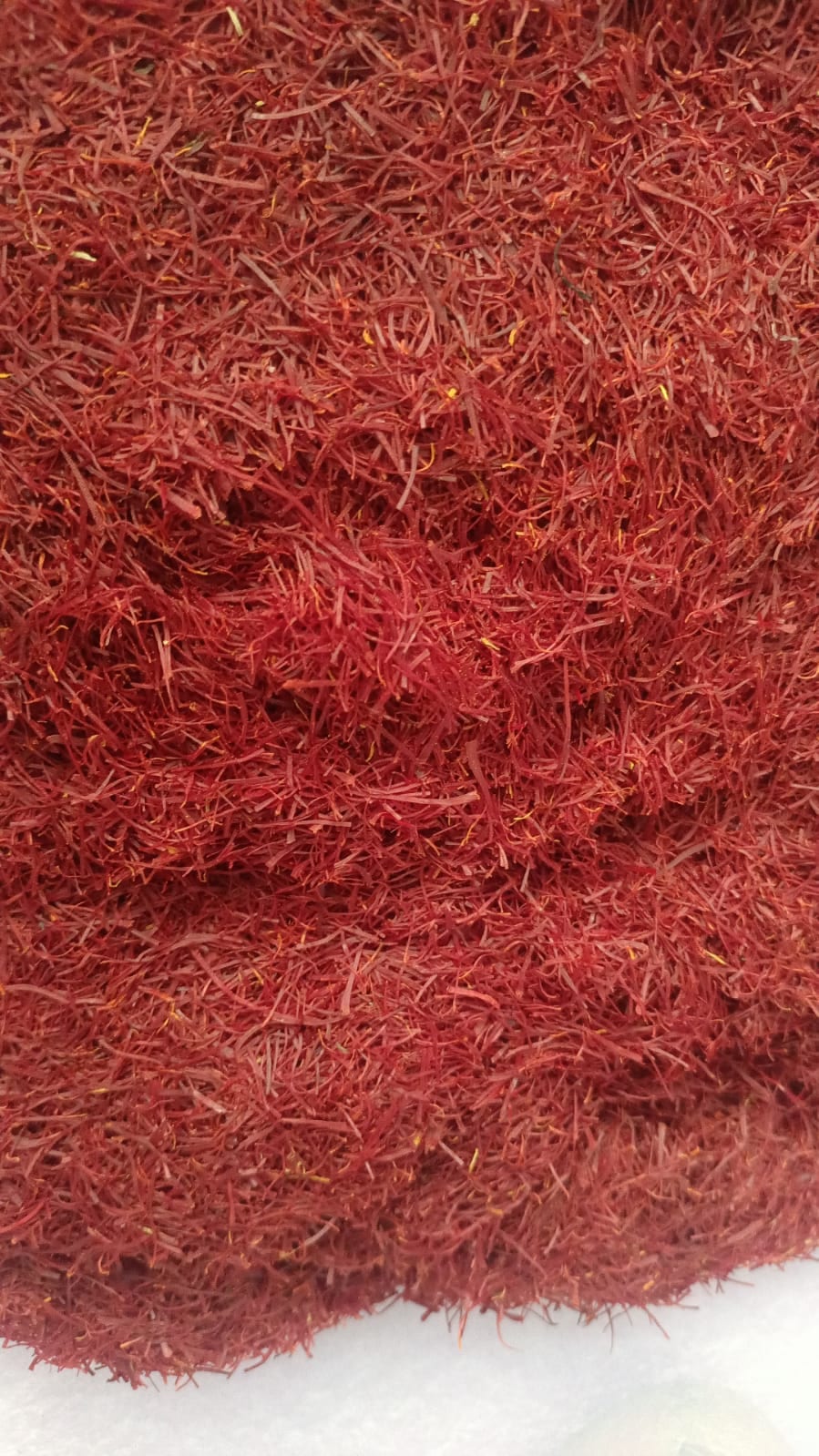
Grading follows ISO 3632, which lab-measures three things: crocin (colouring strength), picrocrocin (taste) and safranal (aroma). Category I — commonly sold as Grade 1 or A++ — is the top band, requiring crocin above 200 units. Mongra, the all-red stigma tips of Kashmiri saffron, routinely grades there. Mongra is the fraction that earns the grade, and it is the only part we sell — the yellow style is discarded by hand.
How is Grade 1 Mongra different from Lachha saffron?
Same flower, different cut. Mongra is only the dark-red stigma tips — highest concentration of colour and aroma, top price band. Lachha keeps the threads whole with their yellow-orange tails attached: real saffron, but diluted by weight since the tails carry little crocin. If a 'Grade 1' price looks too good, it is usually Lachha weight at Mongra vocabulary.
How can I verify your saffron is really Grade 1?
Two things you can check without taking our word for it: we are an FSSAI-licensed food business, and Kashmir saffron sits under the Government of India's GI protection, granted in 2020, which restricts the name to saffron grown in the valley. Then the kitchen test: 3–4 threads in warm water should release slow, deepening gold over 10–15 minutes while the threads stay whole.
What is a fair price for Grade 1 Kashmiri saffron?
Real Grade 1 Kashmiri Mongra cannot be cheap: the flower yields three stigmas, and a gram means around 160 hand-picked flowers. Genuine Kashmiri Grade 1 sits at roughly ₹300–600 per gram retail, and ours is ₹329–359 direct from the grower. Below about ₹150 a gram, you are buying Iranian re-packs, Lachha weight, or dyed imitation — our price-per-gram guide breaks the whole market down.
Do you ship pan-India, and how fresh is the jar?
Orders ship via DTDC across India within 24–48 hours, tamper-sealed with tracking. Jars are filled from the current family harvest in Pampore and batch-coded — saffron stored right holds its character 2–3 years, and ours rarely sits that long.