Heritage Kashmir · North India
Kashmiri Saffron in Punjab
- ਕੇਸਰkesar · Punjabi
- زعفرانzafran · Urdu/Punjabi
The short answer
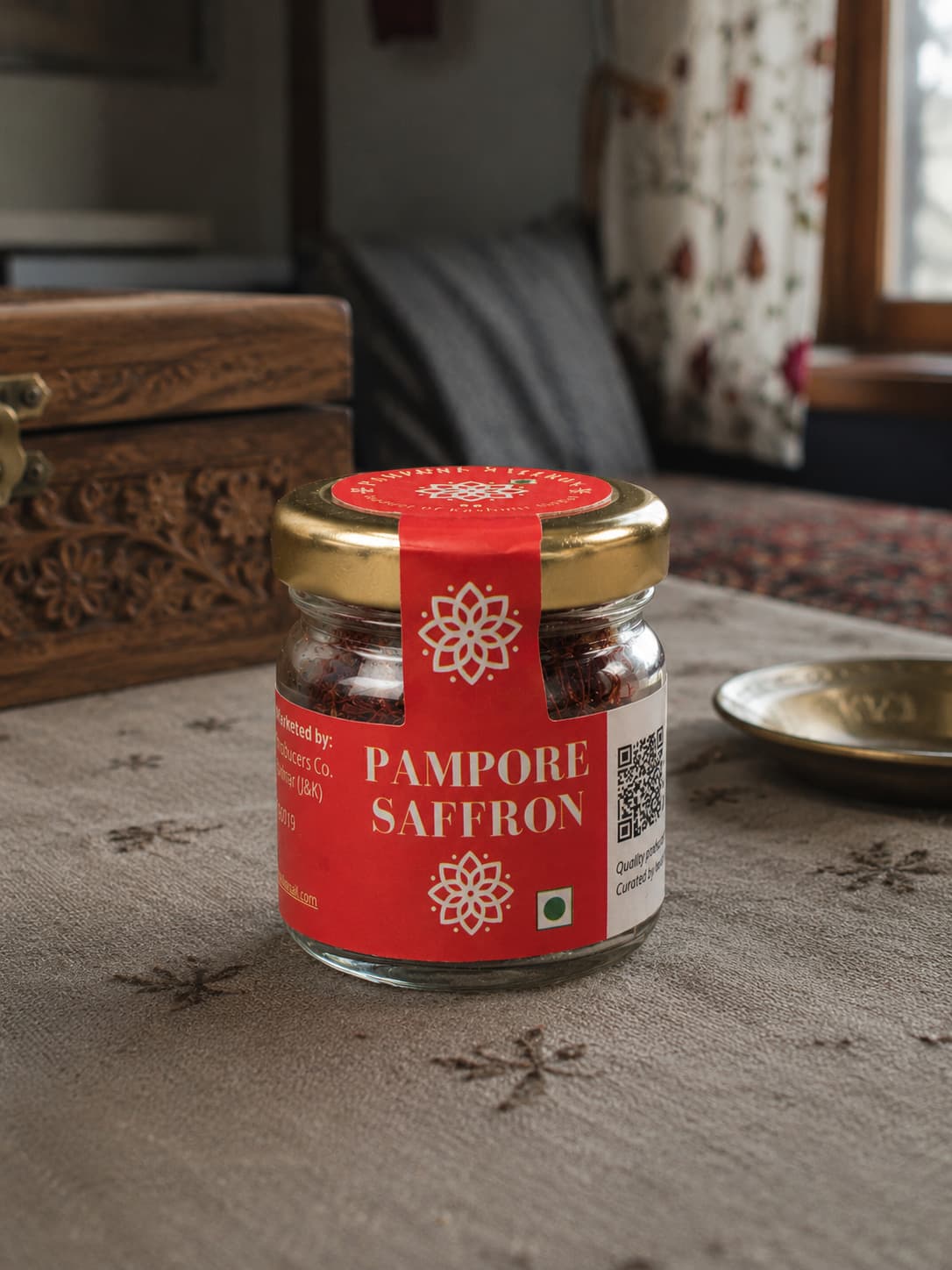
Punjab calls saffron ਕੇਸਰ (kesar) or zafran, and buys more of it per household than most Indian states — kheer, phirni, kesar badam doodh and wedding gifting all run on it. Genuine Kashmiri Mongra costs ₹330–360 a gram direct from Pampore; Amritsar and Ludhiana dry-fruit shops price the same grade at ₹500–800. Punjab's specific hazard is proximity: Pathankot and Amritsar sit on the road to Kashmir, so 'straight from Kashmir' is the standard sales line at every tourist-facing counter in the state, and it is unverifiable unless the jar carries a harvest year and a batch code.
The 'straight from Kashmir' problem in Punjab
Punjab is the last state on the highway before Jammu, and that geography shapes how saffron is sold here. Shops in Amritsar's Hall Bazaar, Ludhiana's Chaura Bazar and along the Pathankot road lean hard on the Kashmir story because it is geographically plausible. Plausible is not the same as true. The same Iranian bulk stock that reaches Delhi reaches Amritsar, and a shop 300 kilometres from Pampore has no more provenance than a shop 3,000 kilometres away unless it can produce a chain of custody.
The second Punjab pattern is the returning-traveller purchase. Punjabi families holiday in Kashmir in large numbers, and roadside saffron bought in Pahalgam, Gulmarg or on the Pampore highway is one of the most reliably adulterated products sold anywhere in India — sold to people who will not be back to complain, often as 'farm-fresh' from a shop that has never seen a corm. Buying from a Pampore family who ship to you, with a name and a phone number attached, inverts that relationship entirely.
Wholesale volumes for gurdwara langar, halwai supply and wedding catering are a real Punjab use case and worth handling separately from a two-gram kitchen jar — bulk pricing at origin is a different conversation from retail, and any grower will have one with you.
- 'From Kashmir' is a claim, not a credential. Harvest year plus batch code plus a named village is a credential.
- Roadside saffron bought on a Kashmir holiday is the highest-risk purchase in the category.
- Halwai and wedding-scale buying should be priced at origin, not at retail.
- For gifting: a sealed glass jar survives a Punjabi wedding season; a paper twist does not.
Kesar in a Punjabi kitchen
Punjab uses saffron more freely than most of North India and in a narrower set of dishes. Kheer is the anchor — rice simmered down in full-fat milk, and the saffron added late, steeped in a little warm milk rather than dropped in dry. Phirni, served set in earthen kulhads at weddings, takes the same treatment. Kesar badam doodh, thick with ground soaked almonds, is the winter drink and the one most Punjabi households will make without a recipe.
Festival use clusters around Lohri, Baisakhi and the wedding season. Punjabi weddings are where saffron consumption spikes hardest: kesar in the phirni, kesar in the milk sweets, and a saffron jar in the gift boxes going out to both families. A halwai working a 500-plate wedding uses saffron in gram quantities, which is exactly when the price per gram stops being trivial.
One Punjabi habit worth naming: adding saffron directly to boiling milk at the start. It is common and it wastes the saffron. Safranal, the aroma compound, is volatile and boils off. Steep the crushed threads in two tablespoons of warm milk for fifteen minutes, take the pot off the heat, then stir the infusion in.
- Kheer and phirni — steeped saffron stirred in off the heat.
- Kesar badam doodh — soaked almonds ground fine, saffron steeped separately.
- Wedding halwai use — gram-scale, so buy at origin pricing.
- Lohri and Baisakhi sweets — a saffron finish on the milk-based mithai.
Delivery to Punjab
Punjab is a short lane from Kashmir but the courier still routes through the plains. Amritsar, Jalandhar, Ludhiana, Mohali and Patiala typically arrive 3–6 business days after dispatch; Bathinda, Ferozepur and the border belt usually 4–7. Dispatch is within 24–48 hours of a confirmed prepaid order, tamper-sealed, DTDC tracking emailed on the way out.
We deliver across
- Amritsar
- Ludhiana
- Jalandhar
- Patiala
- Bathinda
- Mohali
- Pathankot
Every serviceable PIN code in Punjab — not only the cities listed. DTDC Express is ?60 for 7-day delivery, and DTDC Airmax is ?120 for faster air delivery.
Saffron in Punjab — common questions
- ਕੇਸਰ ਦੀ ਕੀਮਤ ਕੀ ਹੈ? What is the price of kesar in Punjab?
- Real ISO 3632 Grade I Kashmiri Mongra is ₹330–360 per gram direct from a Pampore grower family. In Amritsar, Ludhiana and Jalandhar shops the same grade retails at ₹500–800 per gram. Anything under ₹300 a gram is Iranian repack, Lachha weight, or dyed material — the flower yields three stigmas and a gram takes about 160 flowers, so the floor is set by arithmetic, not by the seller.
- Is the saffron sold on the Kashmir highway genuine?
- Treat it as the highest-risk saffron purchase in India. Roadside stalls on the Srinagar–Pampore stretch and in Pahalgam and Gulmarg sell overwhelmingly to tourists who will never return, and the trade is well documented as heavily adulterated — dyed maize silk, safflower petals, and Iranian stock sold as Kashmiri. Actual Pampore growers mostly do not sell from highway stalls; we sell from a sealed jar with a batch code and a phone number that still works in March.
- How much saffron for kheer for 10 people?
- About 15–20 threads, roughly 0.15 grams, for a 10-person kheer. Crush them, steep in three tablespoons of warm milk for fifteen minutes, and stir the infusion in after you take the pot off the heat. Adding saffron at the start of a long simmer boils away the safranal and you lose most of the aroma you paid for — you will still get colour, but colour is the cheap half.
- Do you supply saffron in bulk for weddings or halwai use in Punjab?
- Yes. Wedding, gifting and halwai volumes are priced separately from retail — message the WhatsApp order line with the quantity and the date you need it and we will quote from the current harvest. Bulk from a grower family is where the origin-versus-retail gap matters most: at 50 or 100 grams, the difference between ₹350 and ₹700 a gram is the entire saffron budget over again.
- What is the difference between kesar and zafran?
- None — they are the same spice under two names. 'Kesar' comes through Sanskrit and is standard in Hindi, Punjabi, Gujarati and Marathi; 'zafran' comes through Persian and Arabic and is standard in Urdu, Kashmiri and much of Punjab's Muslim tradition. Both mean the dried stigma of Crocus sativus. What matters is not the word but the grade behind it: ISO 3632 Category I, all-red Mongra, and an origin someone will put their name to.
- How long does delivery to Amritsar or Ludhiana take?
- 3–6 business days after dispatch, and we dispatch within 24–48 hours of a confirmed prepaid order. Amritsar, Jalandhar, Ludhiana, Mohali and Patiala are all on that lane. You get a DTDC AWB by email when the parcel leaves Pampore, so you can watch it come down.
We grow and hand-sort this saffron ourselves in Pampore, seal it there in tamper-evident glass, and ship it prepaid to Punjab. One hop, no repacking, a batch code on the jar.
Also shipping to Punjab: Kashmiri kehwa — the winter cup.
Pampore Saffron FPO, J&K · FSSAI 11022470000019
Also in North India