Heritage Kashmir · North India
Kashmiri Saffron in Haryana
- केसरkesar · Hindi
The short answer
Haryana buys most of its saffron through Delhi, which means Haryana pays a Delhi retail markup on top of a Khari Baoli wholesale markup — ₹550–850 a gram in Gurugram and Faridabad dry-fruit shops for saffron that leaves a Pampore farm at ₹330–360. Buying direct from the grower removes both markups and, more usefully, removes the two hops where Iranian stock and Lachha grades get relabelled as Kashmiri. Haryana households use saffron mainly for kesar doodh in winter and for Karva Chauth sargi, so a 2-gram jar in most homes is a year's supply, not a month's.
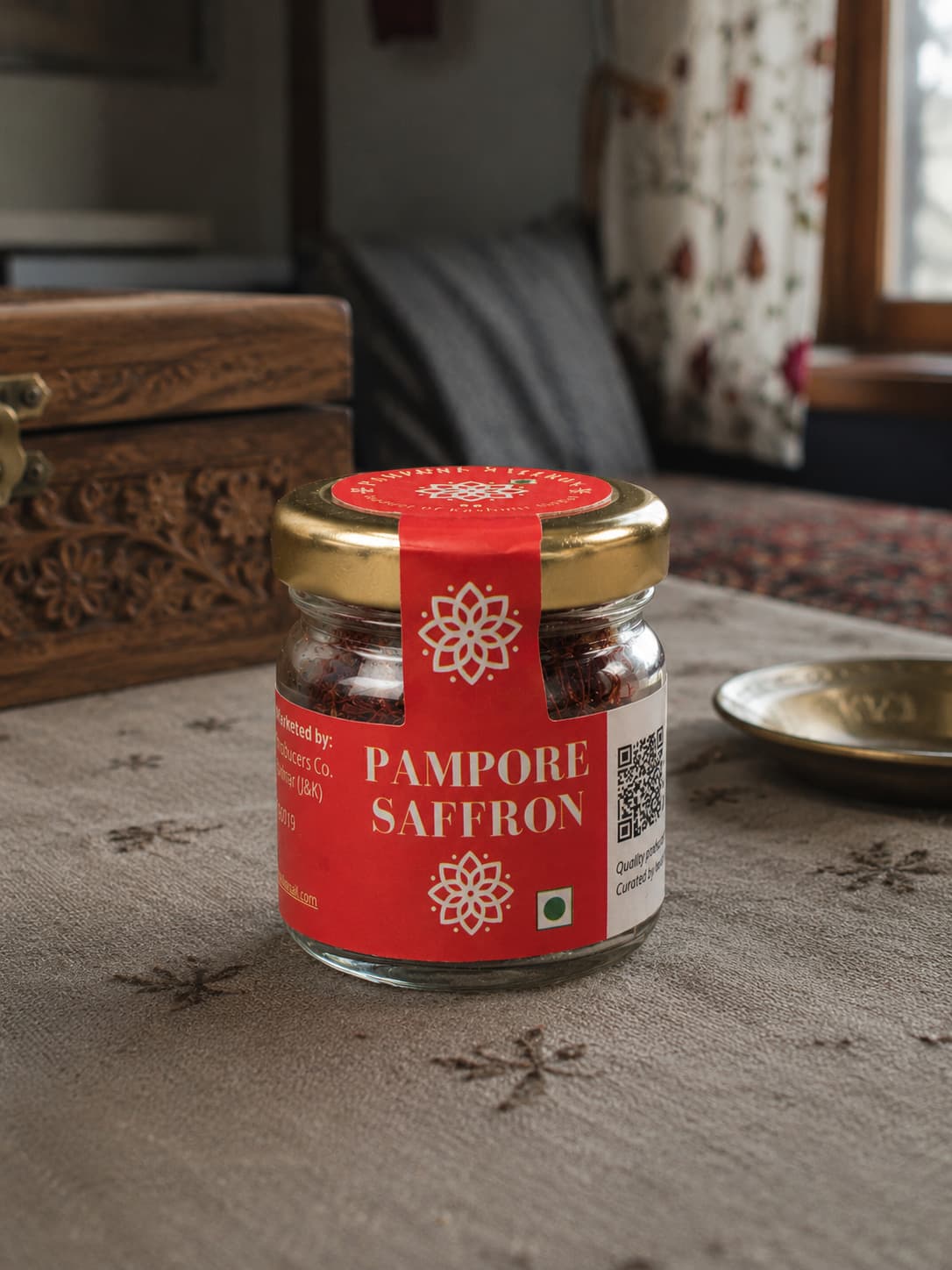
Buying saffron in Haryana without paying the NCR premium
Gurugram is the sharpest example of the problem. It has India's highest concentration of premium grocery retail per square kilometre and almost no independent spice trade of its own — so saffron arrives via Delhi wholesalers, gets a gourmet-store shelf, a glass jar and a designed label, and prices at two to three times what the same grade costs at origin. None of that markup buys you better saffron. It buys packaging and Cyber Hub rent.
Panipat, Karnal and Ambala sit on the old GT Road trade line and have their own long-standing dry-fruit shops, which are generally more honest about what they are selling — but honest about it usually means they will tell you it is Iranian if you ask, and most buyers do not ask. Iranian saffron is not fake; it is simply a different origin with a different price and a different thread. The problem is only ever the label.
For Hisar, Rohtak, Bhiwani and the western districts, local availability of any credible Grade 1 is genuinely thin, and buying online is not a compromise — it is the better option, because a sealed jar shipped from source has a shorter chain of custody than anything on a shelf 200 kilometres from the nearest importer.
- Compare like with like: ISO 3632 Category I Mongra against ISO 3632 Category I Mongra. A 'Grade A' sticker with no ISO reference means nothing.
- A Gurugram gourmet-store markup is rent, not quality.
- In the western districts, direct-from-source shipping beats local stock on both price and traceability.
- For sargi and wedding gifting, sealed 2 g glass reads better and keeps better than a loose paper twist.
Saffron in a Haryanvi kitchen
Haryana's saffron use is small, seasonal and specific. The core of it is kesar doodh through the cold months — Haryana runs genuinely cold in December and January and the state drinks more milk per head than almost anywhere in India, so saffron milk here is a real habit rather than an occasional treat.
The second is Karva Chauth. The pre-dawn sargi thali sent by a mother-in-law traditionally carries dry fruits, a sweet and, in households that keep the fuller form, saffron — either stirred into the milk or in a kesar-laced sweet like a peda. Teej brings ghevar in from Rajasthan, and the good ghevar carries a saffron finish.
Then weddings. Haryana wedding gifting runs to dry fruits at scale, and a sealed saffron jar has become the standard way to raise the value of a box without raising its volume. This is where buying at origin pays off most obviously: the gap between ₹350 and ₹800 a gram compounds fast across sixty boxes.
- Kesar doodh, December–February — 3–4 threads per glass, steeped in warm milk.
- Karva Chauth sargi — saffron in the milk or in the peda.
- Teej ghevar — a steeped-saffron drizzle, not saffron cooked in the syrup.
- Wedding and Diwali gift boxes — sealed 2 g jars in bulk.
Delivery to Haryana
Haryana sits on the same lane as Delhi NCR. Gurugram, Faridabad, Sonipat and Ghaziabad-adjacent addresses typically arrive 3–5 business days after dispatch; Panipat, Karnal, Ambala, Hisar and Rohtak usually 4–6. We dispatch within 24–48 hours of a confirmed prepaid order, sealed and batch-coded, with DTDC tracking emailed on despatch.
We deliver across
- Gurugram
- Faridabad
- Panipat
- Karnal
- Hisar
- Rohtak
- Ambala
- Sonipat
Every serviceable PIN code in Haryana — not only the cities listed. DTDC Express is ?60 for 7-day delivery, and DTDC Airmax is ?120 for faster air delivery.
Saffron in Haryana — common questions
- What does 1 gram of real kesar cost in Gurugram?
- ₹330–360 per gram direct from a Pampore grower family, against ₹550–850 per gram at a Gurugram gourmet grocer or dry-fruit counter for the same ISO 3632 Grade I Mongra. The gap is retail rent and two layers of middleman, not quality. Below about ₹300 a gram anywhere in India you are no longer buying Kashmiri Grade 1, whatever the jar says.
- Can I get genuine Kashmiri saffron delivered to Hisar or Rohtak?
- Yes, and for the western Haryana districts it is the better option rather than a fallback. Local stock that far from an importer has passed through more hands and sat longer; a sealed jar shipped from Pampore reaches Hisar or Rohtak in about 4–6 business days after dispatch with a batch code that traces back to one harvest. We ship prepaid to every serviceable PIN code in Haryana.
- How much saffron goes into Karva Chauth sargi milk?
- Three to four threads for the glass. Crush them, steep in two tablespoons of warm milk for ten minutes, then stir in. For a sargi thali being sent as a gift, a sealed 1–2 gram jar is the usual amount — that is enough for well over a hundred glasses, so it is a gift that lasts the whole winter rather than the morning.
- Is saffron from a Delhi shop cheaper than buying online?
- No — it is reliably more expensive, because a Delhi shop is at least two hops from the farm and both hops take a margin. The only thing a shop gives you that online does not is the ability to look at the threads before paying. You can get that back by buying in clear glass with a visible seal and doing the water test at home within the return window: three threads in warm water should bleed gold slowly over ten minutes with the threads staying whole and red.
- Do you take cash on delivery in Haryana?
- No. We are prepaid-only across India, Haryana included. Saffron is small, light and high-value, which makes COD parcels a target for substitution in transit and makes refused-delivery losses severe for a grower-scale business. Prepaid also means the parcel is sealed at source and opened by you, with nothing in between.
- How do I store saffron in Haryana's summer?
- Airtight, dark, and out of the fridge. Haryana summers run past 45°C, and heat plus light is what degrades crocin and safranal — the compounds you paid for. Keep the jar closed in a dark cupboard away from the stove, not on a spice rack in the sun and not in the refrigerator, where condensation each time you open it will do more damage than the heat would have. Stored that way, good saffron holds its character for two to three years.
We grow and hand-sort this saffron ourselves in Pampore, seal it there in tamper-evident glass, and ship it prepaid to Haryana. One hop, no repacking, a batch code on the jar.
Also shipping to Haryana: Kashmiri kehwa — the winter cup.
Pampore Saffron FPO, J&K · FSSAI 11022470000019
Also in North India