Heritage Kashmir · Northeast India
Kashmiri Saffron in Nagaland
- केसरkesar · Hindi (link language)
The short answer
Nagaland's saffron market is small, concentrated in Dimapur, and priced at the end of a long chain — ₹600–1,000 a gram against ₹330–360 direct from a Pampore grower family. Naga food traditions across all seventeen recognised tribes use no saffron: the cooking is built on smoked and fermented meat, bamboo shoot, axone, anishi, king chilli and boiled preparations with very little added spice. The state's saffron demand comes from Dimapur's substantial settled trading population, from Christmas baking in a state that is overwhelmingly Christian, and from the hotel and event trade around the Hornbill Festival each December.
Dimapur trades for the state
Dimapur is Nagaland's commercial gateway — the only city in the state on the plains, with the railhead and the airport, and it supplies Kohima and the hill districts. Its Hong Kong Market and the general trade stock imported groceries brought up from Guwahati, several margins out, and saffron sits among them as a slow-moving specialty item.
Kohima and the interior districts buy through Dimapur with a further hop. In Mokokchung, Tuensang, Zunheboto and the eastern districts, organised retail of anything premium is very thin and ordering direct is the practical route.
December is the state's commercial peak. The Hornbill Festival at Kisama brings large visitor numbers, the hotel and event trade scales up, and Christmas follows immediately — which together make the six weeks from late November the only period when saffron moves in any volume here.
- Dimapur is the state's gateway and supplies Kohima and the hills.
- Interior districts have very thin premium retail — ordering direct is the practical route.
- December — Hornbill Festival plus Christmas — is the state's saffron peak.
- Slow shelf turnover in a humid climate: buy recent and sealed.
Where saffron fits, and where it does not
Naga cooking is one of India's most distinctive and it has nothing to do with saffron. Smoked pork with axone, anishi, bamboo shoot, galho, boiled greens, the raja mircha — the flavour architecture is fermentation, smoke and heat, not aromatic spice. Saying otherwise would be inventing a tradition, and there is no need to.
Christmas is where a saffron use has grown up. Nagaland is overwhelmingly Christian and Christmas is the year's largest festival, with church feasts, community meals and a considerable home-baking tradition — fruit cake, sweet bread, and the festive spread. That is a real and growing domestic saffron use across the Northeast's Christian-majority states.
The rest is Dimapur's settled Bengali, Bihari, Marwari and Nepali households making their own festival sweets, and the hotel and restaurant trade — particularly around the Hornbill Festival — running north-Indian menus with biryani, kheer and kesar-pista preparations on them.
- Not part of any Naga tradition — axone, anishi, smoked meat and bamboo shoot use none.
- Christmas baking — the state's real domestic saffron occasion.
- Dimapur's settled-community festival sweets.
- Hornbill Festival and hotel-trade north-Indian menus each December.
Delivery to Nagaland
Dimapur typically arrives 9–13 business days after dispatch, routing through Guwahati; Kohima and Mokokchung usually 10–14; Wokha, Tuensang, Zunheboto and the eastern districts 11–16. Monsoon conditions extend all of it. Order three to four weeks ahead of Christmas or Hornbill. We dispatch from Pampore within 24–48 hours of a confirmed prepaid order, sealed and batch-coded, with DTDC tracking emailed on despatch.
We deliver across
- Kohima
- Dimapur
- Mokokchung
- Wokha
- Tuensang
- Zunheboto
Every serviceable PIN code in Nagaland — not only the cities listed. DTDC Express is ?60 for 7-day delivery, and DTDC Airmax is ?120 for faster air delivery.
Saffron in Nagaland — common questions
- Do you deliver saffron to Nagaland?
- Yes, to serviceable PIN codes. Dimapur typically runs 9–13 business days after dispatch via Guwahati; Kohima and Mokokchung 10–14; Wokha, Tuensang, Zunheboto and the eastern districts 11–16, with monsoon conditions extending everything. December is the busiest period on the network because of Christmas and the Hornbill Festival, so order three to four weeks ahead for anything with a date attached.
- What is the price of saffron in Dimapur or Kohima?
- Local retail runs roughly ₹600–1,000 a gram, at the end of a long chain from an import counter through Burrabazar, Siliguri, Guwahati and Dimapur, with a further hop to Kohima and the hills. Direct from a Pampore grower family, ISO 3632 Grade I Kashmiri Mongra is ₹330–360 a gram, sealed and batch-coded with the harvest year on the jar.
- Is saffron used in Naga food?
- No. Naga cooking is built on smoked and fermented ingredients — axone, anishi, smoked pork, bamboo shoot, the raja mircha king chilli — with very little added spice, and saffron has no traditional place in any of the state's food across its many communities. Saffron demand in Nagaland comes from Christmas baking, from Dimapur's settled trading communities, and from the hotel and event trade.
- How much saffron for a Christmas fruit cake?
- 8 to 10 threads for a standard 1 kg cake. Crush them and steep in two tablespoons of warm milk for fifteen minutes before adding that with the wet ingredients — dry threads will not release into a batter. In a fruit cake already carrying soaked dried fruit, spice and often rum, saffron is a background aromatic rather than a lead note, so a light hand is correct and a heavy one is simply expensive.
- How should I store saffron in Nagaland's climate?
- Airtight glass jar in the driest, darkest cupboard you have, away from the stove, and never in the fridge. The monsoon here is long and heavy and saffron absorbs moisture from humid air, clumping and losing aroma. Kohima's cooler hill air is kinder than Dimapur's plains humidity, but the rule is the same in both. Given the long transit, buy a jar you will finish within a year.
- Can I get saffron delivered before the Hornbill Festival?
- Yes, if you order in good time. Hornbill runs from 1 December each year at Kisama, and the courier network across the Northeast is at its heaviest through late November and December because of Christmas. Dimapur typically runs 9–13 business days after dispatch and Kohima 10–14 in normal conditions, so ordering by early November gives real margin. Hotels and event caterers ordering in volume should message the WhatsApp line — bulk is quoted separately.
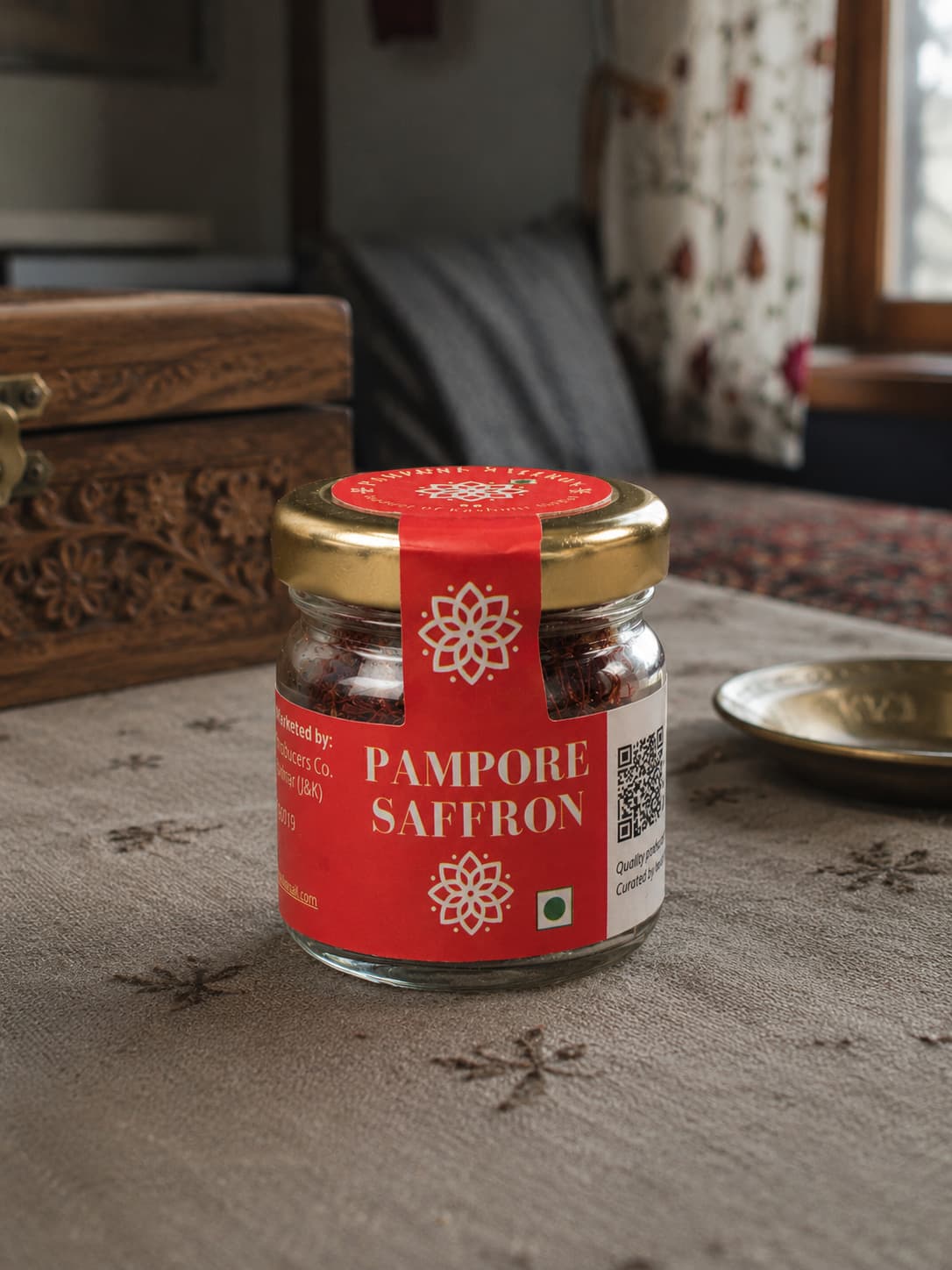
We grow and hand-sort this saffron ourselves in Pampore, seal it there in tamper-evident glass, and ship it prepaid to Nagaland. One hop, no repacking, a batch code on the jar.
Also shipping to Nagaland: Mixed dry fruits from the valley.
Pampore Saffron FPO, J&K · FSSAI 11022470000019