Heritage Kashmir · Northeast India
Kashmiri Saffron in Assam
- কেশৰkexor · Assamese
- জাফৰানjafran · Assamese
The short answer
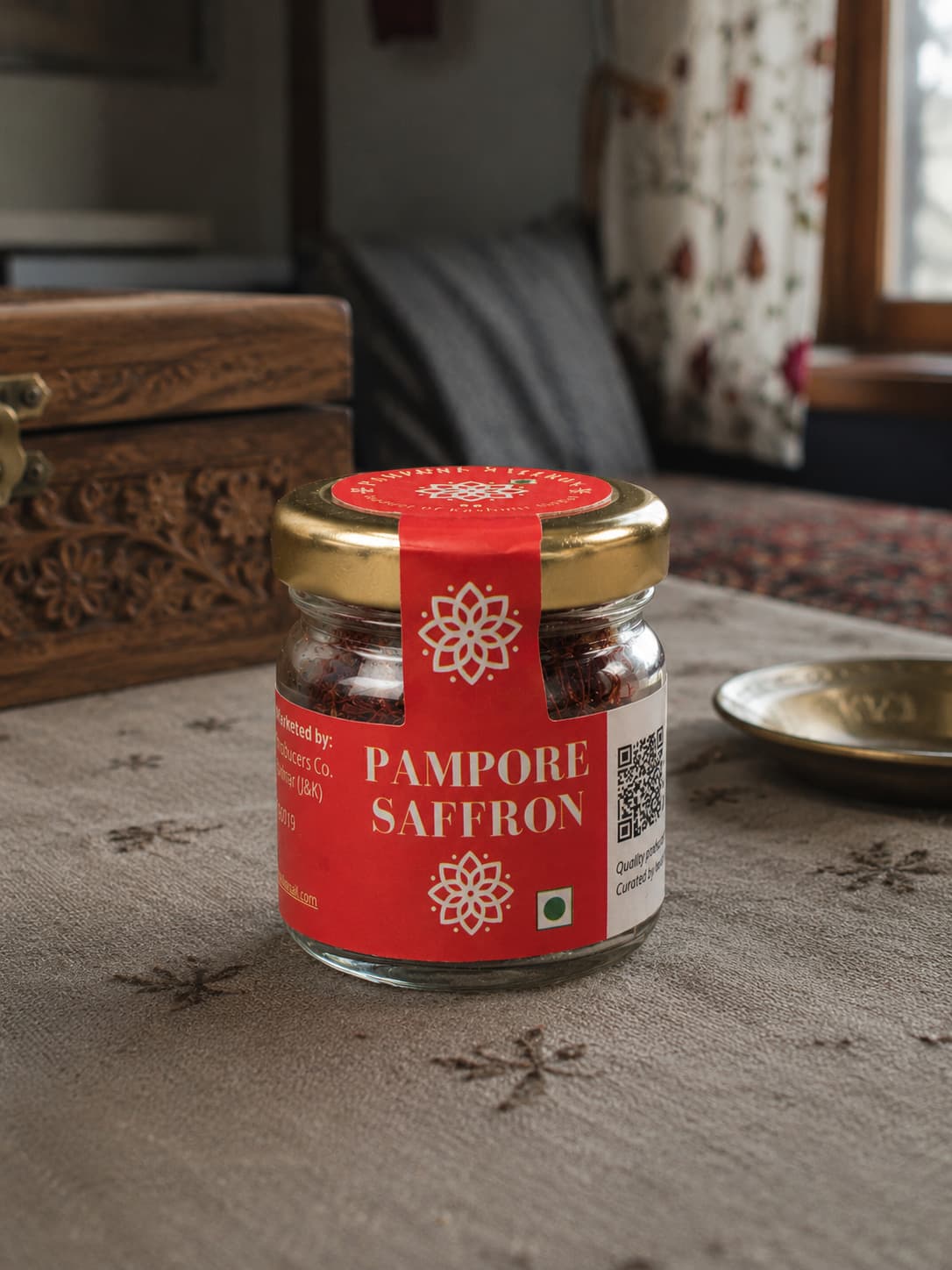
Assam calls saffron কেশৰ (kexor) or জাফৰান (jafran), and its saffron dish is payokh — the rice-and-milk pudding cooked for Bihu, for Uruka night and for every family celebration. Guwahati is the gateway through which almost all saffron entering the Northeast passes, arriving from Kolkata via Siliguri, and Fancy Bazaar and Paltan Bazaar price it at ₹550–950 a gram against ₹330–360 direct from a Pampore grower family. That is one of the widest origin-to-retail gaps in India, and it exists because the Northeast sits at the end of a long, thin, three-margin supply chain that nothing local competes with.
Guwahati is the Northeast's gate, and it charges for it
Fancy Bazaar and Paltan Bazaar in Guwahati are the wholesale and retail centre for the whole region. Saffron reaches them from Kolkata's Burrabazar through Siliguri — so by the time it is on a Guwahati shelf it has taken an import margin, a Burrabazar margin, a Siliguri margin and a local retail margin. Everything sold further east and north of Guwahati adds another.
This is the plainest case in India for buying at origin. It is not a matter of a few percent: the same ISO 3632 Grade I Mongra that a Pampore family sells at ₹330–360 routinely retails in Guwahati at two and a half times that, and in the smaller Northeast towns higher again. Nothing in that gap buys you better saffron or better provenance — it is entirely the cost of a long thin road.
Dibrugarh, Jorhat, Tezpur and Silchar buy through Guwahati. Silchar and the Barak Valley sometimes source through Tripura and Bengal instead, which does not shorten the chain much.
- Guwahati is the wholesale gate for the entire Northeast — every gram passes through it.
- Four margins between an Iranian import counter and a Guwahati shelf.
- The origin-to-retail gap here is among the widest in India, and none of it is quality.
- Ask for ISO 3632 Category I, GI origin and a harvest year — the only claims that survive the journey.
Payokh, Bihu and the Assamese sweet tradition
Payokh is the dish. Sticky rice — bora saul or joha — simmered slowly in milk with sugar, cardamom, bay leaf and dry fruits, and finished with saffron in the richer versions. It is cooked for Bihu, and specifically for the Uruka feast that opens Magh Bihu, when the whole extended family eats together around a firewood kitchen. Payokh is also the celebration dessert for births, weddings and homecomings.
Bihu comes three times a year — Bohag in April, Magh in January, Kati in October–November — and Bohag and Magh are both feast festivals. Til pitha, ghila pitha, narikol laru and the wider pitha tradition are rice-and-coconut sweets that do not traditionally take saffron; payokh is the one that does.
The Kamakhya temple at Nilachal is Assam's largest ritual site and saffron appears in offerings there, as at Shakta shrines across India. Assam's Muslim communities in Barpeta, Dhubri and the Barak Valley use zafran in biryani and sheer khurma at Eid, and Guwahati's restaurant trade uses it across a north-Indian menu.
- Payokh at Bihu and Uruka — saffron steeped in warm milk, stirred in off the heat.
- Not in til pitha, ghila pitha or narikol laru — those are rice, sesame and coconut traditions.
- Kamakhya temple offerings and Shakta ritual use.
- Eid biryani and sheer khurma in Barpeta, Dhubri and the Barak Valley.
Delivery to Assam
Guwahati typically arrives 7–10 business days after dispatch; Jorhat, Tezpur, Nagaon and Silchar usually 8–12; Dibrugarh, Tinsukia, Dhubri and the upper Assam and Barak Valley towns 9–13. Monsoon flooding and landslides on the Siliguri corridor can extend all of that. We dispatch from Pampore within 24–48 hours of a confirmed prepaid order, sealed and batch-coded, with DTDC tracking emailed on despatch.
We deliver across
- Guwahati
- Dibrugarh
- Jorhat
- Silchar
- Tezpur
- Nagaon
- Tinsukia
- Dhubri
Every serviceable PIN code in Assam — not only the cities listed. DTDC Express is ?60 for 7-day delivery, and DTDC Airmax is ?120 for faster air delivery.
Saffron in Assam — common questions
- What is the price of saffron in Guwahati?
- Fancy Bazaar and Paltan Bazaar price Kashmiri-labelled Grade 1 at roughly ₹550–950 a gram — among the highest retail in India, because Guwahati sits at the end of a four-margin chain from an Iranian import counter through Burrabazar and Siliguri. Direct from a Pampore grower family, ISO 3632 Grade I Kashmiri Mongra is ₹330–360 a gram, sealed and batch-coded, delivered in about 7–10 business days after dispatch. Almost none of the gap is quality.
- How much saffron goes into payokh?
- About 10–12 threads for a payokh serving eight. Crush them, steep in two tablespoons of warm milk for fifteen minutes until deep gold, and stir the infusion in after the pot comes off the heat. Bora saul and joha rice both carry a strong aroma of their own, so the saffron should support them rather than compete — this is a dish where restraint reads as confidence and a heavy hand tastes medicinal.
- Do you deliver saffron to Assam and the Northeast?
- Yes, to every serviceable PIN code. Guwahati typically 7–10 business days after dispatch; Jorhat, Tezpur, Nagaon and Silchar 8–12; Dibrugarh, Tinsukia, Dhubri and the upper Assam and Barak Valley towns 9–13. Monsoon flooding and landslides on the Siliguri corridor extend that, so order two to three weeks ahead of Bihu or any date you need it.
- Why is saffron so expensive in the Northeast?
- Distance and the number of hands it passes through, not quality. Saffron reaching Guwahati has taken an import or Kashmir-wholesale margin, a Burrabazar margin, a Siliguri margin and a local retail margin, and anything sold beyond Guwahati adds another. There is no local production and no competing supply line, so nothing pushes the price down. Buying direct from a grower removes the whole intermediate chain — which is why the origin price is roughly the same in Guwahati as it is in Delhi, while the shelf price is not.
- Is saffron grown anywhere in the Northeast?
- At trial scale only. The North East Centre for Technology Application and Reach has grown saffron at Yangyang in South Sikkim and extended trials to parts of Arunachal Pradesh, Meghalaya and Mizoram, working from Kashmiri corms. Nothing has reached commercial volume, and Assam's climate — hot, very wet, low-lying across most of the state — is not suited to Crocus sativus at all. Everything sold in Assam has come from Kashmir or Iran.
- How should I store saffron in Assam's humidity?
- Airtight glass in a dark cupboard, well away from the stove, and never in the fridge. Assam's monsoon humidity is severe and saffron is hygroscopic — it will pull moisture from the air, clump and lose aroma within months in a loosely closed container. Take out what you need quickly and shut it. Given the long transit and the climate, a 1- or 2-gram jar you finish within a year is the sensible purchase rather than a large one.
We grow and hand-sort this saffron ourselves in Pampore, seal it there in tamper-evident glass, and ship it prepaid to Assam. One hop, no repacking, a batch code on the jar.
Also shipping to Assam: Mixed dry fruits from the valley.
Pampore Saffron FPO, J&K · FSSAI 11022470000019