Heritage Kashmir · East India
Kashmiri Saffron in Bihar
- केसरkesar · Hindi/Bhojpuri/Maithili
- زعفرانzafran · Urdu
The short answer
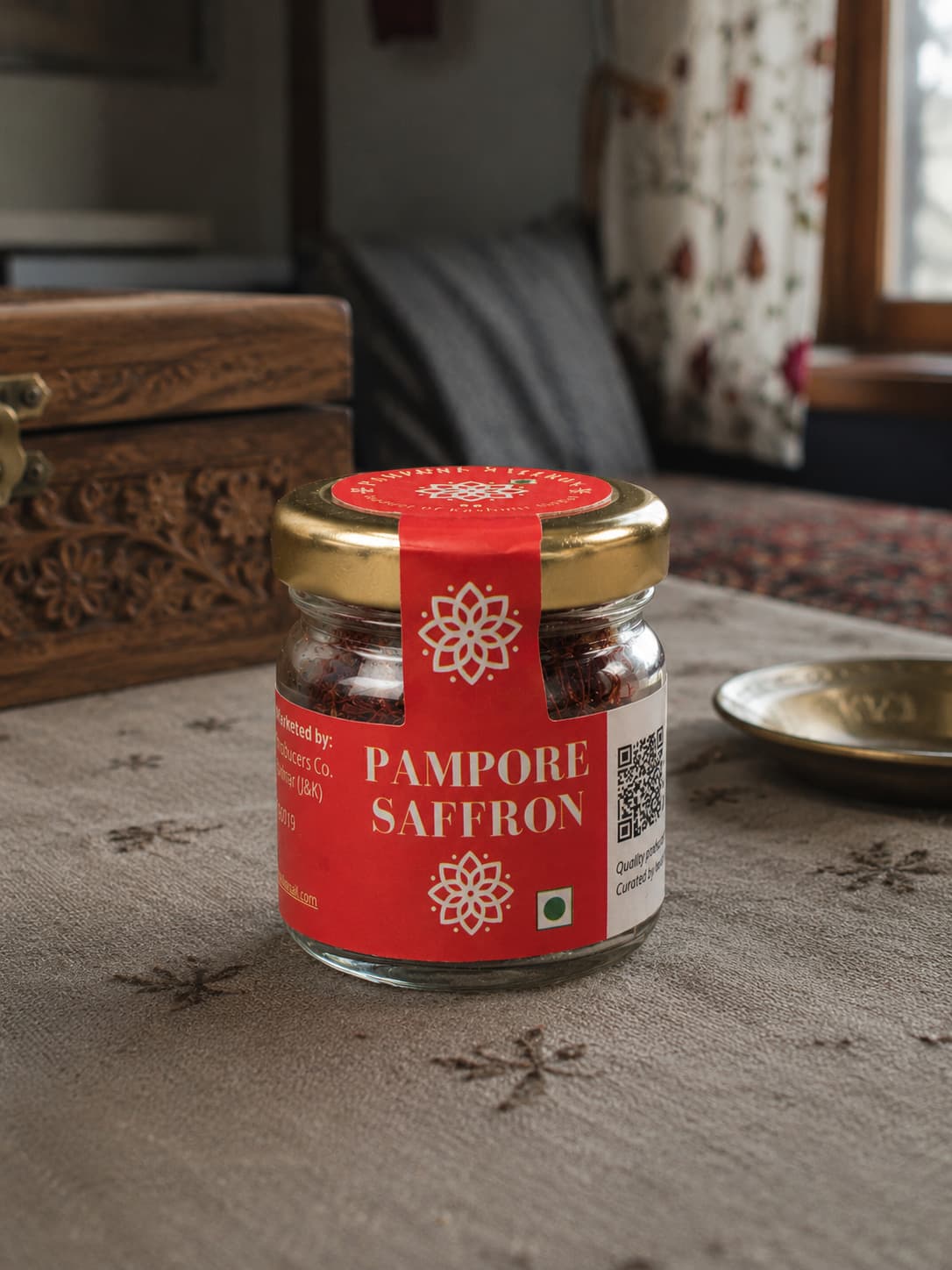
Bihar's saffron demand is festival-shaped and heavily concentrated around Chhath Puja, when kheer, thekua and the prasad tradition drive the single largest buying week in the state's year. Real Kashmiri Mongra is ₹330–360 a gram direct from a Pampore grower family; Patna's Maharaj Ganj and Khajanchi Road trade and the Gaya and Muzaffarpur provision shops run ₹450–800, supplied through Kolkata and Delhi. Bihar is also a market where genuinely low-priced 'kesar' circulates widely — small sachets at ₹50 to ₹100 sold in general stores — and those are, without exception, not saffron.
Patna's supply lines and the ₹50 sachet problem
Bihar draws saffron from two directions — Kolkata's Burrabazar for the eastern districts and Delhi for the west — and pays both a wholesale margin and a transport hop before anything reaches a Patna counter. The state's own trade around Maharaj Ganj and Khajanchi Road is a general provision and dry-fruit trade rather than a specialist one.
The specific Bihar issue is at the bottom of the market. Small sachets labelled kesar and priced at ₹50, ₹100 or ₹150 are sold widely in general stores, at festival stalls and in weekly haats across the state, particularly around Chhath. These are not underpriced saffron; they are dyed maize silk, safflower, or coloured starch threads. There is no version of the arithmetic in which a gram of saffron costs ₹50 — the harvest is 160 hand-picked flowers per gram, done over three weeks in one valley in one autumn.
For festival buying, that matters more than usual, because Chhath prasad has an explicit purity requirement. A household that would never knowingly use an adulterated ingredient in Chhath prasad is precisely the household most likely to buy a ₹100 sachet at a festival stall without asking.
- Supply arrives via Kolkata and Delhi — two margins before it reaches Patna.
- ₹50–₹150 sachets sold at festival stalls and haats are never saffron. The arithmetic makes it impossible.
- For Chhath prasad specifically, a sealed jar with a stated origin is a purity question, not a shopping preference.
- Test anything you buy: three threads in warm water, slow gold over ten minutes, thread stays whole and red.
Kesar at Chhath, and in the Bihari sweet tradition
Chhath Puja is the state's saffron week. The kheer offered as prasad — rice, milk, gur — takes saffron in households that keep the fuller form, and the ritual purity requirements around Chhath cooking are the strictest of any Indian festival: separate vessels, separate fuel, no tasting during preparation. Thekua, the wheat-and-gur biscuit that is the festival's signature, does not traditionally take saffron, though richer modern versions add it.
Silao khaja, the layered pastry from Nalanda district with a GI tag of its own, is made with flour, ghee and sugar syrup; the finer versions carry a saffron note in the syrup. Malpua, made across Bihar at festivals and at Holi, takes saffron in the batter and the syrup. Balushahi, anarsa and the milk sweets of the Bhagalpur and Darbhanga traditions use it in their premium lines.
The Bihari Muslim kitchens of Patna City, Bhagalpur and Purnia use zafran in biryani, in sheer khurma at Eid and in the wedding sweet run — the Awadhi and Bengali influences meeting in the middle of the Gangetic plain.
- Chhath Puja kheer prasad — the state's largest saffron occasion, and the one with the strictest purity rules.
- Malpua at Holi and festivals — steeped saffron in the batter and the syrup.
- Silao khaja and the finer Nalanda pastry tradition.
- Patna City and Bhagalpur biryani and sheer khurma at Eid.
Delivery to Bihar
Patna, Gaya, Muzaffarpur and Ara typically arrive 5–8 business days after dispatch; Bhagalpur, Darbhanga, Purnia, Begusarai and the smaller district towns usually 6–10. We dispatch from Pampore within 24–48 hours of a confirmed prepaid order, tamper-sealed and batch-coded, with DTDC tracking emailed on despatch. For Chhath, order at least two weeks ahead — the courier network runs heavy through that season.
We deliver across
- Patna
- Gaya
- Muzaffarpur
- Bhagalpur
- Darbhanga
- Purnia
- Ara
- Begusarai
Every serviceable PIN code in Bihar — not only the cities listed. DTDC Express is ?60 for 7-day delivery, and DTDC Airmax is ?120 for faster air delivery.
Saffron in Bihar — common questions
- Bihar mein asli kesar kahan milega? Where can I buy real saffron in Bihar?
- Patna's Maharaj Ganj and Khajanchi Road dry-fruit shops are the main in-person option, at roughly ₹450–800 a gram for material supplied through Kolkata or Delhi with no batch code. Direct from a Pampore grower family, ISO 3632 Grade I Kashmiri Mongra is ₹330–360 a gram, sealed at source with the harvest year on the jar, delivered to Patna in about 5–8 business days after dispatch. What to avoid entirely: the ₹50–₹150 sachets sold at festival stalls and weekly haats.
- Is the ₹100 kesar sachet sold at festival stalls real?
- No. There is no arithmetic under which a gram of saffron costs ₹50 or ₹100. Each Crocus sativus flower yields three stigmas, roughly 160 flowers make a single gram, and the whole crop is hand-picked and hand-sorted over about three weeks in one autumn. Sachets at that price are dyed maize silk, safflower petals, or coloured starch threads. Drop three of them in warm water: real saffron releases gold slowly over ten minutes and the thread stays whole and dark red; the fake bleeds red or orange within seconds and goes limp and pale.
- How much saffron goes into Chhath kheer prasad?
- About 10–12 threads for a kheer serving eight to ten. Crush them, steep in two tablespoons of warm milk for fifteen minutes, and stir the infusion in after the kheer comes off the heat. Given Chhath's purity requirements — separate vessels, separate fuel, no tasting during preparation — a sealed jar with a stated origin and no additives is the consistent choice; an unlabelled sachet of unknown material is not something most households would knowingly put in prasad.
- When should I order saffron for Chhath?
- At least two weeks before you need it. Patna, Gaya, Muzaffarpur and Ara typically run 5–8 business days after dispatch and the outer districts 6–10, but the courier network across Bihar runs heavy through the Chhath and Diwali season and everything slows. We dispatch within 24–48 hours of a confirmed prepaid order and email you the DTDC tracking, so you can watch it come down.
- Does Silao khaja or thekua contain saffron?
- Thekua does not, traditionally — it is wheat flour, gur, ghee and a little fennel or cardamom, and that is the whole of it. Silao khaja, the GI-tagged layered pastry from Nalanda, is flour, ghee and sugar syrup, and the finer versions carry saffron in the syrup rather than in the pastry. Modern premium versions of both add saffron, but you should treat that as an upgrade rather than as the traditional recipe.
- How do I store saffron through a Bihar summer?
- Airtight glass, dark cupboard, away from the stove, and never in the fridge. Bihar's summers are hot and its monsoon is humid, and that combination is what degrades saffron — heat and light break down the crocin and safranal, and moisture makes the threads clump and lose aroma. A properly closed jar in a dark cupboard handles both. Take out what you need quickly and shut it. Stored that way, good saffron holds two to three years.
We grow and hand-sort this saffron ourselves in Pampore, seal it there in tamper-evident glass, and ship it prepaid to Bihar. One hop, no repacking, a batch code on the jar.
Also shipping to Bihar: Mixed dry fruits from the valley.
Pampore Saffron FPO, J&K · FSSAI 11022470000019