Heritage Kashmir · South India
Kashmiri Saffron in Tamil Nadu
- குங்குமப்பூkungumapoo · Tamil
The short answer
Tamil Nadu calls saffron குங்குமப்பூ (kungumapoo), and the single most useful thing a Tamil buyer can know is that the dish called kesari — rava kesari, the semolina sweet served at every function — almost never contains saffron. It gets its colour from kesari powder, which is food colouring, and the name is inherited from the spice it no longer contains. Real kungumapoo is ₹330–360 a gram direct from a Pampore grower family, against ₹500–900 in Chennai's Sowcarpet and Parry's Corner trade and in the T. Nagar provision shops. Genuine Tamil saffron demand is real but concentrated: temple kumkumarchanai, payasam at weddings and festivals, and the Chettinad and Ambur biryani traditions.
Sowcarpet, Parry's Corner, and the kesari-powder confusion
Chennai's saffron trade sits in Sowcarpet and around Parry's Corner, supplied largely from Mumbai. It is a Marwari and Gujarati wholesale trade selling into a Tamil retail market, which means the vocabulary shifts at the counter: what the importer calls Iranian becomes 'Kashmiri' by the time it reaches a T. Nagar shop, and the buyer has no way to check.
The bigger Tamil Nadu issue is not adulterated saffron at all — it is substitution at the recipe level. Kesari powder, a food colour sold for a few rupees a packet, is what colours rava kesari, kesari bath and a great deal of what is sold as saffron-flavoured in Tamil sweet shops. That is a legitimate, openly-sold product with its own name and no pretence. The problem only starts when a mithai is priced as a saffron sweet.
Madurai, Coimbatore and Tiruchirappalli buy through Chennai with an added margin. Temple towns — Madurai, Palani, Srirangam, Thanjavur — have a separate small trade in kumkumapoo for archanai, and as in every shrine market in India, a meaningful share of it is safflower rather than Crocus sativus.
- Kesari powder is food colour, not saffron. Rava kesari traditionally contains none.
- Sowcarpet and Parry's Corner move mostly Iranian stock; the Kashmiri label is applied downstream.
- Temple-market kumkumapoo for archanai is often safflower — the water test settles it.
- Kashmiri Mongra threads are short, thick and all dark red; safflower is a flat orange petal that goes limp in water.
Where kungumapoo genuinely belongs in Tamil food
Payasam is the honest answer. Semiya payasam, paal payasam and the wedding-scale akkaravadisal all take saffron steeped in warm milk and stirred in at the end — this is the Tamil dish where good saffron actually shows. Pongal, Deepavali, Tamil New Year and wedding sadhya menus all carry a payasam and that is where most household saffron goes.
Then biryani. The Ambur, Dindigul and Chettinad traditions each handle rice differently, but all three of the more elaborate wedding versions finish with saffron steeped in warm milk poured over the top layer before dum. The everyday shop biryani in Tamil Nadu mostly uses colour rather than saffron, which is why a home-made one with real kungumapoo smells noticeably different.
Temple use is the third stream and possibly the oldest. Kumkumarchanai at the goddess temples — Madurai Meenakshi, Samayapuram, Melmaruvathur — uses kumkum, which is turmeric-and-lime powder, but genuine saffron is used in abhishekam mixtures, in the milk offered to the deity, and in the prasadam at the wealthier shrines.
- Paal payasam, semiya payasam, akkaravadisal — saffron steeped in warm milk, stirred in off the heat.
- Ambur, Dindigul and Chettinad wedding biryani — steeped saffron over the top layer before dum.
- Temple abhishekam and prasadam milk.
- NOT rava kesari — that is kesari powder, and always has been in most kitchens.
Delivery to Tamil Nadu
Chennai typically arrives 6–9 business days after dispatch; Coimbatore, Madurai, Tiruchirappalli, Salem and Erode usually 7–10. Tamil Nadu is one of the longer lanes from Kashmir and parcels route through the northern hubs. We dispatch from Pampore within 24–48 hours of a confirmed prepaid order, tamper-sealed and batch-coded, with DTDC tracking emailed on despatch.
We deliver across
- Chennai
- Coimbatore
- Madurai
- Tiruchirappalli
- Salem
- Erode
- Tirunelveli
- Vellore
Every serviceable PIN code in Tamil Nadu — not only the cities listed. DTDC Express is ?60 for 7-day delivery, and DTDC Airmax is ?120 for faster air delivery.
Saffron in Tamil Nadu — common questions
- குங்குமப்பூ விலை என்ன? What is the price of saffron in Chennai?
- Genuine ISO 3632 Grade I Kashmiri Mongra is ₹330–360 per gram direct from a Pampore grower family. Chennai retail in Sowcarpet, Parry's Corner and the T. Nagar provision shops runs ₹500–900 per gram, and packets sold in 2 g and 3 g sizes in general stores at ₹300–1,000 are usually Iranian or Lachha grade rather than Kashmiri Mongra. About 160 hand-picked flowers make one gram — that is the floor under the price.
- Is there saffron in rava kesari or kesari bath?
- Almost never. Rava kesari gets its colour from kesari powder, an orange food colouring sold cheaply in every Tamil Nadu grocery, and the dish's name comes from the colour rather than the ingredient. Adding real saffron to rava kesari is possible and tastes lovely — steep 8–10 threads in two tablespoons of warm milk and add it with the water — but it is not what the traditional recipe or the sweet-shop version does. If a shop charges a saffron premium for kesari, ask to see threads in it.
- Which saffron should I use for payasam?
- ISO 3632 Grade I Kashmiri Mongra, and about 10–15 threads for a payasam serving six to eight. Crush them, steep in two tablespoons of warm milk for fifteen minutes, and stir the infusion in after you take the pot off the heat — adding threads to boiling milk drives off the safranal and you lose the aroma. Payasam is the Tamil dish where good saffron is most obvious, because the milk carries nothing else to compete with it.
- Is the kumkumapoo sold at temple shops real saffron?
- A good deal of it is safflower rather than Crocus sativus. Safflower petals are sold widely for archanai and ritual use, cost a fraction of saffron, and are a legitimate traditional material under their own name — the problem is only when they are priced as saffron. Test it: three threads in warm water. Real saffron releases gold slowly over ten minutes and the thread stays whole and dark red. Safflower bleeds yellow-orange fast and the petal goes pale and limp.
- How long does saffron delivery take to Chennai or Coimbatore?
- Chennai typically 6–9 business days after dispatch, and Coimbatore, Madurai, Tiruchirappalli and Salem usually 7–10. Tamil Nadu is one of the longer lanes from Kashmir. We dispatch within 24–48 hours of a confirmed prepaid order and email the DTDC tracking number as soon as the parcel leaves Pampore, so you can follow it the whole way down.
- Is Kashmiri saffron better than Iranian saffron for South Indian cooking?
- For milk-based dishes, yes, and for a specific reason. Kashmiri Mongra carries a heavier, more honeyed aroma and a very high crocin content, which is exactly what a paal payasam or a glass of kesar milk needs — the flavour has to survive being diluted in a lot of milk. Iranian saffron is genuine, often excellent and generally cheaper, with a sharper and more medicinal note that suits rice dishes well. Neither is fake; they are different origins at different prices. What you should never accept is Iranian stock sold at a Kashmiri price.
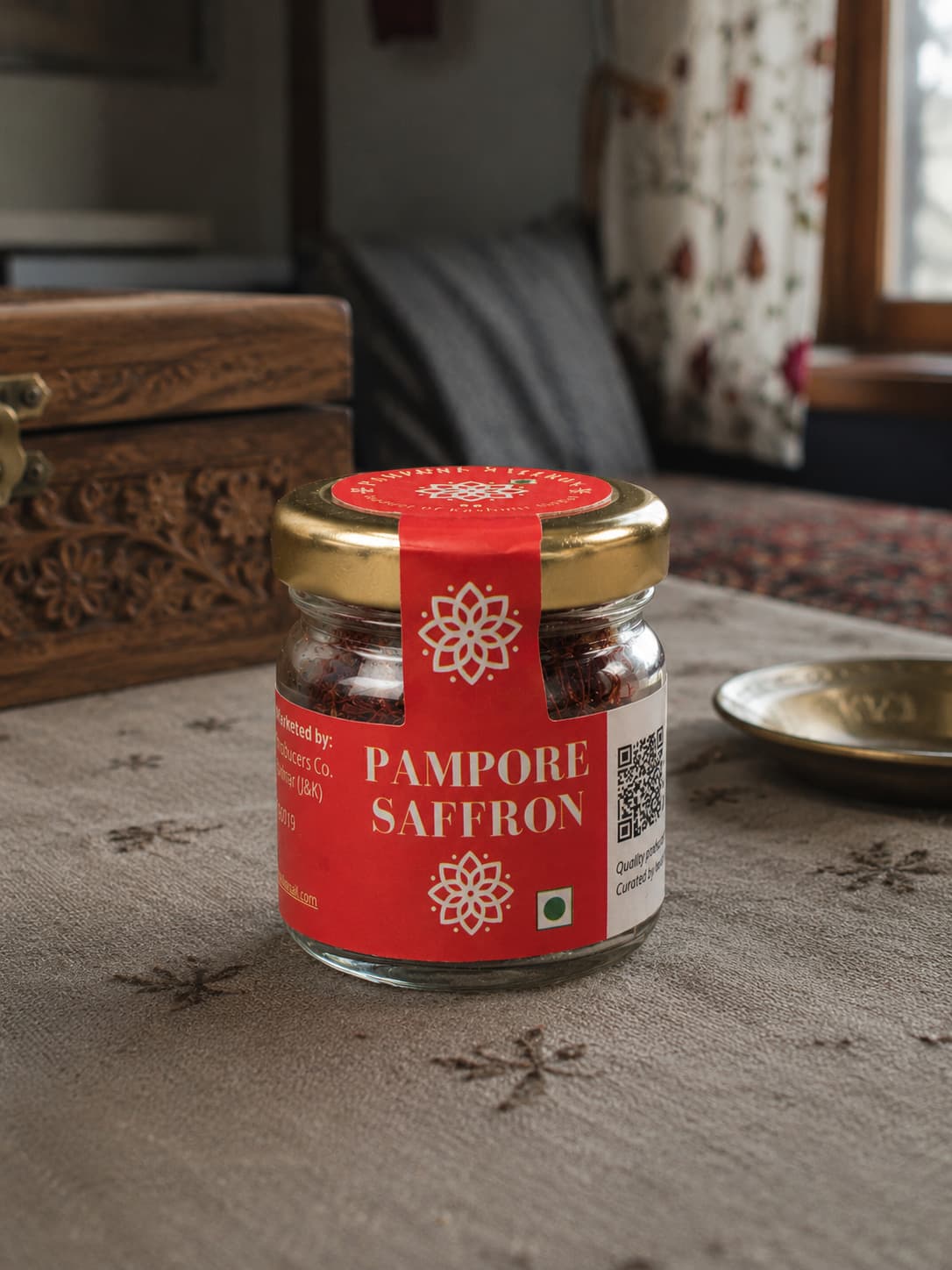
We grow and hand-sort this saffron ourselves in Pampore, seal it there in tamper-evident glass, and ship it prepaid to Tamil Nadu. One hop, no repacking, a batch code on the jar.
Also shipping to Tamil Nadu: Saffron-infused wild honey.
Pampore Saffron FPO, J&K · FSSAI 11022470000019
Also in South India