Heritage Kashmir · South India
Kashmiri Saffron in Kerala
- കുങ്കുമപ്പൂവ്kunkumappoovu · Malayalam
The short answer
Kerala calls saffron കുങ്കുമപ്പൂവ് (kunkumappoovu) and buys it for three distinct reasons — Onam and wedding payasam, Malabar biryani, and Ayurveda. The Ayurvedic demand is the one that sets Kerala apart: kumkumadi thailam, the classical face oil from the Ashtanga Hridayam (Vagbhata, around 600 CE), takes its name and its defining ingredient from saffron, and Kerala's Ayurvedic manufacturing sector is the largest single institutional buyer of saffron in South India. Real Kashmiri Mongra is ₹330–360 a gram direct from a Pampore grower; Kochi and Thiruvananthapuram retail runs ₹550–900. Kerala's humidity is the harshest storage condition for saffron in India, which is a genuine practical reason to buy small sealed jars.
Broadway, the Ayurvedic trade, and a spice coast that never grew this spice
Kerala has been the centre of the world's spice trade for two thousand years and has never grown saffron — the climate is entirely wrong for Crocus sativus, which needs a cold dry autumn and sharp-draining soil. Everything sold as kunkumappoovu in Kochi's Broadway market or Kozhikode's SM Street has come from Kashmir, Iran, or a Mumbai repacker, and the historic Malabar pepper-and-cardamom trade has nothing to do with it. That is worth saying because 'Kerala spice shop' carries an authority here that does not transfer to this particular spice.
The Ayurvedic sector is the exception and the most interesting part of Kerala's saffron market. Kumkumadi thailam is a classical formulation from the Ashtanga Hridayam, compiled by Vagbhata around 600 CE, and it is built around saffron in a sesame-oil base with sandalwood, manjishtha, lotus and a long list of other herbs. Kerala's Ayurvedic manufacturers, from the large classical houses to small vaidya practices, buy saffron by the kilo. The quality question is acute here: a kumkumadi made with cheap saffron is a different product wearing the same Sanskrit name, and a buyer cannot tell by looking at the bottle.
For household buyers, Broadway in Kochi and the Kozhikode and Thrissur provision trades are the traditional options and price at full retail. Kerala's high literacy and heavy online-buying habit mean direct-from-source is well understood here and widely used.
- Kerala has never grown saffron — the climate cannot support it. A 'Kerala spice' provenance means nothing for this one.
- Kumkumadi thailam is named after saffron and defined by it — Ashtanga Hridayam, around 600 CE.
- Ayurvedic manufacturers are the state's biggest institutional saffron buyers.
- Coastal humidity is severe: buy small sealed jars and keep them airtight in the dark.
Payasam, Malabar biryani, and Ayurveda
Payasam carries most of Kerala's household saffron. Palada pradhaman, semiya payasam, and the paal payasam that closes an Onam sadya all take a saffron infusion stirred in at the end — steeped in warm milk, never boiled with it. Vishu, Onam, temple festivals and the wedding sadya calendar drive the demand, and Onam week is the single largest saffron-buying window in the Kerala year.
Malabar biryani — the Thalassery style especially, with its short-grain kaima rice and its restrained spicing — takes saffron steeped in warm milk over the top layer before dum, and the Kerala Muslim wedding tradition around Kozhikode, Malappuram and Kannur is where the state's most serious biryani saffron gets used. Kerala's Christian wedding and Christmas tables also carry saffron in the richer rice dishes and in the plum-cake tradition.
Then Ayurveda, which is not cooking but is genuinely Kerala's distinguishing saffron use. Kumkumadi thailam for the face, saffron in Ayurvedic milk preparations, and saffron in the classical formulations that Kerala's vaidya tradition still prepares in-house. Anyone making kumkumadi at home should understand that saffron is the most expensive ingredient by a very large margin, which is exactly why the cheap commercial versions substitute it out.
- Palada pradhaman and paal payasam at Onam, Vishu and the wedding sadya.
- Thalassery and Malabar biryani — steeped saffron over the rice at dum.
- Kumkumadi thailam and classical Ayurvedic preparations — the largest institutional use.
- Christian Christmas baking and festive rice around Thrissur and Kottayam.
Delivery to Kerala
Kochi, Thrissur and Thiruvananthapuram typically arrive 7–10 business days after dispatch; Kozhikode, Kannur, Kollam, Alappuzha and Palakkad usually 7–11. Kerala is among our longest mainland lanes. We dispatch from Pampore within 24–48 hours of a confirmed prepaid order, tamper-sealed and batch-coded, with DTDC tracking emailed on despatch.
We deliver across
- Kochi
- Thiruvananthapuram
- Kozhikode
- Thrissur
- Kollam
- Kannur
- Alappuzha
- Palakkad
Every serviceable PIN code in Kerala — not only the cities listed. DTDC Express is ?60 for 7-day delivery, and DTDC Airmax is ?120 for faster air delivery.
Saffron in Kerala — common questions
- കുങ്കുമപ്പൂവ് വില എത്ര? What is the price of saffron in Kerala?
- Genuine ISO 3632 Grade I Kashmiri Mongra is ₹330–360 per gram direct from a Pampore grower family. Kochi, Thiruvananthapuram and Kozhikode retail runs ₹550–900 per gram for the same claimed grade. Anything much below ₹300 a gram is Iranian repack, Lachha weight, or dyed material — roughly 160 hand-picked flowers make a single gram, and that arithmetic is what sets the floor.
- Which saffron is used in kumkumadi thailam?
- Kashmiri saffron, and the quality of it is the main thing separating a real kumkumadi from a cheap one. The formulation comes from the Ashtanga Hridayam, compiled by Vagbhata around 600 CE, and its name is literally 'the oil of kumkuma' — saffron is the defining ingredient, alongside sandalwood, manjishtha, lotus, licorice and vetiver in a sesame-oil base. Saffron is by far the most expensive component, which is precisely why mass-market versions substitute it down or out. If you are making it or buying it, the saffron is the line item to ask about.
- How much saffron goes into payasam for an Onam sadya?
- For a payasam serving twenty — a modest sadya batch — about 25–30 threads, roughly 0.3 grams. Crush them, steep in three tablespoons of warm milk for fifteen minutes until deep gold, and stir the infusion in after the payasam is off the heat. In palada pradhaman the saffron competes with a lot of thickened milk and jaggery, so it needs to go in as a concentrated infusion rather than as dry threads, which will simply sink and stay red.
- How do I keep saffron from spoiling in Kerala's humidity?
- This is the real practical issue in Kerala and the reason to buy small. Saffron is hygroscopic: in Kochi or Alappuzha's humidity it pulls water out of the air, clumps, and loses aroma within a few months if the jar is loosely closed or opened often. Use airtight glass, keep it in a dark cupboard well away from the stove and the sink, never refrigerate it, and take out what you need quickly. A 1-gram jar finished in six months keeps far better than a 5-gram jar opened weekly for two years.
- Is saffron grown in Kerala or in the Western Ghats?
- No. Crocus sativus needs a cold, dry autumn to flower and sharply draining soil, and Kerala's climate provides neither at any altitude the state has. There have been occasional small hill-station experiments in South India, including one much-reported farmer's effort in Kodaikanal in Tamil Nadu, but nothing at commercial scale and nothing in Kerala. Every gram of kunkumappoovu sold in the state has come from Kashmir, Iran, or a repacker in between — the Malabar spice tradition, for all its depth, has never included this one.
- How long does saffron delivery to Kochi or Kozhikode take?
- Kochi, Thrissur and Thiruvananthapuram typically 7–10 business days after dispatch; Kozhikode, Kannur, Kollam and Palakkad usually 7–11. Kerala is among our longest mainland lanes from Pampore. We dispatch within 24–48 hours of a confirmed prepaid order and email the DTDC tracking number when the parcel leaves.
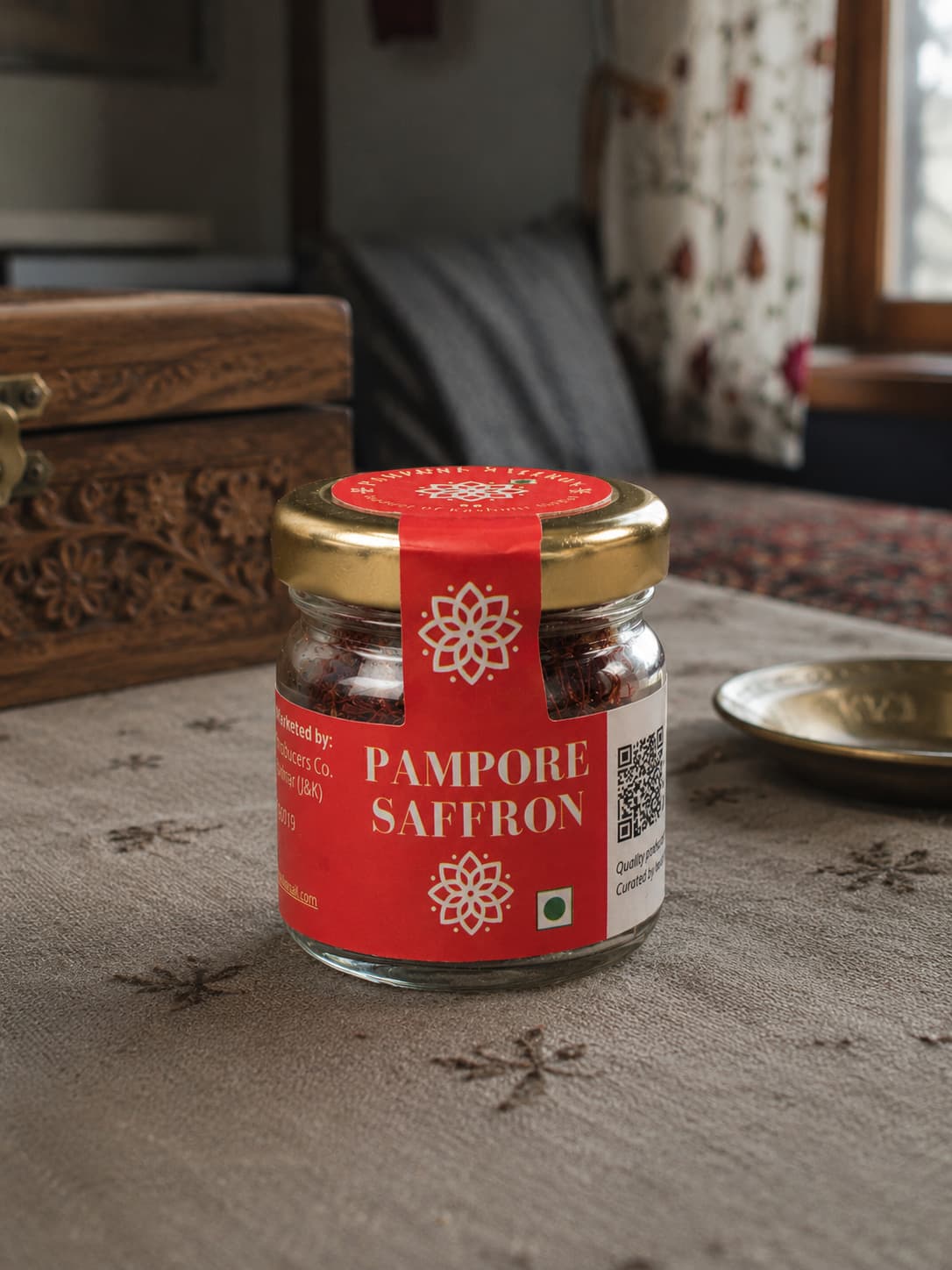
We grow and hand-sort this saffron ourselves in Pampore, seal it there in tamper-evident glass, and ship it prepaid to Kerala. One hop, no repacking, a batch code on the jar.
Also shipping to Kerala: Saffron-infused wild honey.
Pampore Saffron FPO, J&K · FSSAI 11022470000019
Also in South India