Heritage Kashmir · South India
Kashmiri Saffron in Andhra Pradesh
- కుంకుమ పువ్వుkumkuma puvvu · Telugu
The short answer
Andhra Pradesh calls saffron కుంకుమ పువ్వు (kumkuma puvvu) — literally 'kumkum flower' — and its largest saffron demand is temple-driven rather than culinary. Tirupati, Srisailam, Kanaka Durga at Vijayawada and the state's dense network of goddess temples consume saffron in abhishekam, in kumkumarchana preparations and in prasadam, and the pilgrim markets around them sell a great deal of safflower at saffron prices. Real Kashmiri Mongra is ₹330–360 a gram direct from a Pampore grower family; Visakhapatnam and Vijayawada retail runs ₹500–900. In the kitchen, the honest uses are payasam, pulihora-adjacent festival sweets, and the Rayalaseema and Nellore biryani traditions.
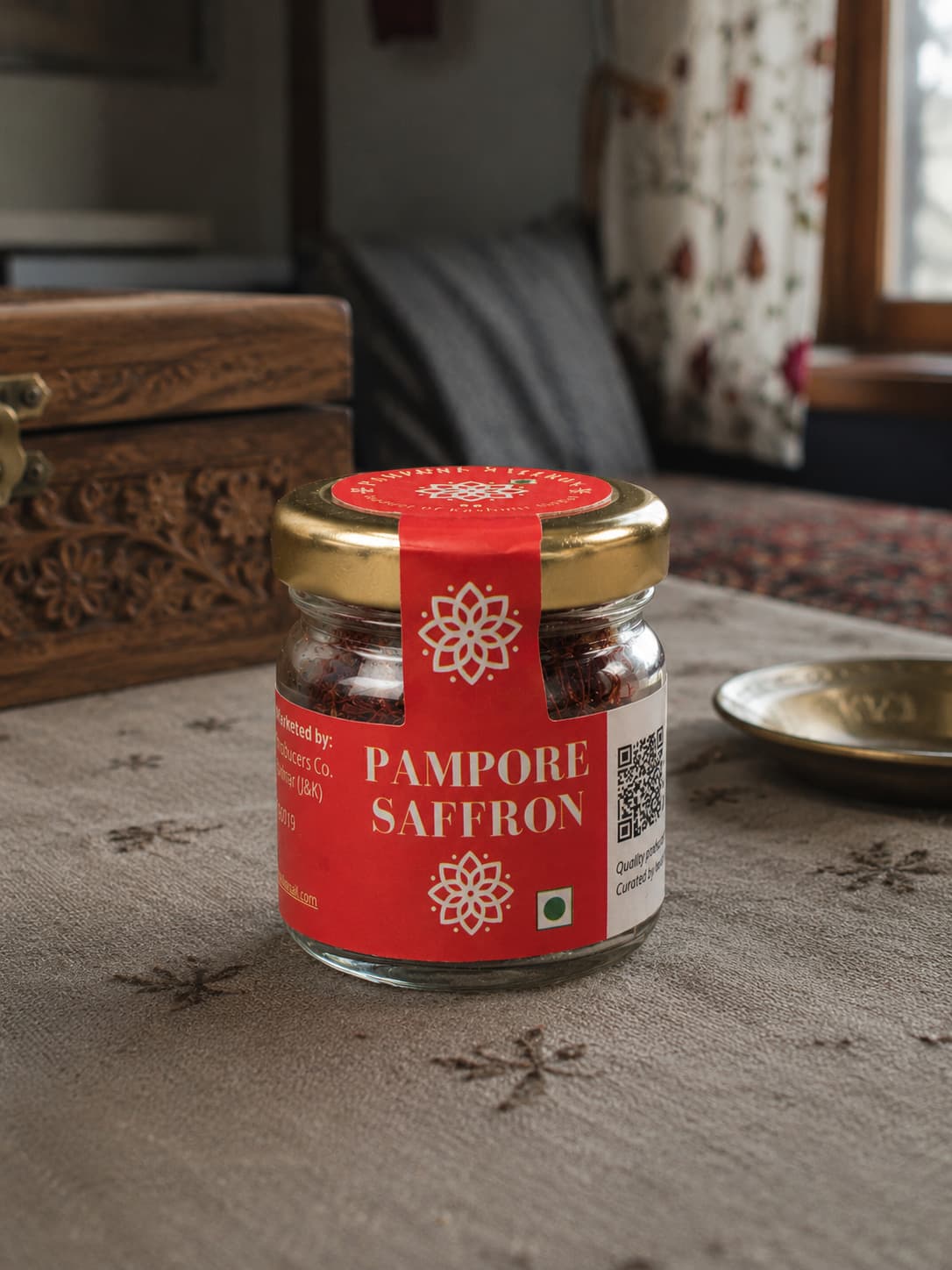
Temple towns, pilgrim retail, and what kumkuma puvvu actually is
The name itself creates the confusion. Kumkuma is the red powder used in archana across Andhra — turmeric treated with slaked lime, costing a few rupees. Kumkuma puvvu is saffron, a completely different material at three hundred times the price. In a Tirupati or Srisailam pilgrim market, packets of both sit on the same counter and the distinction is not always made clearly to a buyer picking up puja items in a queue.
Beyond that, the standard shrine-market problem applies at full strength here. Safflower petals — cheap, orange, and superficially similar in a small packet — are sold as kumkuma puvvu across the temple towns. Safflower is a legitimate traditional material with its own uses; the fraud is only ever the price attached to it.
Vijayawada's One Town wholesale trade and Visakhapatnam's Jagadamba and Poorna Market provision shops are the state's main retail sources, supplied through Chennai and Hyderabad. Guntur, for all that it is India's chilli capital and a serious spice-trading town, has no particular saffron advantage — the trades are entirely separate.
- Kumkuma is turmeric-and-lime powder. Kumkuma puvvu is saffron. They are not related materials.
- Pilgrim markets at Tirupati, Srisailam and Vijayawada sell substantial quantities of safflower as saffron.
- Guntur's chilli trade gives the state no saffron advantage — different supply chain entirely.
- The water test settles it in ten minutes: slow gold and an intact red thread means real saffron.
Temple offering first, kitchen second
Temple use dominates. Saffron goes into the abhishekam mixtures at the major shrines, into the milk and panchamrita offered to the deity, and into the richer prasadam preparations. Andhra's goddess temples in particular — Kanaka Durga at Vijayawada, the Ammavaru shrines across the coastal districts — sustain a steady demand that has nothing to do with cooking. Note that the famous Tirupati laddu is a besan, ghee, sugar, cardamom and cashew preparation; saffron is not its defining ingredient.
In the kitchen, payasam is the anchor: paramannam, semiya payasam and the paal payasam made at Ugadi, Sankranti, Dasara and weddings all take a saffron infusion stirred in at the end. Bobbatlu and the festival sweets around Ugadi carry it in the richer versions. Pootharekulu, the paper-thin Atreyapuram sweet, is rice starch, jaggery and ghee — no saffron by tradition, though modern premium versions sometimes add it.
The Nellore and Rayalaseema biryani traditions and the Andhra Muslim wedding kitchens use saffron steeped in warm milk over the rice before dum, in the same way as their Hyderabadi neighbours but generally more sparingly.
- Abhishekam, panchamrita and prasadam at the major temples — the state's largest single use.
- Paramannam and semiya payasam at Ugadi, Sankranti, Dasara and weddings.
- Nellore and Rayalaseema biryani — steeped saffron over the rice at dum.
- Not in the Tirupati laddu, and not traditionally in pootharekulu.
Delivery to Andhra Pradesh
Visakhapatnam, Vijayawada, Guntur and Rajahmundry typically arrive 6–10 business days after dispatch; Tirupati, Nellore, Kurnool and the smaller district towns usually 7–11. We dispatch from Pampore within 24–48 hours of a confirmed prepaid order, tamper-sealed and batch-coded, with DTDC tracking emailed on despatch.
We deliver across
- Visakhapatnam
- Vijayawada
- Guntur
- Tirupati
- Nellore
- Rajahmundry
- Kurnool
- Kakinada
Every serviceable PIN code in Andhra Pradesh — not only the cities listed. DTDC Express is ?60 for 7-day delivery, and DTDC Airmax is ?120 for faster air delivery.
Saffron in Andhra Pradesh — common questions
- కుంకుమ పువ్వు ధర ఎంత? What is the price of saffron in Andhra Pradesh?
- Genuine ISO 3632 Grade I Kashmiri Mongra is ₹330–360 per gram direct from a Pampore grower family. Visakhapatnam, Vijayawada and Guntur retail runs ₹500–900 per gram for the same claimed grade, and pilgrim-market packets at Tirupati and Srisailam vary wildly for material that is frequently safflower. Around 160 hand-picked flowers make one gram, which is the arithmetic behind the floor.
- What is the difference between kumkuma and kumkuma puvvu?
- They share a name and nothing else. Kumkuma is the red powder used for archana and tilak — turmeric treated with slaked lime, sometimes with added colour, costing a few rupees a packet. Kumkuma puvvu is saffron: the three dried red stigmas hand-picked from each Crocus sativus flower, at around 160 flowers per gram and ₹330–360 a gram for genuine Kashmiri Grade I. Both are traditional and both are used in worship; they are simply different materials separated by a factor of several hundred in price.
- Is the kumkuma puvvu sold near Tirupati real saffron?
- A large share of it is safflower rather than Crocus sativus. Pilgrim markets around Tirupati, Srisailam and the major shrines sell small packets to visitors buying puja items quickly, and safflower — cheap, orange, superficially similar — is widely sold under the saffron name. Safflower has its own legitimate ritual use; the problem is the saffron price attached to it. Test what you buy: three threads in warm water, and real saffron releases gold slowly over ten minutes with the thread staying whole and dark red.
- Does the Tirupati laddu contain saffron?
- Not as a defining ingredient. The Tirumala laddu is made from besan, ghee, sugar, cardamom, cashew and raisin under a closely guarded traditional method, and its colour and aroma come from the ghee, the besan and the cardamom rather than from saffron. Saffron does appear in other temple preparations at Tirumala and across Andhra's shrines — in abhishekam mixtures, in panchamrita and in some richer prasadam — but the laddu is not one of them.
- How much saffron for paramannam or payasam for 10 people?
- About 15 threads, roughly 0.15 grams. Crush them, steep in two tablespoons of warm milk for fifteen minutes, and stir that infusion in after the pot comes off the heat. Adding threads at the start of a long simmer drives off the safranal that carries the aroma — you keep the colour and lose the reason you bought it. One gram covers roughly six or seven such payasams with plenty to spare.
- Do you deliver saffron across Andhra Pradesh?
- Yes, to every serviceable PIN code. Visakhapatnam, Vijayawada, Guntur and Rajahmundry typically arrive 6–10 business days after dispatch; Tirupati, Nellore, Kurnool and the smaller district towns usually 7–11. We ship prepaid only, sealed and batch-coded from Pampore, with DTDC tracking emailed the moment the parcel leaves.
We grow and hand-sort this saffron ourselves in Pampore, seal it there in tamper-evident glass, and ship it prepaid to Andhra Pradesh. One hop, no repacking, a batch code on the jar.
Also shipping to Andhra Pradesh: Saffron-infused wild honey.
Pampore Saffron FPO, J&K · FSSAI 11022470000019
Also in South India