Dry fruits are सूखे मेवे (sukhe meve) in Hindi, or simply मेवा (meva). Anjeer is fig, kishmish is raisin, khubani is apricot, chilgoza is pine nut, kaju is cashew and makhana is fox nut. The table below gives 41 of them in English, in Hindi in Devanagari, and in Hindi as most people type it, in English letters, with one line on what each one actually is.
“Dry fruits” is a wider word in India than in English. It covers nuts such as almonds and walnuts, dried fruits such as figs and raisins, and a few seeds, makhana above all, that are sold and gifted alongside them. We have grouped the list that way and added the Kashmiri specials our family knows best. We are growers in Pampore, and four things on the list are ones we sell; those rows are marked.
Dry fruits names in English and Hindi
Rows marked Ours link to what we sell: mamra almonds, walnut kernels, dried figs and saffron. Roman Hindi has no fixed spelling, so anjeer is also anjir and khajur is also khajoor; shopkeepers and search engines treat them as the same word.
The table scrolls sideways. The English names stay in place.
| English | Hindi | Hindi in English letters | What it is |
|---|---|---|---|
| Nuts | |||
| AlmondOurs: mamra almonds | बादाम | badam | Any almond. Mamra badam is one particular kind (see Kashmiri specials). |
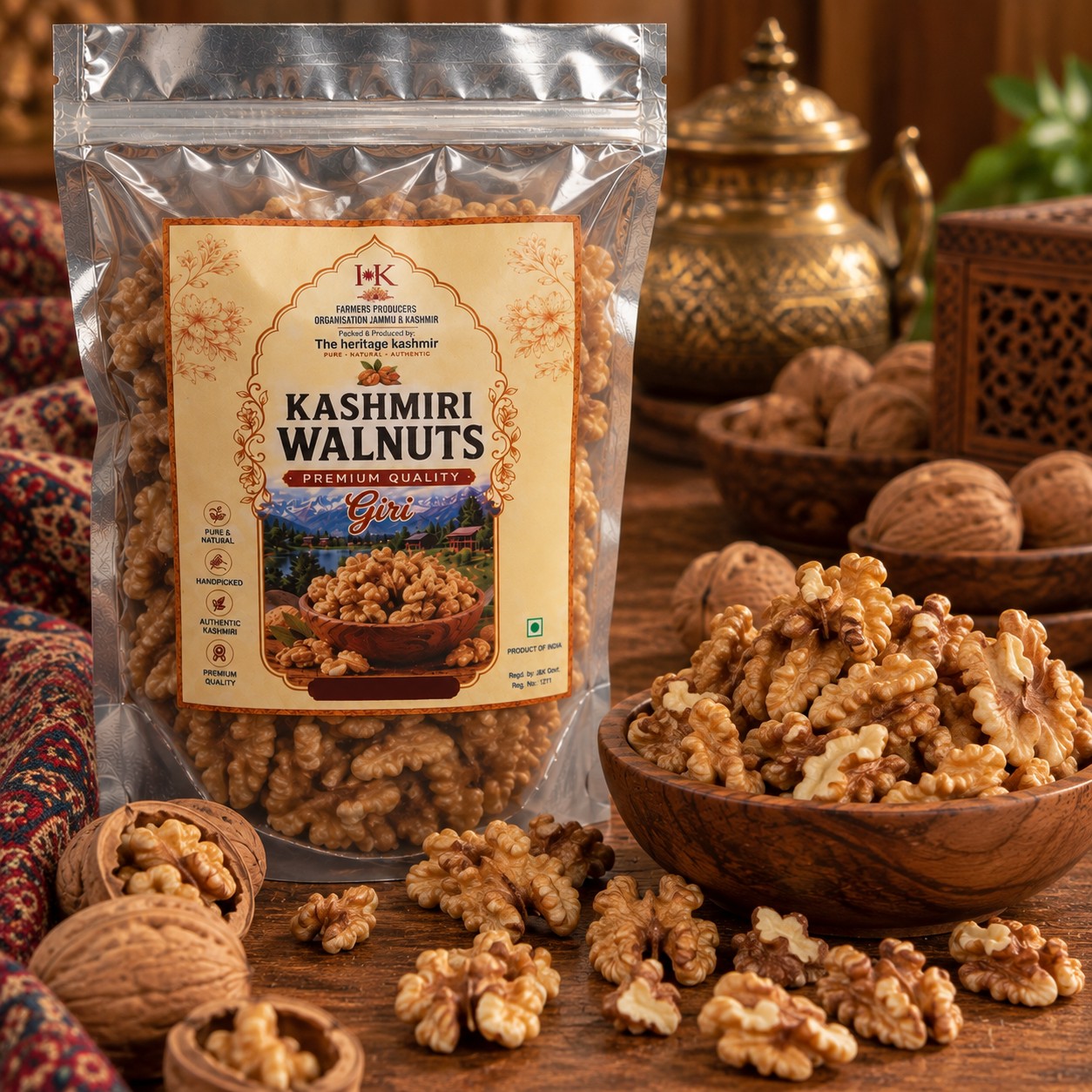
| WalnutOurs: walnut kernels | अखरोट | akhrot | Usually means walnuts in the shell. The shelled kernel is akhrot giri. Kashmiri: doon. |
| Cashew | काजू | kaju | Kidney-shaped nut that grows below the cashew apple. |
| Pistachio | पिस्ता | pista | Green kernel in a shell that splits open at one end. |
| Pine nut | चिलगोज़ा | chilgoza | Seed of the Himalayan chilgoza pine, in a slim brown shell. |
| Peanut, groundnut | मूँगफली | moongphali | A legume, not a true nut, but on every nut list. |
| Hazelnut | हेज़लनट | hazelnut | Round, brown-skinned nut. Usually sold under its English name. |
| Brazil nut | ब्राज़ील नट | brazil nut | Large, three-sided nut. Imported, sold under its English name. |
| Macadamia | मैकाडामिया | macadamia | Round, creamy-white nut. Imported, sold under its English name. |
| Pecan | पेकन | pecan | A cousin of the walnut with a smooth, long shell. Imported. |
| Dried coconut | सूखा नारियल, गोला | sukha nariyal, gola | The dried kernel. Khopra is the trade word for it. |
| Chironji | चिरौंजी | chironji | Lentil-sized seed of the chironji tree. Also sold as charoli. |
| Dried fruits | |||
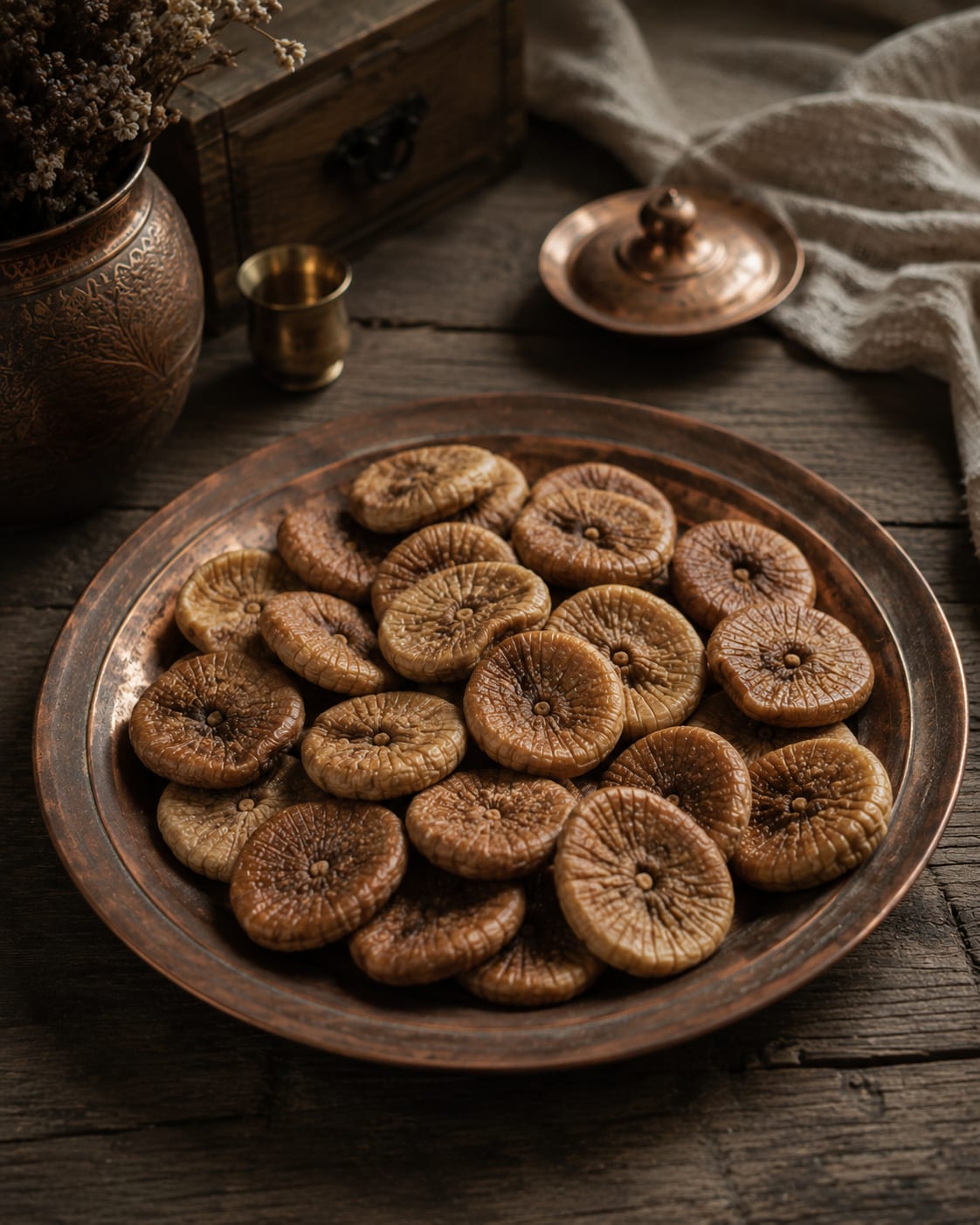
| Fig (dried)Ours: dried figs | अंजीर | anjeer | Anjeer in English is fig. In a dry-fruit shop it means the dried fig. |
| Raisin, sultana | किशमिश | kishmish | Small raisin without seeds: green-gold, golden or black. |
| Black raisin | काली किशमिश | kali kishmish | Small, seedless and black. Still kishmish, not munakka. |
| Large raisin | मुनक्का | munakka | Bigger, darker and stickier than kishmish, often with seeds in. |
| Date | खजूर | khajur | The soft, sticky date sold in boxes. |
| Dry date | छुहारा | chhuhara | A date dried until hard and wrinkled. Not a different fruit. |
| Apricot (dried) | खुबानी | khubani, khumani | Two spellings of one word. Kashmiri: tser. |
| Prune | आलूबुखारा | aloo bukhara | A dried plum. Aloo here is the Persian word for plum, not potato. |
| Mulberry (dried) | शहतूत | shahtoot | White or black mulberries, sun-dried. Kashmiri: tul. |
| Indian gooseberry | आँवला | amla | Sold dried or candied. Not the European gooseberry. |
| Cranberry (dried) | क्रैनबेरी | cranberry | No Hindi name. Usually sweetened before drying. |
| Blueberry (dried) | ब्लूबेरी | blueberry | No Hindi name. Imported. |
| Seeds | |||
| Fox nut | मखाना | makhana | Popped seed of a prickly water lily. Often sold as lotus seed, which it is not. |
| Lotus seed | कमल गट्टा | kamal gatta | The true lotus seed: hard, dark and oval. |
| Pumpkin seeds | कद्दू के बीज | kaddu ke beej | Flat green kernels, sold hulled. |
| Sunflower seeds | सूरजमुखी के बीज | surajmukhi ke beej | Striped shell; the kernels are sold hulled. |
| Watermelon seeds | तरबूज़ के बीज | tarbooz ke beej | The peeled white kernel goes into char magaz. |
| Muskmelon seeds | खरबूजे के बीज | kharbuje ke beej | Peeled, this is the magaz in sweets and thandai. |
| Four mixed seeds | चार मगज़ | char magaz | "Four kernels": peeled seeds of melons and gourds. Which four varies by shop. |
| Flaxseed, linseed | अलसी | alsi | Small, flat and glossy; brown or golden. |
| Sesame seeds | तिल | til | White, black or brown. |
| Poppy seeds | खसखस | khaskhas | Tiny cream-white seeds in Indian kitchens. |
| Sweet basil seeds | सब्जा, तुकमरिया | sabja, tukmaria | Black seeds that grow a grey jelly coat in water. |
| Chia seeds | चिया सीड्स | chia seeds | Look like sabja, but come from a different plant. No Hindi name. |
| Kashmiri specials | |||
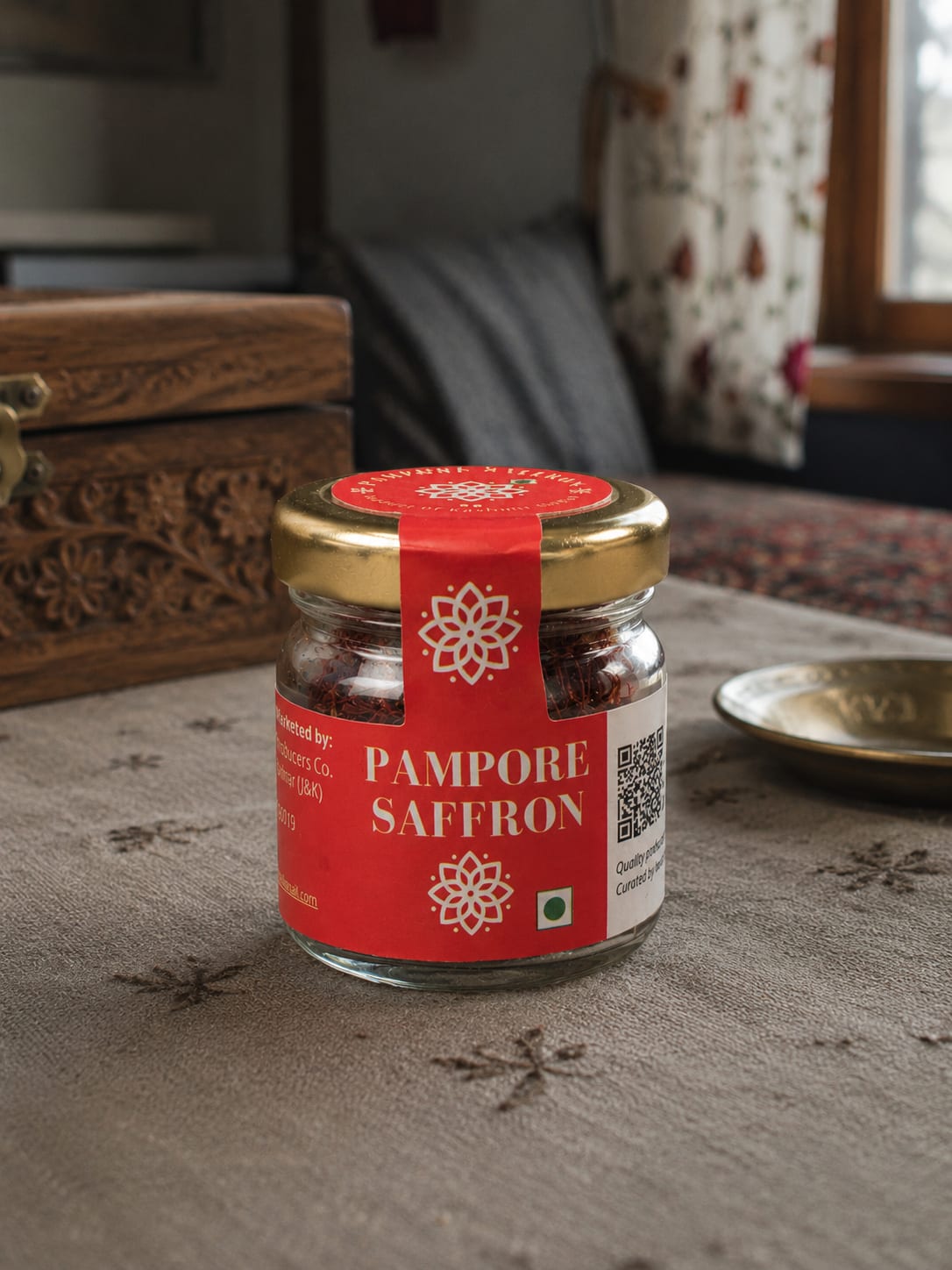
| SaffronOurs: Kashmiri Mongra saffron | केसर | kesar | Dried stigmas of the saffron crocus. A spice, but it shares the dry-fruit tray. Kashmiri: kong. |
| Mamra almondOurs: mamra almonds | ममरा बादाम | mamra badam | One small, wrinkled, oil-rich almond. Plain badam is any almond. |
| Walnut kernelsOurs: walnut kernels | अखरोट गिरी | akhrot giri | Shelled walnut halves. Giri means kernel. |
| Paper-shell walnut | कागज़ी अखरोट | kagzi akhrot | A shell thin enough to crack in the hand. Kashmiri: kakazi doon. |
| Water chestnut | सिंघाड़ा | singhara | Seed of a water plant. In Kashmir it grows in the lakes and is dried and milled into flour. Kashmiri: gaer. |
Where the Hindi column just spells out the English, as with hazelnut or chia, there is no older everyday Hindi name and shops use the English one.
Seven names people mix up
Kishmish, munakka and raisins
Raisin is the English word for any dried grape; Hindi splits it in two. किशमिश (kishmish) is the small one without seeds, which is how the old dictionaries define it: “a small dried grape without stones” (Platts). It can be green-gold, golden (sold in English as sultanas) or black. मुनक्का (munakka) is “a large raisin” (McGregor): bigger, darker and stickier, and often sold with its seeds still in. English has no separate word for it, so munakka in English is simply a large raisin.
The usual slip is to call every black raisin munakka. A small, seedless black raisin is still kishmish, kali kishmish. Munakka is about size and seed, not colour.
Khajur and chhuhara
Both are dates. खजूर (khajur) is the date most people buy in a box: soft, sticky and moist. छुहारा (chhuhara) is “a dried, sweet date” (McGregor), dried until it is hard, wrinkled and pale brown, and usually soaked or chopped before it is eaten. English shops sell the first as dates and the second as dry dates.
Khubani, khumani and apricot
खुबानी (khubani) is apricot, and in a dry-fruit shop it means the dried fruit. Khumani is the same word spelt differently, and you will see both on packs. Platts’ nineteenth-century dictionary describes a khubani as “a dried apricot (with its kernel, or that of an almond inserted)”, so the stuffed apricot is nothing new. In Kashmiri the apricot is tser.
Chilgoza and pine nut
चिलगोज़ा (chilgoza) is the pine nut, and specifically “the seed or kernel of the Himalayan pine Pinus gerardiana” (McGregor): a long, slim seed in a thin brown shell, with a pale kernel inside. Pine nuts sold in jars abroad usually come from other pines; chilgoza names the Himalayan one. In Kashmiri it is jalgoza.
Makhana, fox nut and lotus seed
मखाना (makhana) is the seed of Euryale ferox, a prickly water lily, roasted until it pops into the white puff sold in packets. In English it goes by fox nut, gorgon nut or, very often, lotus seed. That last name is the trap. The true lotus seed is कमल गट्टा (kamal gatta, McGregor), from the lotus plant, Nelumbo nucifera: a hard, dark, oval seed that looks nothing like a makhana.
Is makhana a dry fruit, then? Botanically it is a seed, not a fruit or a nut. It is on almost every Indian dry-fruit list all the same, because it is sold, gifted and cooked alongside them.
Akhrot and akhrot giri
अखरोट (akhrot) is walnut, and on a price list plain akhrot usually means walnuts in the shell. अखरोट गिरी (akhrot giri) is the kernel, out of the shell: giri means kernel, the same word as in giri badam. The shell is a large share of an in-shell walnut’s weight, so an akhrot price and an akhrot giri price are not prices for the same thing; our walnut vs walnut kernels guide does the conversion, and the same page is in Hindi. A kagzi akhrot is a paper-shell walnut, thin enough to crack in the hand.
Badam and mamra badam
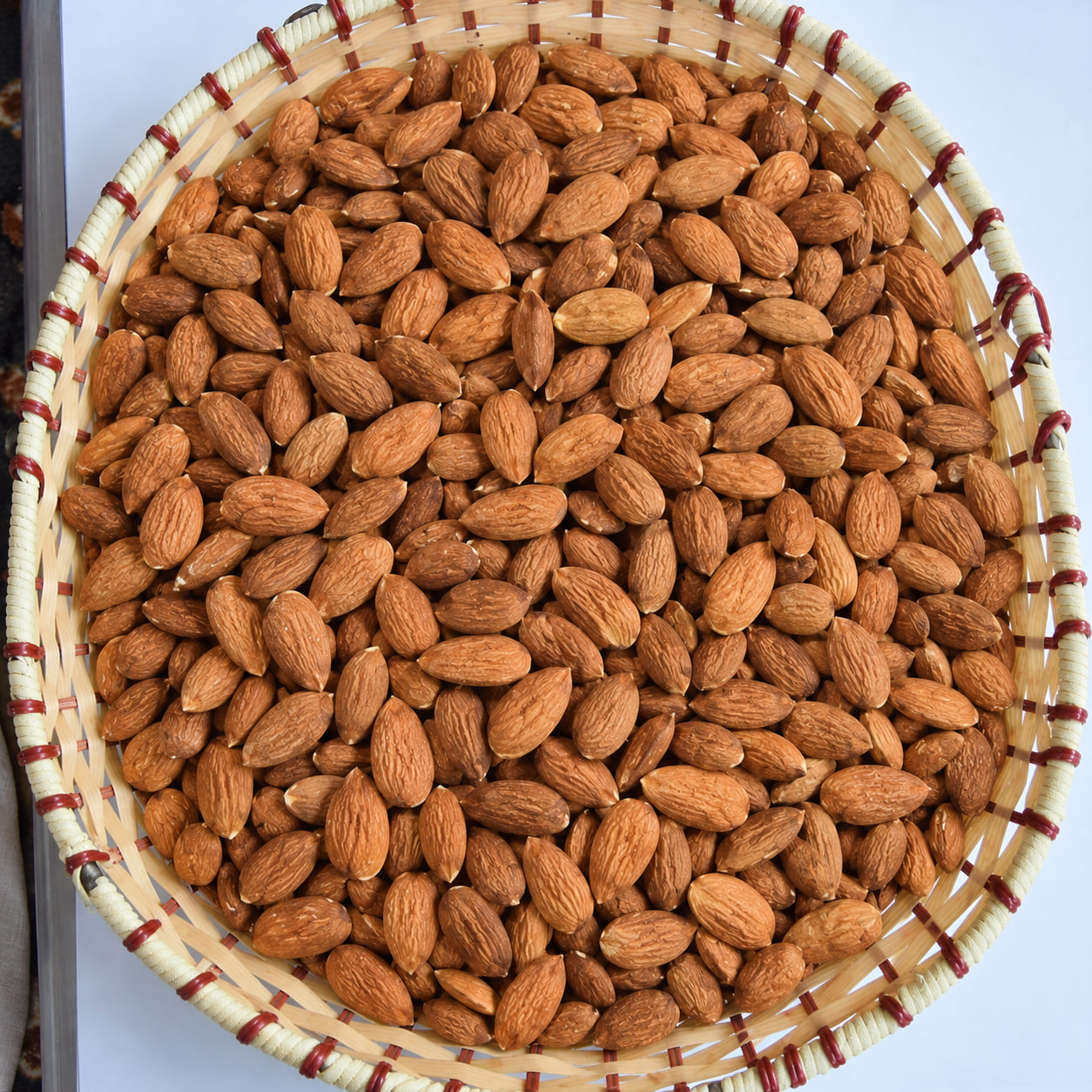
बादाम (badam) means almond, any almond. ममरा बादाम (mamra badam) should name one particular kind: smaller, more wrinkled and oilier than the smooth almonds sold loose in most markets. It is also the name most often put on ordinary almonds, because more people search for it. Giri badam is simply the shelled almond kernel. Our mamra badam price guide explains why one name covers such a wide range, and our Hindi page on giri badam covers the same ground in Hindi.
The four on this list we sell
- Badam: mamra almonds (giri badam), shelled, from our own orchards and our FPO member families’ orchards in the valley.
- Akhrot giri: Kashmiri walnut kernels, out of the shell, from paper-shell walnuts grown in Shar Shali village, Khrew, near Pampore.
- Anjeer: whole sun-dried figs, from our own and our FPO member families’ orchards. In Hindi, see our anjeer page; in English, our anjeer guide covers soaking.
- Kesar: Kashmiri Mongra saffron, from our family’s own fields in Pampore.
Kashmiri names
Kashmiri has its own words for most of what grows here. We have listed only the ones we can show you in print, mostly from Sir George Grierson’s Dictionary of the Kashmiri Language (1932), which the University of Chicago has put online. Each page number below links to its page. Grierson’s spellings are scholarly, so the everyday spelling comes first.
- Walnut: doon. Grierson writes ḍūnu (p. 224), and NIFTEM’s walnut processing course gives akhrot in Hindi and doon in Kashmiri. A paper-shell walnut is kakazi doon (p. 433), the kagzi akhrot of the Hindi trade.
- Saffron: kong. The flower is kong posh. Grierson writes kŏng (p. 456), and a missionary doctor in Kashmir recorded “Kóng-posh”, saffron-flower, in 1881.
- Almond: badam, the same word as in Hindi (bādām, p. 86).
- Apricot: tser (ʦēr, p. 1079). Grierson records khubani too (khŏbānī, p. 391).
- Fig: anjeer (anjīr, p. 34).
- Raisins: kishmish for the small seedless kind (p. 481) and munakh for munakka (p. 580).
- Mulberry: tul (p. 995).
- Pine nut: jalgoza, for chilgoza (jalgōza, p. 373).
- Water chestnut: gaer. Grierson writes gôru and notes that it grows wild in the lakes of Kashmir (p. 298); Kashmir Life spells it Gaer.
Grierson also records panj mewa, “the five fruits”: almonds, coconuts, pistachios, jalgoza and dates (p. 740). The tray has grown a little since.
Sources
- Grierson, G. A., A Dictionary of the Kashmiri Language, Asiatic Society of Bengal, Calcutta, 1932; digitised by the Digital South Asia Library, University of Chicago: search the dictionary.
- McGregor, R. S., The Oxford Hindi-English Dictionary, Oxford University Press, 1993; Digital South Asia Library: search the dictionary.
- Platts, J. T., A Dictionary of Urdu, Classical Hindi, and English, London, 1884; Digital South Asia Library: search the dictionary.
- NIFTEM (Ministry of Food Processing Industries, PMFME scheme), Walnut Processing: PDF.
- Downes, “The Growth of Crocus Sativus, the Source of Hay Saffron, in Kashmir”, The American Journal of Pharmacy, September 1881: transcription.
- Kashmir Life, “Driving Nuts”, 1 November 2022: article.
If your family uses a name that is missing here, our WhatsApp line is open at +91 95966 08297.