Heritage Kashmir · West India
Kashmiri Saffron in Goa
- केशरkeshar · Konkani
The short answer
Goa is a small saffron market with an unusually mixed set of uses — Hindu temple and festival cooking, Goan Catholic Christmas baking, and Konkani Muslim biryani, plus a large hotel and restaurant trade that buys more saffron than Goan households do. Local retail in Panaji and Margao runs ₹550–900 a gram, inflated by tourist pricing, against ₹330–360 direct from a Pampore grower family. Goa's coastal humidity is the practical issue that matters most here: saffron stored badly in Goa loses aroma faster than almost anywhere in India, so buy small sealed jars rather than large ones.
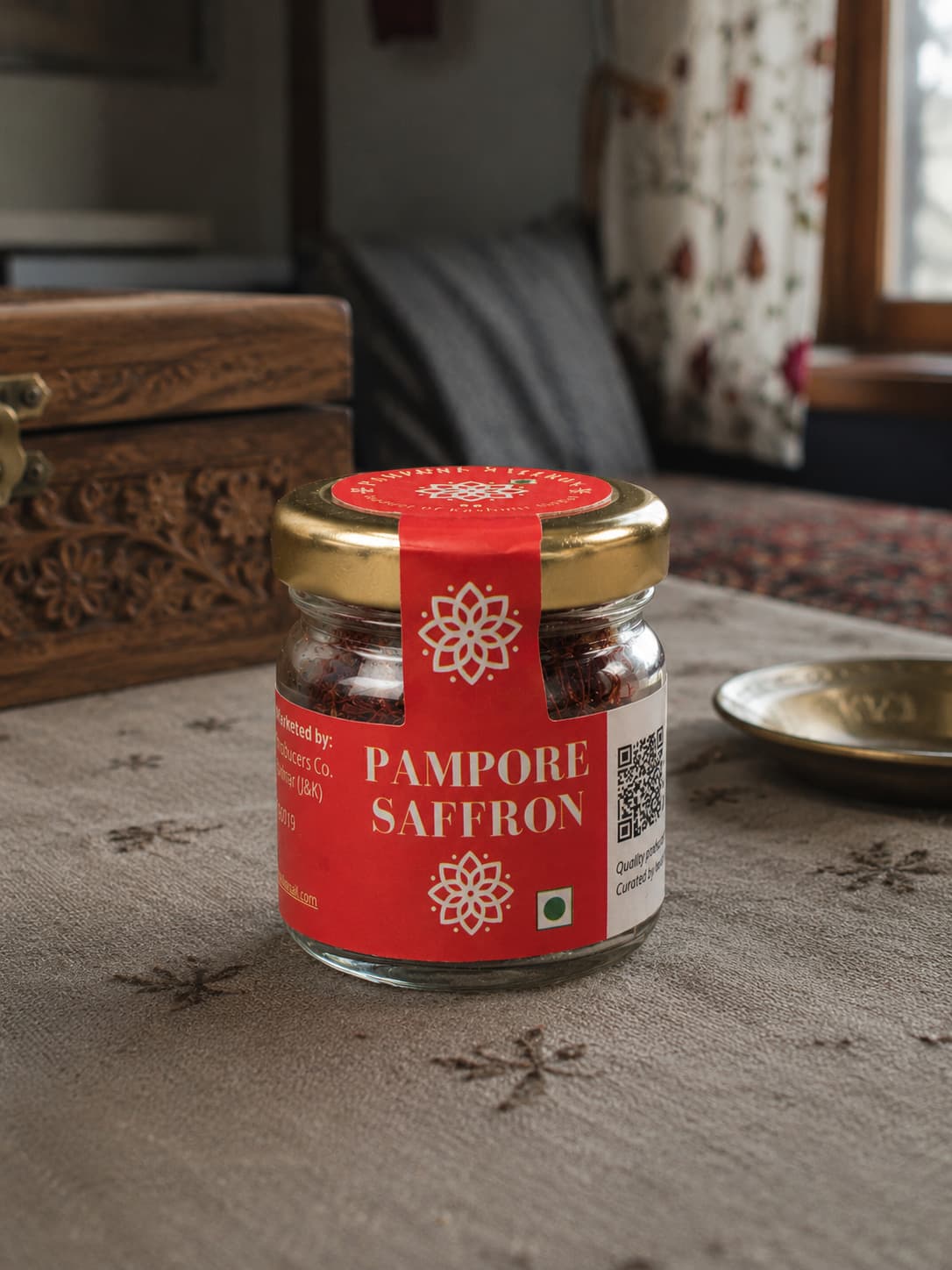
A tourist economy with a small local market
Goa has no wholesale spice trade of its own worth the name — stock arrives from Mumbai and Belagavi. What it has instead is a very large hospitality sector: five-star kitchens in Candolim and Cavelossim, and the restaurant trade across North and South Goa, which collectively buy far more saffron than the state's households.
Retail follows the tourist economy. Shops in the Panaji municipal market, Mapusa's Friday market and the Calangute strip sell saffron in small decorated packets at prices set by what a visitor will pay for a souvenir spice. The Margao covered market and the older provision shops in Ponda are more sensible and mostly sell to locals.
The Portuguese word for saffron, azafrão, still appears occasionally in older Goan recipe books and in Catholic household usage, which is a small linguistic trace of a five-hundred-year trade — Goa was on the route by which saffron and other spices moved between Asia and Europe long before it was a holiday destination.
- No local wholesale trade — stock arrives from Mumbai or Belagavi.
- Tourist-strip retail is souvenir pricing; the Margao and Ponda markets are more honest.
- Buy small sealed jars in Goa — humidity punishes a large jar opened repeatedly.
- Hotel and restaurant volumes are quoted separately from retail.
Saffron across Goa's three kitchens
The Goan Hindu kitchen uses saffron in festival sweets — the kheer and payasam made at Ganesh Chaturthi and Diwali, in patoleo season alongside the turmeric leaf, and in the milk-based mithai at weddings. Ponda and the temple towns around it drive most of that demand.
The Goan Catholic kitchen brings it out at Christmas. The kuswar tray — bebinca, dodol, neureos, kulkuls, bolinhas — is mostly coconut, jaggery and nutmeg rather than saffron, but bebinca in its richer versions and the festive rice and sweet-bread baking do take it, and the Portuguese-inherited habit of a saffron-tinted festive rice survives in some households.
The Konkani Muslim kitchens of Ponda, Bicholim and Vasco make a biryani closer to the Malabar style than the Hyderabadi, and saffron steeped in warm milk goes over the rice at the dum stage. Weddings in this community are where Goa's largest single-occasion saffron use happens.
- Ganesh Chaturthi and Diwali kheer and milk sweets.
- Christmas kuswar — saffron in the richer bebinca and in festive rice.
- Konkani Muslim biryani and wedding pulao — steeped saffron at dum.
- Hotel and restaurant menus across North and South Goa.
Delivery to Goa
Panaji, Margao, Mapusa, Vasco and Ponda typically arrive 6–9 business days after dispatch — Goa is a long lane from Kashmir and the parcel routes through Mumbai. We dispatch within 24–48 hours of a confirmed prepaid order, tamper-sealed and batch-coded, with DTDC tracking emailed when it leaves Pampore.
We deliver across
- Panaji
- Margao
- Mapusa
- Vasco da Gama
- Ponda
- Calangute
Every serviceable PIN code in Goa — not only the cities listed. DTDC Express is ?60 for 7-day delivery, and DTDC Airmax is ?120 for faster air delivery.
Saffron in Goa — common questions
- Where can I buy real saffron in Goa?
- The Margao covered market and the older provision shops in Ponda and Panaji are the sensible local options; the Calangute and Baga strip and the tourist-facing shops sell souvenir packets at souvenir prices. Goa has no wholesale spice trade, so nothing here is close to source. Direct from a Pampore grower family is ₹330–360 a gram sealed and batch-coded against ₹550–900 locally, delivered in about 6–9 business days after dispatch.
- How do I stop saffron going bad in Goan humidity?
- Buy small and seal properly. Goa's monsoon humidity is the harshest storage condition for saffron in India — the threads absorb moisture from the air, clump together, and lose aroma within a few months if the jar is opened often or closed loosely. Use an airtight glass jar, keep it in a dark cupboard well away from the stove and the sink, never refrigerate it, and take out what you need quickly. A 1-gram jar you finish in six months keeps better than a 5-gram jar you open weekly for two years.
- What is azafrão — is it the same as kesar?
- Yes. Azafrão is the Portuguese word for saffron and it survives in older Goan recipe books and in some Catholic households, alongside keshar in Konkani and kesar in Hindi. All of them mean Crocus sativus, the dried red stigmas of the autumn crocus. Be careful with one related word though: açafrão-da-terra in Portuguese usage sometimes means turmeric, which is an entirely different and vastly cheaper spice.
- Is saffron used in bebinca?
- In its richer versions, yes, though bebinca is fundamentally a coconut-milk, egg-yolk, jaggery and nutmeg layer cake and the yellow comes mostly from the yolks. Some Goan households add a saffron infusion to the batter for aroma and a deeper colour in the festive Christmas version. If you are making it that way, steep the threads in a tablespoon of warm coconut milk for fifteen minutes and stir that into the batter rather than adding threads directly.
- Do you deliver saffron to Goa, and how long does it take?
- Yes, to every serviceable PIN code. Panaji, Margao, Mapusa, Vasco and Ponda typically run 6–9 business days after dispatch — Goa is one of the longer lanes from Kashmir and parcels route through Mumbai. We dispatch within 24–48 hours of a confirmed prepaid order and email the DTDC tracking number as soon as it leaves.
- How much saffron does a Goan biryani need?
- About 20 threads, roughly 0.2 grams, for 1 kg of raw rice. Crush them, steep in three tablespoons of warm milk for fifteen minutes, and pour that over the top layer just before you seal the pot for dum. Konkani and Malabar-style biryanis use saffron more lightly than the Hyderabadi tradition and rely on the whole spices and fried onion for depth, so resist the urge to double it — more saffron past a point tastes medicinal, not richer.
We grow and hand-sort this saffron ourselves in Pampore, seal it there in tamper-evident glass, and ship it prepaid to Goa. One hop, no repacking, a batch code on the jar.
Also shipping to Goa: Saffron-infused wild honey.
Pampore Saffron FPO, J&K · FSSAI 11022470000019
Also in West India