Heritage Kashmir · West India
Kashmiri Saffron in Dadra & Nagar Haveli and Daman & Diu
- Saffron in Gujarati:કેસર(kesar)
- Saffron in Marathi:केशर(keshar)
The short answer
This union territory buys its saffron through Vapi, Valsad and Surat on the Gujarat side and through Mumbai for Daman and Diu, so local prices carry a Gujarat retail markup — roughly ₹500–850 a gram — on top of everything else. Direct from a Pampore grower family the same ISO 3632 Grade I Mongra is ₹329–359. The territory's food culture is Gujarati and Marathi with a Portuguese-Catholic layer in Daman and Diu, so the saffron uses run from shrikhand and mohanthal to Christmas baking, all in a small market with no wholesale trade of its own.
Kesar price in Dadra & Nagar Haveli and Daman & Diu today, and the rate per gram
| Local shops, Kashmiri-labelled Grade 1 | ₹500–850 a gram |
|---|---|
| Direct from Pampore, ISO 3632 Grade I | ₹329–359 a gram |
| Per kg, for bulk buyers | ₹3.29–3.59 lakh · 1 kg kesar price explained |
Prices as of 30 October 2026.
A small market on the edge of a large one
Silvassa's retail is effectively an extension of the Vapi and Valsad trade in south Gujarat, and Daman and Diu draw on Mumbai and Surat. Nothing here is close to source and the local shops carry a small-market margin on top of a wholesale one, which puts territory retail at the higher end of the western Indian range.
The territory's industrial belt around Silvassa and Vapi has a large migrant working population from Gujarat, Maharashtra, Uttar Pradesh and Odisha, which shows up as demand for whatever saffron traditions those communities brought with them — kesar doodh, kheer, and festival mithai across four or five regional patterns at once.
Daman and Diu's Portuguese-Catholic households keep a Christmas baking tradition much like Goa's, with the same occasional saffron use in festive rice and richer bakes.
- Supply arrives via Vapi, Valsad, Surat and Mumbai — no local wholesale trade.
- Territory retail sits at the top of the western Indian price range.
- Coastal humidity in Daman and Diu makes airtight storage essential.
- Migrant-community demand spans several regional saffron traditions at once.
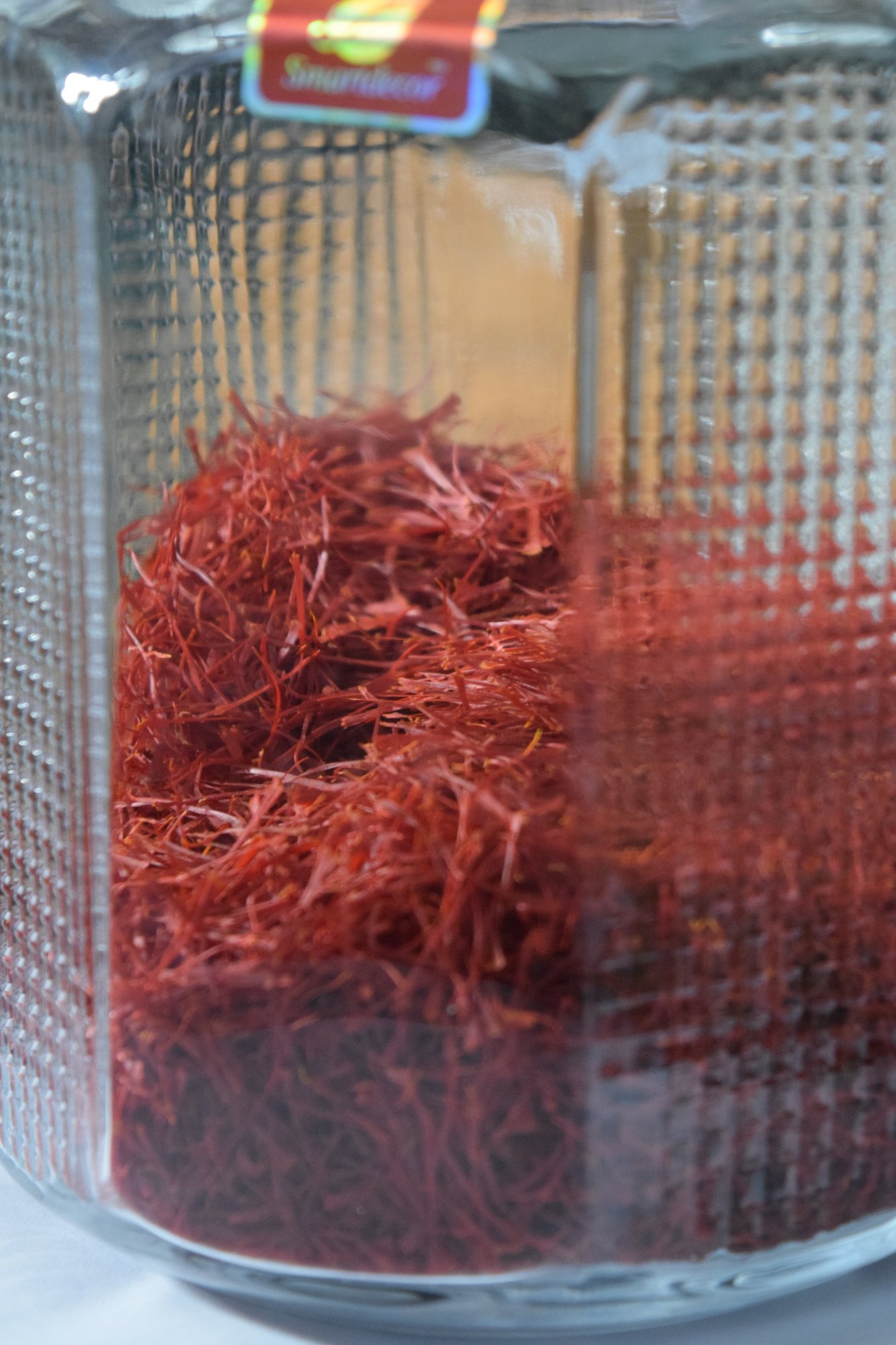
From our fields, in our jars
What the territory cooks
Gujarati and Marathi households in Silvassa and Dadra make shrikhand, basundi, mohanthal and kesar doodh in the same way and at the same festivals as their neighbouring states — Ganesh Chaturthi, Janmashtami, Diwali and the wedding season.
In Daman and Diu the Catholic Christmas tradition brings out a kuswar tray close to Goa's, and the same occasional saffron use in the richer bakes and festive rice.
The territory also has a large hospitality and weekend-tourism trade from Mumbai and Surat, and the hotel kitchens serving it buy saffron for a broadly north-Indian restaurant menu — biryani, korma, kheer, kesar-pista kulfi.
- Shrikhand, basundi and mohanthal in Gujarati and Marathi households.
- Kesar doodh through the short cool season.
- Daman and Diu Christmas baking and festive rice.
- Hotel and restaurant menus serving the Mumbai–Surat weekend trade.
Delivery to Dadra & Nagar Haveli and Daman & Diu
Silvassa, Daman, Diu and the Vapi belt, routing through Mumbai or Surat, take about 5–6 days by air (DTDC Airmax) or 7–8 days by road (DTDC Express) — calendar days from the day the parcel leaves Pampore, not business days. We dispatch from Pampore within 24–48 hours of a confirmed order, tamper-sealed and batch-coded, with DTDC tracking emailed on despatch.
We deliver across
- Silvassa
- Daman
- Diu
- Vapi (adjacent)
Every serviceable PIN code in Dadra & Nagar Haveli and Daman & Diu — not only the cities listed. Free delivery on orders of ₹3,000 or more. Below ₹3,000, prepaid orders pay ₹60 delivery and cash on delivery pays ₹99. Prepaid orders get priority dispatch: DTDC Express (7–8 days) or DTDC Airmax (5–6 days to Dadra & Nagar Haveli and Daman & Diu).
Saffron in Dadra & Nagar Haveli and Daman & Diu — common questions
- Do you deliver saffron to Silvassa, Daman and Diu?
- Yes, to every serviceable PIN code in the union territory. Silvassa, Daman, Diu and the Vapi belt take about 5–6 days by air or 7–8 by road, routed through Mumbai or Surat. We dispatch within 24–48 hours of a confirmed order and email the DTDC tracking number the moment the parcel leaves Pampore.
- What is the price of kesar in Silvassa?
- Local retail runs roughly ₹500–850 a gram, at the top of the western Indian range because the territory has no wholesale trade and stock arrives already marked up from Vapi, Surat or Mumbai. Direct from a Pampore grower family, ISO 3632 Grade I Kashmiri Mongra is ₹329–359 a gram, sealed and batch-coded with the harvest year on the jar.
- How should I store saffron in Daman and Diu's coastal humidity?
- Airtight glass, dark cupboard, never the fridge, and buy small. Coastal humidity is saffron's worst storage condition — the threads absorb moisture, clump and lose aroma. A tightly closed jar in a dark cupboard away from the stove and the sink will hold two to three years; the same saffron in a loosely closed container near a coastal kitchen window will be noticeably weaker in a few months.
- Where does saffron sold in this territory come from?
- Almost all of it arrives via Gujarat and Mumbai wholesalers, which means most of it is Iranian import stock, some of it relabelled as Kashmiri along the way. Nothing sold locally is close to source. If you want Kashmiri Mongra specifically, the label has to say Kashmir, ISO 3632 Category I, and carry a batch or harvest reference — otherwise the origin claim is unverifiable.
- Is saffron used in Daman and Diu Christmas sweets?
- Occasionally, in the richer versions. The kuswar tradition here mirrors Goa's — bebinca, dodol, neureos, kulkuls — and is built mainly on coconut, jaggery, egg yolk and nutmeg rather than saffron. Some households add a saffron infusion to the festive rice or to a richer bebinca batter. Steep the threads in a spoon of warm milk or coconut milk for fifteen minutes first; dropped in dry they will not release.
- How much saffron does a household actually need in a year?
- Far less than most people expect. At three to four threads per glass of milk, one gram (about 450 threads) is roughly 110–150 glasses. A household making kesar doodh a few times a week, shrikhand once a month and a festival sweet or two through the year will comfortably run on 2 to 3 grams annually. That is the real reason to spend on grade rather than on quantity: the whole year's supply of genuinely good saffron costs about the same as one bad restaurant meal.
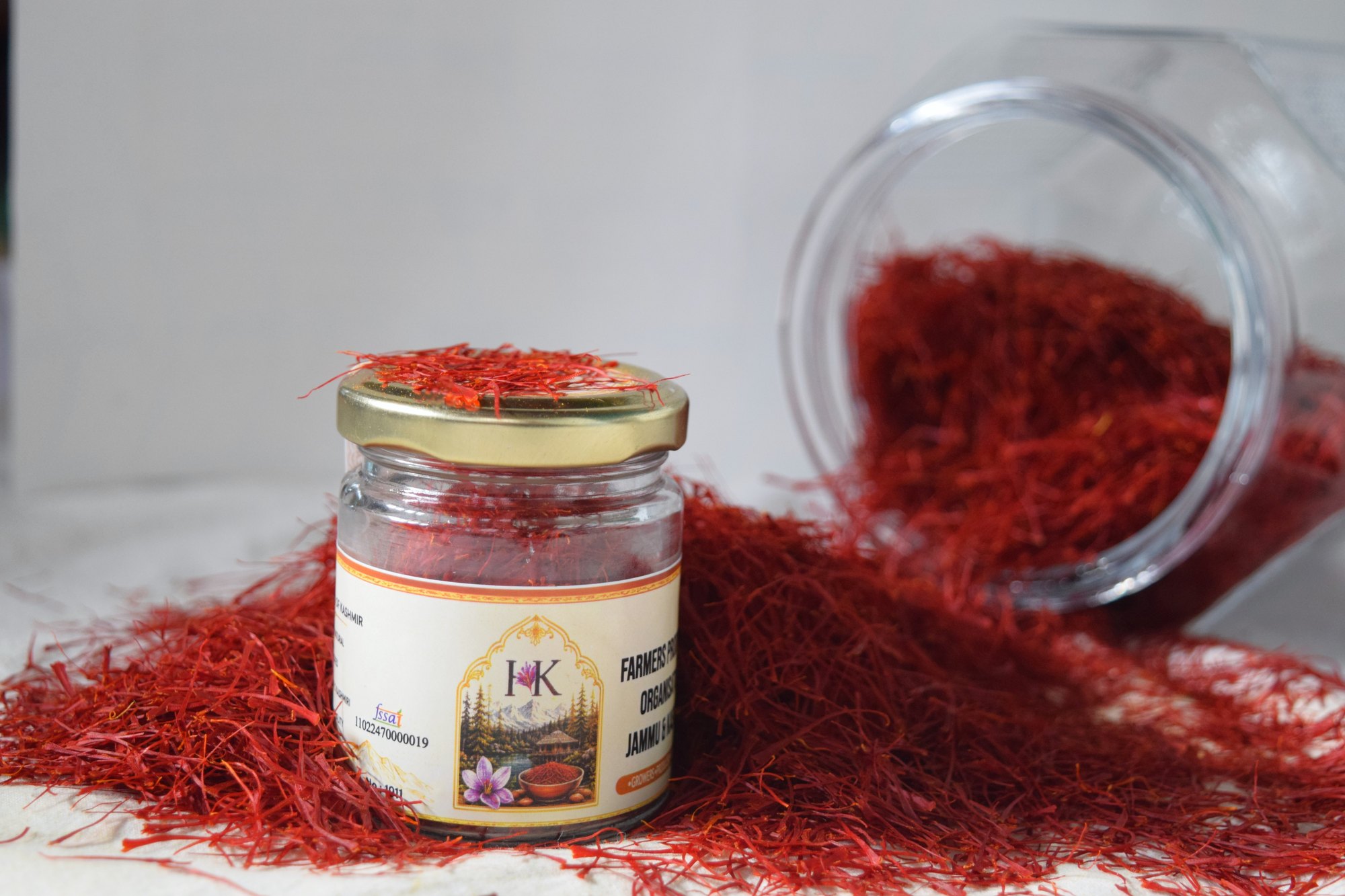
We grow and hand-sort this saffron ourselves in Pampore, seal it there in tamper-evident glass, and ship it to Dadra & Nagar Haveli and Daman & Diu. One hop, no repacking, a batch code on the jar.
Also shipping to Dadra & Nagar Haveli and Daman & Diu: Kashmiri saffron honey.
Pampore Saffron FPO, J&K · FSSAI 11022470000019