Shilajit has been tested in one controlled trial in women. Women past menopause with low bone density who took a standardised extract every day for 48 weeks lost less bone density than women on a placebo. That is the evidence in women, in full. Most of the other benefits you will read about for women, from periods and PCOS to fertility, weight, skin and hair, have no good trial behind them. This page sets out what the one trial shows, what it does not, and who should not take shilajit at all. (Standard honesty: we sell shilajit, and we are not doctors. For anything medical, ask yours.)
Can women take shilajit?
Adult women who are not pregnant or breastfeeding can, in the same small daily portion as anyone else. Shilajit is not a men’s product with a women’s version; it is the same resin. Three groups should stop and think first. Pregnant and breastfeeding women should not take it. Women with any of the conditions listed under “who should not take it” below should avoid it. And anyone on regular medication should ask their doctor before starting.
Shilajit benefits for women: what the research actually shows
These are the controlled human trials of shilajit we could find. One was in women. All three are small, and all three measured something in a laboratory or on a scan, not how the volunteers felt.
| Trial | Who | Dose | How long | What it found | Limits |
|---|---|---|---|---|---|
| Pingali 2022, Phytomedicine | 60 women aged 45–65, past menopause, with osteopenia (low bone density) | 250 mg or 500 mg a day of a standardised extract, or placebo | 48 weeks | Less bone-density loss at the lower spine and hip than placebo, more so on the higher dose | One trial at one centre; about 20 women per group; one extract; measured density on a scan, not fractures |
| Pandit 2016, Andrologia | Healthy men aged 45–55 | 250 mg twice a day of purified shilajit, or placebo | 90 days | Higher testosterone and DHEAS than placebo | Men only, so it tells us nothing direct about women |
| Keller 2019, J Int Soc Sports Nutr | 63 recreationally active men, average age 21 | 250 mg or 500 mg a day of a standardised extract (PrimaVie), or placebo | 8 weeks | At 500 mg, less loss of leg strength after a tiring exercise test | Men only; seen only in the stronger half of the group |
The two trials in men are covered on our shilajit for men page. There are older and smaller studies too, including some with no placebo group. We have left those out: a study without a comparison group cannot tell a real effect from chance or expectation.
Bone density after menopause: a 48-week trial
At the Nizam’s Institute of Medical Sciences in Hyderabad, 60 women aged 45 to 65, past menopause and with osteopenia (bone density lower than normal, though not as low as osteoporosis), were randomly given a placebo or 250 mg or 500 mg a day of a standardised shilajit extract, for 48 weeks. It was double-blind: neither the women nor the researchers knew who was taking which.
Bone density at the lower spine and at the top of the thigh bone, by the hip, fell steadily in the placebo group, as it tends to after menopause. In both shilajit groups it fell less, and less again on the higher dose. Blood markers of bone turnover also fell in both shilajit groups, but not in the placebo group.
What it does not show: it measured density on a scan, not fractures, and it does not show that shilajit can stop osteoporosis developing or treat it. It was one trial, at one centre, with about 20 women in each group, using one extract. It has not been tested in younger women, or with the resin people buy in jars. If you are worried about your bones after menopause, a doctor can arrange a bone-density scan and talk you through what is known to lower fracture risk.
Iron and minerals: what is in the resin, and what is not proven
Shilajit is a mineral-rich resin. Researchers describe it as fulvic acids, dibenzo-α-pyrones, proteins and minerals, iron among them. That is why it is often sold to women as a source of iron.
We found no human trial testing shilajit for anaemia or low haemoglobin. So we do not claim that it helps with either, and we do not quote an iron figure for our resin. If you feel tired and suspect low iron, a blood test will tell you; iron deficiency is common in Indian women, and a doctor can treat it properly. Iron is also the reason people with haemochromatosis, a condition in which the body stores too much iron, are told to avoid shilajit.
Energy and tiredness: why the men’s study does not carry over
Much of the “energy” talk around shilajit leans on the strength trial in young men: average age 21, measured on a leg-strength machine, with an effect seen only at the higher dose and only in the stronger half of the group. It was not a trial of energy or tiredness, and it included no women. We know of no trial of shilajit for tiredness in women.
Tiredness that lasts has many possible causes, among them low iron, thyroid problems, poor sleep, stress and menopause itself. Most of them are worth a doctor’s look before a supplement.
Claims you will see that we will not make, and why
Search for shilajit for women and you will find it sold for regular periods, PCOS, fertility, hormone balance, weight loss, sexual health, glowing skin and thicker hair. We make none of those claims, for two reasons.
- There are no good trials behind them. None of the controlled human trials of shilajit we could find measured periods, PCOS, fertility, hormone balance in women, weight, skin or hair.
- Indian law bars them. The Drugs and Magic Remedies (Objectionable Advertisements) Act, 1954 bars advertising a remedy for correcting menstrual disorders, for conception or for sexual capacity. Its schedule of diseases also lists female diseases in general, disorders of the uterus and of menstrual flow, sterility in women, obesity, diabetes and high or low blood pressure, among others. Separately, the FSSAI’s 2018 advertising and claims regulations bar any food or supplement from claiming to prevent, treat or cure a disease.
If you have irregular or painful periods, signs of PCOS, or trouble conceiving, please see a doctor. Those need a diagnosis, and a jar of resin, ours included, is not one.
How women usually take it
The same way as anyone else: about 300–500 mg once a day, dissolved in warm (not boiling) water or milk, usually in the morning. Start at the small end. The bone-density trial used 250 mg or 500 mg a day of its extract, but that does not convert into a portion of resin with any precision. Our Himalayan shilajit guide covers the method, the timing, how long a jar lasts and the home purity tests, so we have not repeated them here.
Who should not take it
- Women who are pregnant or breastfeeding. There is no safety research in either.
- Anyone under 18. No trial has included teenagers.
- Anyone with haemochromatosis or another iron-overload condition. Healthline also lists thalassaemia and sickle cell anaemia.
- Anyone with gout or high uric acid.
- Anyone taking medicine for blood pressure, diabetes or a thyroid condition, until their doctor has said yes.
- Anyone who gets a rash, a racing heart or dizziness after taking it: stop, and see a doctor.
The side effects that health sites list are mostly mild: stomach upset, nausea, headache, dizziness. There is no evidence that women get different side effects from men.
Heavy metals and the lab report
The risk that deserves more attention than any benefit is contamination. Shilajit forms in rock and carries whatever the rock gave it. A study of 193 Ayurvedic medicines bought online found detectable lead, mercury or arsenic in about one in five, and three-quarters of those claimed Good Manufacturing Practice (Saper and colleagues, JAMA, 2008). It was not a study of shilajit alone, but it shows why a label is not a test. Whoever you buy from, ask for:
- A report for your batch, with the batch number on your jar.
- The laboratory’s name, whether it is NABL-accredited (India’s accreditation body for testing labs), a report number and the test date.
- Measured figures for lead, arsenic, mercury and cadmium, in ppm (mg/kg), each beside the limit it is judged against.
- The test method, such as ICP-MS. A line saying “lab tested” with no numbers is not a report.
Where we stand, against that list: our shilajit is lab-tested for fulvic acid and for heavy metals (lead, arsenic, mercury and cadmium), and the jar you receive comes with its test report. We have not yet published that report on this website, so you cannot check it here today. If you would like to see it before you order, ask us on WhatsApp at +91 95966 08297, and read it against the same list.
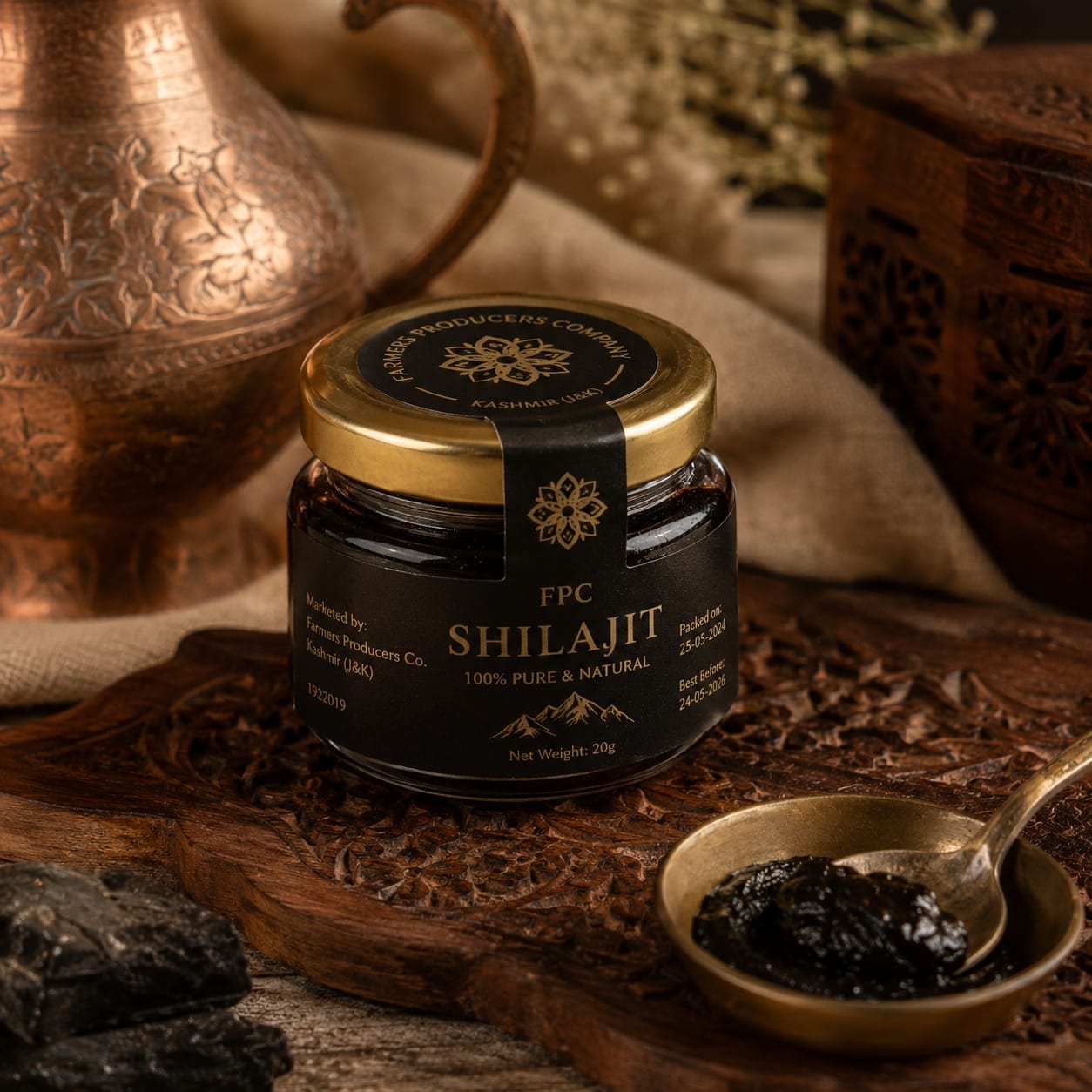
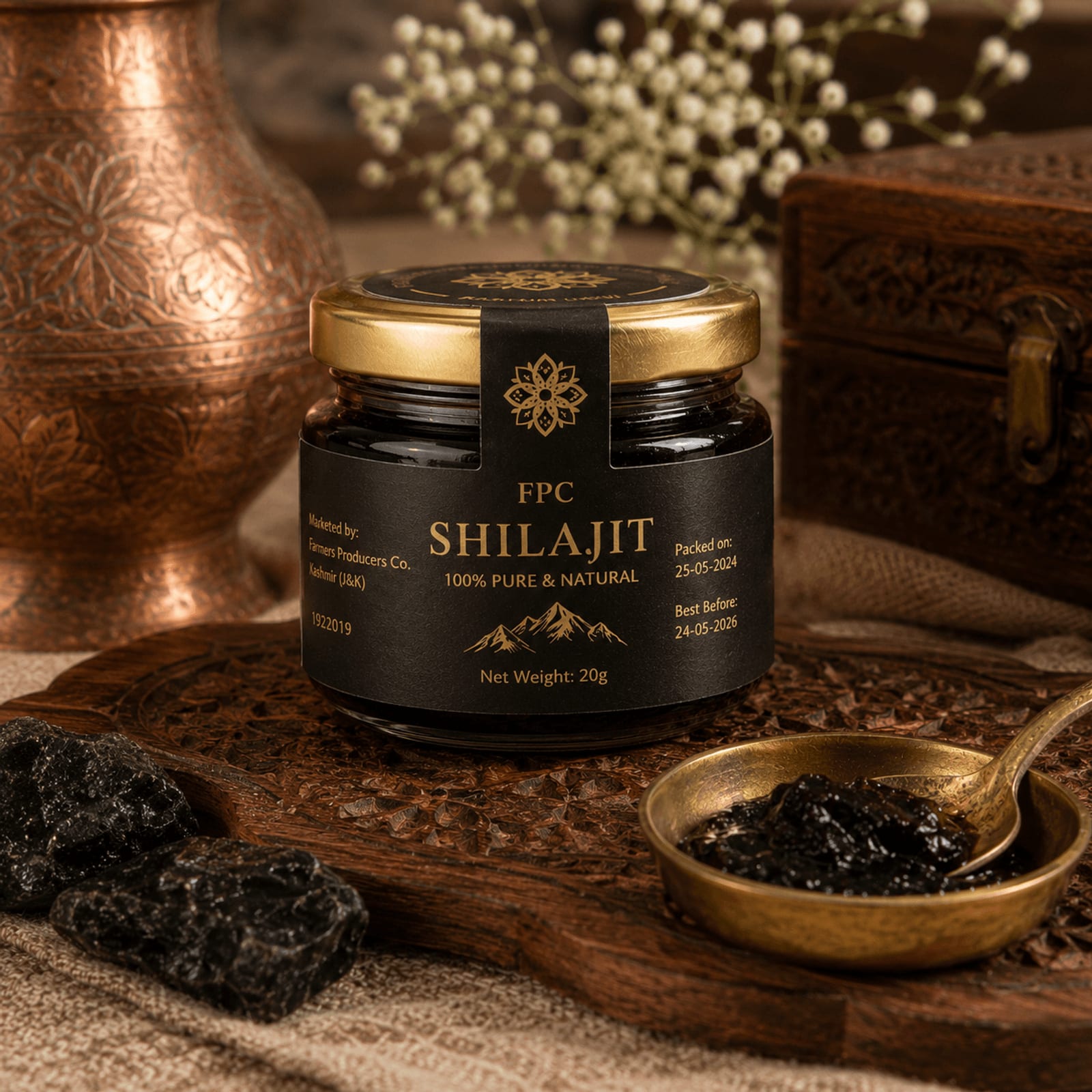
Our Himalayan shilajit resin is purified Himalayan resin from high-altitude rock, ₹599 for a sealed 20 g jar that lasts about 6–8 weeks at the usual portion. We are a saffron-growing family in Pampore and do not dig shilajit ourselves. If you are comparing sellers, the shilajit buying guide puts the purity tests and pricing on one page. Reading in Hindi? शिलाजीत की पूरी जानकारी हिंदी में.