Most fragrance advice online is written for spray perfume — alcohol base, atomiser, a scent that announces itself and fades in an hour. Kesar attar is a different tradition entirely: a concentrated, alcohol-free oil that wears warm and close to the skin for hours. If you have never used attar before, the format alone changes how you should buy it, apply it, and expect it to behave.
What kesar attar actually is
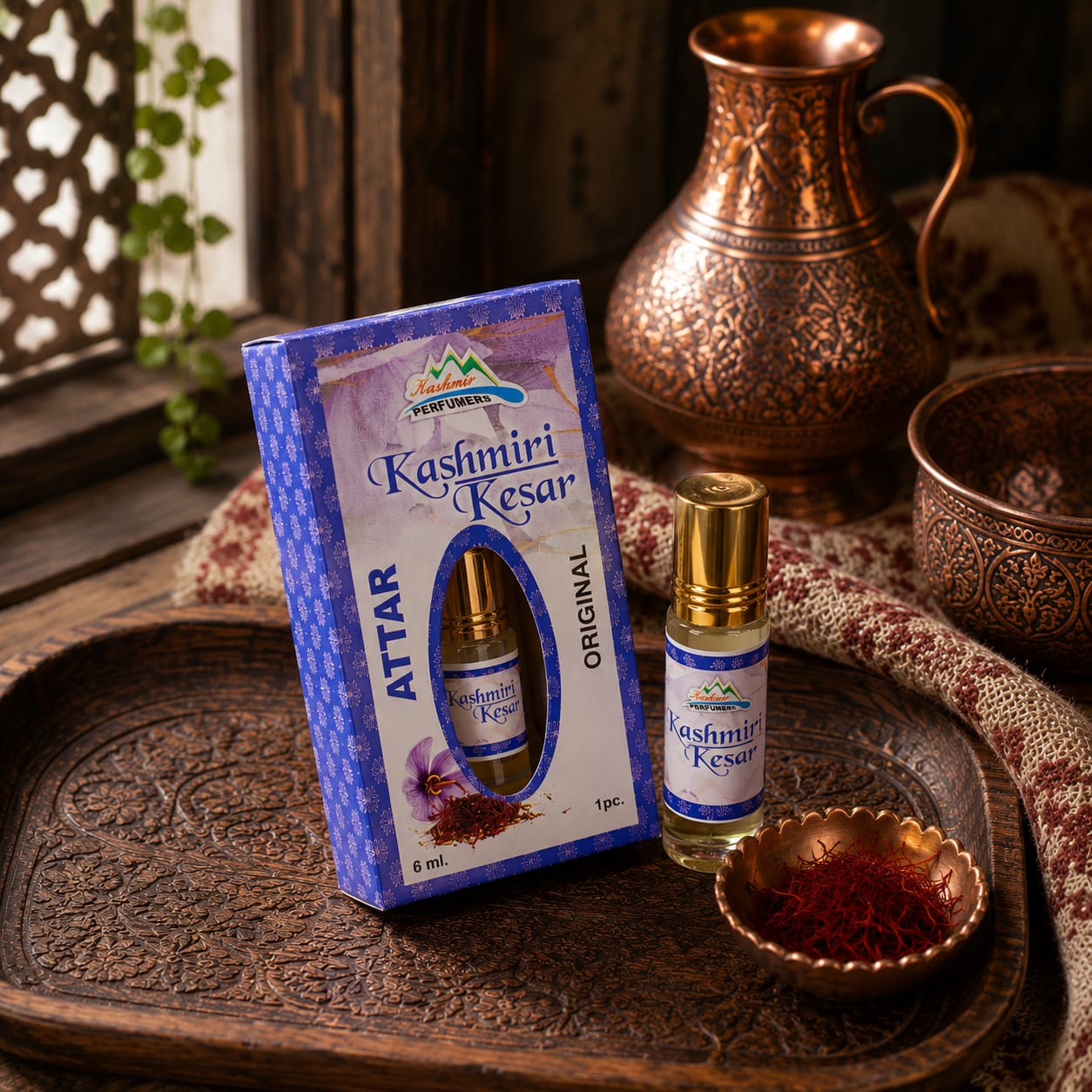
Attar (also spelled ittar) is one of the oldest fragrance formats in the world — flowers, spices, woods and resins steeped or distilled into a carrier oil, with no alcohol anywhere in the process. Kashmir and North India have practised this for centuries, and kesar attar — saffron steeped into the oil — is one of its most prized forms: warm, sweet, faintly honeyed, with the same deep character as the spice itself. Our version uses the same Mongra saffron we grow and grade in Pampore, infused into an alcohol-free oil base and bottled as a 6ml roll-on.
Why alcohol-free matters
Alcohol is what makes spray perfume project outward and evaporate quickly — useful for a quick spritz, but it also strips moisture from skin and burns off most of the fragrance within an hour or two. An alcohol-free attar skips that entirely. The oil base means the scent develops slowly as it warms against your skin, changing subtly over the day instead of hitting all at once and fading. It is also gentler on dry or sensitive skin, and it is the preferred format for anyone who avoids alcohol-based products for religious or personal reasons — including before prayer, which is one of the most common reasons people search for attar specifically instead of ordinary perfume.
A tradition with its own protected geography
Attar-making is taken seriously enough in India that Kannauj, Uttar Pradesh — the country’s historic attar capital — holds a Geographical Indication for its traditional flower attars. We don’t claim that tag — our kesar attar is a Kashmir-origin saffron composition, not a Kannauj flower attar — but it is made in the same alcohol-free, oil-steeped tradition, and with the same saffron whose own Kashmir origin we can trace batch by batch.
How to apply attar correctly
- Use less than you think. One small roll or dab per pulse point — attar is far more concentrated than spray perfume.
- Target pulse points. The inside of the wrists, behind the ears, and the base of the throat — everywhere body heat can slowly release the scent.
- Press, don’t rub. Rubbing wrist-to-wrist generates friction heat that can break down the top notes early. Pat or press it in instead.
- Apply to clean, slightly moisturised skin. Oil-based fragrance holds longest on skin that isn’t bone dry.
How long it lasts, and how much to use
A good kesar attar develops in stages over roughly 6–8 hours — brighter and sweeter in the first hour, settling into a warmer, muskier saffron note by the afternoon. A faint trace often survives on clothing into the next day, which is normal for an oil and not a sign you used too much. One roll-on application per pulse point is the right amount; attar rewards restraint, and doubling up makes it heavy rather than longer-lasting.
Attar vs perfume — what actually differs
Neither format is objectively better; they solve different problems. Spray perfume (eau de parfum/toilette) is alcohol-and-water based, designed to project outward in a room and fade within a few hours — good for a strong first impression. Attar is an oil concentrate applied sparingly to skin, designed to wear close and warm for most of the day rather than fill a room. If you want a scent that is yours rather than everyone’s around you, and one that changes character as the day goes on, attar is built for that.
Buying kesar attar online — what to check
Because attar is sold in small volumes at a wide range of prices, two things are worth checking before you buy: whether the base is genuinely alcohol-free (ask directly — many “attars” sold online are actually diluted spray perfumes rebottled), and whether the saffron used is traceable. Our kesar attar is a 6ml roll-on in a keepsake box, made with saffron from our own Pampore fields — the same saffron behind our saffron jars and saffron oil, not a fragrance-house synthetic sold under a saffron name.
Curious about the rest of the valley’s daily rituals? Start from the Kashmiri wellness pantry or the home page, or message us on WhatsApp with any question about sourcing.