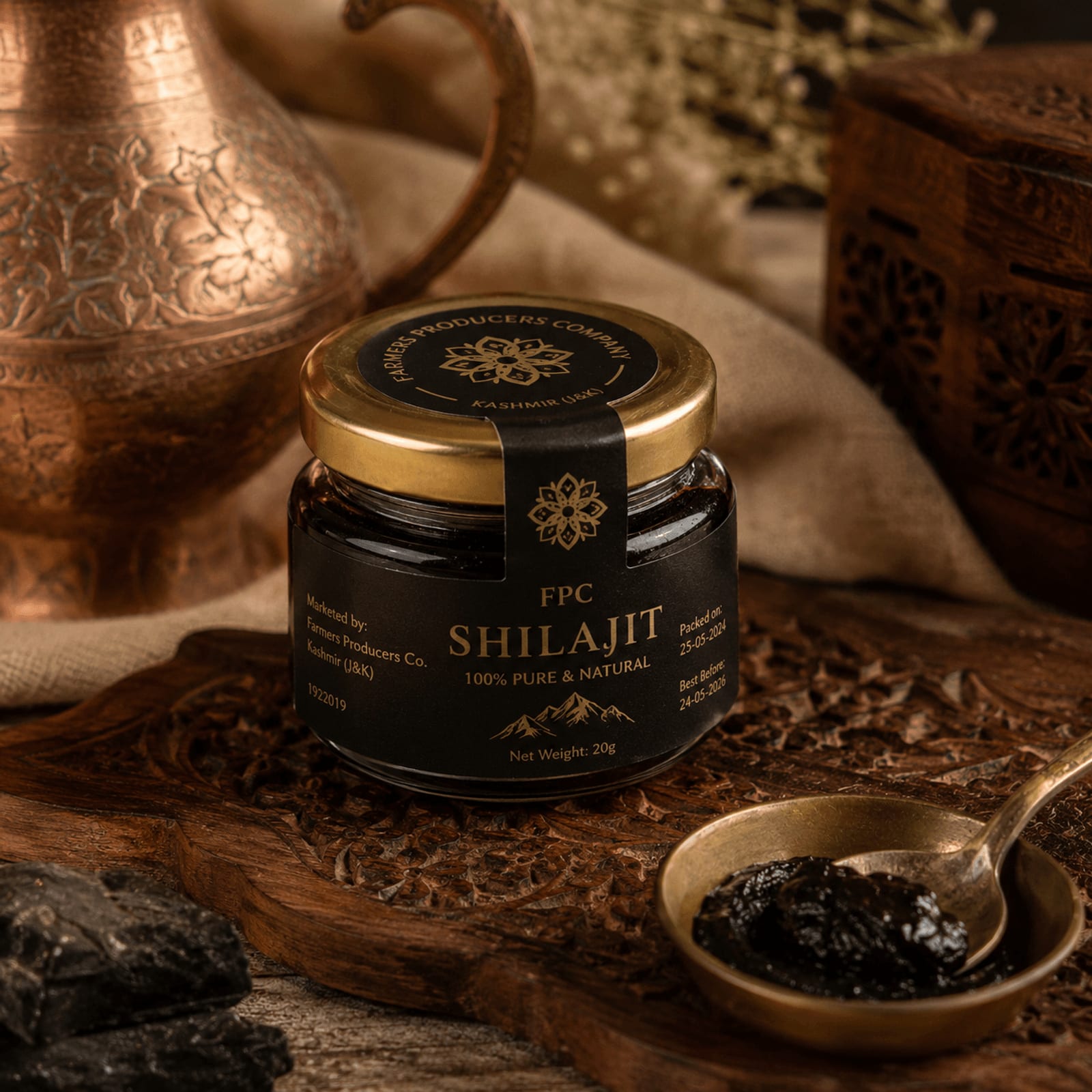
Shilajit has the strangest origin story in the wellness pantry: a blackish resin that seeps from Himalayan rock faces in high summer, formed over centuries from compressed plant matter and minerals. Ayurveda has prescribed it for vitality for a very long time; modern research is slowly catching up. And because demand exploded before verification did, most of what sells as shilajit online is not shilajit. Here is the guide we give our own customers. (Standard honesty: we sell this product, and we are not doctors — for medical questions, ask yours.)
What it is — and what “purified” means
Raw shilajit comes off the rock mixed with grit, plant debris and — the important part — potentially heavy metals. Traditional and modern processing dissolves, filters and concentrates it into a purified resin: glossy, uniform, and safe to consume when screened. Never buy raw or unbranded “rock” shilajit; the purification and the lab screening are the product.
How to take it
- Portion: a pea-sized dab — roughly 300–500mg. Start small.
- Dissolve: in warm water or warm milk. Not boiling — heat degrades it, and it dissolves fine at drinking temperature.
- Timing: once daily, traditionally morning, on a relatively empty stomach.
- Cycle: take it consistently for weeks; it is a tonic, not a stimulant. Many users run 8–12 weeks, then pause.
The best time to take shilajit
Morning, before breakfast or on a light stomach, dissolved in a cup of warm water or milk. That is the traditional timing, and it is the easiest one to turn into a daily habit. The habit is the part that matters: the same time every day, for weeks, does more than chasing the perfect hour.
Shilajit price in India
Our purified resin is ₹599 for a sealed 20g jar. At 300–500mg a day that jar lasts 6–8 weeks, or roughly ₹11–₹14 a day, which makes the per-day cost of even premium resin unremarkable. Resin offered at a small fraction of genuine prices is the first thing to put through the purity tests below.
What the research actually shows
Small human trials have explored shilajit for testosterone support, fatigue, and recovery, with encouraging early results; fulvic acid — its signature compound — is studied for mineral absorption and antioxidant activity. The fair summary: promising, traditional, under-researched. Anyone promising transformation in a week is selling the jaggery version.
The trials split by who took part, so we have written them up separately, each with its limits: shilajit for men and shilajit for women.
The four purity tests
- Warmth: real resin softens between your fingers; fakes stay hard or greasy.
- Dissolve: complete dissolution in warm water, golden-brown, no sediment. Cloudy sludge = filler.
- Taste: intensely bitter, earthy, slightly smoky. Sweetness means jaggery.
- Flame: real shilajit bubbles and chars like resin; it does not melt like sugar syrup.
And the fifth test that outranks them all: a lab report — heavy metals screened, batch identified. The same verification logic we apply to saffron applies here, doubled.
Who should skip it
Pregnant or breastfeeding women; anyone with gout, high uric acid or iron-overload conditions; and anyone on blood-pressure or diabetes medication without a doctor’s clearance. When in doubt, the rule is boring and correct: ask first.
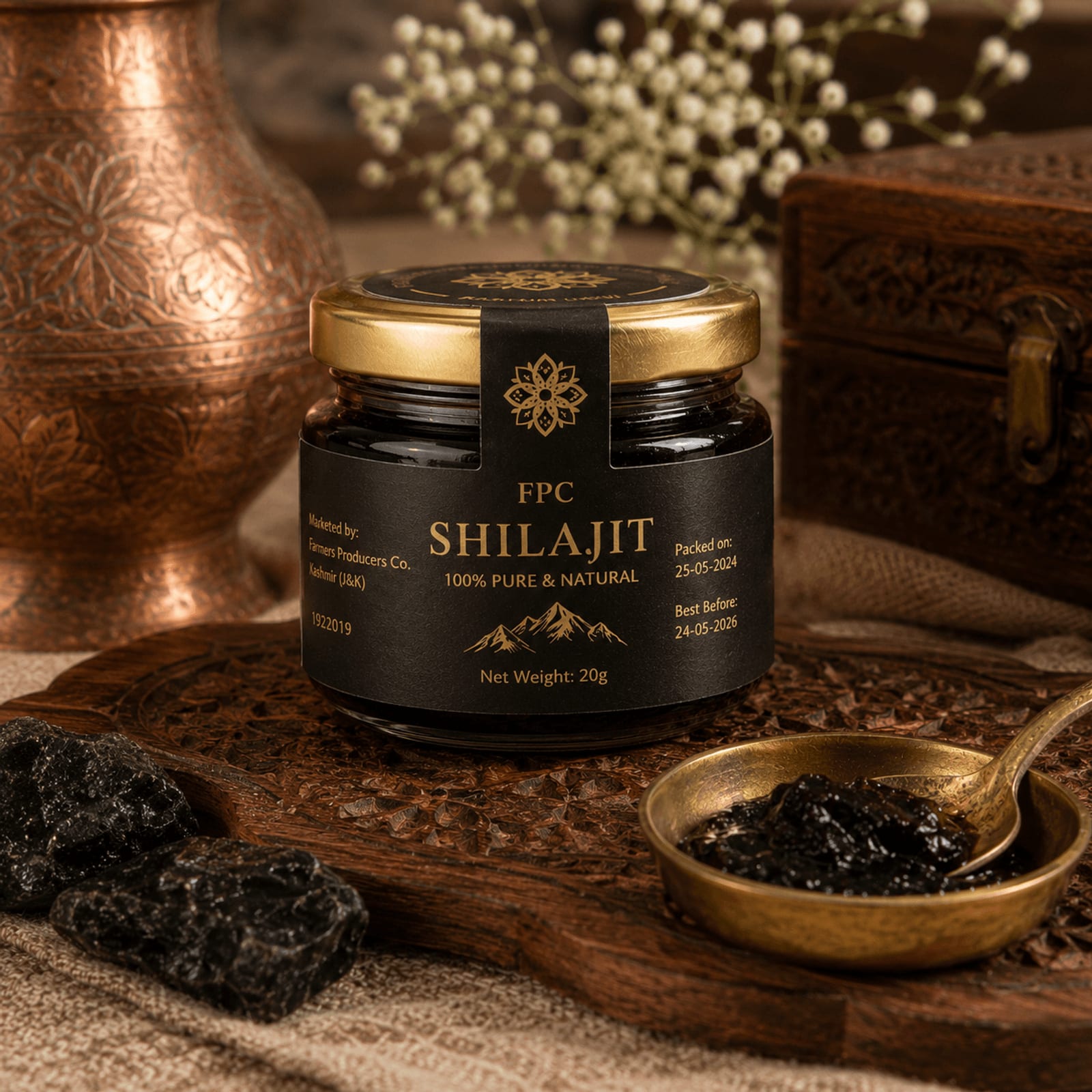
Our Himalayan shilajit resin is purified, batch-tested and sealed in a 20g jar — sourced with the same direct, name-the-origin discipline as everything in the range (our process). Not sure where to start? The shilajit buying guide walks through the purity tests and pricing in one place. Pair the morning ritual with kahwa or start exploring from the home page.
Heavy metals: the question to ask before any other
This is the part of the shilajit conversation that deserves to come first, and rarely does. Shilajit is a mineral-origin substance that forms in rock over long periods. Its chemistry is defined by what it absorbed from the geology around it — which is exactly why contamination is a structural risk in this category rather than a manufacturing accident.
The evidence is genuinely mixed, and both halves matter:
- Peer-reviewed work and regulatory alerts have reported unsafe levels of lead, arsenic and mercury in some resin samples, including products marketed as “purified”.
- Independent testing by ConsumerLab of a set of shilajit supplements found heavy metals below levels of concern at a single daily dose across the products tested.
The reconciliation is that quality varies enormously by source and processing, and the word “purified” has no standardised definition or verification behind it. It is a marketing term, not a specification. Treat it as one.
What a real quality claim looks like
| Claim on the label | What it is actually worth |
|---|---|
| “Purified” / “Lab tested” | Nothing on its own. No standard definition, no verification, no numbers. |
| ICP-MS heavy metal report | The one that counts — lead, mercury, arsenic, cadmium, with actual figures and a lab name. |
| Quantified fulvic acid % | Meaningful if the assay method is stated. A bare percentage is not. |
| AYUSH standard mark | Indicates compliance with India’s domestic regulatory requirements for the category. |
Our position on our own product, stated against that table: our shilajit is lab-tested for heavy metals — lead, arsenic, mercury and cadmium — and for fulvic acid, and the jar you receive comes with its test report. Read it the way this table says to: check the lab, the date and the measured figures against the limits. Details are on the product page, and the same scepticism applies to us as to everyone else.
One practical note in the meantime: dose sensibly and do not treat “natural” as a safety argument. A mineral resin from a mountain is precisely the kind of product where that reasoning fails.