Skip to content

Diwali: a free gift on orders ₹1,499+

See offers
Heritage KashmirPampore Saffron FPO, J&KThe Heritage Kashmir - Pampore Saffron FPO, J&K— home

Kashmiri Dried Apricots (Khubani) From the karewas of Kashmir

Whole khubani from Shar Shali, on the karewas near Pampore — dried with the stone in, no sulphur used.

Reviews of our shop on Google

  • No sulphur used
  • Shar Shali, Pampore karewas
  • FSSAI licensed

Choose weight

₹650

500 g · GST-inclusive

Diwali: free Kesar Attar 6 ml on ₹1,499+, free 1 g Kashmiri Mongra Saffron on ₹3,000+.

1


  • Whole dried apricots, stone in, from Shar Shali village on the karewas near Pampore
  • No sulphur used in drying
  • From the June–July harvest, dried whole after picking
  • ₹1,300/kg — 250 g, 500 g and 1 kg packs
  • For snacking, soaking overnight, or khubani ka meetha

₹650

Our guarantee

Whole apricots from one Kashmir village, dried with no sulphur.

Delivery, payment & returns · Full returns policy

  • No sulphur used
  • Shar Shali, Pampore karewas
  • FSSAI licensed
  • FPO-backed
  • Ships pan-India · COD available

FSSAI licence 11022470000019. The Heritage Kashmir — a brand of the Pampore Saffron Farmers Producer Company, J&K.

Five moments, one season

From the karewa to your kitchen

Khubani from Shar Shali, the karewa village near Pampore our walnuts come from: picked in the June–July harvest and dried whole, with the stone in and no sulphur. Every frame is an illustration until our own harvest photographs replace them. Tap to go on, hold to pause.

01 · June–JulyRipe on the karewaApricot trees on the raised karewa land near Pampore, heavy with fruit.Illustration
02 · HarvestPicked when ripeShar Shali (Sharshali) village, Khrew, about 1,600 m up.Illustration
03 · After pickingDried whole, stone inNo sulphur is used.Illustration
04 · Your kitchenSoaked overnightA few in water overnight plump up soft by morning.Illustration
05 · Your kitchenKhubani ka meethaSoaked, slow-cooked with sugar, served with malai.Illustration

What you get in the pouch

Know your khubani

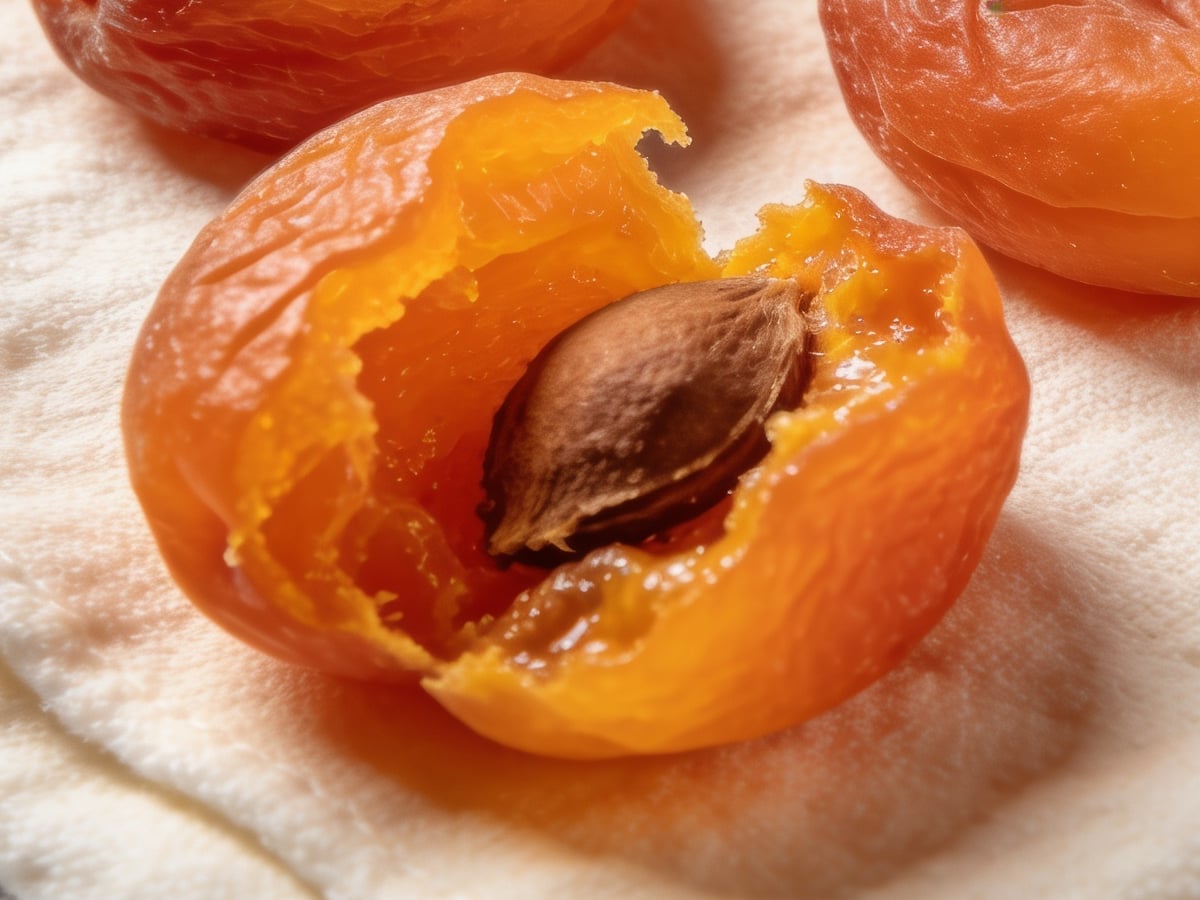
Illustration: a whole dried apricot torn open, showing the orange flesh and the stone inside
Illustration · whole, with the stone inside

Dried apricot types · whole, pitted, halves

Types of dried apricot, and which one is in our pouch

FSSAI’s standard names four styles of dried apricot; the rest are how the fruit is treated and where it grows. Pick a type:

Health and nutrition

Dried apricot benefits, honestly

What is actually in khubani, and what the research does and does not show. A 30 g handful is one portion of dried fruit by the NHS’s measure.

Dietary fibre

0.0g

Drying keeps the fruit's fibre; only the water goes.

Potassium

0mg

Drying concentrates it: dried apricots are on high-potassium food lists.

Vitamin A

0µg

From beta-carotene, the pigment that makes apricots orange.

Iron

0.0mg

Plant iron: a modest share of a day's need, not a supplement.

Energy

0kcal

Sweet and filling; a handful is a small snack, not a meal.

Natural sugar

0.0g

The fruit's own sugar, concentrated by drying. None added.

Fibre and digestion

Dried apricots carry 7.3 g of fibre per 100 g. One 2025 trial gave people a daily mix of prunes, raisins and apricots for constipation; it was industry-funded and published only as an abstract, and no trial has tested apricots on their own.

Source: ClinicalTrials.gov NCT04086134

Iron and pregnancy

A 30 g handful gives about 0.8 mg of iron, a small part of the 27 mg a day ICMR-NIN sets in pregnancy. Dried apricots are an everyday food, not a treatment for low iron: follow your doctor on supplements.

Source: USDA FoodData Central 173941

Sugar and blood sugar

A handful has about 16 g of the fruit's own sugar. Two small studies measured the glycaemic index of dried apricots at 42 and 56, so we don't call them low-GI. If you watch your sugar, count them as carbohydrate and ask your doctor.

Source: PMC6024783

Potassium and kidneys

At 1,162 mg per 100 g, dried apricots are on kidney-care lists of high-potassium foods. On a potassium-restricted diet, ask your doctor before eating them.

Source: Fresenius Kidney Care

Typical values from USDA FoodData Central (record 173941, dried apricots), not a laboratory test of our batch; ours are whole, so part of each handful is the stone. Not medical advice.

Don’t take our word for it

Check it at home

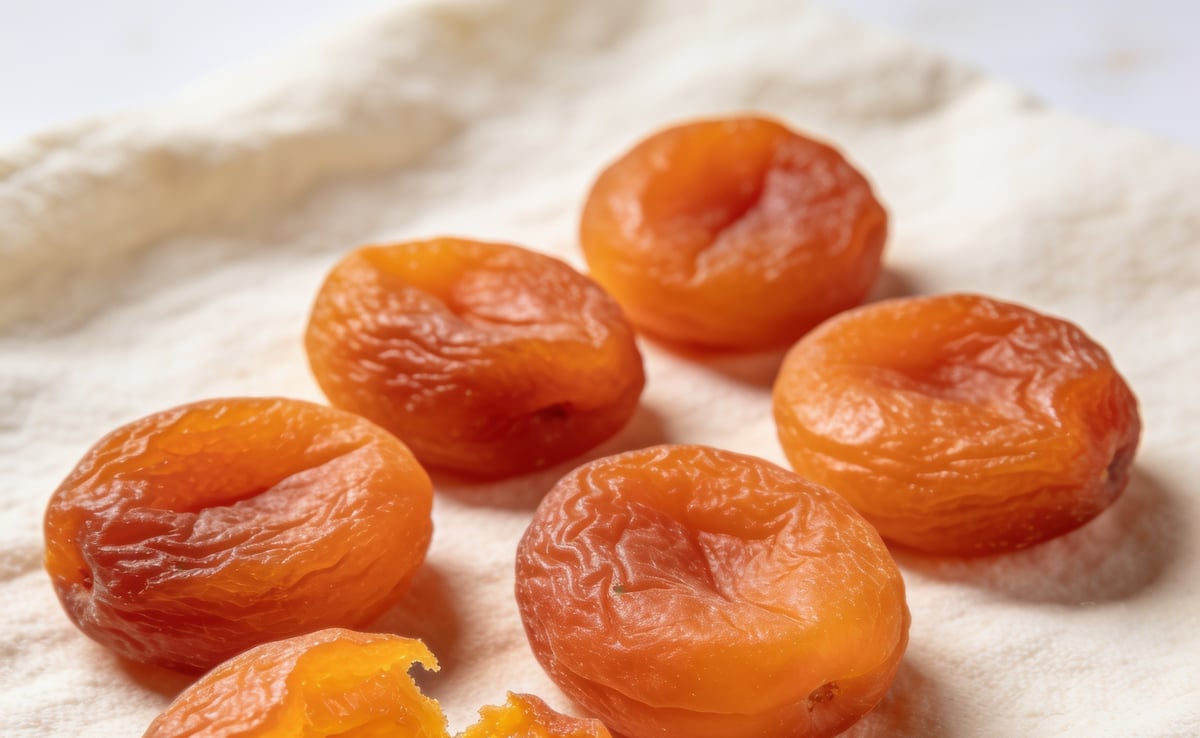
Illustration: whole dried apricots on cream cloth, wrinkled and orange-amberCheck 1 of 4 · Look · Illustration

If a pouch of ours arrives damaged or mouldy, send a photo on WhatsApp and we replace it.

Pick the right pack

How long will a pack last?

Tell us who eats them. A handful is 30 g, the NHS’s portion of dried fruit, counted by pack weight.

People eating them1
Handfuls each a day1

That is 30 g a day for your home.

  • 250 g

    8days

    ₹325

  • 500 g

    16days

    ₹650

  • Covers a month

    1 kg

    33days

    ₹1,300

Cooking khubani ka meetha for a wedding or a big family? Ask us for a bulk quote.

In your kitchen

What to make with it

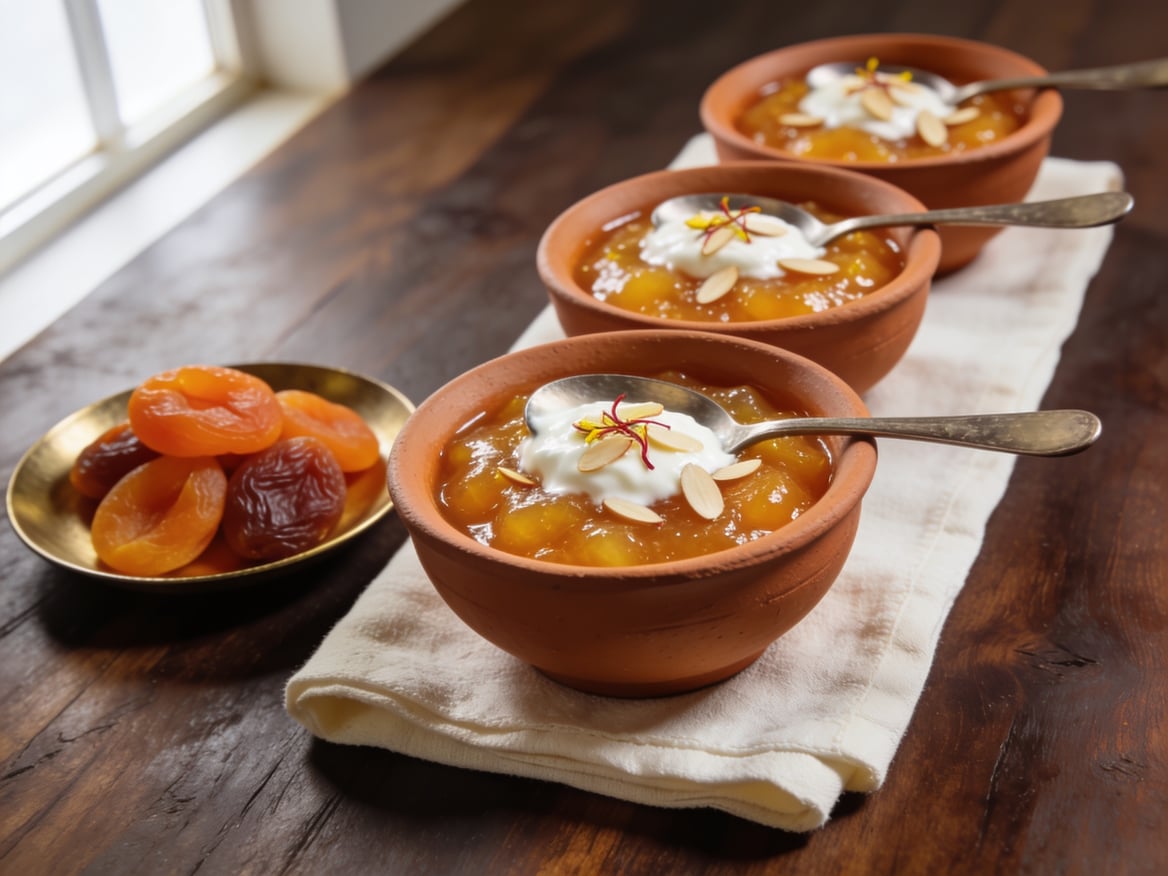
  • Illustration: khubani ka meetha in terracotta bowls with cream and slivered almonds

    Khubani ka meetha

    Soak overnight, slow-cook with sugar, top with malai and blanched almonds

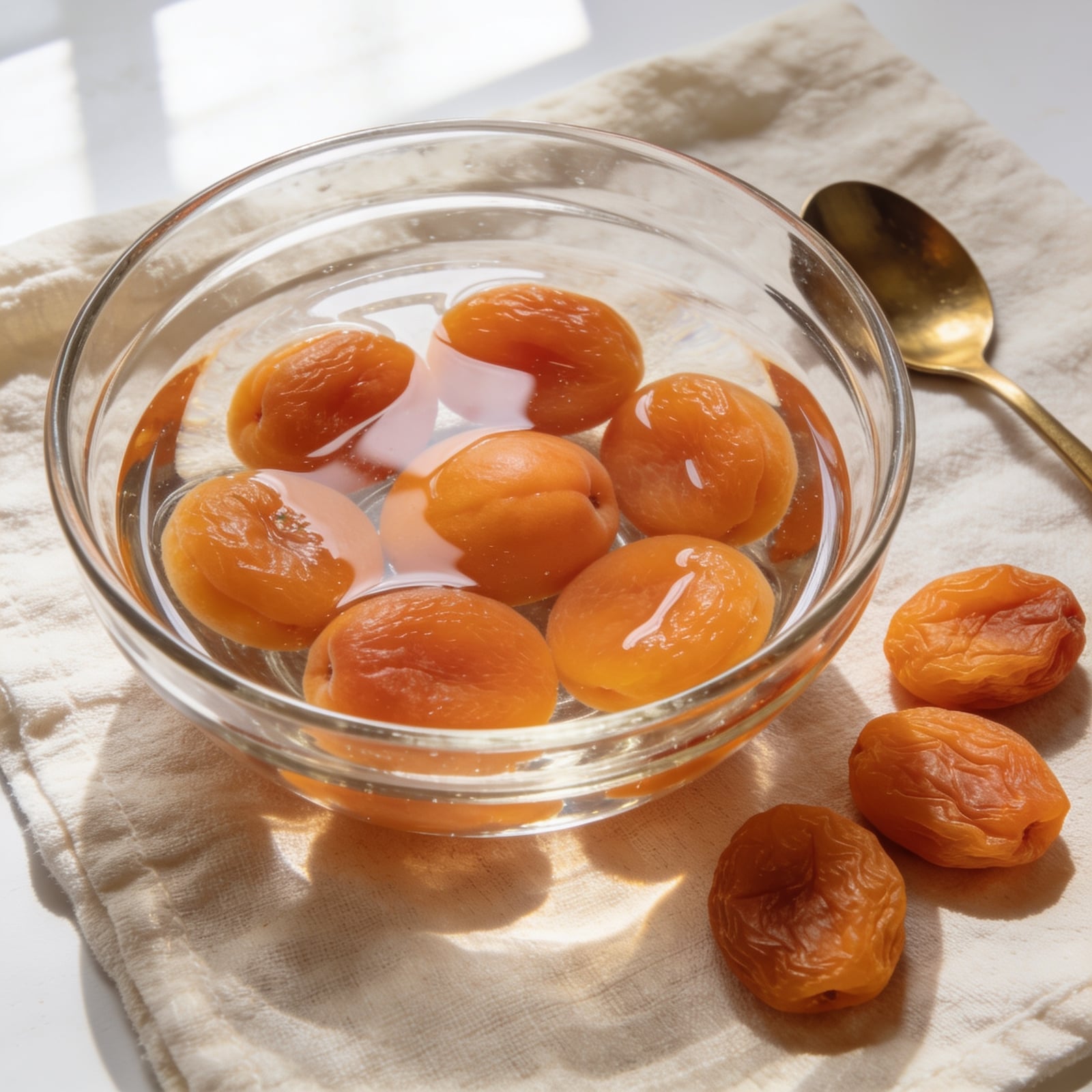
  • Illustration: dried apricots soaking in a glass bowl of water

    Soaked khubani

    A few in water overnight; eat them in the morning, around the stone

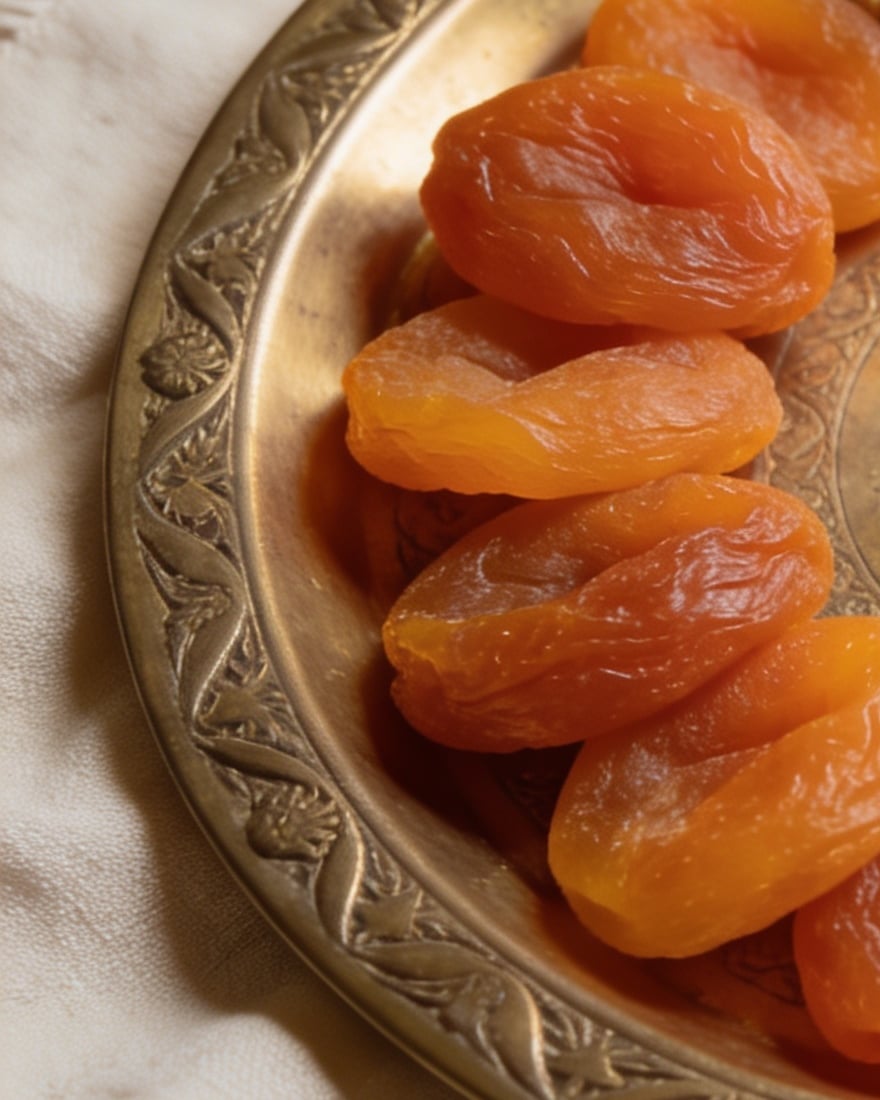
  • Illustration: whole dried apricots laid out on an engraved brass tray

    Winter dry-fruit plate

    With walnut kernels, almonds and anjeer, for guests

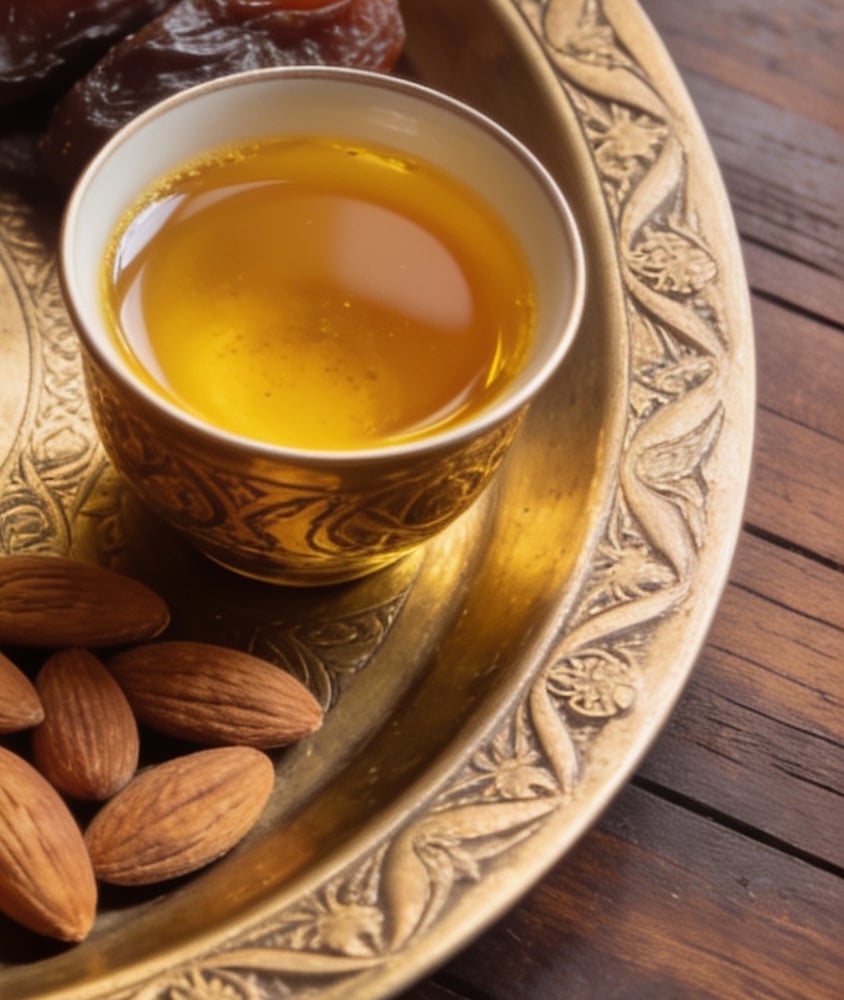
  • Illustration: a cup of golden kahwa on a brass tray beside almonds

    With kahwa

    A khubani or two beside a cup of Kashmiri kahwa

Pictures are illustrations, not our kitchen. Whole khubani keep their stone: lift it out before cooking, and never eat the kernel inside.

Delivery, payment and returns

  • DispatchWithin 24–48 h, from Pampore
  • DeliveryFree on ₹3,000+ orders
  • PaymentUPI, cards or cash on delivery
  • Returns2-day refund, nothing to post back
Full delivery and returns terms
Dispatch
Packed and dispatched from Pampore within 24–48 hours of a confirmed order, tamper-sealed.
Delivery
Free delivery on orders of ₹3,000 or more. Below ₹3,000, prepaid delivery is ₹60, with priority dispatch: DTDC Express, 7–8 days, or DTDC Airmax, 4–8 days by state. A tracking number is emailed after dispatch. The store minimum is ₹600 per order.
Payment
Pay online through Razorpay (UPI, card, netbanking or wallet), or choose cash on delivery for a ₹99 delivery fee (free on orders of ₹3,000 or more) where DTDC offers it for your PIN code. COD goes by DTDC Express (7–8 days) and is packed once you confirm the order on WhatsApp.
Returns
Arrives damaged, leaking, wrong or not as described? Send a photo on WhatsApp within 48 hours of delivery and we refund or replace in full — your choice, nothing to post back. Opened food cannot otherwise be returned. Full policy.

About this product

Khubani is the everyday Indian name for the dried apricot. Ours come from apricot trees in Shar Shali (Sharshali) village, Khrew, near Pampore in Pulwama district — the raised karewa land of the Kashmir valley, about 1,600 metres up, and the same village our walnuts come from. They are picked in the June–July harvest and dried whole, with the stone still inside. No sulphur is used.

Whole means whole: every apricot has its stone. Eat around it, or slit the fruit and lift the stone out before cooking. Don't crack and eat the kernel inside the stone — the European Food Safety Authority warns that even a few raw apricot kernels can go over the safe level.

On price, so it can be compared honestly: ₹1,300 a kilogram — ₹1,300 for the kilo pack, ₹650 for 500 g and ₹325 for 250 g. Part of a whole apricot's weight is its stone, so a pitted pack and a whole pack are not the same thing per kilo; compare like with like.

How to use: eat a 30 g handful with a meal, soak them overnight to plump them, or cook them into khubani ka meetha. Storage: with no sulphur, the colour can deepen slowly over the months. Keep the pouch sealed, cool and out of the sun, and in the fridge in hot, humid weather.

From Shar Shali

Kashmiri khubani, from the tree to your table

Illustrations of the season, until our own photographs of the next harvest replace them.

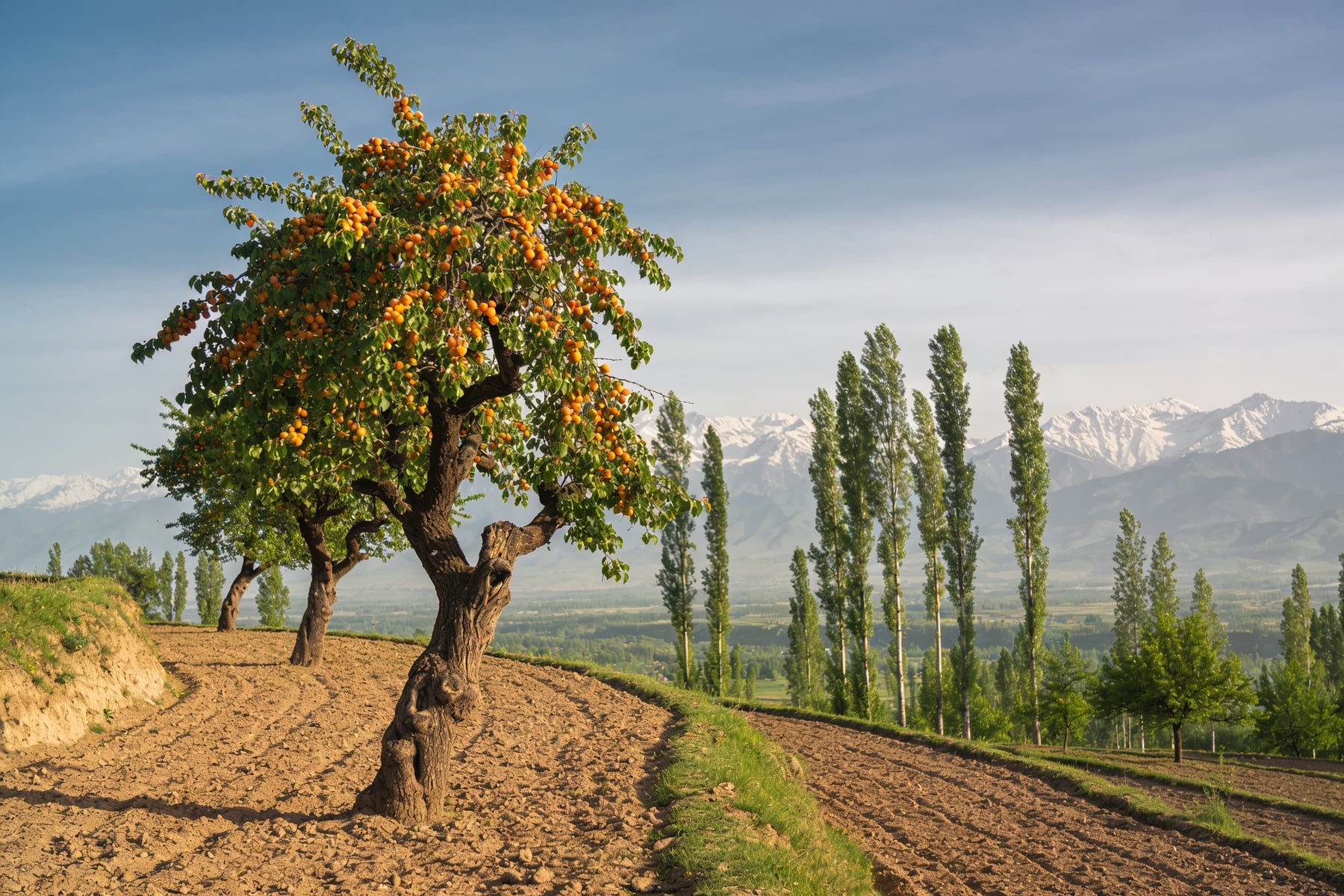
Illustration: an apricot tree full of ripe fruit on a ploughed karewa terrace, poplars and snow peaks behind
On the karewaApricot trees on the raised karewa land near Pampore.
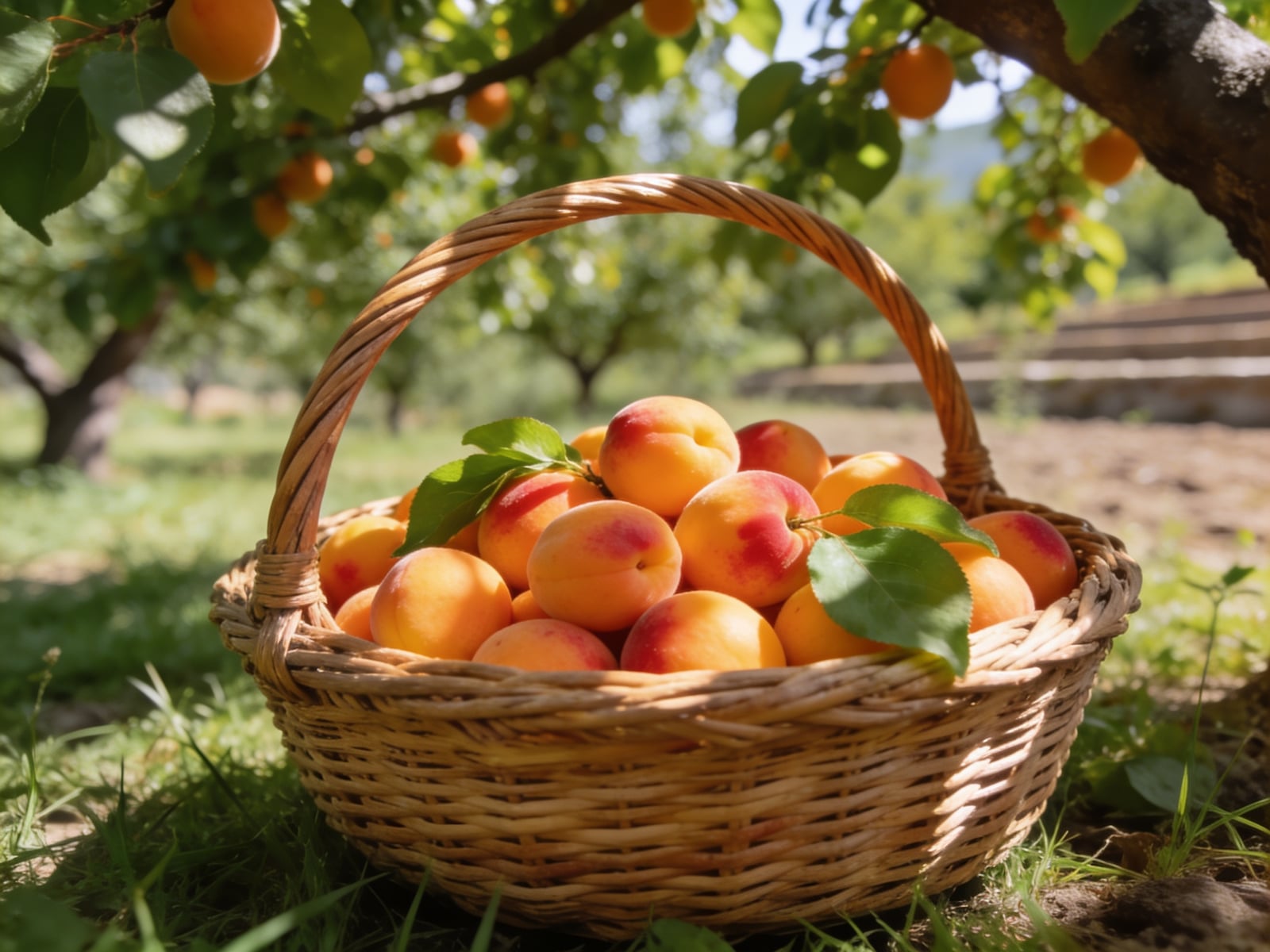
Illustration: a willow basket of freshly picked ripe apricots under an apricot tree
June–July harvestThe fruit is picked ripe, in early summer.
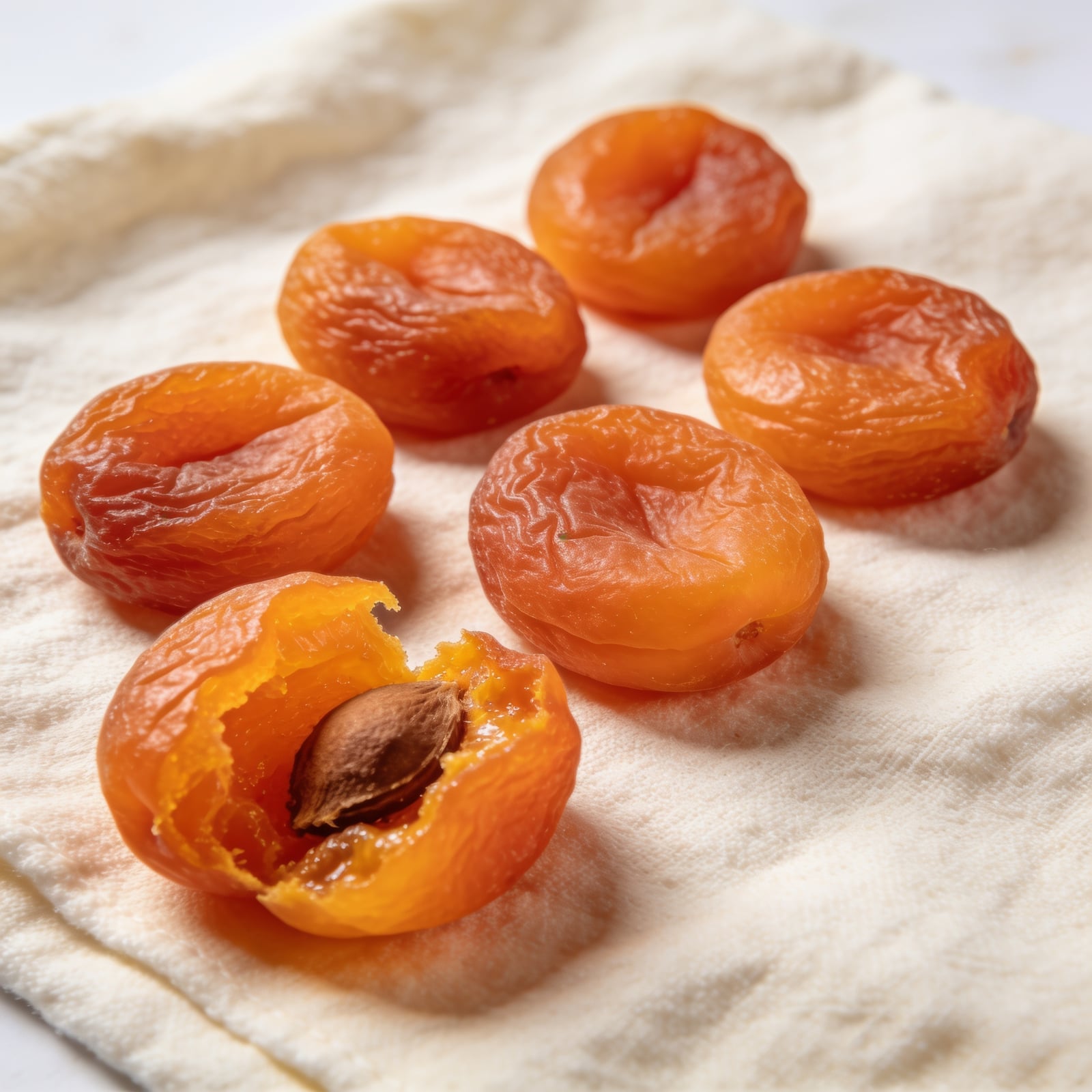
Illustration: whole dried apricots on cream cloth, one torn open to show the orange flesh and the stone inside
Dried wholeThe stone stays inside; no sulphur is used.
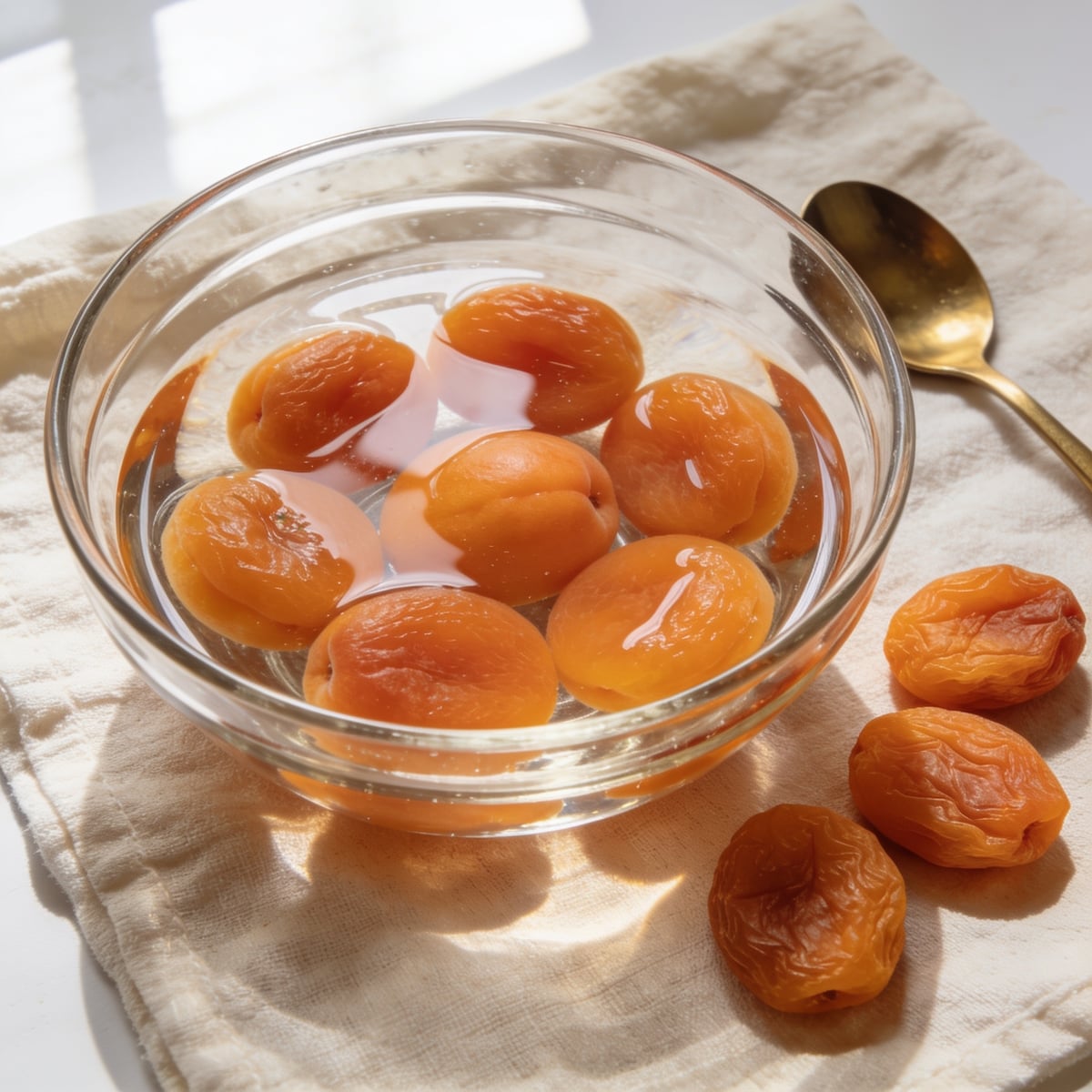
Illustration: whole dried apricots soaking in a glass bowl of water, three dry ones and a brass spoon beside it
Soaked overnightPlump and soft by morning.
Khubani ka meetha
Khubani ka meethaThe Hyderabadi wedding dessert.

The khubani guide

Kashmiri dried apricots (khubani): the complete guide

Our dried apricots — khubani — are whole apricots dried with the stone still inside, from Shar Shali (Sharshali) village in Khrew, on the karewas near Pampore in Kashmir. No sulphur is used. The price is ₹1,300 a kilogram at every size — ₹325 for 250 g, ₹650 for 500 g and ₹1,300 for 1 kg — delivered across India. Below: the names, where apricots grow in Kashmir, sulphur and colour, the FSSAI styles, how to choose, eat and store them, and the kernel.

At a glance

Product
Whole dried apricots, stone in
Names
Khubani, khumani, jardalu; tser in Kashmiri
Origin
Shar Shali (Sharshali), Khrew, Pulwama — about 1,600 m
Harvest
June–July
Drying
Whole, no sulphur
Price
₹1,300/kg — 250 g ₹325, 500 g ₹650, 1 kg ₹1,300
GI tag
None (India's GI apricot is Ladakh's Raktsey Karpo)

Khubani in English, and other names

Khubani is the Urdu word for apricot, and the name most Indian shoppers use for the dried fruit; you will also see khumani, jardalu and zardalu on packs and price lists. Qubani, as in Hyderabad’s qubani ka meetha, is the same word. In Kashmiri the apricot is tser: George Grierson’s Kashmiri dictionary records it, along with tsēra-phulay, the season of apricot blossom.

Where apricots grow in Kashmir

A SKUAST-Kashmir study describes the apricot, “popularly known as khubhani”, as “grown mainly in Kashmir valley, Ladakh, Kargil and few pockets of Jammu Division”. The Kashmir valley’s crop was 3,470 tonnes in 2018–19. Ladakh grows far more — about 62% of India’s apricots — and its Raktsey Karpo apricot has a GI tag since December 2022. Ours are not Raktsey Karpo and carry no GI tag.

Karewas are the raised, flat-topped plateaus of old lake sediment in the valley, best known for saffron, almonds and apples. Our apricots come from trees on that land at Shar Shali — the same village as our walnuts.

Harvest and drying

Apricots are one of Kashmir’s early fruits: SKUAST-Kashmir’s June 2024 advisory lists them among the stone fruits harvested in June, and the picking runs into July. Ours are dried whole, with the stone still inside, and no sulphur is used at any point.

Sulphur, and why colour proves nothing

Dried apricots are commonly treated with sulphur dioxide “to inhibit browning and microbial growth”. Turkey’s Malatya apricots must be sulphured under their own specification. In India, FSSAI allows up to 2,000 mg per kilogram, and any pack with 10 mg/kg or more has to say “contains sulphite”.

Without sulphur, dried apricots tend to darken over time — in one study of Malatya’s Alkaya apricots, unsulphured fruit browned more but kept more aroma. So colour alone cannot tell you; the label can. Ours use no sulphur: keep the pouch cool to slow the colour change.

Dried apricot styles and quality limits (FSSAI)

FSSAI’s dried-apricot standard names four styles and sets limits for every pack sold in India. Ours is the first style.

Dried apricot styles and quality limits, with the style we sell marked
Style or limitWhat it meansOurs
Whole unpittedThe whole fruit, stone insideWe sell this
Whole pittedWhole fruit, stone removed (“seedless”)—
HalvesPitted fruit cut in two—
SlabsFlattened pitted pieces—
MoistureAt most 20% for untreated fruit, 25% for treatedUntreated (no sulphur)
DefectsAt most 15% defective fruit in total, 1% mouldy—
Sulphur dioxideAt most 2,000 mg/kg; “contains sulphite” from 10 mg/kgNone used

How to choose good dried apricots

  1. Style. Whole with the stone, pitted or halves? Compare prices within one style.
  2. Look. No fuzz, no webbing, no insects; small blemishes only.
  3. Feel. It should bend without cracking and not feel wet or sticky.
  4. Smell. Sweet and fruity. Sour, fermented or musty means it has gone off.
  5. Label. “Contains sulphite” if sulphured, an origin, a packing date.

Buying online: 250 g, 500 g or 1 kg

All three packs are the same whole khubani at ₹1,300 a kilogram, so a bigger pack buys convenience rather than a discount:

  • 250 g (₹325): to try them, or one person’s daily handful.
  • 500 g (₹650): a household pack for snacking and soaking.
  • 1 kg (₹1,300): khubani ka meetha for a crowd, a winter platter, or two homes.

How to eat, soak and store them

The NHS counts 30 g of dried fruit as one portion, best eaten with meals to protect your teeth. Eat them as they are, around the stone; soak a few overnight to plump them; or cook them. Hyderabad’s khubani ka meetha soaks them overnight, slow-cooks them with sugar and serves them with malai and blanched almonds.

Keep them airtight, cool and dark. Most dried fruit keeps about a year at around 16 °C and about six months at around 27 °C, so use the fridge in a hot, humid summer. Throw away any fruit with mould.

About the kernel inside the stone

Don’t crack the stone to eat the kernel. The European Food Safety Authority warns that “eating more than three small raw apricot kernels, or less than half of one large kernel, in a serving can exceed safe levels”, and that a toddler can go over the safe level with a single small kernel. Eating the fruit itself does not carry that risk. Keep the stones away from small children.

Dried apricot nutrition (USDA typical values)

USDA FoodData Central record 173941, not a laboratory test of our batch. The record is for pitted, sulphured fruit; ours are whole, so 100 g of ours includes the stone and holds a little less fruit.

Dried apricot nutrition per 100 g and per 30 g, USDA typical values
NutrientPer 100 gPer 30 g handful
Energy241 kcal72 kcal
Carbohydrate62.6 g18.8 g
of which sugars (the fruit's own)53.4 g16.0 g
Dietary fibre7.3 g2.2 g
Protein3.4 g1.0 g
Fat0.5 g0.2 g
Potassium1,162 mg349 mg
Iron2.7 mg0.8 mg
Vitamin A180 µg RAE54 µg RAE
Sources (19)

Compare on facts

Why buy from us

Compare on facts, not marketing.

What to check when buying Dried Apricots (Khubani): The Heritage Kashmir against typical online sellers
What to checkOur standardThe Heritage KashmirElsewhereTypical online sellers
Where it comes fromGrown in Shar Shali (Sharshali) village, Khrew, on the karewas near PamporeOutsourced from mandis, importers or re-packers. Most brands, however big, do not own a farm.
Proof of what you getFSSAI-licensed, with origin details on every orderNo verifiable proof — just a label
FreshnessFrom the June–July harvest, packed to orderUnknown stock age, often months old
PuritySingle-origin — never blendedOften sold with no village, harvest or drying named
PriceBest rate when you book direct on WhatsAppMarked up by middlemen & marketplace fees

Booking a larger order? Message us on WhatsApp for the best direct-from-farm rate.

Order on WhatsApp

Frequently asked questions

The doubts in your head? We’ve answered them here.

Illustration: khubani ka meetha in terracotta bowls topped with cream and almond slivers
What is khubani called in English?

Dried apricot. Khubani (खुबानी) is the Urdu word for apricot and the name most Indian shoppers use for the dried fruit; khumani, jardalu and zardalu are other names you will see. In Kashmiri the apricot is tser.

Where do your dried apricots come from?

From Shar Shali (Sharshali) village in Khrew, near Pampore in Pulwama district, Kashmir — the raised karewa land of the valley, about 1,600 metres up. Our walnuts come from the same village. Apricots are grown mainly in the Kashmir valley, Ladakh and Kargil, by a SKUAST-Kashmir study's account.

Are your dried apricots sulphured?

No. No sulphur is used in drying them. Many dried apricots are treated with sulphur dioxide to stop them browning, and in India any pack with 10 mg/kg or more has to say "contains sulphite" — so read the label rather than judging by colour. Without sulphur, the colour of ours can deepen slowly over the months; keeping them cool slows that down.

Are they whole or pitted (seedless)?

Whole, with the stone still inside. Eat around the stone, or slit the fruit and lift the stone out before cooking. A pitted ("seedless") pack has had the stone removed, so it holds more fruit per kilo and usually costs more per kilo — compare whole with whole.

Can I eat the kernel inside the stone?

No. The European Food Safety Authority warns that eating more than three small raw apricot kernels, or less than half of one large kernel, in a serving can exceed safe levels, and that a toddler can go over the safe level with one small kernel. The fruit itself does not carry that risk. Keep the stones away from small children.

What is the dried apricot price per kg?

Ours is ₹1,300 a kilogram at every size: ₹325 for 250 g, ₹650 for 500 g and ₹1,300 for 1 kg. Market prices vary with style (whole or pitted), origin and whether the fruit is sulphured, so compare the same style. Free delivery on orders of ₹3,000 and above.

When are apricots harvested in Kashmir?

In early summer: SKUAST-Kashmir's June 2024 advisory lists apricots among the stone fruits harvested in June, and the picking runs into July. Ours are from the June–July harvest, dried whole after picking.

Are these the same as Ladakh apricots?

No. Ladakh grows about 62% of India's apricots, and its Raktsey Karpo apricot — known for a white seed coat — has a GI tag since December 2022. Ours are grown in the Kashmir valley, at Shar Shali near Pampore, and carry no GI tag.

How many dried apricots should I eat a day?

A 30 g handful is one portion of dried fruit by the NHS's measure, best eaten with a meal rather than between meals, for your teeth. By USDA's typical values, 30 g of dried apricot has about 72 kcal and 16 g of the fruit's own sugars. Ours are whole, so part of a 30 g handful is the stone.

Should I soak dried apricots?

It is up to you. Soaking a few overnight in drinking water plumps and softens them; they are also fine eaten as they are. Khubani ka meetha starts with an overnight soak.

How do I make khubani ka meetha with these?

Khubani ka meetha is a Hyderabadi wedding dessert: dried apricots soaked overnight, slow-cooked with sugar until soft and glossy, and served with malai and blanched almonds. With whole khubani, lift the stones out after soaking.

How should I store dried apricots?

Airtight, cool and dark. Most dried fruit keeps about a year at around 16 °C and about six months at around 27 °C, so in a hot, humid summer keep the pouch in the fridge. Throw away any fruit that shows mould.

Is there added sugar?

No sugar is added: the pack is whole dried apricots. Dried apricots are sweet on their own — USDA lists about 53 g of the fruit's own sugars per 100 g, concentrated by drying.

Do you take bulk or wedding orders?

Yes. Large quantities are available — message us on WhatsApp or use the bulk enquiry page with the quantity and delivery PIN code, and we will quote.

What customers say

Reviews on Google that mention dry fruits come first.

  • FaizanGoogle review · October 2026

    An exceptional experience! The quality of their Kashmiri dry fruits and authentic saffron is unmatched. Everything is incredibly fresh, packed beautifully, and tastes amazing. If you are looking for premium, genuine Kashmiri produce, this is the perfect place. Highly recommended!

  • Arsalan ShahGoogle review · October 2026

    Fresh dry fruits, good quality, and reasonable prices. Highly recommended!

  • Sheikh TawqeerGoogle review · October 2026

    Really good quality dry fruits and saffron. Everything felt fresh and authentic, and the service was warm and friendly. Definitely worth visiting if you’re looking for genuine Kashmiri products!

  • Rahul MauryaGoogle review · October 2026

    Bought from here a few times now. Always got 10/10 quality saffron & dry fruits. Easily one of the best in Kashmir

  • Pranav MishraGoogle review · October 2026

    Really good stuff icl, greatest saffron and dryfruits seller in the multiverse

  • Faisal QayoomGoogle review · October 2026

    Excellent quality and freshness! The dry fruits were fresh, tasty, and well-packed. Great quality at a reasonable price. Highly recommended! ⭐⭐⭐⭐⭐

  • Ahmad basha SyedGoogle review · October 2026

    Excellent quality saffron! The strands look fresh and premium, with a beautiful natural aroma and colour. The quality is genuinely impressive, and the packaging was neat and secure. Very happy with my purchase. Definitely worth buying! ❤️

  • Danish HameedGoogle review · October 2026

    Very goof quality

  • Sheikh Tahfeez AhmadGoogle review · October 2026

    Quality is superb

  • THE KNOWN 1Google review · October 2026

    Premium quality stuff 🤌🏻

  • Bhat EhsanGoogle review · October 2026

    Excellent

  • Kaaabir KhanGoogle review · October 2026

    Superb Quality! And best price you will ever get Worthy Experience ❤️

  • AyaN AmeenGoogle review · October 2026

    beyond expectation... quanlity is really superb

  • Majid RatherGoogle review · October 2026

    Supr quality

  • zaid khanGoogle review · October 2026

    one of the best experiences.

  • Rakib ZahoorGoogle review · October 2026

    It's a great place. Quality is superb

  • magray shakirGoogle review · October 2026

    quality to b trusted

  • Sheikh SaadGoogle review · October 2026

    Very good quality

  • suhaib QurashiGoogle review · October 2026

    Superb quality 👌

  • Kifayat FarooqGoogle review · October 2026

    Great quality and awesome hospitality

  • rahilGoogle review · October 2026

    Quality is amazing, loved it

  • Zamin BashirGoogle review · October 2026

    super quality

  • Magandeep SinghGoogle review · October 2026

    Quality is top notch and really fabulous! Authentic and amazing! Would recommend to everyone! 😍

  • Naveed Mohammad pareyGoogle review · October 2026

    “The saffron quality is genuinely impressive. Great aroma, vibrant colour, and a rich flavour. A wonderful product from Heritage Kashmir.”

  • Bhat RakibGoogle review · October 2026

    This product is just 🔥 Looks aesthetic, feels premium, and works perfectly. Instantly became my favourite. Quality 10/10.

  • Kashif ShabirGoogle review · October 2026

    Best quality ❤❤

  • Yasir HamidGoogle review · October 2026

    Outstanding

  • moomin magrayGoogle review · October 2026

    The overall experience was too good

  • Masroor RiyazGoogle review · October 2026

    Exceptional quality saffron with deep-red threads, an intense aroma, and rich, natural color in just a few strands

  • Hammaad SuhailGoogle review · October 2026

    Very good quality and completely pure.The quality is consistently excellent. Definitely one of the best places for genuine, high-quality products. Highly recommended!

  • Sheikh AhsanGoogle review · October 2026

    Great quality

  • Khass NafarGoogle review · October 2026

    Good quality

  • XeropXGoogle review · October 2026

    Best experience

  • Rujhan RatherGoogle review · October 2026

    excellent quality

  • Mozin GaniGoogle review · October 2026

    Pure saffron quality with genuine prize.

  • Moien ShabanGoogle review · October 2026

    Really impressed with the quality of the saffron from The Heritage Kashmir. The saffron has a beautiful natural aroma, rich colour, and the quality feels genuinely premium. The packaging was also neat and secure. Overall, a very good experience and I’m definitely satisfied with my purchase. Highly recommended! ❤️

  • MOHAMMAD ALEEMGoogle review · October 2026

    Good-quality natural products with neat packaging. The saffron has a lovely aroma,Smooth delivery and a great overall experience. Would definitely recommend!

  • Shahid NisarGoogle review · October 2026

    Good quality stuff

  • Shaiq NabiGoogle review · October 2026

    Good-quality natural products with neat packaging. The saffron has a lovely aroma, and the shilajit feels authentic and well-presented. Smooth delivery and a great overall experience. Would definitely recommend!

  • PEACE FOUNDATIONGoogle review · October 2026

    I purchased saffron from your website.... It was really nice ,authentic.. delivery was on time...... Quality, it was super awesome.......

  • wani musavirGoogle review · October 2026

    Trustworthy service and quality products.

  • Naveen SonyGoogle review · October 2026

    i bought saffron powder and it was extremely good. the quality was excellent and i was really happy with the product. delivery was also smooth and everything was well packed. really satisfied with my purchase and would definitely recommend them.

  • Imad WaniGoogle review · October 2026

    They sell iso grade 1 Saffron and that is unheard from other sellers. Wishing you lots of success with this amazing journey.

  • Sadaa SadaariyazGoogle review · October 2026

    Wishing Kashmir Heritage huge success and hoping it reaches people all across the country. Keep going and keep making Kashmir proud! 🤝✨

  • AFTAB WANIGoogle review · October 2026

    Proud to see kashmir heritage promoting The saffron, looks authentic, has a beautiful aroma, and gives a lovely natural colour and flavour. The packaging was also good. Highly recommended for anyone looking for quality Kashmiri saffron. 🌸❤️

  • faizan bashirGoogle review · October 2026

    Very nice and 100% authentic products💕

  • Maaid Farooq WaniGoogle review · October 2026

    Exceptional. Quality is fantastic. I compared your product with top bands out in market and I found your product best. Quality is superb

  • Daily Quran_360Google review · October 2026

    Original story.

  • Kashish KhanGoogle review · October 2026

    Thank you

  • Ayushi TiwariGoogle review · October 2026

    Thank you

  • Bhatt YawerGoogle review · October 2026

    🔥💝

  • lone hashimGoogle review · October 2026

    Thank you

  • Fahadsajad BhatGoogle review · October 2026

    Rated five stars on Google.

  • Tawqeer NazirGoogle review · October 2026

    Rated five stars on Google.

  • Mohsin BhatGoogle review · October 2026

    Rated five stars on Google.

  • Saqib AltafGoogle review · October 2026

    Rated five stars on Google.

  • TerminatorGoogle review · October 2026

    Rated five stars on Google.

  • Shamiq ShafiGoogle review · October 2026

    Rated five stars on Google.

  • Suhail ShafiGoogle review · October 2026

    Rated five stars on Google.

  • Jitendra Kumar PradhanGoogle review · October 2026

    Rated five stars on Google.

  • TawseefGoogle review · October 2026

    Rated five stars on Google.

  • anit beniwalGoogle review · October 2026

    Rated five stars on Google.

  • Suhaib MirGoogle review · October 2026

    Mudasir is a great businessman, I have known him for long and he cares about his customers
You might also like

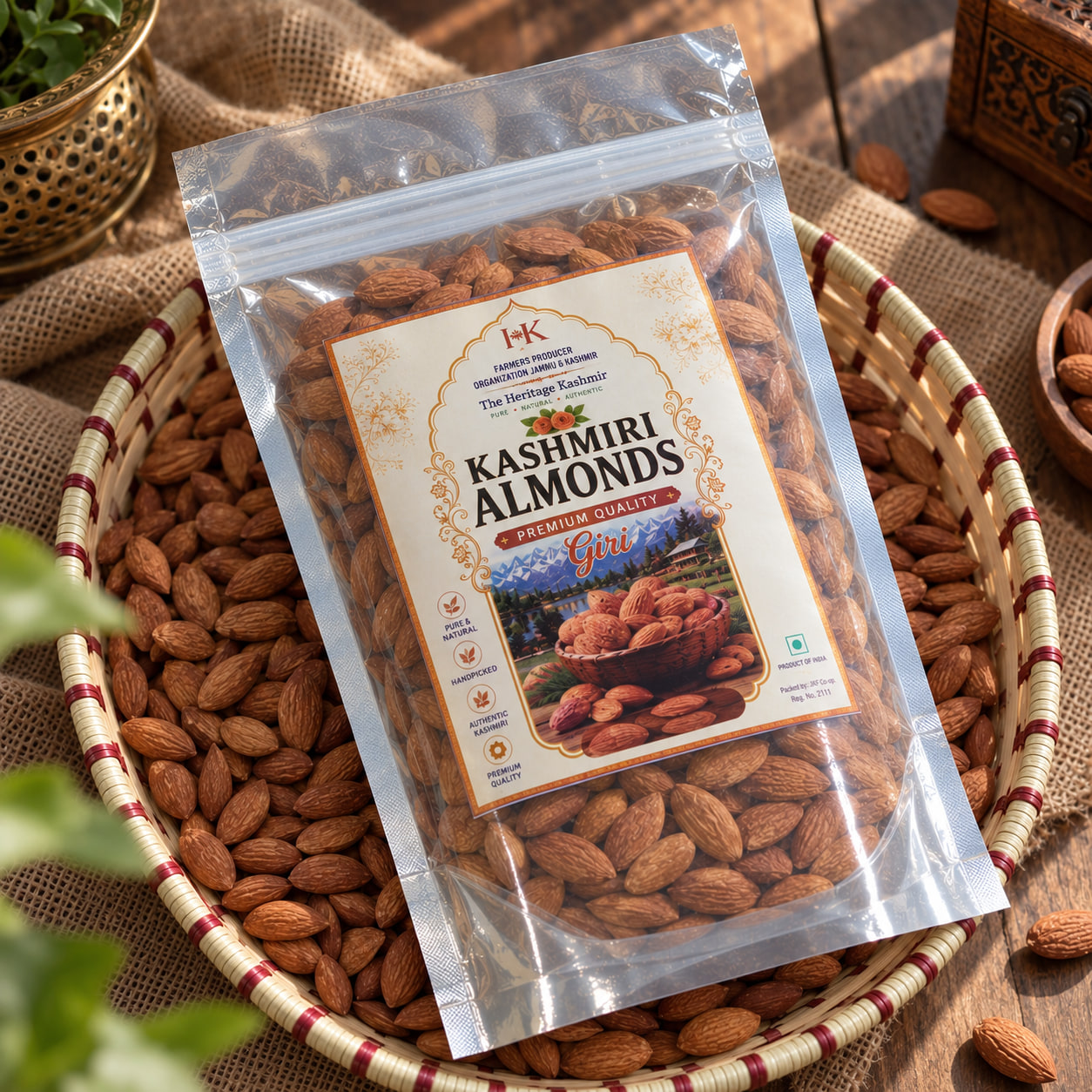
A clear pouch of Kashmiri almonds with the Heritage Kashmir label lying on a woven basket of skin-on almonds

Our shop is rated 5.0 out of 5 from 63 Google reviews

₹375MRP ₹450−17%
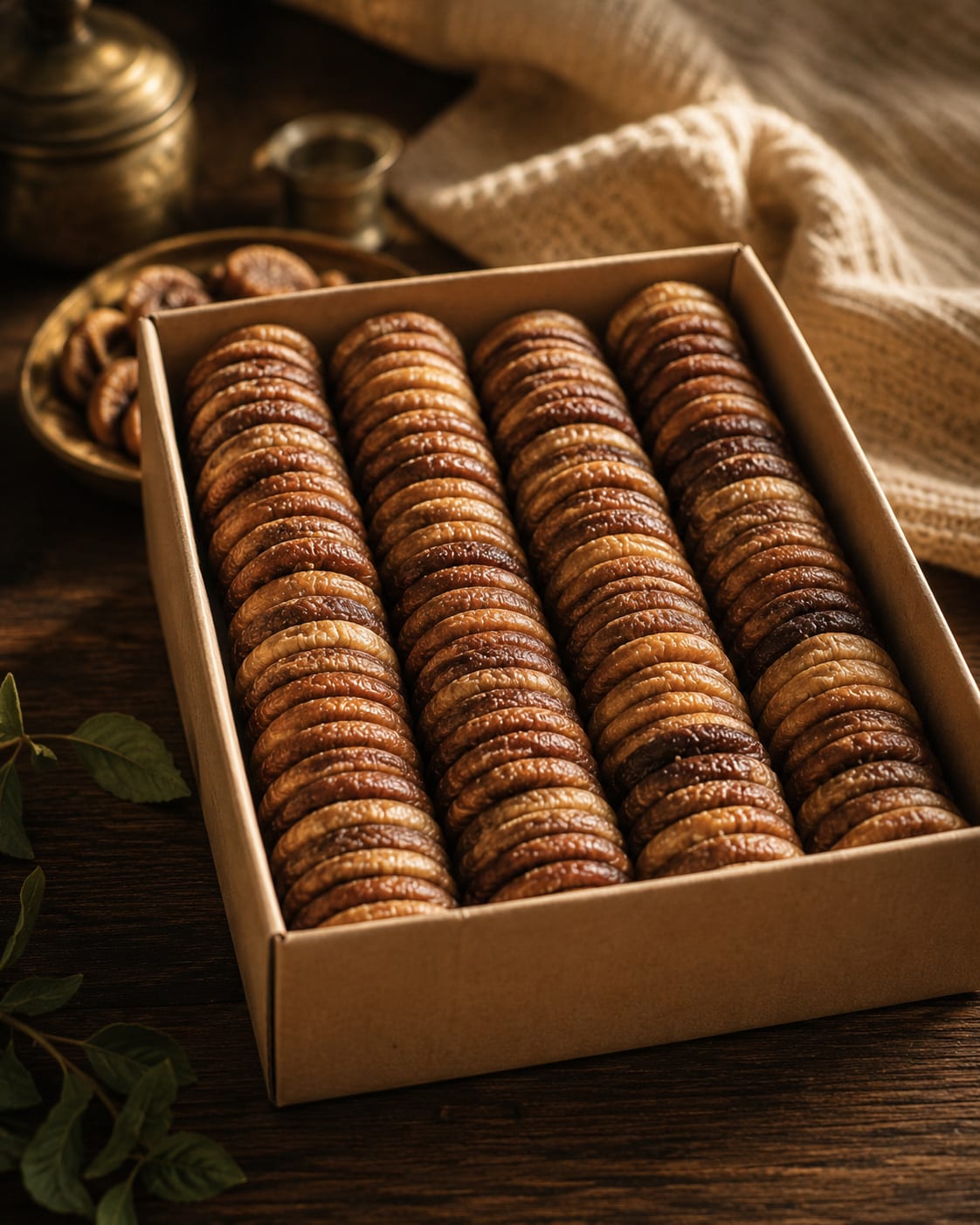
A clear pouch of Kashmiri dried figs with the Heritage Kashmir label on a marble table, a wooden bowl of figs and loose figs beside it

Dried Figs

250 g +

Our shop is rated 5.0 out of 5 from 63 Google reviews

₹340MRP ₹450−24%
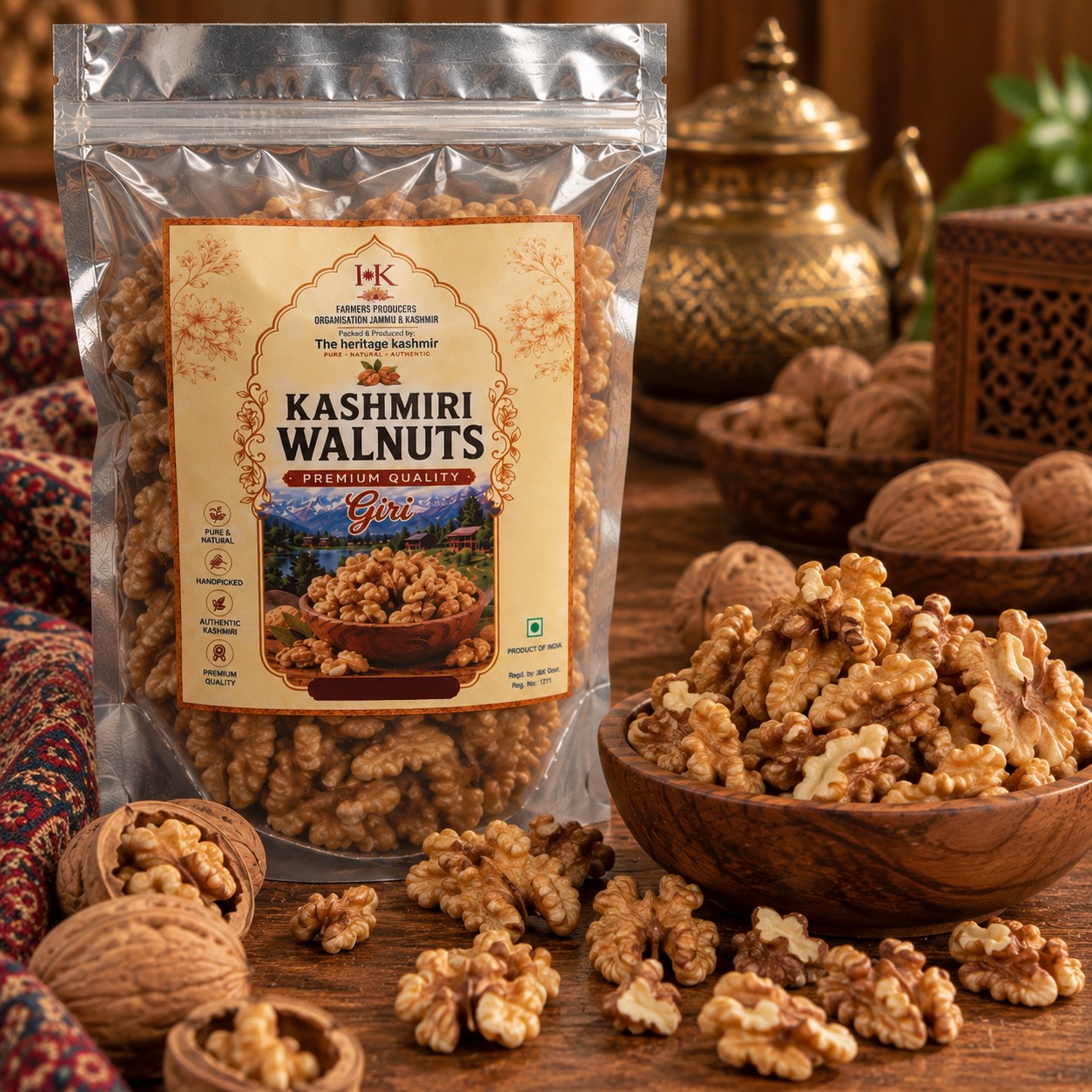
A clear pouch labelled Kashmiri Walnuts Giri, full of walnut kernels, beside a wooden bowl of kernels, whole walnuts in their shells and a brass samovar

Our shop is rated 5.0 out of 5 from 63 Google reviews

₹390MRP ₹450−13%
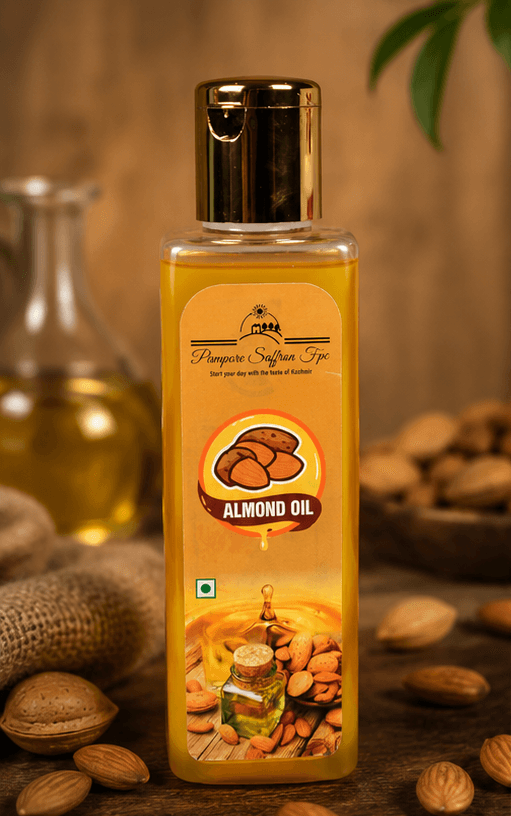
A gold-capped bottle of Pampore Saffron FPC almond oil on dark wood, whole almonds scattered around its base

Our shop is rated 5.0 out of 5 from 63 Google reviews

₹329MRP ₹500−34%

Giving it as a gift? See our 30 ready-packed combo gift boxes or the Diwali gifting guide.