Heritage Kashmir · Central India
Kashmiri Saffron in Chhattisgarh
- केसरkesar · Hindi/Chhattisgarhi
The short answer
Chhattisgarh buys its saffron through Raipur, which is supplied from Nagpur, Mumbai and Kolkata, and local retail runs ₹450–850 a gram against ₹330–360 direct from a Pampore grower family. The state's traditional sweets — dehrori, khurmi, thethari, papchi — are rice-flour, jaggery and sesame preparations that use no saffron, so household demand here is concentrated in the urban, industrial and settled-migrant population of Raipur, Bhilai, Durg and Korba, and in the Diwali and wedding gifting calendar. Bastar's Danteshwari temple and the state's shrine economy add a smaller ritual stream.
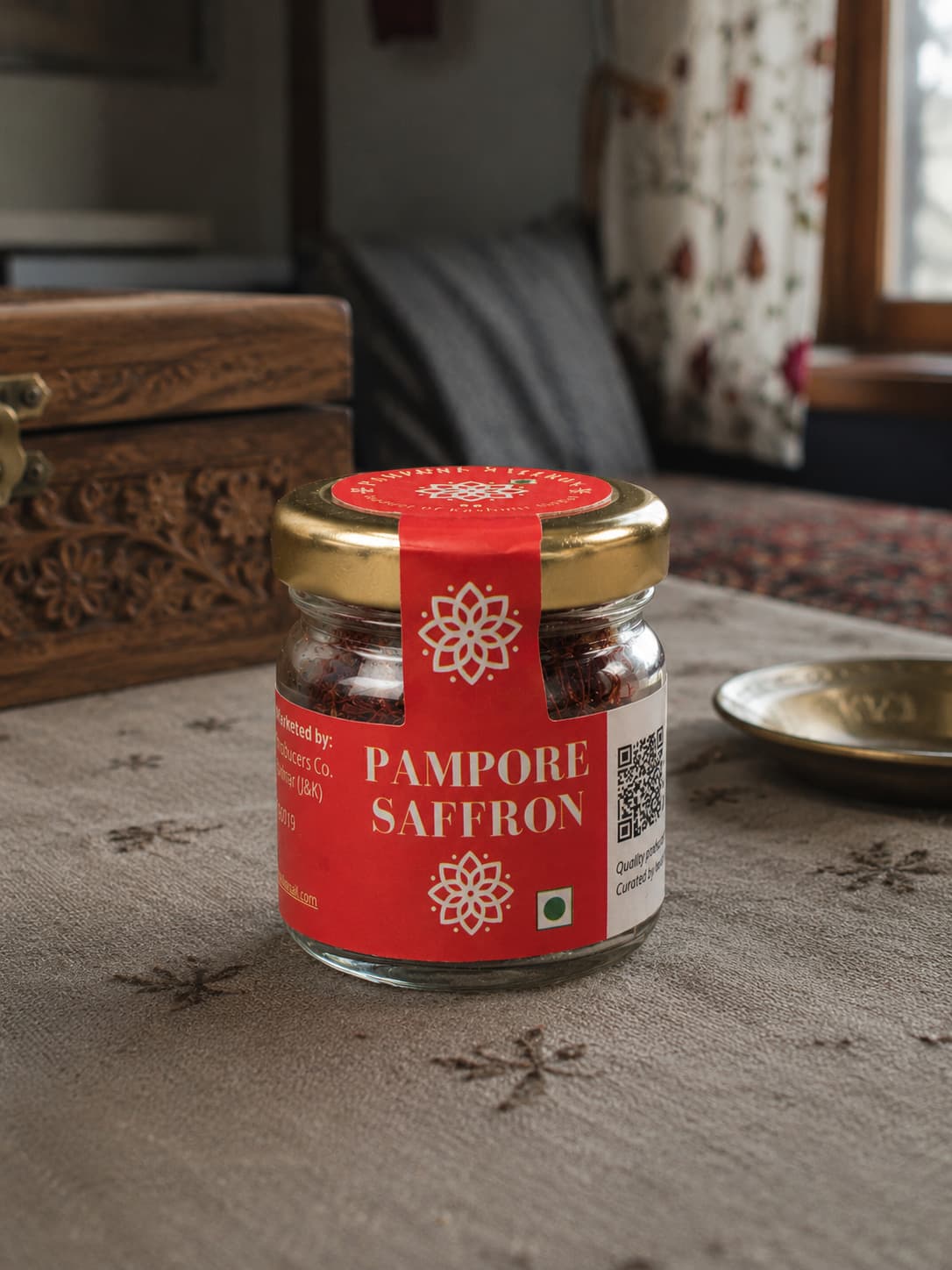
Raipur trades for the state
Raipur's Sadar Bazaar and the Malviya Road provision trade are the state's commercial centre for anything imported, supplied from Nagpur, Mumbai or Kolkata depending on the route. Bhilai, Durg, Bilaspur and Korba buy through Raipur; Jagdalpur, Ambikapur and the Bastar and Surguja districts buy through Raipur with a further hop and much thinner retail.
Chhattisgarh's steel and power belt — Bhilai, Durg, Korba, Raigarh — drew workers and managers from across India through the twentieth century, and that settled population is where most of the state's saffron demand actually sits. Bengali, Odia, Bihari, Punjabi and Marwari households each brought their own festival dish, and each buys saffron for it.
The state's own food culture is a different matter and worth being straightforward about: Chhattisgarhi cooking is rice-centred and unusually restrained with spice, and saffron has no traditional place in it.
- Raipur supplies the state, drawing from Nagpur, Mumbai and Kolkata.
- Bastar and Surguja have very thin premium retail — ordering direct is the practical route.
- Demand sits with the industrial belt's settled communities, not the indigenous food tradition.
- No local production and no batch-coded stock on any shelf in the state.
Where saffron is used in Chhattisgarh
Chhattisgarhi sweets — dehrori, the fermented-rice fritter soaked in syrup; khurmi; thethari; papchi; and the wider rice-and-jaggery tradition — use no saffron, and there is no reason to claim otherwise. The state's everyday food, built on rice, chana dal, local greens and bore basi, uses none either.
Where saffron is used is in the settled communities' festival cooking across the industrial belt. Bengali payesh at Durga Puja in Bhilai and Durg, Odia rasabali and malpua, Bihari Chhath kheer, Punjabi and Marwari Diwali mithai — four or five festival calendars running in the same city, each with its saffron dish.
Ritually, the Danteshwari temple at Dantewada — one of the Shakti Peethas and Bastar's most important shrine — and the state's other temples use saffron in abhishek and offerings, and the Bastar Dussehra, which runs for seventy-five days and is one of the longest festivals in the world, brings its own ritual food traditions, most of them indigenous and none of them saffron-based.
- Not in dehrori, khurmi, thethari, papchi or bore basi.
- Bengali payesh, Odia rasabali, Bihari Chhath kheer and Punjabi mithai across the industrial belt.
- Danteshwari and temple abhishek use in Bastar.
- Diwali and wedding gifting — the state's largest single saffron occasion.
Delivery to Chhattisgarh
Raipur, Bhilai, Durg and Bilaspur typically arrive 6–9 business days after dispatch; Korba, Raigarh, Jagdalpur, Ambikapur and the Bastar and Surguja districts usually 7–11. We dispatch from Pampore within 24–48 hours of a confirmed prepaid order, tamper-sealed and batch-coded, with DTDC tracking emailed on despatch.
We deliver across
- Raipur
- Bhilai
- Bilaspur
- Durg
- Korba
- Jagdalpur
- Raigarh
- Ambikapur
Every serviceable PIN code in Chhattisgarh — not only the cities listed. DTDC Express is ?60 for 7-day delivery, and DTDC Airmax is ?120 for faster air delivery.
Saffron in Chhattisgarh — common questions
- What is the price of kesar in Raipur?
- Sadar Bazaar and the Malviya Road provision trade price Kashmiri-labelled Grade 1 at roughly ₹450–850 a gram, supplied through Nagpur, Mumbai or Kolkata with two hops before local retail. Direct from a Pampore grower family, ISO 3632 Grade I Mongra is ₹330–360 a gram, sealed and batch-coded with the harvest year on the jar, delivered in about 6–9 business days after dispatch.
- Where can I buy genuine Kashmiri saffron in Chhattisgarh?
- In person, Raipur's Sadar Bazaar and the Bhilai and Bilaspur dry-fruit shops are the practical options, and none of them carries a batch code or a stated harvest. There is no specialist saffron trade in the state. Buying direct from a Kashmiri grower is the only route that gives you an origin you can actually hold someone to — a sealed jar with ISO 3632 Category I, the harvest year and an FSSAI licence number, shipped prepaid from Pampore.
- Do Chhattisgarhi sweets use saffron?
- No. Dehrori, khurmi, thethari, papchi and the state's rice-flour and jaggery sweet tradition use no saffron at all, and the everyday Chhattisgarhi table — rice, chana dal, local greens, bore basi — uses none either. Saffron in Chhattisgarh belongs to the festival cooking of the communities who settled around the steel and power belt: Bengali payesh, Odia rasabali, Bihari Chhath kheer, and Punjabi and Marwari Diwali mithai.
- Do you deliver to Jagdalpur, Bastar and the interior districts?
- Yes, to every serviceable PIN code in the state. Raipur, Bhilai, Durg and Bilaspur typically arrive 6–9 business days after dispatch; Korba, Raigarh, Jagdalpur, Ambikapur and the Bastar and Surguja districts usually 7–11. For the interior districts ordering direct is not a compromise — local premium retail there is very thin, and a sealed jar shipped from source has a shorter chain of custody than anything on those shelves.
- How much saffron goes into payesh or Chhath kheer?
- About 10–12 threads for a dish serving eight. Crush them, steep in two tablespoons of warm milk for fifteen minutes until the milk is deep gold, and stir that in after the pot comes off the heat. Adding dry threads at the start of a long simmer boils off the safranal that carries the aroma — you keep the colour and lose what you paid for. One gram covers roughly twenty such dishes.
- How much saffron should a household buy at a time?
- One or two grams for most households, and it will last the year. At three to four threads per glass of milk and 10–12 for a festival kheer or payesh, a single gram runs to roughly 250 glasses or twenty festival dishes. Saffron use in Chhattisgarh is occasion-driven rather than daily, so the sensible pattern is a small sealed jar of genuinely good saffron rather than a large one of something cheap — and stored airtight in a dark cupboard, it holds two to three years.
We grow and hand-sort this saffron ourselves in Pampore, seal it there in tamper-evident glass, and ship it prepaid to Chhattisgarh. One hop, no repacking, a batch code on the jar.
Also shipping to Chhattisgarh: Kashmiri kehwa — the winter cup.
Pampore Saffron FPO, J&K · FSSAI 11022470000019