Heritage Kashmir · Island territories
Kashmiri Saffron in Andaman & Nicobar Islands
- केसरkesar · Hindi
- জাফরানjafran · Bengali
- குங்குமப்பூkungumapoo · Tamil
The short answer
The Andamans have no local saffron trade — everything arrives by ship or air through Chennai, Kolkata or Visakhapatnam, and Port Blair's Aberdeen Bazaar stocks it thinly and prices it accordingly. Real Kashmiri Mongra is ₹330–360 a gram direct from a Pampore grower family. The islands' population is a settled mix of Bengali, Tamil, Telugu and Malayali communities plus a Hindi-speaking administration, which means all four regional saffron traditions — payesh, payasam, paramannam and kheer — are cooked here side by side. Transit is long and weather-dependent, and the maritime humidity makes airtight storage essential.
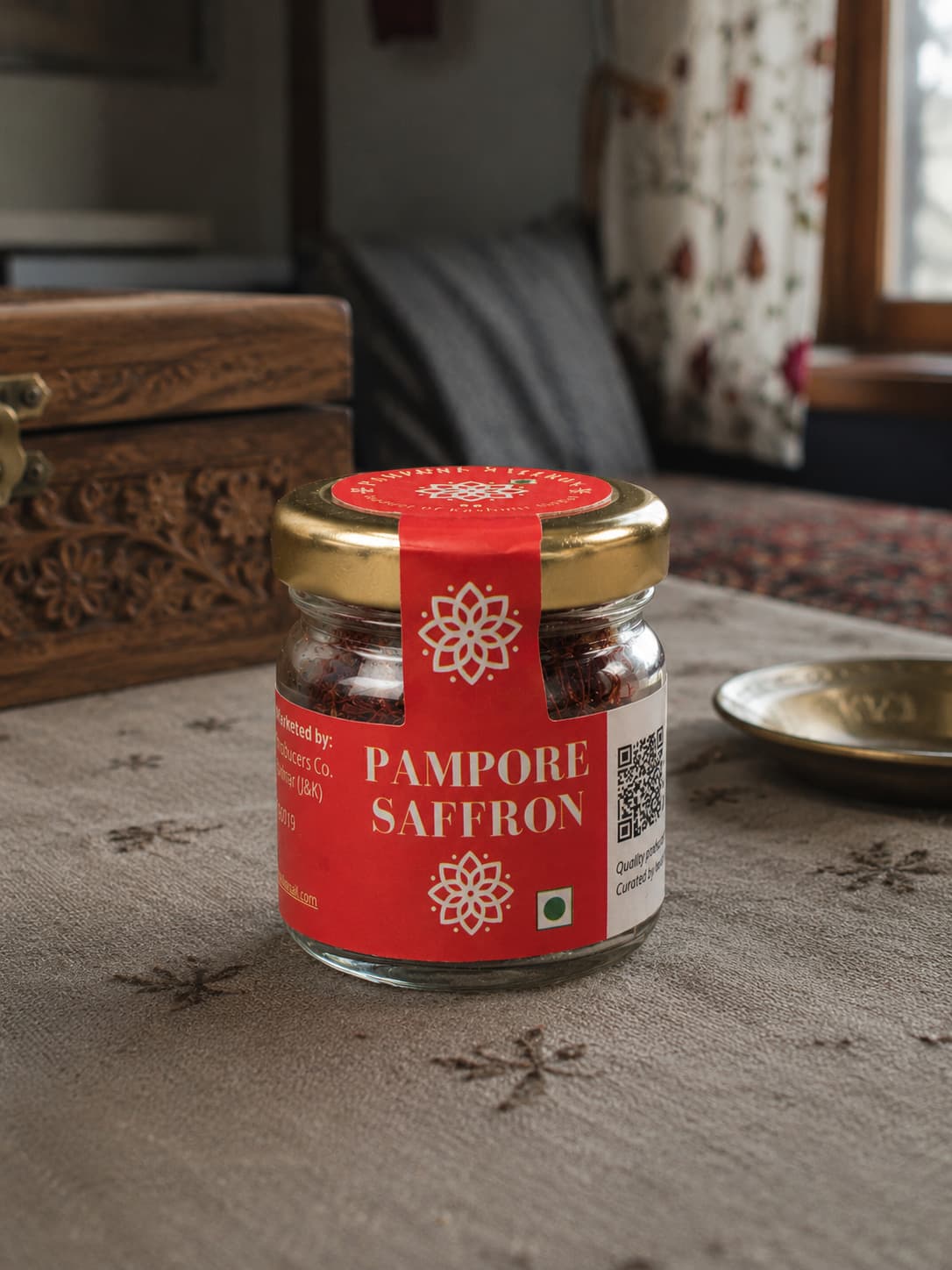
A settler market with four food traditions and one supply line
Aberdeen Bazaar and the Port Blair provision trade stock a limited range of premium groceries brought in from the mainland, and saffron is a slow-moving item that sits a long time in a humid climate. There is no wholesale trade, no local origin authority and no meaningful price competition.
What makes the Andamans distinctive is the composition of the population. Post-Partition Bengali settlement in Middle and North Andaman, Tamil and Telugu settlement across the islands, a Malayali community, and a Hindi-speaking administrative and services population — each brought its own saffron dish and its own name for the spice. In one Port Blair market you will hear kesar, jafran and kungumapoo used for the same jar.
For anyone on the islands, ordering direct from the mainland is the practical route, and the only real planning constraint is time. Shipments route through Chennai or Kolkata and then onto the sea or air link, and weather affects both.
- No local trade — stock arrives from Chennai, Kolkata or Visakhapatnam.
- Four settler food traditions in one market: Bengali, Tamil, Telugu and Malayali.
- Transit is long and weather-dependent; order well ahead of festivals.
- Maritime humidity: airtight glass, dark cupboard, small jars.
Four traditions, one island kitchen
The Bengali settler community makes payesh — the birthday and celebration rice pudding — with a saffron finish, and the Durga Puja calendar here is observed seriously despite the distance from Kolkata. The Tamil and Telugu communities make paal payasam and paramannam at Pongal, Deepavali and Ugadi. The Malayali community makes palada pradhaman at Onam.
The islands' Muslim community and the general restaurant trade make biryani in a broadly South Indian register, with saffron steeped in warm milk over the rice at dum.
Everyday Andaman cooking — fish, coconut, rice — carries no saffron at all, so household quantities are small and occasion-driven. A gram lasts most island households a year comfortably.
- Bengali payesh at birthdays and Durga Puja.
- Tamil and Telugu paal payasam and paramannam at Pongal, Deepavali and Ugadi.
- Malayali palada pradhaman at Onam.
- Biryani at weddings and in the restaurant trade — steeped saffron at dum.
Delivery to Andaman & Nicobar Islands
Port Blair typically runs 10–14 business days after dispatch, routed through Chennai or Kolkata and then by the sea or air link. Havelock, Diglipur, Rangat and the outer islands take longer again, and Nicobar addresses are restricted and frequently unserviceable. Monsoon weather extends everything. Order three to four weeks ahead of any date you need it; we dispatch within 24–48 hours of a confirmed prepaid order and email DTDC tracking.
We deliver across
- Port Blair
- Havelock (Swaraj Dweep)
- Diglipur
- Rangat
- Car Nicobar
Every serviceable PIN code in Andaman & Nicobar Islands — not only the cities listed. DTDC Express is ?60 for 7-day delivery, and DTDC Airmax is ?120 for faster air delivery.
Saffron in Andaman & Nicobar Islands — common questions
- Do you deliver saffron to Port Blair and the Andaman Islands?
- Yes, to serviceable PIN codes. Port Blair typically runs 10–14 business days after dispatch, routed through Chennai or Kolkata and then onto the sea or air link; Havelock, Diglipur, Rangat and the outer islands take longer, and Nicobar addresses are restricted and often unserviceable. Monsoon weather extends everything. Order three to four weeks ahead of a date you need it.
- How much does saffron cost in Port Blair?
- Aberdeen Bazaar and the Port Blair provision shops stock saffron thinly and price it at a considerable island premium — commonly ₹700–1,200 a gram, for material with no stated grade or harvest and often a long time on the shelf in a humid climate. Direct from a Pampore grower family, ISO 3632 Grade I Kashmiri Mongra is ₹330–360 a gram, sealed and batch-coded, with shipping calculated separately at checkout.
- How do I store saffron in the Andamans' humidity?
- Airtight glass, darkest and driest cupboard available, well away from the kitchen and never in the fridge. Maritime humidity is the harshest storage condition saffron faces — it absorbs moisture from the air, clumps and loses aroma within months in a loosely closed container. Take out what you need quickly and close it immediately. Buy a 1-gram jar you will finish within a year rather than a larger one that sits open through two monsoons.
- Which saffron dishes do Andaman households make?
- All four mainland traditions, side by side. Bengali settler families make payesh at birthdays and through Durga Puja; Tamil and Telugu families make paal payasam and paramannam at Pongal, Deepavali and Ugadi; Malayali families make palada pradhaman at Onam; and the general restaurant and wedding trade makes biryani with steeped saffron over the rice at dum. Everyday island cooking — fish, coconut and rice — uses none, so household saffron here is entirely occasion-driven.
- Is jafran the same as kesar?
- Yes — same spice, different language. 'Jafran' is the Bengali form, from the Persian zafran; 'kesar' is the Hindi and Sanskrit-derived form; 'kungumapoo' is Tamil. In a Port Blair market you will hear all three used for the same jar, because the islands' settled population brought all three vocabularies with them. All of them mean Crocus sativus, the dried red stigmas of the autumn crocus.
- Can I pay cash on delivery in the Andamans?
- No. We are prepaid-only everywhere in India, and on a ten-to-fourteen-day island route a refused COD parcel is effectively a total loss for a grower-scale business. Prepaid also means the jar is sealed at source in Pampore and opened by you, with nothing in between across a long sea or air journey.
We grow and hand-sort this saffron ourselves in Pampore, seal it there in tamper-evident glass, and ship it prepaid to Andaman & Nicobar Islands. One hop, no repacking, a batch code on the jar.
Also shipping to Andaman & Nicobar Islands: Saffron-infused wild honey.
Pampore Saffron FPO, J&K · FSSAI 11022470000019